 English
 Español
 Português
 Deutsch
 한국어
한국어 日本語
日本語 Italiano
 Français
 العربية
 Türkçe
Twenty minutes. That’s how long most cooling sleeves actually work.
You pull them on, feel that initial chill, and think “this is great.” Then the sun keeps beating down. Your body keeps generating heat. And suddenly, those “cooling” sleeves feel like wet plastic wrap clinging to your arms—somehow making you hotter than going bare-skinned.

I’ve watched this frustration play out thousands of times over my 20 years in functional textiles. Customers would return products not because they were defective, but because physics simply caught up. Regular cooling fabrics can’t block external heat while simultaneously cooling your skin. They pick one battle and lose the other.
That’s why we stopped trying to improve existing cooling sleeve technology—and started looking at how NASA keeps spacecraft from overheating in the vacuum of space, the aerogel textile thermal insulation technology.
What Makes Aerogel Cooling Sleeves Different?
The Problem with Regular Cooling Sleeves
Most cooling sleeves on the market rely on evaporative cooling or chemically treated fabrics. The limitation isn’t the technology itself—it’s that external heat continuously penetrates the material, overwhelming the cooling mechanism within 30 minutes. Standard polyester or nylon fabrics conduct heat at rates around 0.25 W/mK, meaning ambient heat transfers directly to your skin. Moisture-wicking helps manage perspiration, but it cannot prevent thermal radiation from reaching your body. We’ve tested dozens of competitor products, and the pattern repeats: initial relief followed by rapid heat saturation.
Dual-Layer Defense Technology
Our approach tackles both heat invasion and active cooling simultaneously through engineered layering.
The Aerogel Insulation Barrier
Aerogel remains one of the most effective insulating materials ever created. NASA developed it for Mars Rover missions, where equipment faces temperature swings from -100°C to 200°C. The material’s structure—99.8% air trapped in a silica matrix—achieves thermal conductivity as low as 0.013 W/mK, roughly 20 times more insulating than conventional fabrics. When we integrate aerogel into sleeve construction, it creates a barrier that blocks external heat radiation before it reaches your skin. Our lab testing shows that when ambient temperature hits 38°C, the inner surface of aerogel sleeves stays around 28°C. That 10-degree buffer makes the difference between tolerable and unbearable.
The Cooling Nylon Contact Layer
While aerogel blocks incoming heat, the inner cooling nylon layer actively reduces skin temperature through high thermal conductivity fibers. These specialized yarns achieve Q-max values exceeding 0.25 W/cm², meaning they rapidly absorb and disperse body heat on contact. Here’s what makes this work long-term: the aerogel outer layer prevents external heat from warming the nylon, so the cooling capacity persists for hours rather than fading after the first half-hour. This synergy between insulation and active cooling delivers sustained comfort that single-layer designs simply cannot match.
Integrated UPF 50+ Protection
Beyond temperature management, the aerogel structure blocks 98% of UVA and UVB radiation, earning UPF 50+ certification. The dense composition scatters ultraviolet wavelengths while maintaining breathability—no stuffy sensation that typically comes with heavy sun-protective fabrics. We’ve essentially solved three problems with one material system: heat blocking, active cooling, and UV protection.
Real-World Performance in Extreme Scenarios
Outdoor Adventures Where Aerogel Excels

Fishing Expeditions
Water surfaces reflect and intensify solar radiation, creating heat exposure roughly 40% higher than land-based activities. We’ve worked with professional anglers who spend 8-10 hours in these conditions, and their feedback shaped our final design. The aerogel barrier eliminates heat distraction, letting them focus on subtle line movements instead of constantly seeking shade. The cooling nylon handles perspiration without compromising the insulation layer’s integrity, maintaining comfort even during motionless periods when there’s minimal airflow. Several tournament fishermen have reported maintaining better concentration throughout long sessions, which they attribute to reduced thermal stress.
Cycling and Trail Running
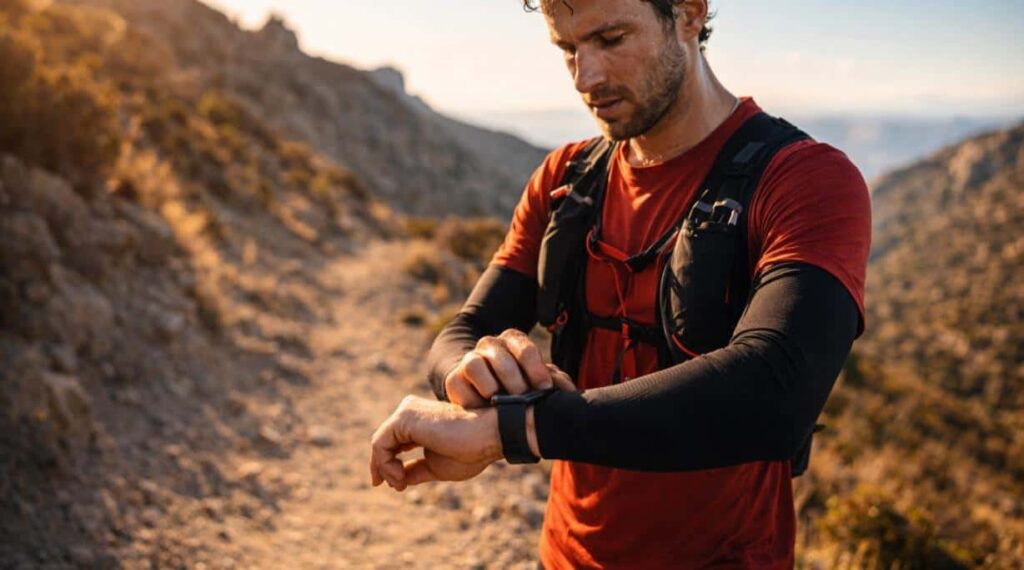
High-intensity outdoor sports generate significant metabolic heat while exposing athletes to direct sunlight—a challenging combination. Aerogel sleeves provide a counterintuitive advantage: the insulation layer blocks solar heat gain while the cooling nylon wicks away exercise-induced perspiration. During field testing with mountain bikers on exposed terrain, riders consistently measured cooler arm temperatures compared to bare skin, as the aerogel reflects radiant heat that would otherwise be absorbed. At approximately 40 grams per pair, the weight addition is negligible for performance-focused athletes.


Rock Climbing and Hiking
Alpine environments present deceptive heat challenges. Thinner atmosphere means less UV filtration, while rock surfaces radiate stored thermal energy throughout the day. Climbers testing our sleeves reported reduced arm pump and better grip endurance—cooler muscle temperatures appear to delay fatigue onset. We also engineered the outer layer for abrasion resistance, so contact with rough granite or limestone doesn’t compromise the aerogel structure. Durability matters when gear needs to match the demands of technical pursuits.
Daily Life Applications
Driving Comfort
Vehicle air conditioning struggles against direct sunlight streaming through windows onto arms and hands. This scenario came up repeatedly in our customer interviews—professional drivers, delivery personnel, and daily commuters spending hours behind the wheel. The aerogel barrier blocks solar heat before it reaches skin, providing immediate relief. This also eliminates the common “driver’s arm” tan line while potentially reducing reliance on maximum air conditioning settings.

Urban Commuting
City environments create unique heat challenges: concrete radiates stored heat, public transit often lacks adequate cooling, and professional dress codes limit clothing options. We designed these sleeves to fit discreetly under business attire or casual wear, with a quick-wear design that takes seconds to apply. For short trips where applying sunscreen feels excessive, this offers a practical middle ground. Office workers appreciate arriving at destinations without heat-induced perspiration or sun damage.
The Science Behind Aerogel
Aerogel earned the nickname “frozen smoke” due to its translucent appearance and remarkable properties. Samuel Kistene invented it in 1931, though it remained largely a laboratory curiosity until aerospace applications demanded ultra-lightweight insulation. NASA’s adoption for space shuttle tiles and Mars exploration equipment validated aerogel’s extreme performance capabilities. The material’s nanostructured pores—measuring 20-50 nanometers—trap air molecules, preventing convective heat transfer while maintaining breathability for water vapor. This allows perspiration to escape while blocking thermal radiation, solving the traditional trade-off between insulation and comfort.

Integrating aerogel into flexible textiles presented significant engineering challenges. Aerogel’s naturally brittle structure required developing composite techniques that preserve insulating properties while achieving fabric-like flexibility. Modern aerogel textiles embed microscopic aerogel particles within fiber matrices, creating durable, washable materials that retain 85-90% of pure aerogel’s insulating capacity. Combined with cooling nylon’s instant-chill properties, the result delivers performance unattainable through conventional fabric technologies alone.
Maximizing Your Aerogel Cooling Sleeves
For optimal cooling effect, try pre-chilling sleeves in a refrigerator for 10-15 minutes before use. The aerogel layer traps this coolness, extending the initial cooling sensation. During extended outdoor activities, briefly wetting the sleeves activates additional evaporative cooling without saturating the aerogel barrier. Store sleeves away from direct sunlight when not in use to preserve material integrity. Hand washing with mild detergent maintains the cooling nylon’s performance, while air drying protects the aerogel structure from heat damage.
Redefine Your Comfort Zone
Aerogel cooling sleeves represent a fundamental shift in personal thermal management—bringing aerospace engineering principles to everyday outdoor challenges. The dual-layer system blocks external heat through aerogel insulation while cooling nylon actively reduces skin temperature, delivering sustained comfort that traditional sleeves cannot match. Whether you’re pursuing extreme sports, working outdoors professionally, or navigating summer heat during daily routines, this technology transforms hostile environments into manageable conditions. That 10-degree difference expands what’s possible outdoors.

Related Posts

From NASA Spacesuits to Everyday Clothing: How Aerogel is Changing Textile Insulation Technology
Introduction: The Space-to-Street Journey Aerogel technology was first used by NASA engineers in the design of space suits, to protect...
Aerogel Fabric for Summer Apparel: How Heat Blocking Outperforms Every Cooling Treatment on the Market
I’ve been in functional textiles for over 20 years. In that time, I’ve seen a lot of “breakthrough” cooling materials...

Durable Cooling Fabric vs Instant Contact Cooling: Which Keeps You Cool Longer?
You know that brisk tingle the moment you pull on a “cool-touch” T-shirt? Nice, right? But step outside for 5...

How NIR Reflection Technology and IcSnow® Cooling Tech Redefine Summer Fabric Experience
This article explores how innovative textile technologies combine to create superior cooling fabrics for hot weather conditions, providing scientific insights...