 English
 Español
 Português
 Deutsch
 한국어
한국어 日本語
日本語 Italiano
 Français
 العربية
 Türkçe
Most cooling fabrics do one thing well. IcSnow® does two — at the same time, from the first rep to the final cooldown.
Request a Sample →Here’s a scenario that’s more common than it should be: you buy a running shirt marketed as “cooling performance fabric.” It feels great in the store. Three weeks into summer training, it clings to your back like a wet compress, and the cooling sensation you paid for is nowhere to be found. The shirt isn’t broken — it was only ever designed to do one thing.
That’s the gap this article is about. Not all cooling fabrics fail the same way, and understanding why they fall short is the fastest route to understanding what actually works. The short answer: single-function fabrics — whether they wick moisture or feel cool to the touch — hit a ceiling under real workout conditions. Dual-action cooling fabric was built to remove that ceiling.
Dual-action cooling fabric is a textile that combines yarn-embedded contact cooling (Q-max ≥ 0.15 W/cm²) with microporous evaporative moisture management in a single two-sided construction — delivering both instant and sustained thermal relief during athletic activity, independent of sweat rate or workout duration.
The IcSnow® construction from Annie’s Smartex is built on exactly this principle. What follows is a breakdown of how it works, where it matters most, and what separates it from the cooling fabrics that don’t hold up past the warm-up.
What Is Dual-Action Cooling Fabric — And Why Does It Matter?
Walk into any sporting goods store and you’ll find racks of garments labeled “cooling,” “moisture-wicking,” and “breathable” — often used interchangeably, as if they mean the same thing. They don’t.
Moisture-wicking fabrics move sweat away from the skin toward the outer surface of the garment, where it evaporates. That evaporation does cool the body — but only after you’re already sweating, and only as long as the fabric’s transport capacity keeps pace with your sweat rate. Push past that threshold, and the fabric saturates. The cooling stops. The clammy feeling starts.
Contact cooling works differently. Fabrics built with thermally conductive minerals absorb heat directly from the skin surface the moment they make contact — no sweat required. You feel it instantly. The limitation is the flip side: once the fabric has absorbed enough heat, the effect fades unless something actively carries that heat away.
Neither mechanism alone is enough for a full workout. That’s not a design flaw — it’s a physics problem. Dual-action cooling fabric solves it by running both systems simultaneously: the contact layer handles the immediate thermal load; the moisture management layer keeps clearing it. One reinforces the other across the entire arc of exercise.
| Fabric Type | Cooling Mechanism | Starts Cool? | Stays Cool at Peak Intensity? | Quick-Dry |
|---|---|---|---|---|
| Standard Cotton | None | No | No | Poor |
| Regular Polyester (Moisture-Wicking) | Evaporative only | No | Partially | Moderate |
| Contact-Cooling Coated Fabric | Contact only | Yes | Fades with heat buildup | Poor–Moderate |
| ✦ Dual-Action Cooling Fabric (IcSnow®) | Contact + Evaporative | Yes | Yes | Excellent |
The Science Behind IcSnow®: Two Sides, One Continuous Cooling Cycle
The IcSnow® Dual-Action Sports Cooling Fabric is constructed as a deliberate two-sided system. Each face of the fabric has a distinct job — and the two jobs are designed to hand off to each other as workout intensity changes.
IcSnow® Two-Sided Construction
Each face engineered for a distinct, complementary cooling role
IcSnow® Ice Cooling Nylon Yarn
Thermally conductive mineral particles permanently spun into the fiber. Conducts heat away from skin on contact. Q-max ≥ 0.15 W/cm². No wash-out.
IcSnow® 8C Microporous Technology
8C-shaped cross-section groove fibers generate a fourfold siphon effect — absorb, conduct, diffuse, evaporate — moving sweat faster than standard round-section fibers.
The Inner Face: IcSnow® Ice Cooling Nylon Yarn
The side that rests against skin is built from IcSnow® Ice Cooling Nylon Yarn. During the fiber spinning process, thermally conductive mineral particles are embedded directly into the yarn structure — not applied to the surface afterward. That distinction matters more than it might seem.
Surface-coated cooling fabrics are common and inexpensive to produce. They also lose their cooling performance after roughly 20 to 30 wash cycles as the coating abrades and washes away. With IcSnow® cooling nylon, the mineral particles are part of the fiber itself. They don’t wash out because there’s nowhere for them to go.
The performance benchmark here is the Q-max value — the peak rate of heat flux from skin to fabric at the moment of initial contact, measured in W/cm². The industry threshold for classifying a fabric as a genuine cooling textile is Q-max ≥ 0.15 W/cm². IcSnow® cooling nylon is engineered to meet and exceed this threshold, producing a perceptible cooling sensation the instant it touches warm skin. [3]
The Outer Face: IcSnow® 8C Microporous Technology
The outer face handles moisture. Each fiber in this layer has a precisely engineered cross-section shaped like “8C” — a three-dimensional groove structure that creates a network of microchannels both inside and along the fiber surface. Annie’s Smartex developed this geometry specifically to maximize the siphon effect: sweat is pulled from the skin side, conducted laterally across the fabric, spread across a larger surface area, and evaporated into the surrounding air.
In lab testing, the difference is visible within seconds. Where a standard round-section fiber holds moisture in a localized wet spot, the 8C groove structure disperses the same volume of liquid across a dramatically wider area — accelerating evaporation and eliminating the concentrated wet-patch sensation that makes saturated sportswear so uncomfortable. [2]
How They Work Together
At the start of a workout, before significant perspiration begins, the cooling nylon layer is doing the work — conducting heat away from skin through direct contact. As exercise intensity rises and sweat production increases, the 8C microporous layer takes over, rapidly transporting moisture away from the skin and accelerating evaporation. That evaporation removes latent heat from the body’s surface, which in turn keeps the contact layer from becoming heat-saturated.
It’s a self-reinforcing loop. Neither layer is passive while the other works — they operate in parallel, each compensating for the other’s limitation.
6 Sports Where Dual-Action Cooling Fabric Makes a Real Difference
The dual-action mechanism isn’t equally relevant to every sport. These six categories are where single-function fabrics most consistently fall short — and where the IcSnow® construction delivers the most measurable benefit.
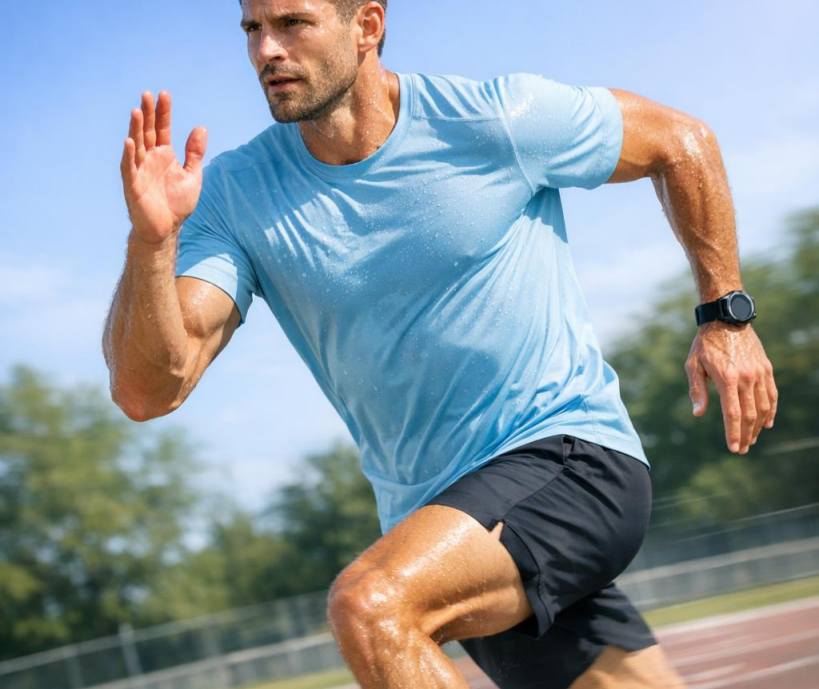
Running
Trained distance runners can lose 1–2 liters of sweat per hour in summer conditions. [4] At that rate, standard moisture-wicking polyester saturates before it can dry — leaving runners with heavy, clinging fabric that chafes and overheats. The 8C microporous layer maintains high moisture transport even under peak sweat load. The cooling nylon layer provides continuous thermal relief against the skin throughout.
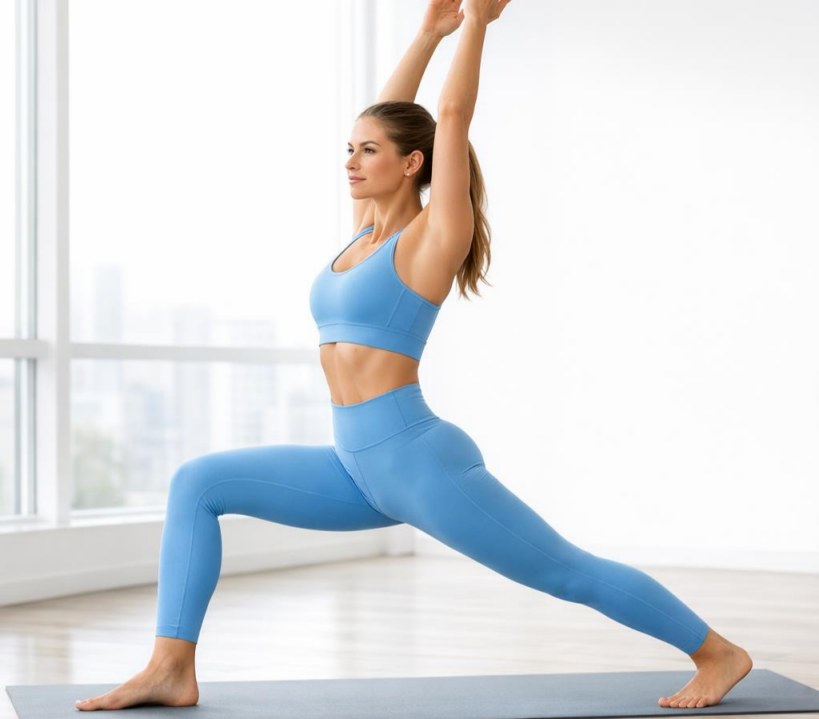
Yoga & Pilates
Hot yoga is a different kind of thermal challenge. Sweat rates are lower than cardio sports, but close-fitting garments mean any moisture retention is immediately noticeable — and distracting during static holds. The contact-cooling inner layer provides a consistent cool-to-touch sensation regardless of whether you’re in a flow sequence or holding warrior III for 90 seconds. The quick-dry outer layer returns the fabric to a non-clingy state between poses.
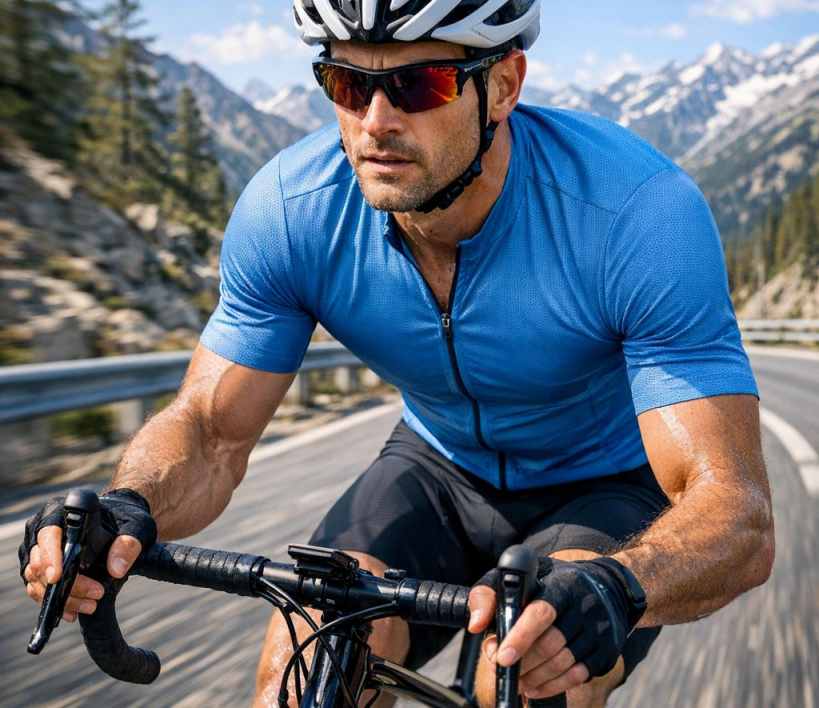
Cycling
A four-hour road ride puts different demands on fabric than a 45-minute gym session. At speed, convective airflow provides natural cooling — but on climbs or in still air, body temperature spikes sharply. More importantly, fabric performance needs to hold up across the full duration. Because IcSnow® cooling nylon’s mineral particles are spun into the fiber rather than coated onto it, the cooling performance doesn’t degrade with sweat exposure or mechanical friction over long sessions.

Gym & HIIT
HIIT is defined by rapid swings between maximum exertion and brief recovery. During work intervals, sweat production spikes; during rest, the body needs to dissipate heat quickly before the next effort. The 8C layer’s rapid drying capability means the fabric recovers its moisture management capacity between intervals — it doesn’t just stay wet and get progressively worse. The cooling nylon layer is always active, regardless of where in the interval cycle the athlete is.
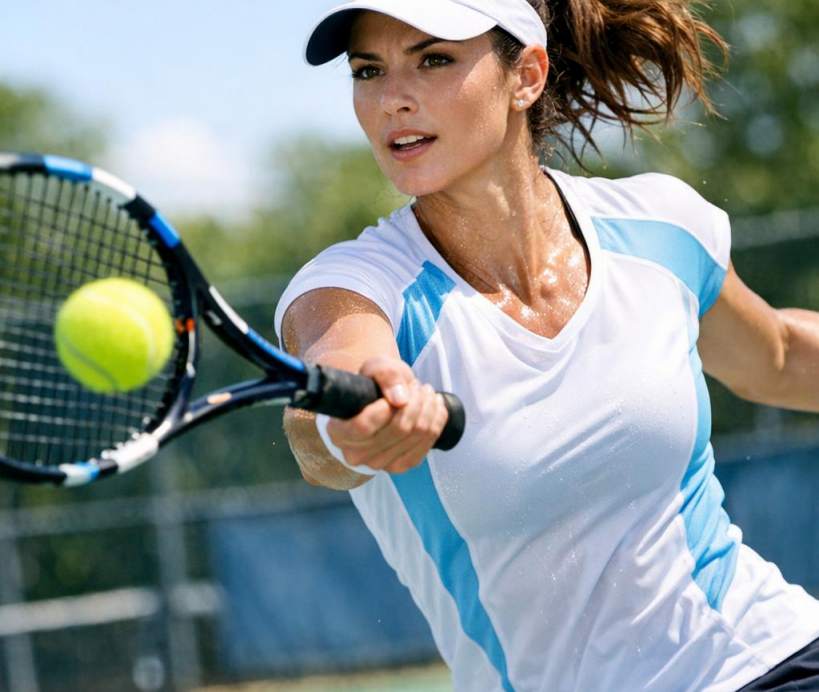
Outdoor Sports
Tennis, golf, and hiking share a problem that indoor sports don’t: you can’t control the environment. A full afternoon on court or trail means prolonged solar radiation combined with bursts of exertion — and no shade break. The contact-cooling layer continuously conducts heat away from the skin even during lower-intensity periods, reducing the thermal load on the body’s own cooling system. Less heat buildup means less fatigue and better sustained concentration over a full afternoon.
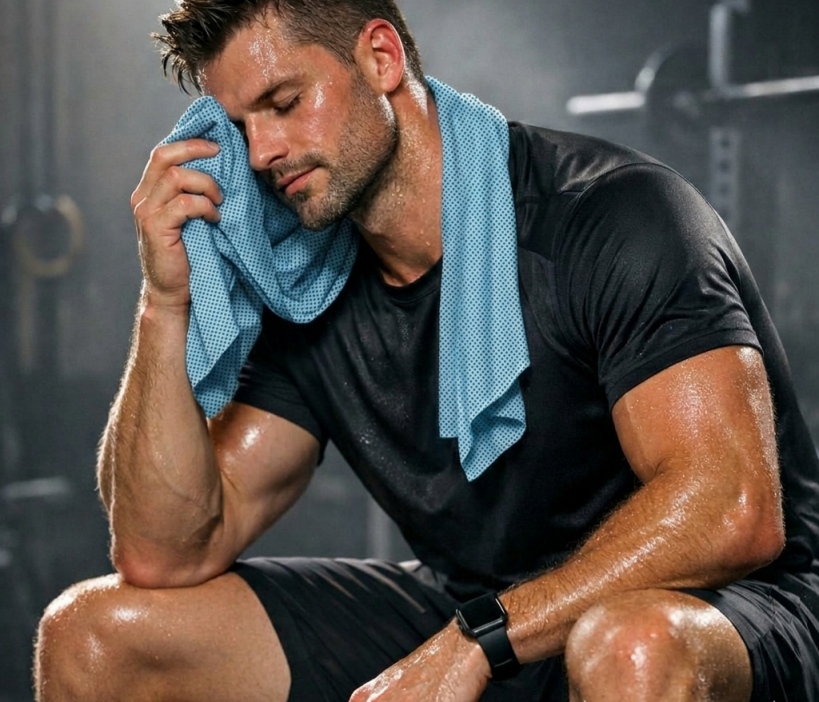
Post-Workout & Sports Towels
After intense exercise, the body keeps producing heat as core temperature normalizes. A cotton towel absorbs moisture but provides no active cooling. A standard microfiber towel dries quickly but offers no thermal relief. The Kineticool® Super Cooling Sports Towel applies the IcSnow® dual-action construction to the circular-knit towel format — one face delivers immediate cooling contact; the other rapidly absorbs and disperses sweat. Both happen at once, not sequentially.
| Sport | Primary Thermal Challenge | Key Requirement | IcSnow® Advantage |
|---|---|---|---|
| Running | High sweat rate + solar heat | Fast wicking + sustained cooling | 8C microporous handles peak sweat load; cooling nylon provides continuous skin-level relief |
| Yoga / Pilates | Moisture retention in close-fit garments | Contact cooling + quick dry | Instant cool-to-touch; fabric returns to dry state rapidly between poses |
| Cycling | Prolonged exertion + variable airflow | Durable cooling over 2–5 hours | Yarn-embedded technology resists degradation; consistent performance across full ride duration |
| Gym / HIIT | Cyclical sweat spikes | Fast recovery between intervals | Rapid drying restores wicking capacity between sets; cooling layer is always active |
| Outdoor Sports | Solar radiation + intermittent exertion | Passive cooling + lightweight | Continuous heat conduction reduces thermal load without relying on sweat to trigger cooling |
| Sports Towels | Post-workout heat + moisture | Cooling contact + fast absorption | Dual-face construction delivers both simultaneously, not sequentially |
Why Sports Towels Are the Most Overlooked Application
The sports towel category has barely evolved in decades. Cotton dominates because it’s soft and familiar — but cotton towels work by passive absorption. They soak up moisture without moving it away from the contact surface, become saturated quickly, and take hours to dry. That slow drying isn’t just inconvenient; a consistently damp towel is a reliable environment for bacterial growth and odor.
PVA towels addressed the drying problem but introduced a different one: the material feels stiff and synthetic when dry, and it provides no thermal benefit at all. You’re wiping down with something that absorbs moisture but doesn’t cool.
A sports towel built from IcSnow® dual-action fabric does something neither of those materials can: it cools and absorbs simultaneously. The cooling nylon face delivers a measurable drop in skin surface temperature on contact — genuine post-workout thermal relief, not just surface moisture removal. The 8C microporous face disperses absorbed sweat rapidly, so the towel recovers its performance between uses rather than staying saturated throughout a session. And because the cooling function is embedded in the yarn, it survives repeated washing without any degradation in performance.
| Towel Material | Contact Cooling | Absorption Speed | Drying Speed | After 50 Washes | Odor Resistance |
|---|---|---|---|---|---|
| Cotton | None | Moderate | Slow | N/A | Poor |
| PVA | None | Fast | Moderate | N/A | Moderate |
| Standard Microfiber | None | Fast | Fast | N/A | Moderate |
| ✦ IcSnow® Dual-Action Fabric | Yes (yarn-embedded) | Fast | Very Fast | Excellent retention | Good |
How IcSnow® Compares to Other Cooling Technologies
The cooling fabric market has expanded fast, and the terminology has gotten loose. “Cooling fabric” now appears on everything from budget polyester T-shirts to technically sophisticated performance textiles. The differences are real and worth understanding.
Standard moisture-wicking fabrics — including widely recognized platforms like Nike Dri-FIT and Adidas Climacool — are evaporative-only systems. They manage moderate sweat loads well. Under high-intensity conditions, or before perspiration begins, they provide no active cooling. That’s not a criticism; it’s what they were designed to do.
Contact-cooling surface coatings take a different approach: a thermally conductive finish is applied to the fabric surface, delivering an immediate cool-to-touch sensation. The durability issue is well-documented — surface treatments abrade and wash out, typically losing meaningful performance after 20 to 30 wash cycles. For a garment expected to last two or three seasons of regular use, that’s a significant limitation.
HeiQ Cool represents a more sophisticated dual-action approach, combining biobased thermo-functional and hydro-functional polymers in a chemical finish. It has demonstrated fabric temperature reductions of up to 3°C/5.4°F and is applicable across fiber types. [6] The distinction from IcSnow® is in the construction method: HeiQ Cool achieves its dual-action performance through a chemical finish applied to the fabric; IcSnow® achieves it through the physical structure of the yarn and fiber geometry. Both are durable approaches — the structural method simply removes the finish as a variable entirely.
| Technology | Cooling Mechanism | Durability | Moisture Management | Construction Method |
|---|---|---|---|---|
| Standard Moisture-Wicking Polyester | Evaporative only | High | Moderate | Standard fiber |
| Contact-Cooling Surface Coating | Contact only | Low (~20–30 washes) | None | Surface treatment |
| HeiQ Cool | Contact + Evaporative | High | Moderate | Chemical finish |
| ✦ IcSnow® Dual-Action (Smartex) | Contact + Evaporative | High (yarn-embedded) | Excellent (8C microporous) | Structural — yarn level |
What to Look for When Sourcing Cooling Fabric
For product developers and sourcing teams, the challenge isn’t finding cooling fabric — it’s validating the claims. These are the parameters that matter, and what to ask suppliers to provide.
The wash durability test is the one most commonly skipped in supplier evaluations — and the most revealing. A fabric that retains ≥ 80% of its initial Q-max and moisture transport performance after 50 washes at standard care temperatures is genuinely wash-durable. Request the test data before committing to bulk production. Reputable suppliers should provide it without hesitation. [3]
🏷️ Certifications to request: OEKO-TEX Standard 100 (absence of harmful substances) · bluesign® (responsible resource use in production) · GRS (Global Recycled Standard) if recycled fiber content is a priority for your line.
Frequently Asked Questions
Explore IcSnow® Dual-Action Cooling Fabric
Request a technical sample, download the full Tech PDF, or reach out to the Annie’s Smartex team for custom development and OEM sourcing discussions.
View Product & Request Sample →References
- The Role of Sports Clothing in Thermoregulation, Comfort and Performance – PMC
- Dual-action Sports Cooling Fabric – Annie’s Smartex
- Best Cooling Fabric Technology: The Ultimate Guide – Annie’s Smartex
- My Favorite Running Gear for Hot Weather – Outside Online
- Top 9 Performance Fabrics in Sports Apparel – Yunli Apparel

Related Posts
Boron Nitride Cooling Fabric: Cool Touch, Sun Heat and What BNX Tests Actually Show
Boron nitride cooling fabric can improve first-touch heat transfer, but it cannot answer every heat problem with one measurement. IcSnow®...
How to Choose the Right Cooling Fabric: A Buyer’s Guide to PCM Nylon, Cool-Touch Nylon & 8C Pro Polyester
The Problem With “Cooling” as a Category Walk into any trade show in 2025 and half the booths will have...
How NIR-Reflective Cooling Fabric Reduces Solar Heat Gain
Cooling Textile Series | 03 A buyer-focused guide to near-infrared reflection, textile construction, color, testing and the difference between heat...
How PCM Cooling Fabric Works: Phase Change, Thermal Buffering and the Questions Buyers Should Ask
Cooling Textile Series | 02 A practical explanation of what phase change material can do in a textile, where its...