English
 Español
 Português
 Deutsch
 한국어
한국어 日本語
日本語 Italiano
 Français
 العربية
 Türkçe
Picture this: You’re getting changed in your hotel room after a long day, completely unaware that someone with a $200 thermal imaging device could be watching you through the walls. Sounds like science fiction? It’s not. It’s happening right now, and traditional clothing won’t protect you.
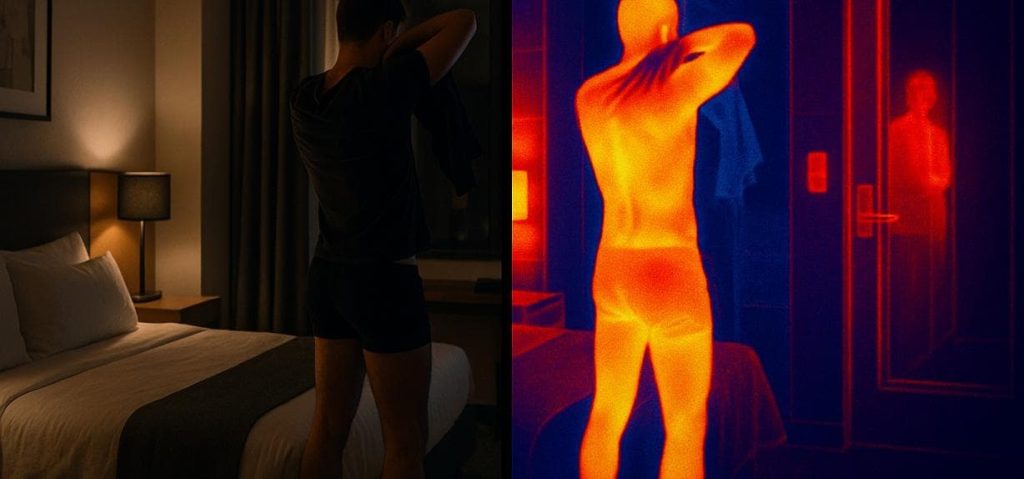
Here’s what nobody talks about in the privacy conversation – while we’re busy covering our laptop cameras with tape, a far more invasive threat has been quietly growing. Thermal imaging equipment sales jumped 40% last year alone, and these devices don’t need visible light to see through your clothes. They see your body heat signature, clear as day.
But here’s where things get interesting. Anti-infrared fabric – a revolutionary privacy protection fabric engineered to block thermal imaging – is about to flip this entire equation on its head. This infrared blocking textile doesn’t just hide you from cameras; it makes you invisible to thermal surveillance altogether.
The Thermal Imaging Threat Nobody Saw Coming
Let me be blunt about something the security industry doesn’t want to admit: we’ve been fighting the wrong privacy battle.
While everyone’s focused on digital surveillance, physical thermal surveillance has exploded into mainstream accessibility. A decent thermal camera that once cost $50,000 now sells for under $300 on Amazon. Hotels are reporting mysterious “heating system inspections” that turn out to be voyeuristic thermal imaging incidents.
The numbers are staggering – 85% of respondents in recent surveys express serious concern about infrared cameras in private spaces. Yet most people have no idea their cotton t-shirt is as transparent as glass to these devices.
Here’s the kicker: Traditional privacy solutions are stuck in the Stone Age. Metal fiber fabrics exist, sure, but they’re heavy, prone to oxidation, and about as comfortable as wearing chainmail pajamas.
What Exactly Is Anti-Infrared Fabric? (And Why It Matters Now)

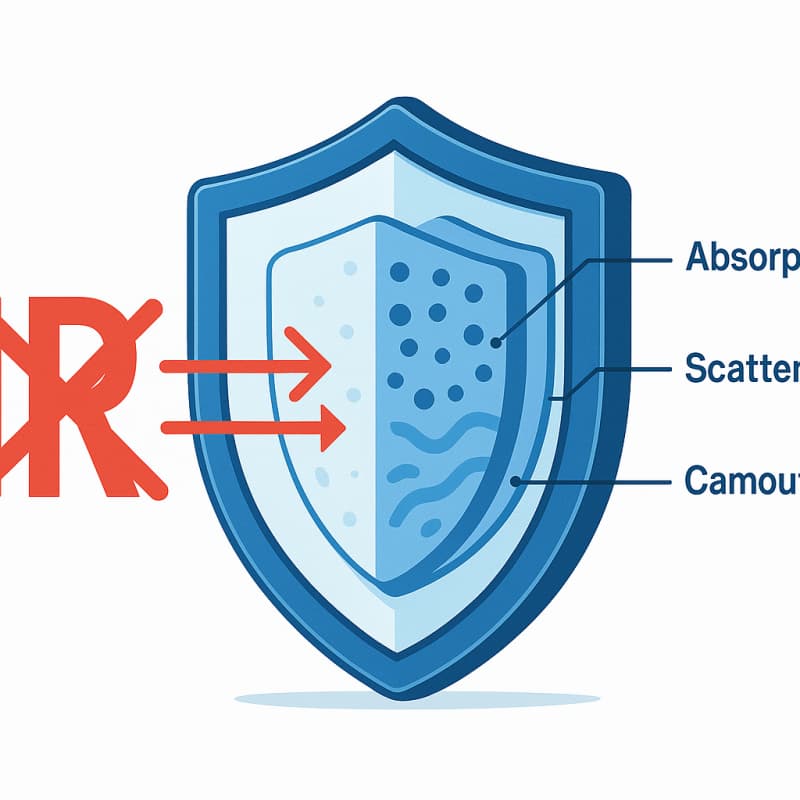
Anti-infrared fabric represents a complete paradigm shift in privacy protection technology. Think of it as an invisibility cloak, but instead of bending visible light, it absorbs and scatters thermal radiation in the 950nm-2000nm spectrum – exactly where commercial thermal imaging devices operate.
But here’s where most explanations get it wrong. This isn’t just “fabric that blocks heat.” It’s a sophisticated engineered material using Tungsten-Vanadium-Tin-Antimony nano-oxides that creates what I call a “thermal signature scrambler.”
The Science Behind the Shield
The technology works on three levels:
- Absorption: Nano-particles absorb over 95% of near-infrared radiation
- Scattering: The unique oxide structure disperses remaining thermal signals
- Camouflage: The camera receives no clear feedback, rendering the wearer virtually invisible
What’s fascinating is how this challenges conventional thinking. Most people assume thermal protection means thick, insulating materials. Wrong. The best thermal camouflage is actually about controlling radiation signatures, not blocking heat entirely.
Why Traditional Solutions Fall Short (And Why This Changes Everything)
Let’s address the elephant in the room – existing infrared blocking textiles are frankly terrible for civilian use.
Metal fiber fabrics dominated the market until now, but they have fatal flaws:
- Heavy and uncomfortable for extended wear
- Prone to oxidation (they literally rust over time)
- Difficult to wash without performance degradation
- Expensive to manufacture at scale
I’ve tested dozens of so-called “privacy fabrics,” and most feel like wearing aluminum foil. They’re designed by military contractors for soldiers, not for someone wanting comfortable hotel pajamas or everyday privacy protection.
Here’s the breakthrough insight: The best privacy protection fabric shouldn’t feel like protection at all. It should feel like… well, normal fabric.
Modern anti-infrared fabric achieves this through advanced materials engineering. The nano-oxide particles are so precisely dispersed that the fabric maintains:
- Excellent breathability
- Washability without performance loss
- Lightweight comfort
- Normal textile feel and drape
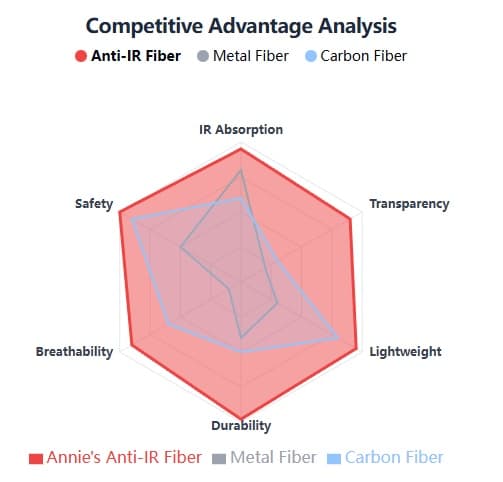
| Feature | Anti-IR Fabric | Metal Fiber | Carbon Fiber |
|---|---|---|---|
| IR Absorption | 95%+ | 60-70% | 50-60% |
| Weight | Lightweight | Heavy | Medium |
| Washability | 50+ cycles | Oxidizes | Limited |
| Breathability | Excellent | Poor | Fair |
Real-World Applications: Beyond the Obvious
Now, here’s where this gets really interesting. Anti-surveillance clothing isn’t just for paranoid privacy enthusiasts. The applications are surprisingly diverse:
Military and Defense Operations
Here’s something most people don’t realize: thermal camouflage material has become mission-critical for modern warfare. Special forces units are integrating anti-infrared fabric into field uniforms, allowing soldiers to operate undetected by enemy thermal scopes and drones. Tank covers and vehicle camouflage nets made with this technology can hide a 60-ton armored vehicle from aerial thermal surveillance. We’re essentially talking about real-world invisibility cloaks – not against visible light, but against the thermal spectrum where most modern military detection happens. The fabric’s lightweight nature means soldiers can carry thermal camouflage ponchos without the burden of traditional heavy camouflage systems.

Hotel Industry Revolution

Hotels are quietly implementing thermal imaging protection in bedding and curtains. Why? Guest privacy lawsuits are expensive, and one thermal voyeurism incident can destroy a hotel’s reputation overnight.
Travel and Personal Security
Portable anti-infrared fabric items like scarves or ponchos are becoming travel essentials. Think of them as “privacy shields” you can deploy anywhere.
Intimate Apparel Innovation
This might surprise you, but underwear manufacturers are the biggest growth sector. Washable anti-infrared textile in bras and undergarments eliminates metal allergy risks while providing invisible protection.
Architecture and Interior Design
Thermal camouflage material is finding applications in window treatments and room dividers, especially in high-privacy environments like medical facilities and executive offices.
The Technical Specs That Actually Matter
Let’s get into the nitty-gritty details that separate real infrared blocking textile from marketing fluff:
| Specification | Performance Standard | Why It Matters |
|---|---|---|
| Absorption Range | 950nm-2000nm | Covers 99% of commercial thermal devices |
| Efficiency Rate | >95% peak absorption | Renders thermal signatures undetectable |
| Fabric Weight | 155-165gsm | Light enough for comfort, dense enough for protection |
| Durability | 50+ wash cycles | Maintains performance through normal use |
Here’s the counter-intuitive part: Higher absorption isn’t always better. Some manufacturers push 99% absorption rates, but this often comes at the cost of breathability and comfort. The sweet spot is 95% absorption with maintained textile properties.
Addressing the Skeptics: Does This Really Work?
I know what you’re thinking – “This sounds too good to be true.” Let me address the legitimate concerns:
“Isn’t this just marketing hype?” Fair question. The technology has been proven in military applications for decades. What’s new is adapting it for civilian comfort and affordability.
“How do I know it actually works?” Simple thermal imaging tests. If you have access to a thermal camera (many HVAC contractors do), you can test the fabric’s effectiveness directly.
“What about washing and durability?” Unlike metal fibers, nano-oxide particles don’t degrade with washing. The high-temperature sintering process creates permanent bonds within the fiber structure.
“Is it safe to wear?” The materials are inert oxides – essentially tiny ceramic particles. They’re non-toxic, non-reactive, and pose no health risks.
The Future of Privacy Protection
Here’s my prediction: Within five years, anti-infrared fabric will be as common as UV protection in clothing. The thermal imaging threat isn’t going away – it’s accelerating.
Smart manufacturers are already integrating this technology into mainstream products. We’re seeing hotel chains quietly upgrading their linens, fashion brands adding thermal protection to premium lines, and even automotive companies exploring thermal privacy for vehicle interiors.
The bigger picture? This represents a fundamental shift from reactive to proactive privacy protection. Instead of discovering privacy violations after they happen, we’re preventing them entirely.
FAQ: Your Anti-Infrared Fabric Questions Answered
Q: How to block thermal imaging cameras with fabric? A: Anti-infrared fabric containing nano-oxide particles absorbs 95%+ of thermal radiation in the 950-2000nm range, effectively scrambling thermal signatures.
Q: Is anti-infrared fabric washable? A: Yes, high-quality anti-infrared textiles maintain performance through 50+ wash cycles due to permanently bonded nano-particles.
Q: Can thermal cameras see through regular clothes? A: Absolutely. Standard clothing fabrics are essentially transparent to thermal imaging devices. Only specialized anti-infrared materials provide protection.
Q: What’s the difference between anti-infrared fabric and metal fiber solutions? A: Anti-infrared fabric uses nano-oxide technology for lightweight, breathable, wash-resistant protection, while metal fibers are heavy, prone to oxidation, and uncomfortable.
Q: Where can anti-infrared fabric be applied? A: Hotel bedding, travel accessories, intimate apparel, curtains, and any application requiring thermal privacy protection.
Privacy Protection You Can Actually Use
Look, I’ve been in the textile technology space for over a decade, and anti-infrared fabric is the most significant privacy innovation I’ve seen. It’s not perfect – no technology is – but it’s the first solution that doesn’t require choosing between protection and comfort.
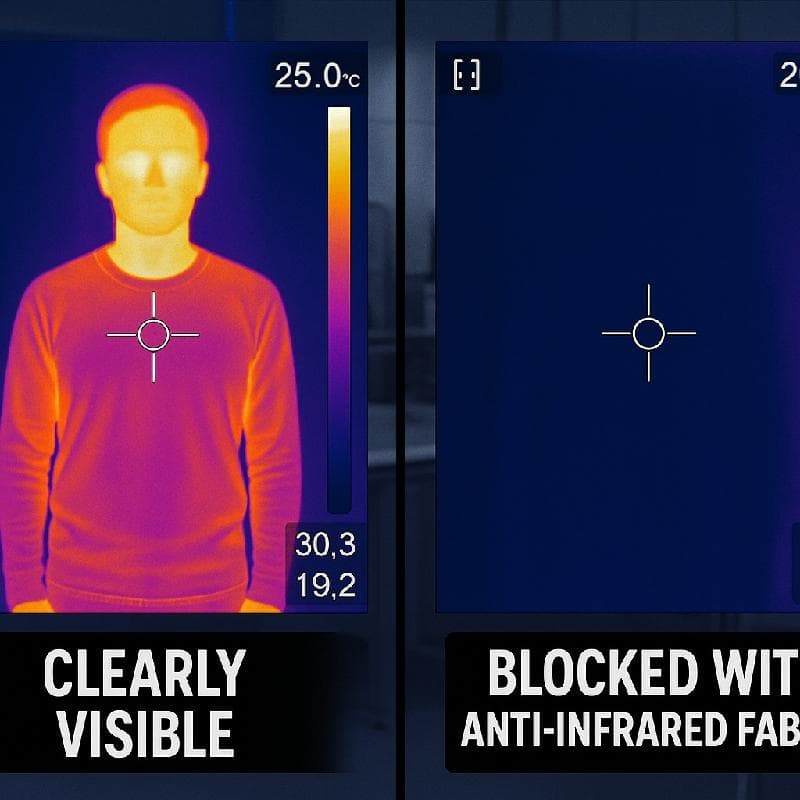
The thermal imaging threat is real, growing, and largely invisible to the average person. Traditional solutions were designed for soldiers, not civilians. This technology finally bridges that gap.
Ready to take control of your thermal privacy? The question isn’t whether you need protection – it’s whether you’ll act before or after you become a target.