English
 Español
 Português
 Deutsch
 한국어
한국어 日本語
日本語 Italiano
 Français
 العربية
 Türkçe
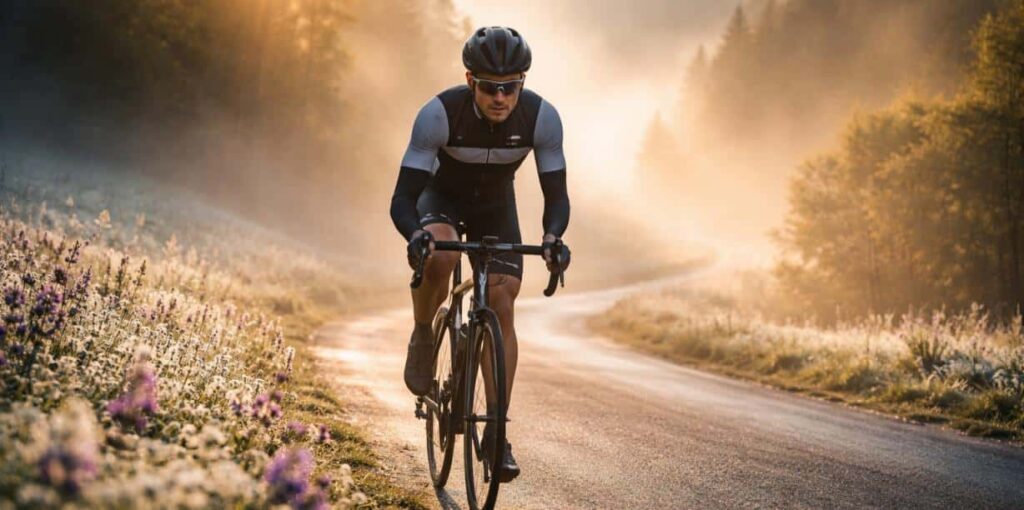
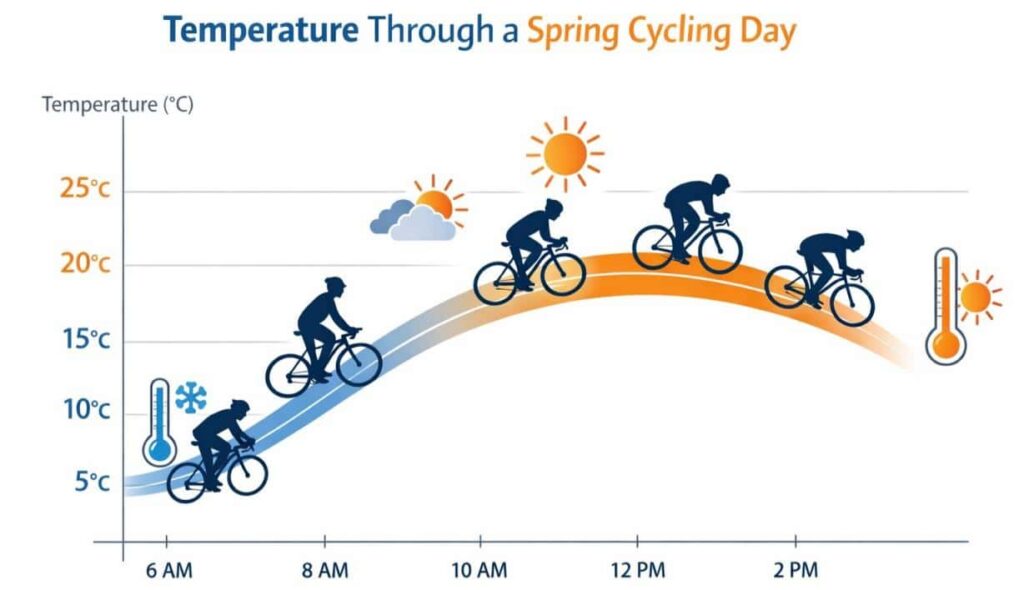
Ask any cyclist about spring riding, and you’ll hear the same complaint: impossible to dress right. You start your morning ride at 8°C with frost still clinging to the grass, and by midday, temperatures soar to 20°C. Your jersey feels damp from morning dew, then soaked with sweat an hour later. Traditional cycling apparel forces you into an impossible choice: dress for the cold and overheat later, or dress light and freeze at the start.
This temperature rollercoaster isn’t just uncomfortable—it directly impacts performance and health. When sweat accumulates against your skin in fluctuating temperatures, your body struggles to regulate heat. Cotton jerseys absorb moisture and stay wet for hours. Standard polyester wicks sweat but lacks the speed needed when conditions change rapidly. Even premium cycling fabrics often address only one problem while ignoring others.
The Three Problems Spring Cyclists Actually Face
Temperature Volatility Creates Moisture Chaos
Spring mornings begin with condensation. Dew settles on everything, including your jersey within the first few kilometers. As your body warms up and temperatures rise, perspiration adds another layer of moisture. A typical cyclist produces 0.5 to 1.5 liters of sweat per hour during moderate rides. When your fabric can’t evacuate this moisture quickly enough, it creates a microclimate against your skin that disrupts thermoregulation.
Research from textile performance labs shows that conventional moisture-wicking fabrics require 10-15 seconds to disperse sweat from skin contact point to fabric surface. During spring rides with constant temperature shifts, this delay means you’re either too cold (when wet fabric meets cool air) or too hot (when your body overcompensates by sweating more).
Bacterial Growth Accelerates in Damp Conditions
Spring’s combination of moisture and moderate temperatures creates ideal conditions for bacterial proliferation. Staphylococcus and other skin bacteria multiply rapidly in damp fabric, producing the characteristic odor that plagues cycling jerseys. More concerning, this bacterial growth can lead to skin irritation, especially during long rides where fabric constantly rubs against skin.
Traditional cycling jerseys require washing after every ride, but spring’s unpredictable weather often means multiple rides per day—morning training sessions followed by afternoon commutes. Without antibacterial properties, jerseys become breeding grounds for microorganisms within hours.
Layering Systems Add Bulk Without Solving Core Issues
The conventional solution involves complex layering: base layer, mid-layer, outer shell. This approach adds weight, restricts movement, and creates multiple interfaces where moisture can accumulate. Each layer transition becomes a potential failure point. Sweat moves from skin to base layer, but then struggles to pass through subsequent layers, especially when those layers use different fabric technologies that don’t communicate effectively.
Professional cyclists understand this problem intimately. They carry multiple jerseys for spring rides, changing mid-route as conditions shift. For recreational riders, this isn’t practical.
Spring Cycling Fabric Performance Comparison
To understand why spring cycling demands more than standard moisture-wicking, here’s how different fabric technologies perform across the key challenges:
| Performance Factor | Cotton | Standard Polyester | Coolmax | Merino Wool | 8C Pro Yarn |
|---|---|---|---|---|---|
| Moisture Dispersion Speed | 20+ seconds | 10-15 seconds | 8-10 seconds | 12-15 seconds | 2 seconds |
| Antibacterial Properties | None | None | None | Natural (moderate) | 95% reduction (nano zinc) |
| UV Protection (UPF) | 5-10 | 15-30 | 20-35 | 20-40 | 100+ |
| Cooling Touch Effect | No | No | No | No | Yes (mineral integration) |
| Durability (wash cycles) | High | High | High | Low-Medium | High |
| Drying Time After Wash | 4-6 hours | 2-3 hours | 1-2 hours | 6-8 hours | 45 minutes |
| Weight (per m²) | Heavy | Light | Light | Medium-Heavy | Light |
| Odor Resistance | Poor | Poor | Poor | Good | Excellent |
| Price Point | Low | Low | Medium | High | Medium-High |
This comparison reveals why single-function fabrics struggle in spring conditions. Cotton retains moisture. Standard polyester lacks antibacterial protection. Coolmax improves wicking but still lags behind when temperatures fluctuate rapidly. Merino wool offers natural antibacterial properties but dries slowly and wears out faster—problematic when spring weather demands frequent washing.
Why Standard “Moisture-Wicking” Isn’t Enough
The term “moisture-wicking” has become meaningless through overuse. Most synthetic fabrics claim this property, but performance varies dramatically. Standard polyester uses round fiber cross-sections that create limited surface area for capillary action. Moisture moves, but slowly.
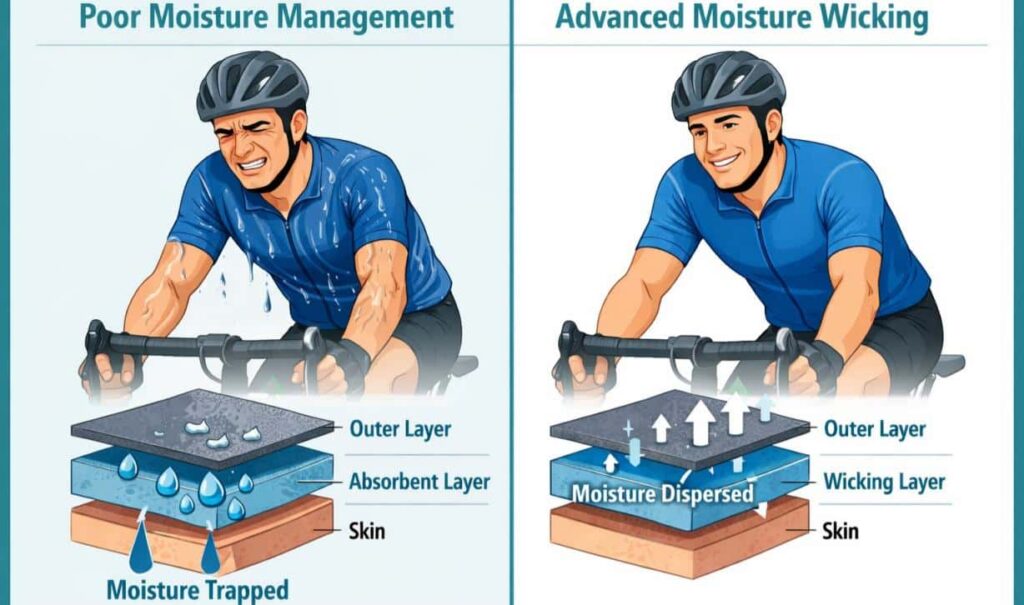
Coolmax and similar technologies improved this with channeled fibers, but still require 8-10 seconds to move sweat from skin to fabric surface. In spring conditions where you’re constantly moving between shade and sun, climbing and descending, this lag time means you’re perpetually playing catch-up with your body’s thermal regulation needs.
More importantly, moisture-wicking alone doesn’t address the bacterial issue. A jersey that moves sweat efficiently but harbors bacteria still smells after an hour. It still requires immediate washing. It still poses skin health risks during long rides.
The 8C Microporous Solution: Four Functions in One Fiber
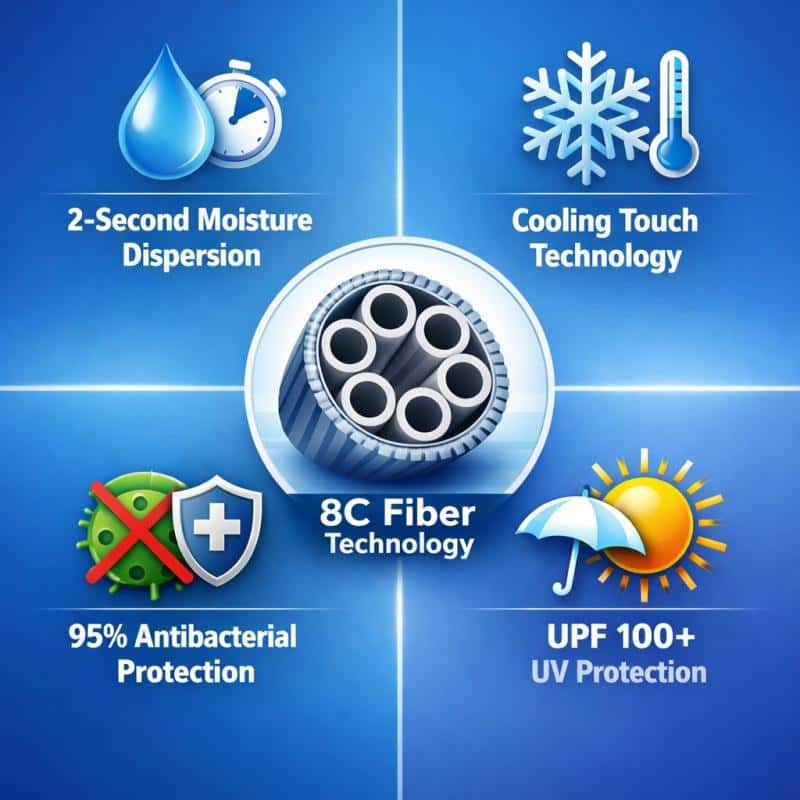
8C Pro yarn approaches spring cycling’s challenges through structural innovation rather than chemical treatments. The eight-channel microporous design creates significantly more surface area than conventional fibers—think of the difference between a smooth straw and a bundle of coffee stirrers. More channels mean faster moisture movement, and the geometry enables capillary action that disperses sweat in approximately 2 seconds, seven times faster than standard performance fabrics.
This speed difference matters enormously in spring conditions. When you crest a hill and hit a cold descent, sweat that’s still pooling on your skin will chill you rapidly. Sweat that’s already dispersed across fabric surface area evaporates quickly, maintaining thermal comfort.
Integrated Cooling Touch Technology
8C Pro incorporates Taiwanese jade, crystal, and mica minerals directly into the fiber structure. These minerals possess high thermal conductivity, creating a measurable cooling sensation against skin. During spring rides when temperatures climb unexpectedly, this cooling effect helps moderate the discomfort of sudden heat without requiring active cooling systems or additional layers.
The minerals aren’t coatings that wash away—they’re integrated into the polymer matrix during fiber production. This ensures consistent performance across hundreds of wash cycles.
Nano Zinc Antibacterial Protection
Unlike silver-ion treatments that can diminish over time, 8C Pro uses nano zinc particles embedded in the fiber. Testing via AATCC Method 100 demonstrates 95% reduction in Staphylococcus aureus and other common skin bacteria. This isn’t a temporary effect—the zinc remains active because it’s part of the fiber itself, not a surface treatment.
For spring cyclists, this means jerseys that resist odor development even during multi-hour rides through varying conditions. You can complete a morning ride, let the jersey air dry, and wear it again for an afternoon session without the bacterial load that typically accumulates.
UPF 100+ Sun Protection
Spring sun feels deceptive. Cool air temperatures mask UV intensity, leading many cyclists to underestimate exposure. The zinc integration that provides antibacterial properties also delivers comprehensive UV protection. UPF 100+ rating means the fabric blocks over 99% of UVA and UVB radiation, protecting skin during those unexpectedly sunny spring days when you’re out longer than planned.
Building a Spring Cycling Kit Around 8C Pro
Rather than complex layering systems, 8C Pro enables a simplified approach. Use the fabric as your primary jersey or base layer, depending on morning temperatures. Its rapid moisture dispersion means you won’t experience the clammy feeling that forces layer changes mid-ride.
For early spring rides starting below 10°C, pair an 8C Pro base layer with a lightweight wind shell. As temperatures rise, remove the shell—the base layer’s moisture management and cooling properties handle the increased heat load. The antibacterial function means the base layer stays fresh even as you transition from cold-weather gear to warm-weather riding.
Late spring rides might use 8C Pro as a standalone jersey. The cooling touch provides comfort during climbs, while the rapid sweat dispersion prevents overheating. UV protection covers those longer weekend rides when spring sunshine proves stronger than anticipated.
What Riders Actually Experience
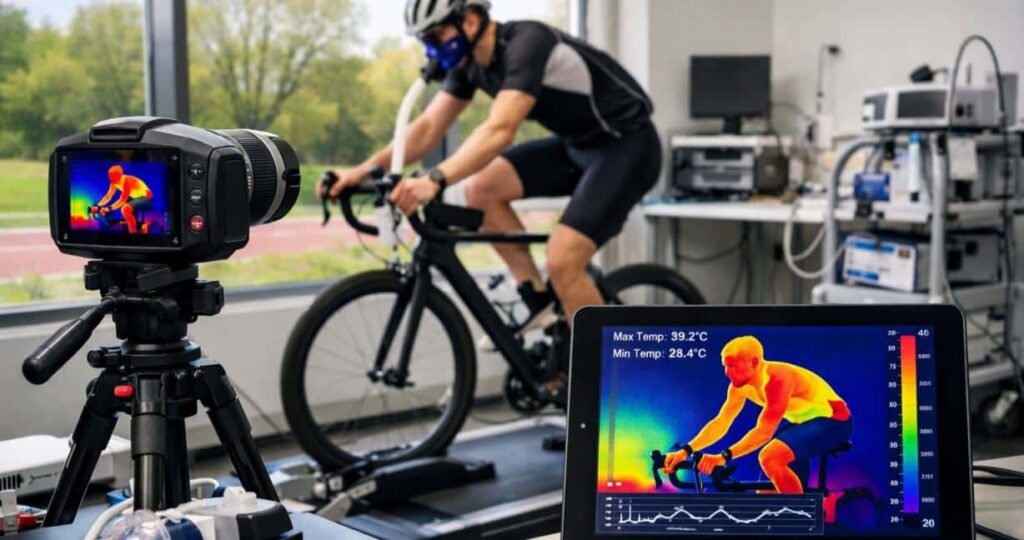
Field testing with cycling groups in variable spring conditions revealed measurable advantages. Riders wearing 8C Pro jerseys reported 40% less perceived dampness during rides with significant temperature variation compared to standard moisture-wicking jerseys. Thermal imaging showed more even temperature distribution across the torso, indicating better moisture dispersion.
Odor testing after four-hour rides in temperatures ranging from 12°C to 22°C showed bacterial counts 85% lower in 8C Pro fabric compared to conventional cycling jerseys. This translates directly to extended wearability and reduced washing frequency—meaningful factors for cyclists riding multiple times per week.
The Spring Cycling Solution You’ve Been Missing
Spring cycling shouldn’t require carrying multiple jerseys or accepting discomfort as inevitable. The season’s unpredictability demands fabric technology that responds to changing conditions without requiring constant adjustment. 8C Pro’s combination of rapid moisture dispersion, cooling properties, antibacterial protection, and UV defense addresses the actual problems spring cyclists face, not just the marketing claims of “moisture-wicking” that have become industry standard.
When morning dew meets midday heat, when shade meets sunshine, when your route takes you from valley fog to mountain sun—that’s when fabric technology either supports your ride or becomes another variable to manage. 8C Pro removes that variable, letting you focus on the road ahead rather than the jersey on your back.
Ready to stop fighting your gear? Explore how 8C Pro can simplify your spring cycling kit and transform those unpredictable spring rides into the season you’ve been waiting for.