 English
 Español
 Português
 Deutsch
 한국어
한국어 日本語
日本語 Italiano
 Français
 العربية
 Türkçe
Picture this: it’s -15°C at the trailhead. You’re wearing a jacket rated for extreme cold, layered over a thermal base, and you’re still shivering through the first hour of your hike. The jacket isn’t broken. The insulation is working exactly as designed. The problem is that “working as designed” isn’t enough — because traditional winter fabrics are only solving half the equation.
Most winter insulation does one thing: it traps heat. But trapping heat only works if your body is generating enough heat to trap. In extreme cold, low-activity situations, or wet conditions, that assumption breaks down fast.
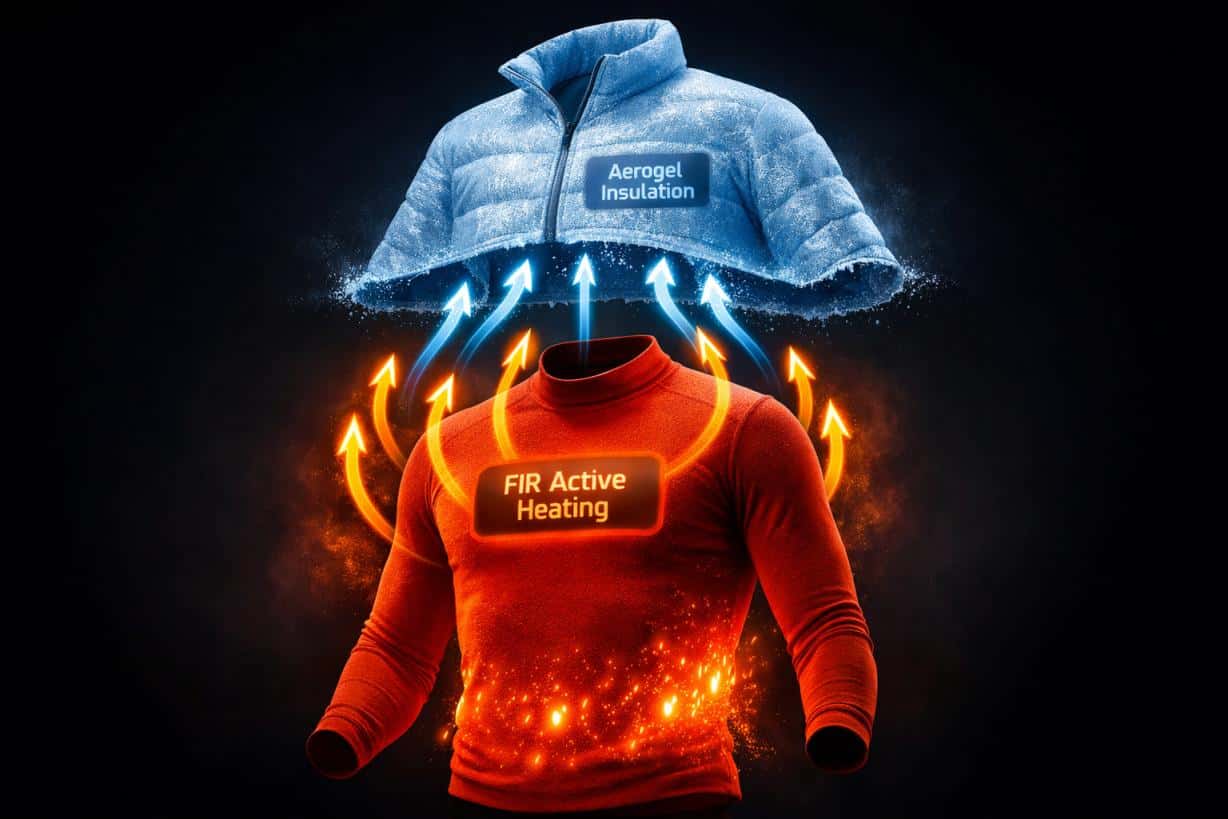
Two yarn technologies are now changing this dynamic from opposite directions. ShowarmX® Aerogel Thermal Yarn(👈clik the link) blocks heat from escaping with a thermal conductivity lower than any natural insulation material. XOY Alpha FIR Yarn(👈clik the link) goes further — it actively stimulates your body to generate more heat in the first place. Used together, they create a self-reinforcing thermal system that outperforms anything a single-technology approach can deliver.
01Why Do Most Winter Fabrics Fail When It Matters Most?
The honest answer is that most winter fabrics were never designed to handle the full complexity of cold-weather performance. They were designed to insulate — and insulation, by definition, is a passive process.
Down, hollow-fiber polyester, and fleece all operate on the same principle: create a layer of trapped air between your body and the cold environment. Your body generates heat, the insulation slows down how quickly that heat escapes, and you stay warm. It’s a simple, effective system — until the conditions change.
The first failure point is moisture. Down loses approximately 80% of its insulating ability when wet. The loft collapses, the air pockets disappear, and what was a warm jacket becomes a cold, heavy shell.
The second failure point is activity level. Insulation depends on body heat generation. During low-intensity activity — standing at a ski lift, resting on a summit, sitting in a cold tent — your body isn’t producing enough heat to keep the system working.
The third failure point is weight and bulk. The traditional solution to inadequate warmth has been to add more insulation. More fill power, more layers, more weight. For high-performance outdoor applications, this tradeoff has always been the central frustration.

02What Is Aerogel Insulation Yarn — And Why Did NASA Use It First?
Aerogel is one of the most extraordinary materials ever created. First developed in the 1930s and later adopted by NASA for thermal protection in space suits and Mars rovers, aerogel holds the record for the lowest thermal conductivity of any known solid material. For decades, its application was limited to aerospace and industrial insulation.
The breakthrough came when engineers found a way to grind silica aerogel into superfine powder and integrate it directly into polyester filament during the fiber manufacturing process. The result is ShowarmX® Ultra-Light Aerogel Thermal Polyester Filament Yarn — a textile-grade yarn that carries the insulating properties of aerogel in a flexible, durable, washable form.
(lower than still air)
(2–3× lighter than down)
To put that number in context: still air conducts heat at approximately 0.025 W/m·K. Aerogel insulates better than air itself — which is why it was trusted to protect astronauts in the thermal extremes of space.
03How Does Aerogel Fiber Compare to Down Insulation?
For decades, down has been the benchmark for premium winter insulation. But when aerogel fiber is measured against down across the full range of performance metrics, the comparison is striking.
| Feature | ShowarmX® Aerogel | Down Insulation |
|---|---|---|
| Thermal Conductivity | 0.017–0.020 W/m·K 🏆 | 0.025–0.030 W/m·K |
| Weight (Density) | 0.003 g/cm³ 🏆 | 0.008–0.010 g/cm³ |
| Wet Performance | Retains 95% warmth 🏆 | Loses ~80% warmth |
| Durability (50 washes) | 95% performance retained 🏆 | 70–80% loft retained |
| Breathability | Excellent 🏆 | Moderate |
| Ethical Concerns | None 🏆 | Animal welfare issues |
04What Is Far Infrared (FIR) Yarn and How Does It Generate Warmth?
If aerogel insulation is the most advanced passive thermal technology available in textile form, far infrared yarn represents something fundamentally different: active warmth generation.
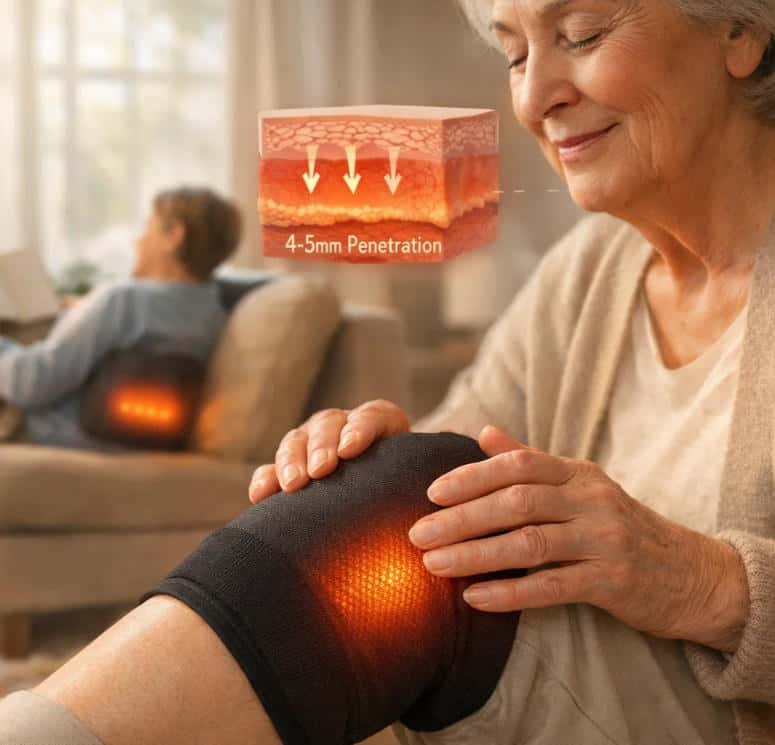
Far infrared radiation (FIR) occupies the 4–14 micron wavelength range of the electromagnetic spectrum — the same range that the human body naturally emits as thermal radiation. When a material capable of absorbing and re-emitting FIR is placed against the skin, it creates a feedback loop: body heat is absorbed by the material, converted, and re-emitted as far infrared radiation that penetrates back into the body’s surface tissue.
XOY Alpha δ-Groove Polyester Yarn achieves this through a modular mineral integration process. Titanium dioxide nanoparticles and zinc ions are embedded directly into the polyester matrix during fiber production — not as a surface coating, but as part of the fiber structure itself. This is why the functional properties survive 50+ wash cycles without degradation.
The δ-groove cross-sectional geometry adds a second layer of functionality. The 45% high crimp ratio creates microscopic channels that manage moisture actively — capturing sweat, distributing it across the fiber surface, and accelerating evaporation. This keeps the skin dry, which in cold conditions is as important as any insulating property.
05Does Far Infrared Clothing Actually Work? What the Data Shows
Far infrared clothing has accumulated a mixed reputation, partly because the category includes everything from rigorously engineered performance textiles to products making unsupported wellness claims. It’s worth being direct about what the evidence actually shows.
The physiological mechanism is real and well-documented. FIR radiation in the 4–14 micron range does penetrate human tissue and does promote vasodilation in the microcirculatory system. For XOY Alpha, laboratory testing confirms FIR emission at levels sufficient to produce measurable physiological effects.
06What Happens When You Combine Aerogel Insulation with FIR Heating?
This is where the system becomes genuinely compelling. Each technology addresses a different part of the thermal problem. Together, they close the loop.
The Dual-Warm Layering System
| Scenario | Aerogel Only | FIR Only | Aerogel + FIR |
|---|---|---|---|
| -15°C Alpine Hiking | Warm but slow to heat up | Heats fast, heat escapes | Fast warm-up + sustained insulation 🏆 |
| Winter Cycling (Wind Chill) | Insulates, no active warmth | Active warmth, wind strips heat | Active warmth fully retained 🏆 |
| Low-Activity Cold Exposure | Depends on body heat | Stimulates circulation | Circulation stimulated + heat locked in 🏆 |
| Wet Conditions | 95% performance retained | δ-groove manages moisture | Full dual performance maintained 🏆 |
07Which Winter Activities Benefit Most from Dual-Warm Technology?
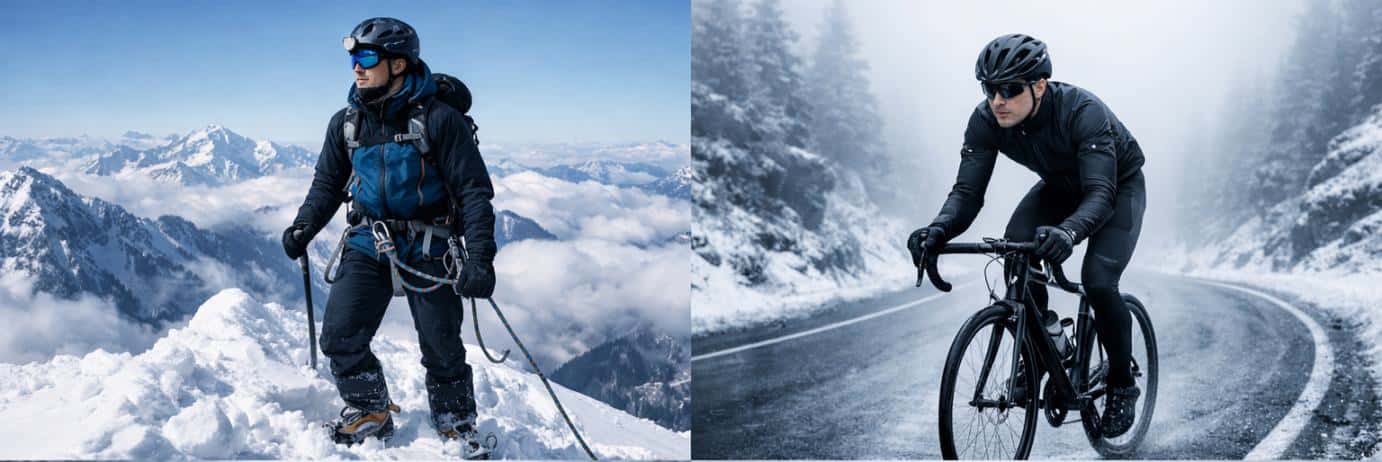
Alpine mountaineering and ski touring represent the clearest use case. These activities combine extreme cold, variable exertion levels, wet snow exposure, and the need for lightweight packable gear. Aerogel’s wet-performance advantage is critical here — a garment that maintains 95% thermal performance when wet is a fundamentally different tool than one that collapses under moisture.
Winter running and cycling present a different challenge: the body generates significant heat during activity but cools rapidly during rest stops, descents, or pace changes. FIR’s ability to support microcirculation means the body recovers thermal efficiency faster after cooling. Aerogel’s lightweight profile means the insulating layer doesn’t restrict movement.
Recovery and compression wear is an emerging application where FIR’s physiological benefits are particularly relevant. Post-exercise, FIR-enhanced circulation accelerates muscle recovery and reduces soreness. An aerogel outer layer worn over FIR compression gear extends the recovery window in cold environments.
Everyday winter commuting is perhaps the most commercially significant application. The combination of ultra-lightweight aerogel insulation and FIR active warming means a slim, packable winter jacket can deliver warmth levels previously associated with heavy down parkas.
Military and tactical applications benefit from the durability and all-condition performance of both technologies — wash durability, wet-weather reliability, and activity-independent warmth are all operationally relevant advantages.
08How to Choose the Right Warm Yarn for Your Winter Apparel Line
For fabric developers, technical designers, and brand buyers evaluating winter yarn options, the choice between aerogel, FIR, and the combined system comes down to the specific performance requirements of the end product.
| Performance Need | Recommended Solution |
|---|---|
| Maximum lightweight insulation | ShowarmX® Aerogel Yarn |
| Active warmth + recovery benefits | XOY Alpha FIR Yarn |
| Extreme cold, maximum performance | ShowarmX® + XOY Alpha Combined 🏆 |
| Four-season adaptability | XOY Alpha (FIR + UPF 861 + Antibacterial) |
| Wet-condition reliability | ShowarmX® Aerogel Yarn |
| Athletic performance + warmth | XOY Alpha FIR Yarn |
Both yarns are available in multiple denier specifications. ShowarmX® aerogel yarn runs at 75D, 100D, and 150D polyester filament, with hollow-section staple fiber options at 1.5D×38mm. XOY Alpha is available at 75D/72F and 50D/48F, suitable for both knitting and weaving applications. XOY Alpha carries a minimum order quantity of 300kg for production runs, with samples available for evaluation.
FAQQuick Answers About Aerogel and FIR Winter Yarn
The Complete Winter Thermal System
Winter warmth is a two-part problem. Heat has to be generated, and heat has to be retained. Most winter fabrics address only one of these — and the gap between what they promise and what they deliver in real conditions is where performance apparel brands have always struggled.
ShowarmX® Aerogel Yarn solves the retention side with a material originally trusted to protect astronauts. XOY Alpha FIR Yarn solves the generation side by turning the body’s own thermal output into a self-amplifying warmth system.
It’s about making every layer work smarter.”

Related Posts
Far Infrared Fabric Applications: Beyond Winter Warmth to Year-Round Performance
When most people hear “far infrared fabric,” they immediately think of winter base layers and heated clothing. But here’s what...
Aerogel Fiber vs Down Insulation: Which is Better for Winter Clothing?
You’ve probably stood in an outdoor gear store, holding two jackets that look almost identical, trying to figure out which...

Why we need Far Infrared(FIR) Thermal Fabric?
In today’s fast-paced world, many of us are experiencing various health issues. Stress, lack of sleep, poor circulation, and muscle...
How to Achieve Maximum Thermal Insulation with Minimal Weight: Hollow-Star Aerogel Technology
For years, we have lived with the unavoidable compromise in winter clothing: the choice between being truly warm or staying...