 English
 Español
 Português
 Deutsch
 한국어
한국어 日本語
日本語 Italiano
 Français
 العربية
 Türkçe
The Temperature Problem Nobody Talks About
You’re 20 minutes into your morning run. Your body’s generating heat, but the air is still cold. Do you wear enough layers to stay warm at the start and overheat later? Or dress light and freeze for the first mile?
Most fabrics force you to choose. Fleece traps heat—great when you’re cold, miserable when you warm up. Moisture-wicking shirts pull sweat away but leave you chilled the moment you stop moving. You end up carrying extra layers or just being uncomfortable.
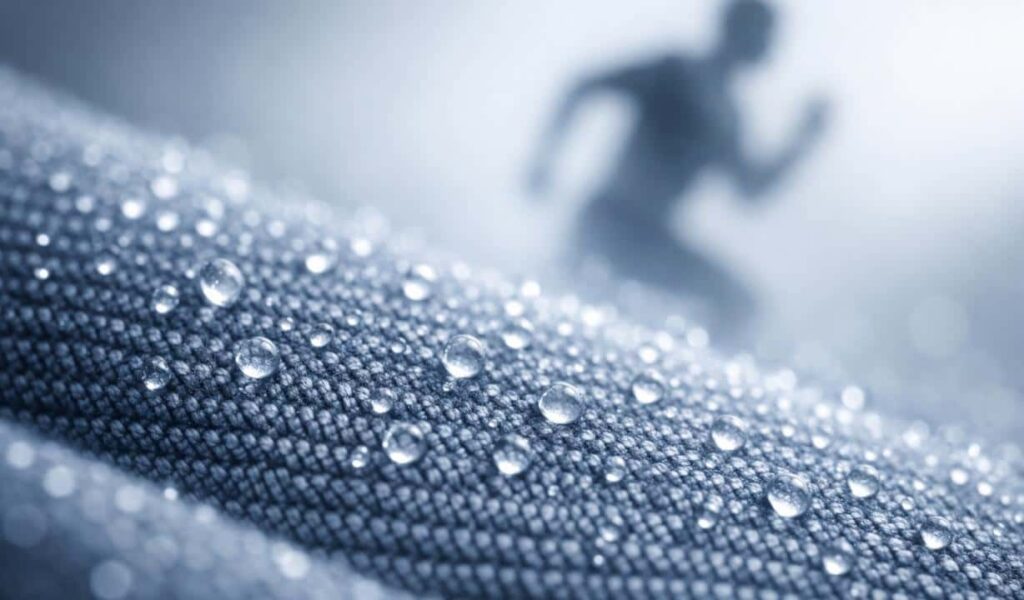
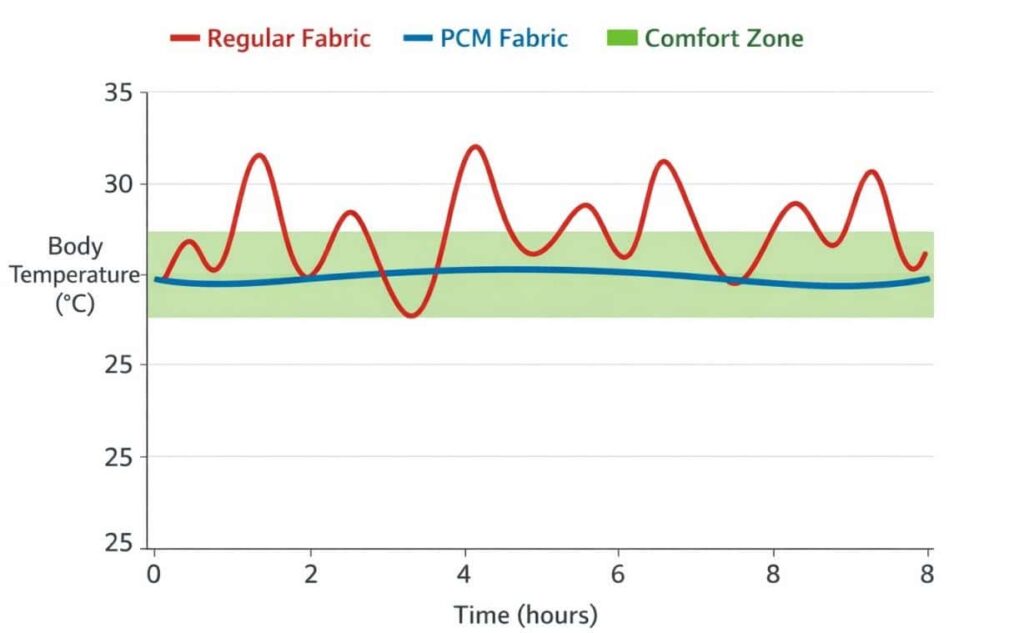
PCM fabric works differently. Instead of just blocking heat or letting it escape, the material actually stores excess heat when you’re warm and gives it back when you cool down. Think of it as a thermal battery built into your clothing. No zippers to adjust, no layers to add or remove—the fabric responds automatically to your body’s changing temperature.
What is PCM Fabric?
PCM stands for Phase Change Material. These are substances that absorb or release large amounts of heat when they change state—like ice melting or water freezing. You’ve experienced this principle every time you’ve added ice to a drink. The ice keeps your beverage cold not because it’s cold itself, but because melting ice absorbs heat from the liquid around it.
Textile manufacturers embed these phase change materials into fabrics in two ways:
Microencapsulated PCM coats the fabric surface with millions of microscopic capsules (about the width of a human hair) containing phase change compounds. When your body heats up, these capsules absorb that excess heat by melting from solid to liquid. When you cool down, they solidify again and release the stored warmth back to your skin. This method delivers the highest heat storage—typically 40-60 joules per square meter—making it ideal for athletic gear and high-performance applications.
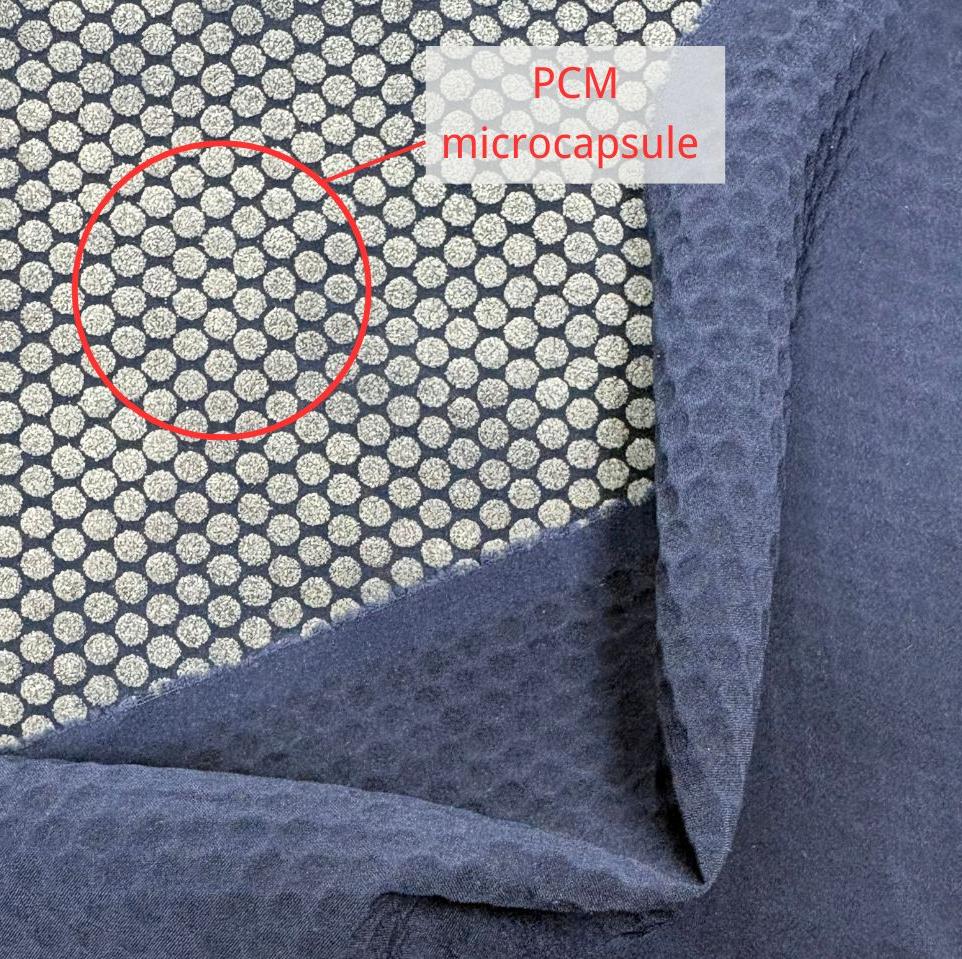
Fiber-integrated PCM builds the phase change material directly into synthetic fibers during manufacturing. The PCM becomes part of the fiber structure itself, which makes it more durable and gives the fabric a softer feel. Heat storage capacity runs slightly lower at around 39 J/m² on average, but these fabrics hold up better to repeated washing and wear. You’ll find this type in outdoor apparel, bedding, and everyday clothing.
| Type | Heat Storage Capacity | Technology | Best Applications |
|---|---|---|---|
| Microencapsulated PCM | 40-60 J/m² | Surface finishing with protective microcapsules | High-intensity sportswear, protective gear |
| Natural PCM Fiber | 39 J/m² average (60 J/m² peak) | PCM integrated into fiber structure | Outdoor apparel, bedding, casual wear |
The key difference from regular fabrics? PCM actively manages temperature instead of just reacting to it. A cotton t-shirt absorbs sweat. A polyester running shirt wicks moisture away. PCM fabric does something neither can—it stores thermal energy and releases it later when you need it.
How PCM Fabric Actually Works
The science sounds complex, but the concept is straightforward. PCM materials are engineered to melt at specific temperatures—usually between 28-32°C, right around normal skin temperature.
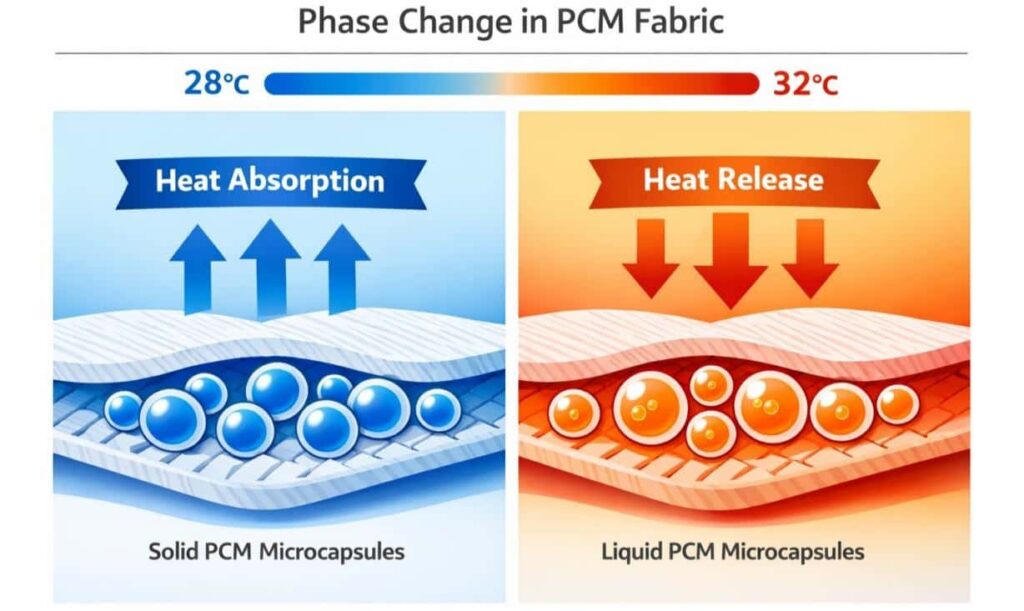
When you heat up: Let’s say you’re climbing stairs with a heavy backpack. Your muscles generate heat, your skin temperature rises above 30°C, and the PCM in your shirt starts melting. This phase change from solid to liquid absorbs heat energy without the fabric itself getting hotter. You feel the shirt pulling warmth away from your body, keeping you cooler than a regular fabric would.
When you cool down: You reach the top and stop to rest. Your body temperature drops, but the PCM is still liquid and warmer than your skin. Now it reverses—the material solidifies again, releasing that stored heat back to your body. You stay warmer longer without needing to throw on an extra layer.
This cycle repeats automatically throughout the day. The PCM in your clothing might go through 20-30 heating and cooling cycles during a single workout or commute, constantly adjusting to your activity level and the environment around you.
What makes this “smart” is that it happens passively. No batteries, no buttons, no thinking required. The material responds to temperature changes through basic physics—the same way ice melts in your drink without you telling it to.
The Three Biggest Benefits
1. It Handles Temperature Swings Better Than Any Other Fabric
Regular insulation works one way. Fleece keeps you warm. Cooling fabrics keep you cool. PCM does both, which makes it uniquely useful when conditions change fast.
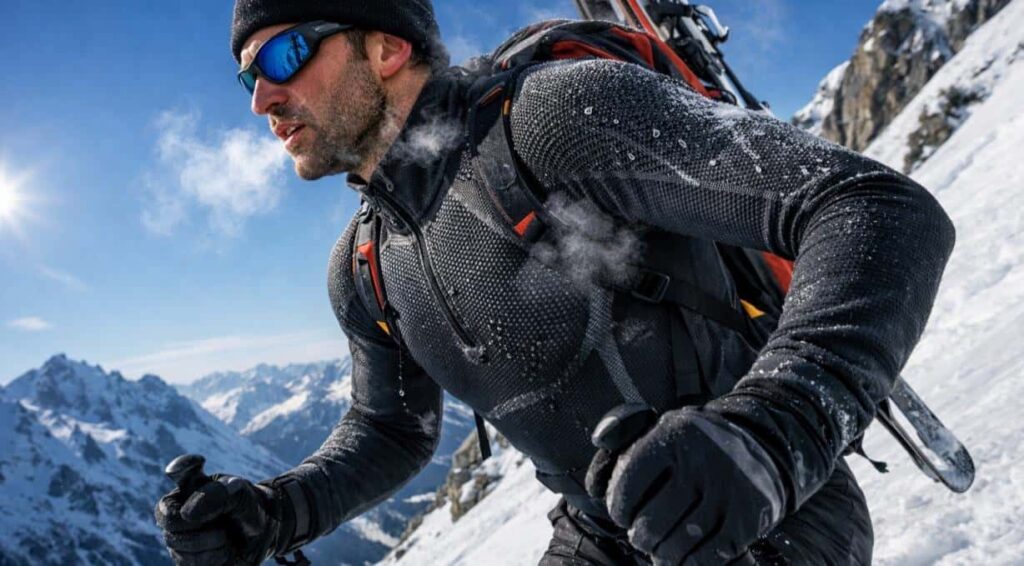
Winter sports athletes deal with this constantly. Ski touring uphill generates massive heat—enough that people strip down to base layers in sub-zero weather. The descent produces almost no body heat, but you’re moving fast through cold air. PCM base layers absorb the excess heat during the climb and release it during the descent. One clothing layer handles both extremes.
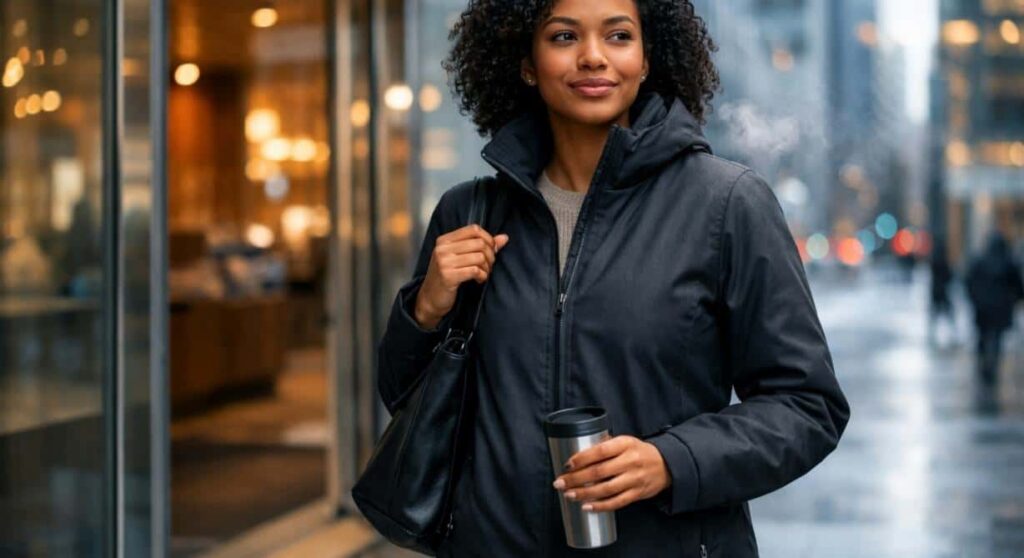
The same applies to urban commuting. Walk to the train station in cold morning air, pack into a heated car with 50 other people, walk through wind to your office, sit in air conditioning all day. PCM smooths out these transitions without you constantly adding and removing layers.
2. It Works Alongside Moisture Management
Sweat and heat are related but different problems. You can be sweaty and cold (after a hard run in cool weather) or hot and dry (sitting in a stuffy room). Most performance fabrics address one or the other.
High-end PCM fabrics combine phase change materials with moisture-wicking structures. The wicking layer pulls sweat away from your skin so it can evaporate. The PCM layer manages the heat your body is producing. During intense exercise, you stay dry and avoid overheating. During recovery, you stay dry and retain warmth.
This combination matters most in cold weather. Wet clothing in freezing temperatures is dangerous—water conducts heat away from your body 25 times faster than air. PCM fabrics with good moisture management keep you both dry and thermally regulated, which is why you’ll find them in technical mountaineering gear and military cold-weather systems.
3. It Reduces Weight and Bulk
Achieving temperature stability through traditional layering means carrying multiple garments—a base layer for moisture, a mid-layer for insulation, a shell for wind protection. That system works but adds weight and bulk.
A single PCM garment can replace or reduce the need for multiple layers. The thermal storage capacity means you need less static insulation to stay comfortable across a wider temperature range. For activities where weight matters—ultralight backpacking, trail running, cycling—this makes a measurable difference. You’re carrying less and still staying more comfortable.
PCM vs. The Alternatives
Understanding where PCM excels means knowing what else is out there.
| Technology | Mechanism | Best For | Limitations |
|---|---|---|---|
| PCM Fabric | Latent heat storage through phase transitions | Variable activity levels, temperature fluctuations | Requires specific temperature range to activate, limited total heat capacity |
| Merino Wool | Natural crimp creates insulating air pockets, moisture absorption without wet feel | Steady-state comfort, odor resistance | Slower thermal response, less effective during rapid temperature changes |
| Cooling Fabrics (jade, ice silk) | High thermal conductivity for instant touch-cooling | Immediate cooling sensation in hot weather | No heat retention, ineffective in variable conditions |
| Moisture-Wicking Synthetics | Capillary action pulls sweat to outer surface for evaporation | Sweat management during high-intensity activity | Cooling through evaporation only, can feel cold in cool conditions |
Merino wool regulates temperature through moisture absorption and natural insulation. It’s excellent for steady-state comfort—wearing it all day in relatively stable conditions feels great. But wool responds slowly to temperature changes. It takes minutes for the moisture-absorption cycle to kick in. PCM reacts in seconds. For activities with rapid temperature swings, PCM outperforms wool. For all-day comfort in stable conditions, wool might feel better.
Cooling fabrics (jade-infused, ice silk, high-conductivity synthetics) provide instant touch-cooling by rapidly conducting heat away from your skin. They feel refreshing the moment you put them on. But that’s all they do—once the fabric reaches ambient temperature, the cooling stops. And they provide zero warmth retention. PCM’s cooling effect builds more gradually but lasts longer and transitions to warmth when you need it. Cooling fabrics are single-purpose; PCM adapts to changing conditions.
Moisture-wicking synthetics excel at moving sweat away from skin, enabling evaporative cooling. They’re highly effective during intense activity in warm weather. But evaporative cooling can become excessive in cool conditions, leaving you chilled. And if you’re not sweating, wicking fabrics don’t regulate temperature at all. PCM works regardless of moisture levels, managing heat through energy storage rather than evaporation.
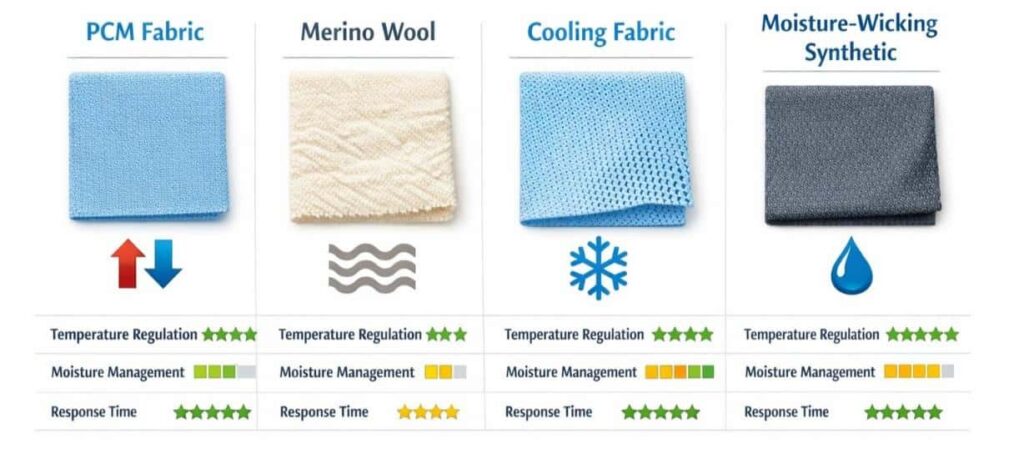
The choice depends on your use case. For consistent activity in stable conditions, simpler technologies work fine. For variable-intensity activities with temperature fluctuations—interval training, alpine sports, commuting through multiple climate zones—PCM’s thermal storage capability delivers comfort the alternatives can’t match.
Where PCM Fabric Makes the Most Sense
Winter sports and alpine activities: Backcountry skiing, snowshoeing, and mountaineering involve intense uphill efforts followed by cold descents or rest periods. PCM base layers and mid-layers absorb heat during the climb and release it when you stop, reducing the need to constantly adjust clothing.
Running and cycling: Morning workouts often start cold and warm up significantly. PCM running shirts and cycling base layers moderate both extremes, maintaining more consistent comfort throughout the session. Marathon runners particularly value this during races where starting temperatures may be 10-15°C cooler than finishing conditions.
Urban commuting and travel: Moving between heated buildings, cold outdoor air, crowded transit, and climate-controlled offices creates constant temperature fluctuations. PCM jackets and shirts smooth these transitions, reducing the need to carry extra layers or constantly adjust your clothing.
Bedding and sleepwear: Body temperature drops naturally during sleep, but the rate varies between individuals and across sleep stages. PCM sheets and mattress covers absorb excess heat early in the night and release it during early morning hours when body temperature is lowest. This regulation improves sleep quality and reduces nighttime waking.
Medical applications: Post-surgical patients and people with temperature regulation disorders benefit from PCM’s gentle, consistent thermal management. The fabric helps stabilize body temperature without the risks of external heating or cooling devices. Menopausal women use PCM sleepwear to reduce the intensity and duration of hot flashes.
How to Choose PCM Products
Check the heat storage capacity. Higher numbers (50-60 J/m²) provide more temperature buffering for intense activities. Lower capacity (35-45 J/m²) works fine for moderate use. Manufacturers don’t always publish this spec, but products marketed for “high-performance” or “athletic” use typically feature higher PCM loading.
Understand the PCM type. Microencapsulated PCM delivers maximum performance in a thin, lightweight fabric—ideal for athletic gear. Fiber-integrated PCM offers better durability and softer feel—better for everyday wear and items you’ll wash frequently. The trade-off is performance versus longevity and comfort.
Match the transition temperature to your use. Most textile PCMs transition between 28-32°C. Lower melting points (28-29°C) work better for high-intensity activities, starting to absorb heat earlier. Higher melting points (31-32°C) suit cold-weather applications, providing warmth retention without activating prematurely.
Consider care requirements. PCM fabrics need gentle washing—cold or warm water (below 40°C), mild detergent, no bleach or fabric softeners. High heat damages the microcapsules. Air drying or low-temperature tumble drying preserves performance. If you need clothing you can throw in a hot wash and high-heat dryer, PCM might not be practical.
Look for durability specs. Quality PCM products should retain 80-90% of thermal performance after 50-100 wash cycles. Products without durability information may use lower-quality PCM that degrades quickly. If you’ll use and wash the garment frequently, invest in higher-quality PCM with documented longevity.
Taking Care of PCM Fabric
Wash in cold or lukewarm water with mild detergent. Avoid bleach and fabric softeners—they damage the microcapsules or coat them, reducing heat transfer. Use a gentle cycle to minimize mechanical stress.
Air dry when possible. If you use a dryer, choose the lowest heat setting and remove the garment while slightly damp. Never iron PCM fabric or expose it to direct heat sources.
Store in cool, dry places away from direct sunlight. UV exposure can degrade PCM compounds over time.
You’ll know the PCM is still working if the fabric feels noticeably cooler than regular fabric when you first put it on—that’s the PCM absorbing heat from your skin. If this cooling sensation disappears, performance has likely declined. Expect gradual performance loss rather than sudden failure. Quality PCM fabrics maintain useful thermal regulation through 50-100 washes, though capacity may drop to 70-80% of original levels.
The Bottom Line
PCM fabric solves a specific problem: temperature fluctuations during activities where your heat production and environmental conditions change frequently. It’s not magic, and it’s not necessary for every situation. But when you’re dealing with variable-intensity exercise, rapid temperature changes, or environments where you can’t easily adjust clothing, PCM’s thermal storage capability provides comfort that traditional fabrics simply can’t deliver.
The technology works through straightforward physics—materials that absorb heat when melting and release it when solidifying, engineered to transition at temperatures relevant to human comfort. No batteries, no complexity, just a passive system that responds automatically to your body’s changing thermal needs.
If your activities involve consistent conditions and steady effort, simpler fabrics probably work fine. But if you’re tired of being too hot, then too cold, then too hot again—if you’re constantly adding and removing layers or just accepting discomfort—PCM fabric is worth exploring.
Ready to experience adaptive temperature regulation? Explore our PCM fabric solutions and see how phase change technology can improve your comfort and performance.
Quick Answers
Can you wash PCM fabric?
Yes, but use cold or warm water (below 40°C) and mild detergent. Avoid bleach, fabric softeners, and high-heat drying.
How long does PCM fabric last?
Quality PCM fabrics retain 80-90% performance after 50-100 washes. The base fabric typically outlasts the PCM functionality.
What temperature range works best for PCM?
PCM fabrics are most effective when temperatures fluctuate around 28-32°C. They provide less active regulation in extreme heat or cold where temperatures stay far above or below this range.
Does PCM replace insulation in cold weather?
No. PCM provides thermal buffering but can’t replace continuous insulation in very cold conditions. It works best as part of a layering system or as a standalone solution in moderate temperatures.
Is PCM safe for skin contact?
Yes. The phase change materials are sealed in protective microcapsules or integrated into fiber structures, preventing direct skin contact with the PCM compounds.

Related Posts
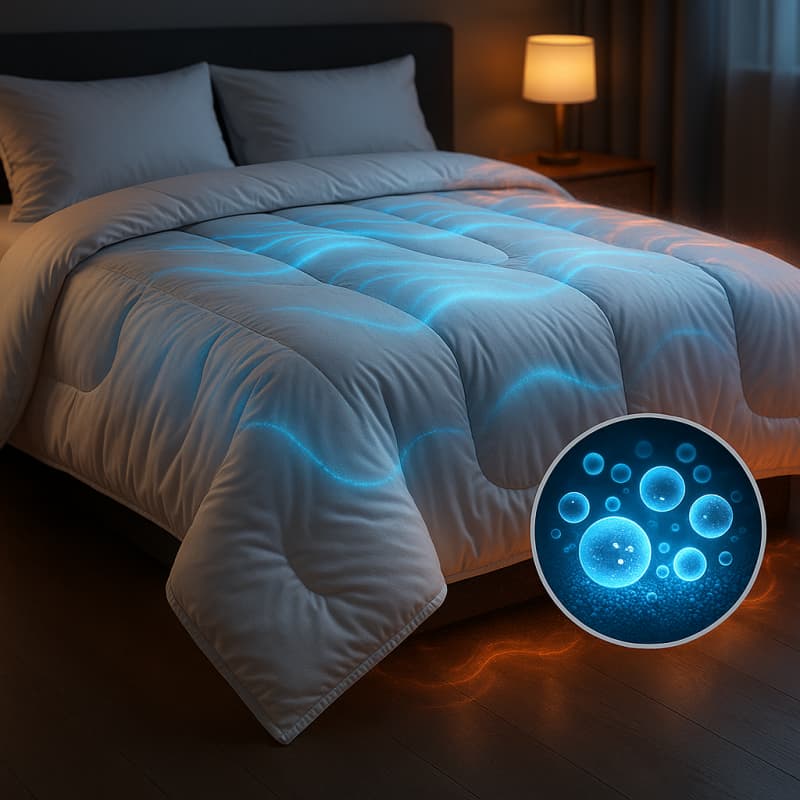
PCM Smart Temperature Comforter
The Challenge “I need a comforter that automatically adapts to my body temperature throughout the night.” Many people experience thermal...

Aerogel Fabric in Medical Textiles: Temperature Regulation for Patient Comfort
When surgical nurse Karen Thompson wheeled her post-operative patient back to recovery, she noticed the familiar signs: pale lips, uncontrollable...
Functional Textile Transforming Pets Apparels: A Complete Guide to Smart Pet Clothing Technologies
The pet apparel industry is experiencing unprecedented growth, with the global market expected to reach $9 billion by 2030. Modern...

Applications of Phase Change Materials for Smart Textiles: The Ultimate Guide
In the world of performance textiles, temperature regulation remains a constant challenge. Athletes sweat during intense workouts, skiers experience temperature...