 English
 Español
 Português
 Deutsch
 한국어
한국어 日本語
日本語 Italiano
 Français
 العربية
 Türkçe
If you’ve ever soaked through a base layer mid-run, or woken up at 3am kicking off your duvet, you already understand the problem thermoregulation fabric was built to solve. Your body temperature doesn’t stay still — it spikes, drops, and shifts constantly. Most fabrics ignore that. Thermoregulation fabric doesn’t.

Thermoregulation fabric is a textile engineered to actively manage heat exchange between your body and the environment — absorbing excess heat when you’re warm and releasing stored energy when you cool down. Unlike standard insulation materials that simply trap warmth, thermoregulating fabrics respond dynamically to body temperature changes, maintaining a stable microclimate against your skin. Two technologies lead this space today: Phase Change Materials (PCM) and Aerogel textile. They work differently, perform differently, and suit different applications.
How Does Thermoregulation Fabric Work?
The human body maintains a core temperature of around 37°C, but skin surface temperature fluctuates constantly — with activity, weather, and stress. Conventional fabrics are passive: they insulate or breathe, but they don’t adapt. Thermoregulation fabric closes that gap by embedding thermally active materials directly into the fiber or yarn structure.
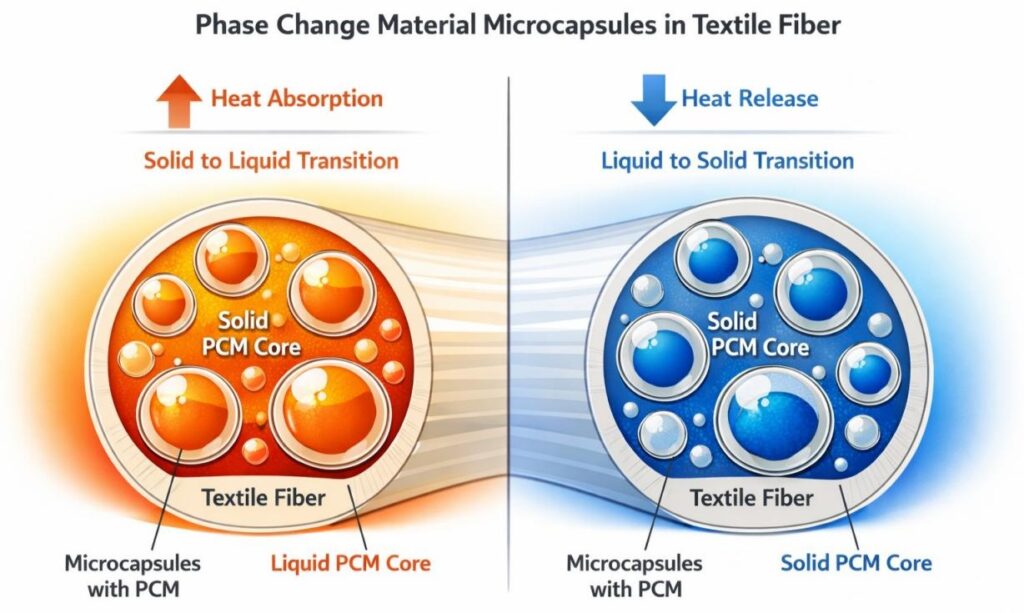
PCM-based fabrics use microencapsulated substances that transition between solid and liquid states within the skin-comfort temperature range (roughly 28–36°C). As your body heats up, the PCM absorbs that energy and melts internally — buffering the temperature spike. As you cool down, it solidifies and releases the stored heat back. This cycle repeats continuously without any external power source.
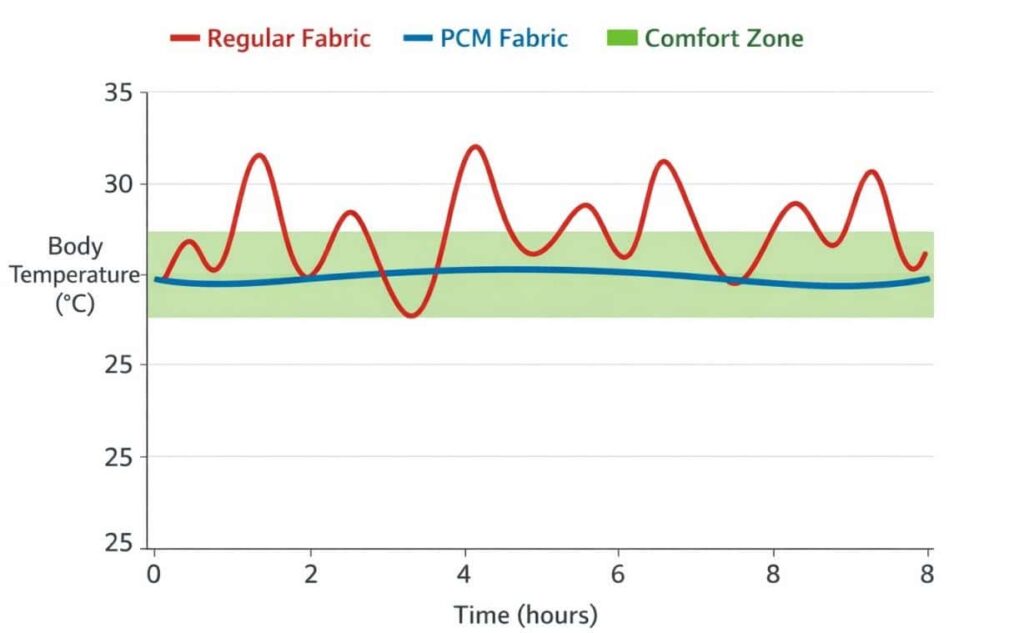
Aerogel fabrics work on a completely different principle — passive thermal blocking. Aerogel is one of the lightest solid materials on earth, with an extremely low thermal conductivity that physically slows heat transfer in either direction. It doesn’t store or release energy; it simply resists it.
PCM vs Aerogel: Which One Actually Regulates Temperature?
This is where most buyers get confused. Both technologies improve thermal comfort, but only one truly “regulates.”
PCM is active. It responds to your body’s real-time temperature changes, absorbing heat during exertion and returning it during rest. Research confirms that PCM-treated yarns show measurably improved thermoregulation properties, with an increased duration index — meaning the fabric maintains comfort temperature for longer periods compared to untreated textiles.
Aerogel is passive. It delivers exceptional insulation — studies show aerogel fiber textiles achieve a passive insulation effect of up to 3.6°C relative to body temperature in controlled conditions — but it cannot absorb or release heat dynamically. It keeps extreme cold out, but it doesn’t balance temperature fluctuations.
For variable conditions — a morning run, a long-haul flight, a day that moves between air-conditioned offices and outdoor heat — PCM is the more intelligent choice. For static extreme cold environments like Arctic fieldwork or high-altitude mountaineering, aerogel’s unmatched insulation value wins. The most advanced protective textiles, such as firefighter thermal liners, now combine both: aerogel for insulation, PCM for heat buffering.
PCM vs Aerogel: Side-by-Side Comparison
| Feature | PCM Fabric | Aerogel Fabric |
|---|---|---|
| Mechanism | Active — absorbs & releases heat | Passive — blocks heat transfer |
| Temperature response | Bidirectional (warm & cool) | One-directional (insulation only) |
| Best environment | Variable temperature conditions | Extreme cold, static conditions |
| Flexibility & drape | High — suitable for next-to-skin | Moderate — stiffer hand feel |
| Wash durability | 50–100 cycles at full performance | High structural durability |
| Weight | Lightweight | Ultra-lightweight |
| Typical applications | Sportswear, bedding, travel apparel | Mountaineering, firefighter gear |
| Combined use | Yes — often layered with aerogel | Yes — often paired with PCM |
Where Is Thermoregulation Fabric Used?
PCM thermoregulation fabric has proven performance across several high-demand categories.
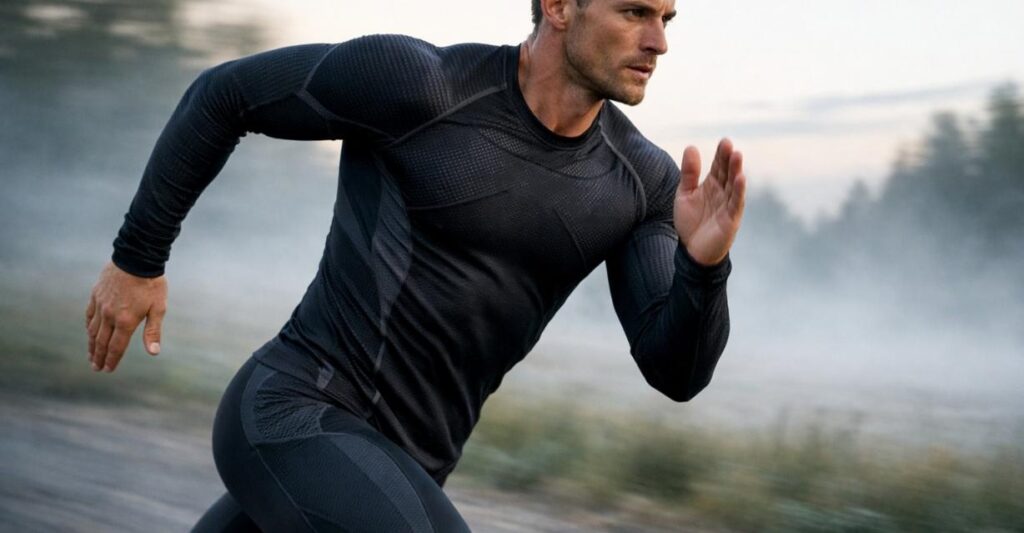
Athletic and performance wear benefits most directly. During intense exercise, body heat spikes rapidly — PCM absorbs that excess energy and delays the discomfort threshold. During cool-down, it returns stored warmth, preventing the post-workout chill that leads to muscle stiffness. Base layers, cycling jerseys, and compression tights are the most common applications.
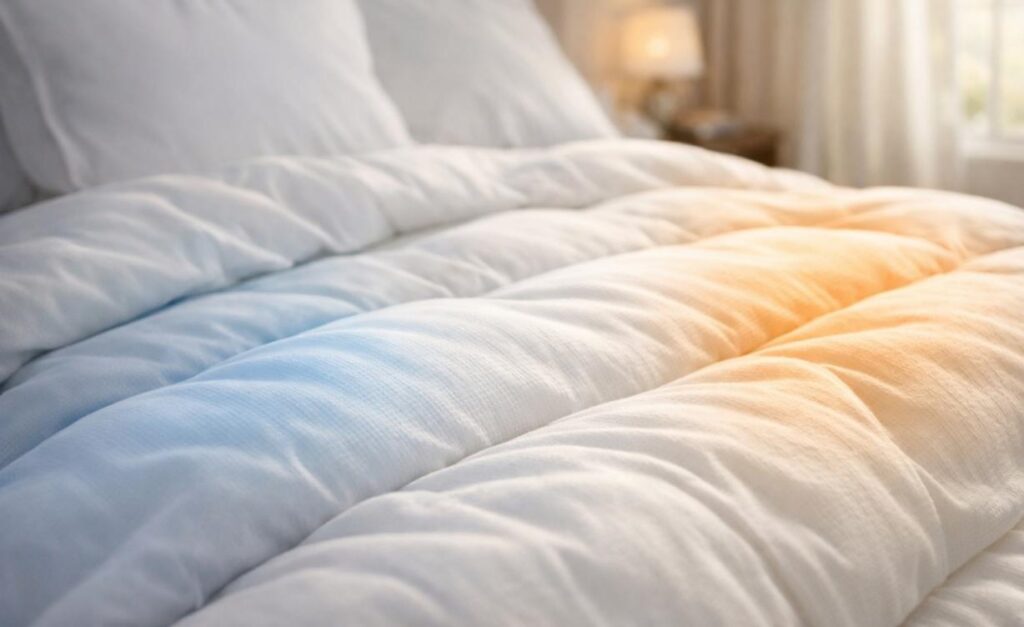
Sleep and bedding is one of the fastest-growing segments. Temperature fluctuation during sleep is a leading driver of poor sleep quality. PCM-integrated mattress covers and duvets create a stable thermal microclimate through the night — Outlast® data shows PCM bedding can reduce sweat production by up to 48%, directly improving sleep hygiene and continuity.
Outdoor and travel apparel — particularly mid-layers and softshell jackets — use PCM to reduce the need for constant layering adjustments as conditions change throughout the day.
Medical and therapeutic textiles apply PCM in compression garments and post-surgical recovery wear, where managing localized heat buildup supports circulation and reduces inflammation during extended wear.
| Application | Primary Need | Why PCM Works Here |
|---|---|---|
| Athletic base layers | Heat spike management during exercise | PCM absorbs rapid heat buildup, delays discomfort threshold |
| Cycling jerseys | Temperature balance across effort levels | Bidirectional regulation matches variable exertion |
| Sleep & bedding | Stable microclimate through the night | Reduces sweat production by up to 48% |
| Softshell jackets | Reduce layering adjustments outdoors | Buffers temperature swings across changing conditions |
| Compression garments | Manage localized heat in recovery wear | Controls inflammation-related heat buildup |
| Firefighter thermal liners | Extreme heat protection + moisture comfort | PCM + aerogel combination outperforms either alone |
The Bottom Line
Thermoregulation fabric is defined by its ability to actively respond to body temperature — and PCM technology delivers that more precisely than any passive insulation material. For brands developing performance apparel, premium bedding, or adaptive outdoor gear, PCM-integrated fabric at the yarn level represents the most durable and effective path to genuine thermoregulation. Aerogel remains a powerful tool for extreme insulation scenarios, but when the goal is true temperature balance across real-world conditions, PCM is the answer.
If you’re sourcing thermoregulating yarn for your next product line, speak to our development team — we work directly with brands on fiber-level PCM integration for custom performance requirements.
FAQ
Q: Is thermoregulation fabric the same as moisture-wicking fabric?
No. Moisture-wicking moves sweat away from the skin surface. Thermoregulation fabric manages heat energy directly — they address different aspects of comfort and are often combined in the same garment for maximum performance.
Q: Can PCM fabric keep you both warm and cool?
Yes — this is its core advantage. The same PCM microcapsule absorbs heat when temperatures rise and releases it when temperatures fall. It works bidirectionally, which is why it suits variable-temperature environments far better than one-directional insulation.

Related Posts

How Cooling Yarn Technology Keeps Athletes Comfortable During Intense Workouts
Have you ever wondered why some workout clothes leave you feeling hot and sticky while others keep you surprisingly cool?...

How Heat Generating Fabrics Work: Smart Heating Technology for Cold Weather Comfort
When winter hits and you’re tired of layering bulky sweaters just to stay warm, heat-generating fabrics offer an elegant solution....

How NIR Reflection Technology and IcSnow® Cooling Tech Redefine Summer Fabric Experience
This article explores how innovative textile technologies combine to create superior cooling fabrics for hot weather conditions, providing scientific insights...
Aerogel Cooling Sleeves: NASA-Inspired Technology Keeps You 10°C Cooler Longer
Twenty minutes. That’s how long most cooling sleeves actually work. You pull them on, feel that initial chill, and think...