 English
 Español
 Português
 Deutsch
 한국어
한국어 日本語
日本語 Italiano
 Français
 العربية
 Türkçe
Pineapple leaf fiber (PALF) is a cellulose-rich fiber extracted from the leaves left after pineapple cultivation. The extracted bundle is not automatically a soft apparel yarn: it still has to be cleaned, separated, conditioned and prepared for the intended spinning system. That distinction matters because a raw PALF sample, a PALF blend yarn and a finished fabric can have very different composition, handle and performance claims.
This guide answers the material question behind searches for “pineapple fiber” and “pineapple leaf fiber.” It does not replace the specifications on our raw pineapple leaf fiber page or the running composition on our PALF–Modal spun yarn page. If you are comparing samples, begin by identifying which material stage a supplier is actually offering.
What Is Pineapple Leaf Fiber?
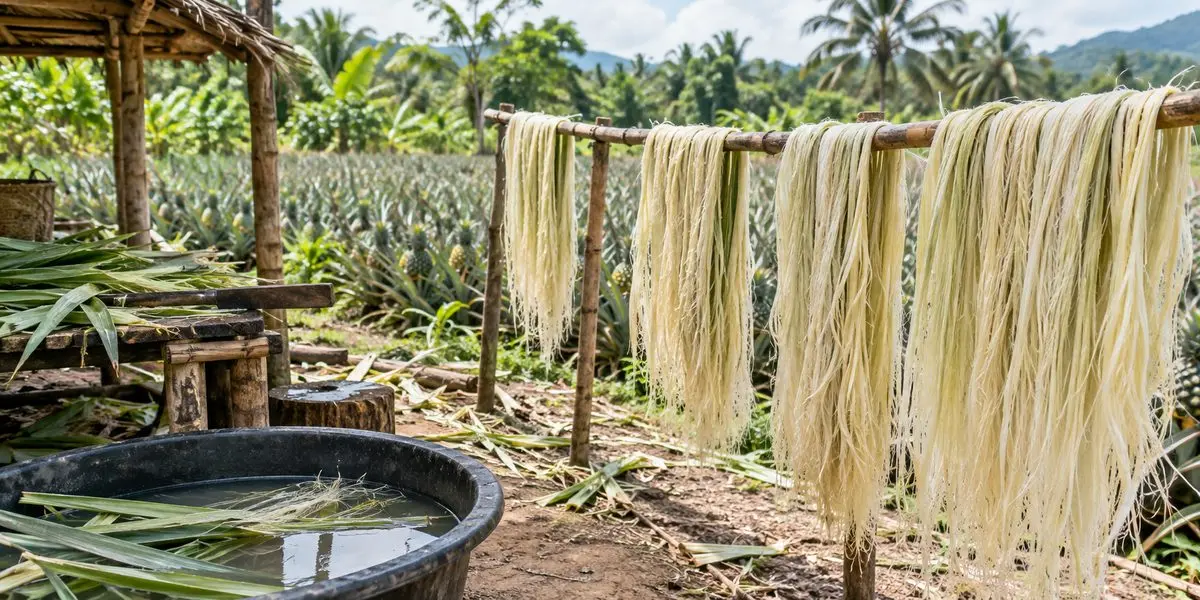
PALF comes from the vascular fiber bundles inside pineapple leaves. These bundles contain cellulose together with hemicellulose, lignin and pectin. Their composition and geometry help explain why PALF can be strong and lustrous, but also why an untreated bundle may feel too coarse or inconsistent for a lightweight apparel fabric.
2025년 검토 천연섬유 저널 describes PALF from plantation through extraction, processing and end use. For a buyer, the practical point is simple: “pineapple fiber” identifies the botanical source, not a finished textile specification. Variety, leaf maturity, extraction route, residual non-cellulosic material, fiber length and preparation all affect what happens next.
How Do Pineapple Leaves Become Spinnable Textile Fiber?
The route usually begins with leaf collection and mechanical scraping or decortication to release the long bundles. Washing and drying remove loose plant matter. Depending on the target product, further retting, degumming, softening, cutting and opening may be needed before the fiber can enter cotton, bast-fiber or another spinning route.
There is no honest one-line claim that every PALF supply is “chemical-free.” Published textile trials use different combinations of mechanical, physical, biological and chemical preparation. One study produced a 30/70 PALF–cotton yarn after physical–mechanical separation and controlled treatment; it also reported remaining challenges in fiber cohesion, uneven diameter and manual pretreatment. See the study’s method and limitations, not just its headline result.
Leaf, Fiber, Yarn and Fabric Are Not the Same Product
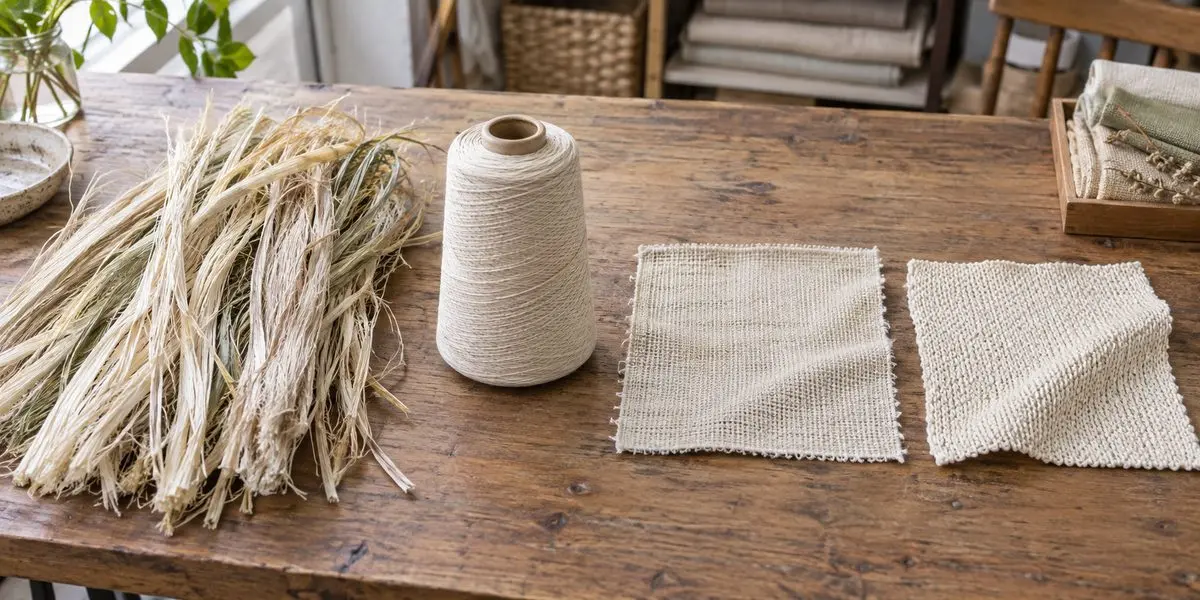
| 재료 단계 | 당신이 사는 무엇 | What still has to be confirmed |
|---|---|---|
| Extracted PALF | Prepared leaf-fiber bundles or staple | Length distribution, cleanliness, residual gum, moisture, preparation route and compatible spinning system |
| 방적사 | PALF alone or, more commonly, PALF blended with another fiber | Exact blend composition, yarn count, twist, evenness, strength and knitting/weaving performance |
| 구조 | A woven or knitted construction using a specified yarn | GSM, structure, finish, handle, dimensional stability, pilling, care and any functional test |
| Pineapple-based sheet material | A nonwoven or composite that may include binders, coatings or other polymers | Full composition and end-of-life route; do not assume it is the same as PALF yarn or woven piña cloth |
This separation also prevents a common sourcing error: a finished material described as “pineapple” may use leaf fiber as only one constituent. The percentage and the other constituents determine what can be said about the yarn, fabric and end of life.
Can Pineapple Leaf Fiber Be Spun at 100%?
Research shows that high-PALF and 100% PALF yarn routes are technically possible under particular preparation and spinning conditions. That does not mean every supplier’s running apparel yarn is 100% PALF, or that a high-PALF construction will deliver the hand, consistency and price a brand needs.
Blending is often the commercial bridge. The 2025 review notes that coarse appearance and brittleness have limited broad acceptance of 100% PALF fabrics, while blends with cotton and other fibers have been developed for apparel. Another open study describes the adjustments needed to process PALF on existing spinning equipment. You can review its discussion of fiber preparation and yarn processing in 전체 논문.
Annie’s Smartex currently lists a running spun-yarn specification of 10% pineapple leaf fiber and 90% Modal. The blend uses Modal to support softness and drape; it must not be described as a 100% PALF yarn. If you need a different ratio, availability and spinnability should be confirmed before it becomes a development target.
What Does PALF Change in Fabric Development?
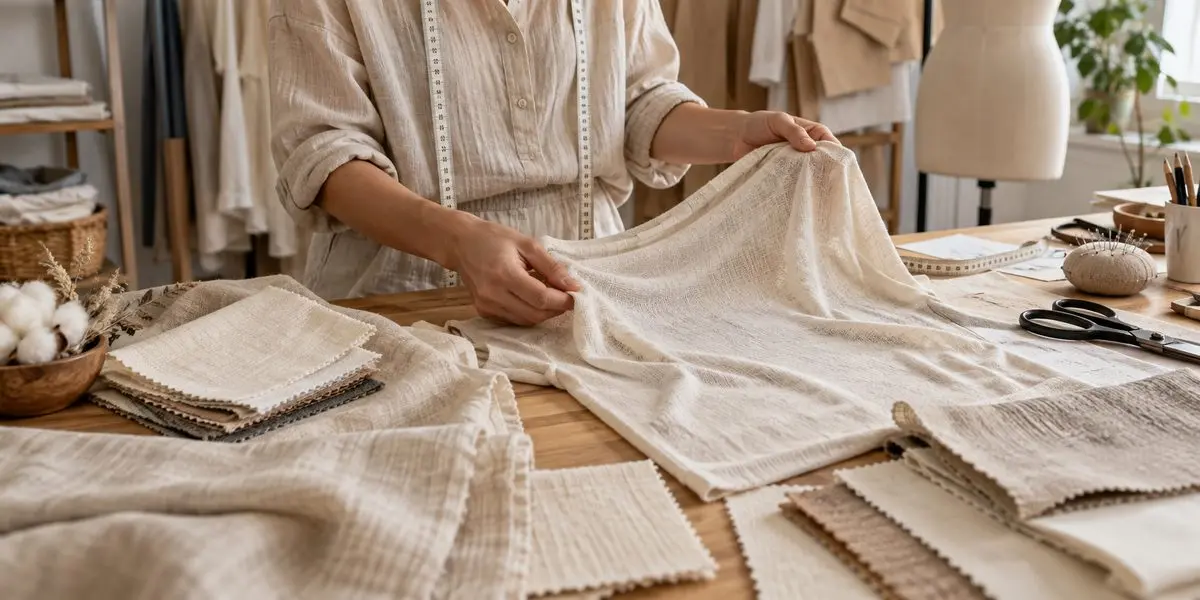
PALF can add a recognizable plant-fiber story and a more structured natural texture. It may also introduce variation in fineness, color, stiffness and process behavior. For a mill, that means the fiber percentage cannot be chosen in isolation: yarn count, companion fiber, twist, knit or weave structure and finishing all influence whether the fabric feels crisp, dry, soft or unstable.
For lightweight casual apparel, start with the available yarn and compare it with a control in the same construction. Changing the blend, yarn count and fabric structure at once makes it impossible to learn which variable caused a difference. Our PALF kidswear development concept shows how to turn that principle into a sample plan.
Which Sustainability and Antimicrobial Claims Need Evidence?
Using a residue stream is meaningful, but it does not by itself prove a lower-impact finished fabric. Extraction yield, water and energy use, treatment chemistry, transport, blend partners, dyeing, garment life and end-of-life conditions all influence the result. “Biodegradable” also needs a defined test object and environment; a raw plant fiber claim cannot automatically be transferred to a dyed fabric, coated product or blended garment.
Annie’s Smartex positions its PALF material as naturally bacteriostatic and deodorizing. Before a brand repeats that claim, the supporting report should identify the tested sample, composition, organism, method, control and any wash conditioning. We have not located the original report in the current WordPress media library, so this revision does not state a percentage reduction, wash duration or “permanent” performance.
What Should You Put in a PALF Sample Request?
Tell the supplier whether you need raw fiber, spun yarn or finished fabric. For a useful first discussion, include the intended product, target hand, yarn count or fabric construction, preferred blend partner, dyeing/finishing route, care conditions and the exact claim you hope to support. If antimicrobial performance matters, specify the target test method and wash condition instead of asking whether the material is simply “antibacterial.”
If your project begins with a soft apparel yarn, review the running 10% PALF / 90% Modal specification. If you are evaluating the raw material or another blend route, begin with the pineapple leaf fiber supply form.
자주 묻는 질문
Is pineapple leaf fiber the same as Piñatex?
그렇지 않습니다. PALF is the extracted leaf fiber. Piñatex is a branded sheet material with its own composite construction. A woven PALF fabric, a PALF blend yarn and a pineapple-based sheet should not share specifications or end-of-life claims without composition evidence.
Is all pineapple leaf fiber yarn 100% PALF?
그렇지 않습니다. Many apparel yarns are blends because another fiber can improve processing, softness or consistency. Request the exact percentage and make sure “natural” is not being used to conceal the total yarn composition.
Is PALF automatically antibacterial after spinning and finishing?
No automatic conclusion is safe. The claim has to be demonstrated on the relevant sample. Ask what was tested: raw fiber, yarn, greige fabric, finished fabric or garment, and under which method and conditioning.
Discuss a PALF Fiber or Yarn Sample
Send us your target end use, supply form, blend requirement, yarn or fabric construction, care conditions and any claim that needs testing. We can use those details to decide whether the running PALF–Modal yarn or a different development route is the more realistic starting point.

관련 게시물
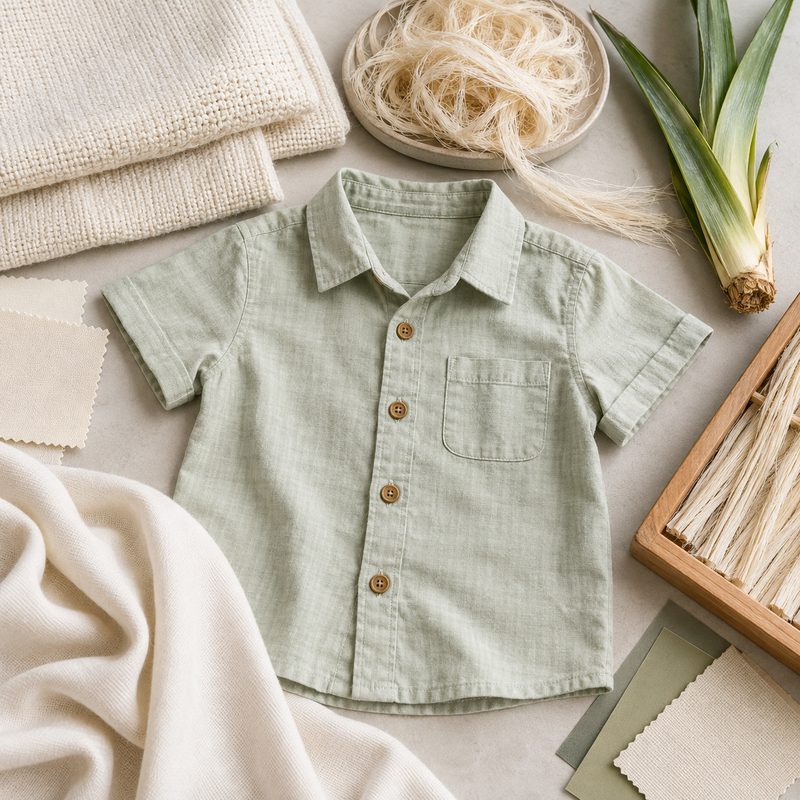
파인애플 잎 섬유로 만든 아동복: 자연스러운 질감과 부드러움의 완벽한 조화
10% PALF / 90% 모달 혼방 원사를 사용하여 경량 아동복 소재의 적합성을 샘플 분석 및 원단 검사를 통해 평가하는 방법을 알아보세요.
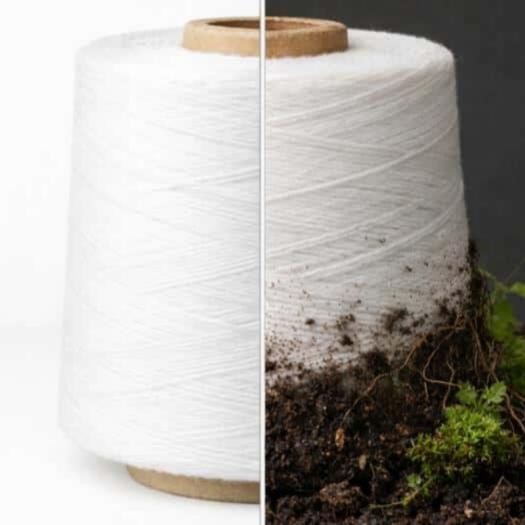
지속 가능한 원사란 무엇일까요? 친환경 섬유 혁신에 대한 완벽 가이드
솔직히 말해서, "지속 가능한 원사"는 너무 흔하게 사용되는 용어 중 하나라서 이제는 좀 식상해지기 시작했죠...

PCM 원단이란 무엇일까요? 체온에 맞춰 스스로 조절되는 스마트 섬유입니다.
아무도 이야기하지 않는 온도 문제. 아침 조깅을 시작한 지 20분이 지났습니다. 몸에서는 열이 발생하지만, 공기는…

단순한 냉방을 넘어: 차세대 여름 섬유에서 자외선 차단과 태양열 관리의 중요성
"시원한 촉감"은 원단이 피부에 닿는 순간 발생하는 현상을 해결하지만, 그 이후의 지속적인 땀과 같은 현상은 해결하지 못합니다.
저는 파인애플 잎을 가공하여 직물을 만드는 과정을 연구하고 싶습니다. 제조 공장을 설립하고 싶은데, 제가 사는 지역에는 파인애플 잎이 풍부하게 있습니다.
안녕하세요, 관심 가져주셔서 감사합니다! 파인애플 잎 섬유(PALF) 가공 시설을 시작하시는 것은 아주 좋은 아이디어입니다. 특히 지역에 원료가 풍부하다면 더욱 좋습니다. 사실 이는 이 산업에서 가장 큰 장점 중 하나인데, 다른 지역에서는 운송과 잎의 부패가 흔한 병목 현상이기 때문입니다.
핵심 공정은 세 단계로 구성됩니다. 첫 번째는 탈피(일반적으로 탈피기를 사용하여 잎에서 섬유를 기계적으로 추출하는 과정), 두 번째는 펙틴과 리그닌을 제거하는 탈검/침지 과정, 그리고 마지막으로 빗질/방적을 통해 사용 가능한 실로 만드는 과정입니다. 기계적 추출 방식은 화학적 방법보다 물과 화학 물질 사용량을 줄여 섬유의 천연 항균성 및 생분해성을 그대로 유지할 수 있기 때문에 일반적으로 선호됩니다.
중소규모 생산 시설의 경우, 초기 투자 비용은 주로 탈피기 및 건조/정밀 가공 장비에 투입됩니다. 수율은 일반적으로 잎 무게 대비 2~3% 정도이므로 생산량이 중요합니다. 지속 가능한 섬유에 대한 세계적인 수요가 증가하고 있는 점을 고려하면, 이는 매우 유망한 사업이 될 수 있습니다.
안녕하세요 애니,
PALF에 대한 훌륭한 통찰력이었습니다. 이 공정에 사용되는 기계에 대한 자세한 정보를 제공해 주시겠습니까? 원자재는 충분히 확보하고 있습니다.
문안 인사
자얀트 싱할
안녕,
중국에서는 이러한 기계를 쉽게 구할 수 있습니다.
I. 원료 전처리 단계
파인애플 잎 수집 및 이송 장비: 특수 현장 수집 기계와 벨트 컨베이어가 파인애플 잎의 중앙 집중식 이송 및 공급을 담당합니다.
파인애플 잎 세척기: 회오리 분사 방식과 유연한 브러시를 사용하여 잎 표면의 흙과 곤충 알을 제거하며, 잎의 가시와 불규칙한 모양에도 효과적으로 사용할 수 있습니다.
II. 섬유 추출 단계
소규모 수동 섬유 추출 장비: 가정용으로 적합하며, 수동 조작으로 섬유 긁어내기 및 추출이 용이하고, 가격이 저렴하며 사용이 간편합니다.
반자동 파인애플 잎 섬유 추출 장비: 소규모에서 중규모 가공에 적합하며, 잎 펄프를 일괄적으로 추출할 수 있어 노동 강도를 줄여줍니다.
자동 조절식 연삭형 섬유 생산 설비: 다양한 크기의 부유식 연삭 휠을 사용하여 잎 두께에 맞춰 조절함으로써 섬유 파손을 방지하고 지속적인 산업 생산을 지원합니다.
특수 자동 섬유 스크래핑 기계: 효율적인 펄프 탈피가 가능한 산업용 배치 추출 장비이며, 현재 섬유 내 불순물 함량을 줄이기 위해 최적화 작업이 진행 중입니다.
III. 섬유 후처리 단계
섬유 세척 및 표백 장비: 섬유 표면에서 잔류 점액과 색소를 제거하여 백색도를 향상시키는 세척 탱크와 표백 장치를 포함합니다.
탈검 및 건조 장비: 생물학적 또는 화학적 탈검을 수행하는 동시에 섬유를 건조하여 수분 함량이 기준을 충족하고 후속 가공 중 접착을 방지합니다.
IV. 개폐 및 회전 단계
섬유 풀림 기계: 압축된 섬유 뭉치를 최소한의 손상으로 풀어 부드러운 상태로 만들어 방적을 위한 소재를 준비합니다.
개방-세척-소면 장치/소면기: 개방된 섬유에서 불순물을 제거하고 균일한 섬유 조각을 생산하여 파인애플 잎 섬유의 가공 특성에 맞춥니다.
방적 보조 장비: 연신틀과 방적기는 섬유를 꼬아 실을 만듭니다. 파인애플 잎 섬유를 면이나 화학 섬유와 같은 재료와 혼합한 혼방사 생산을 지원합니다.