 English
 Español
 Português
 Deutsch
 한국어
한국어 日本語
日本語 Italiano
 Français
 العربية
 Türkçe
A ski jacket has to handle two opposite moments: high heat and moisture during a run, then rapid cooling during a lift ride or rest. A PCM lining can be developed to buffer that transition, but it cannot replace ventilation, moisture transport or insulation. The core design decision is where to place the PCM and how to compare it with a structurally matched control.
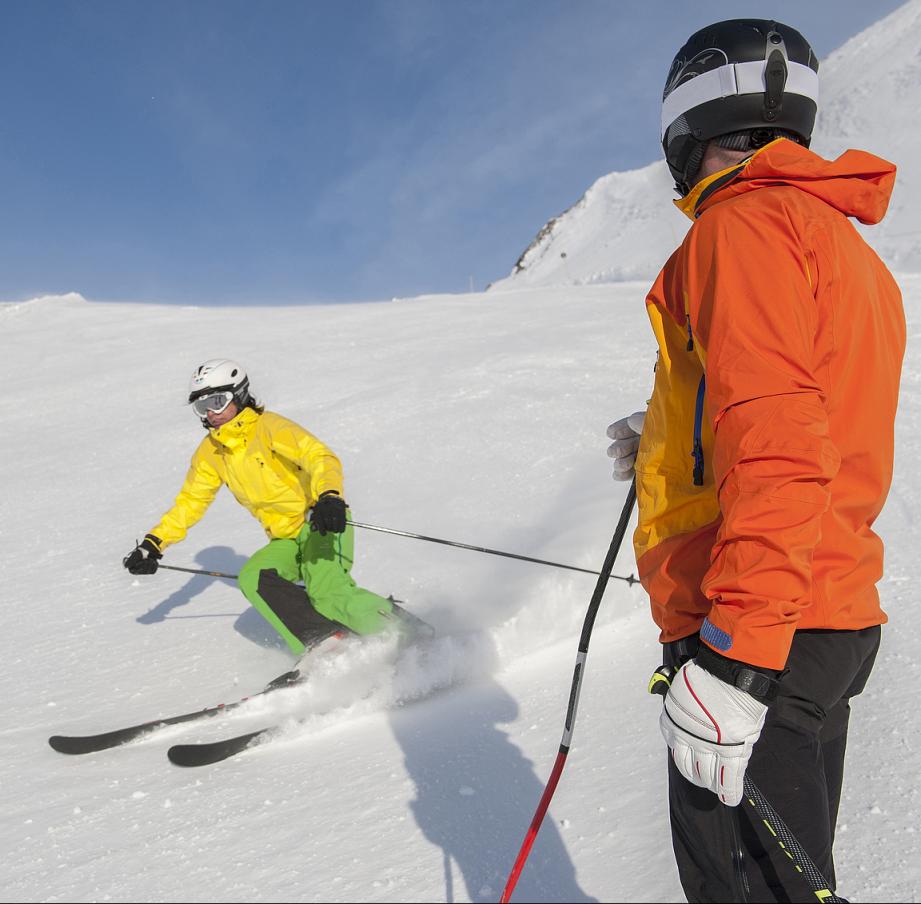
The challenge: buffer a transition without trapping more moisture
Adding a thermal function is easy to describe and difficult to place. A full PCM lining may increase coverage, yet it may also add weight or reduce air exchange. A very small panel may preserve breathability but contribute too little material to change the garment microclimate. If PCM is separated from the body by thick insulation or a poorly conducting layer, heat may not reach it quickly enough during the relevant transition.
The development target should therefore describe an event rather than promise a fixed body temperature: reduce the sharp sensation of overheating near the end of an active interval and soften the first cooling period after activity stops. This gives the fabric team a condition that can be reproduced and compared.
Development path: give every layer one clear job
The shell manages wind, snow and external moisture. Insulation slows long-term heat loss. The next-to-skin or intermediate layer manages sweat. PCM belongs where body heat can reach it and where its effect can be evaluated without preventing moisture from leaving.
For a first sample, the most useful locations are often a lightweight inner lining or selected torso panels. The lining route keeps the PCM closer to the thermal event and makes it easier to build a control jacket with the same shell and insulation. Zonal placement can reduce weight and leave high-moisture areas more open, but the panel map must follow the jacket pattern and ventilation design rather than a decorative graphic.
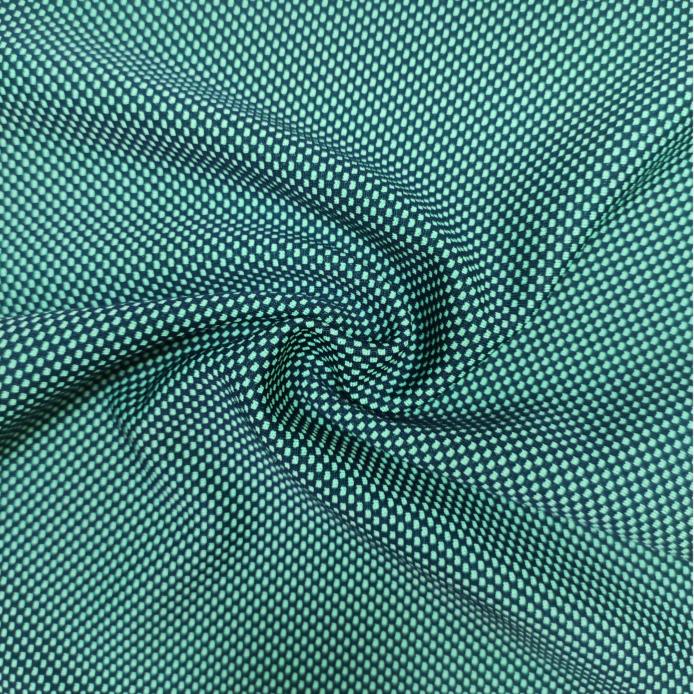
Material decision: build PCM into the textile or add a surface finish?
The preferred starting point for this concept is the PCM nylon or polyester filament-yarn route. It lets the mill control the knitted or woven structure and the share of PCM-bearing yarn. Smartex lists 70D/48F nylon FDY and 75D/48F polyester FDY as running specifications. The finished lining still needs a confirmed blend, weight, construction and report tied to the supplied sample.
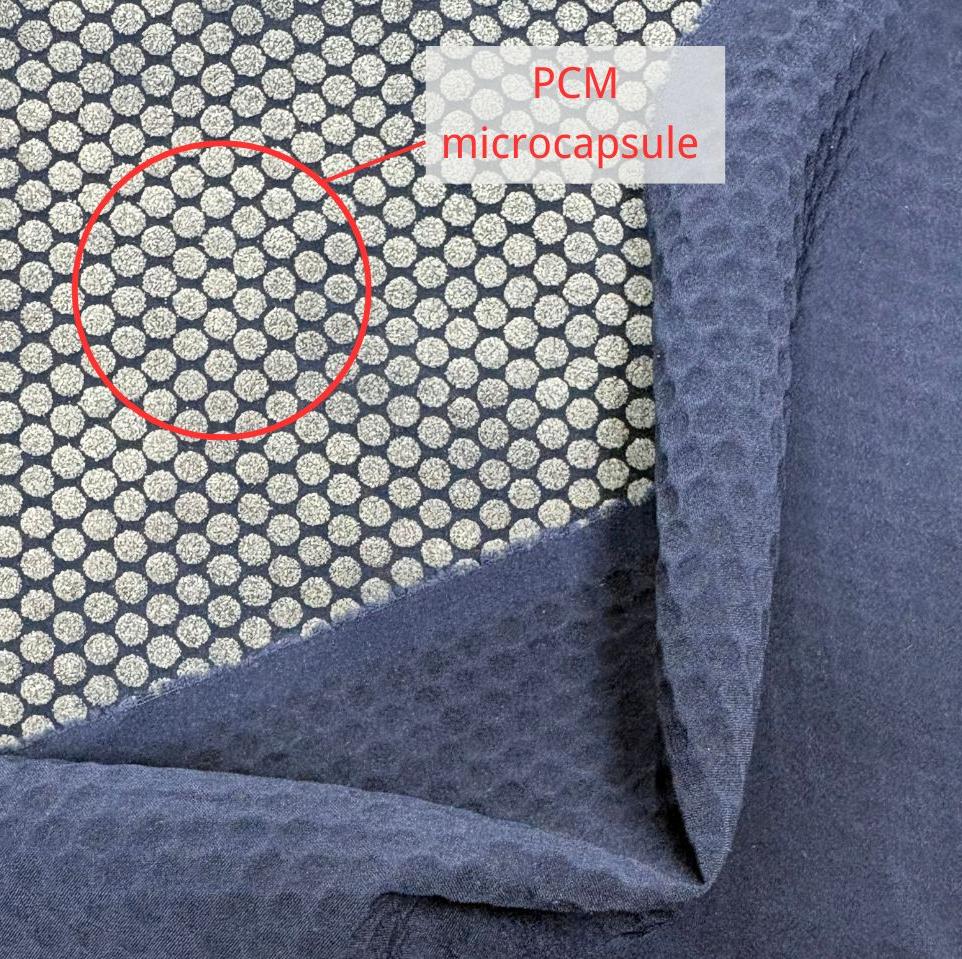
A microencapsulated finishing route remains a secondary option. It may be useful when a base lining has already been selected or when the developer wants a treated face for comparison. The trade-off is that the binder and add-on can change hand, drape, air permeability and care behavior. A finish should be chosen because it fits the construction, not because visible capsules make the technology easier to market.
Proposed sample plan: isolate the variable before changing the jacket
| 프로토 타입 | 목적 | 꾸준히 유지하세요 | Variable to evaluate |
|---|---|---|---|
| A — control lining | 기준점을 설정하십시오. | Shell, membrane, insulation, pattern, vents, lining construction and garment size. | No PCM-bearing component. |
| B — full PCM lining | Test the maximum practical lining coverage. | Everything possible from A, including fabric weight and openness. | PCM-bearing yarn or confirmed PCM fabric across the agreed lining area. |
| C — zoned PCM lining | Test whether less material gives a better balance of buffering, weight and moisture release. | Same jacket system and total test procedure. | PCM limited to mapped torso panels; more open lining retained in higher-moisture zones. |
If a microcapsule finish is commercially relevant, it should be added as Prototype D rather than substituted for B without explanation. That keeps the route difference visible and prevents a coating effect from being confused with a yarn-integrated effect.
Validation: connect the material report to a repeatable ski cycle
At material level, identify the specimen and confirm transition temperatures and enthalpy using a suitable method such as DSC. At fabric level, record composition, GSM, thickness, air permeability, moisture behavior, stretch and hand. Repeat the agreed thermal measurement after the intended care cycle, using the same sample code and method.
At garment level, use the same base layer, jacket fit, environment and activity/rest schedule. Measure the microclimate at the same body locations and record subjective comfort separately from instrument data. The decisive comparison is not the warmest or coolest single point. It is whether the PCM prototype changes the short transition without creating unacceptable moisture retention, weight or stiffness.
Performance boundaries for ski apparel
PCM stores a limited amount of heat and needs a temperature reversal to reset. It does not provide continuous heating, replace insulation or make a shell waterproof. Results from raw PCM, masterbatch, yarn or an unwashed fabric should not be presented as finished-jacket performance. Care durability, skin-contact requirements and chemical compliance must be checked for the exact material route and target market.
For the broader evidence and sourcing questions behind these limits, read Applications of Phase Change Materials in Textiles. 해당 PCM temperature-regulating fabric page provides the current product route for sampling discussions.
Prepare a PCM skiwear sample brief
Send the jacket layer map, lining composition and weight, insulation type, activity/rest cycle, target care method, sample quantity and required evidence. Annie’s Smartex can then discuss a control, full-lining and zoned-lining comparison.

관련 게시물
파인애플 잎 섬유로 만든 아동복: 자연스러운 질감과 부드러움의 완벽한 조화
See how a 10% PALF / 90% Modal yarn could be evaluated for lightweight kidswear through controlled samples, fabric checks...

어린이 아웃도어 의류 얼룩 방지 솔루션
클린조™ 이지클린 기술이 어떻게 부모들을 빨래 걱정에서 해방시켰을까? 부모의 딜레마 "아이들이 마음껏 탐험하고, 오르고, 뛰어놀았으면 좋겠는데..."
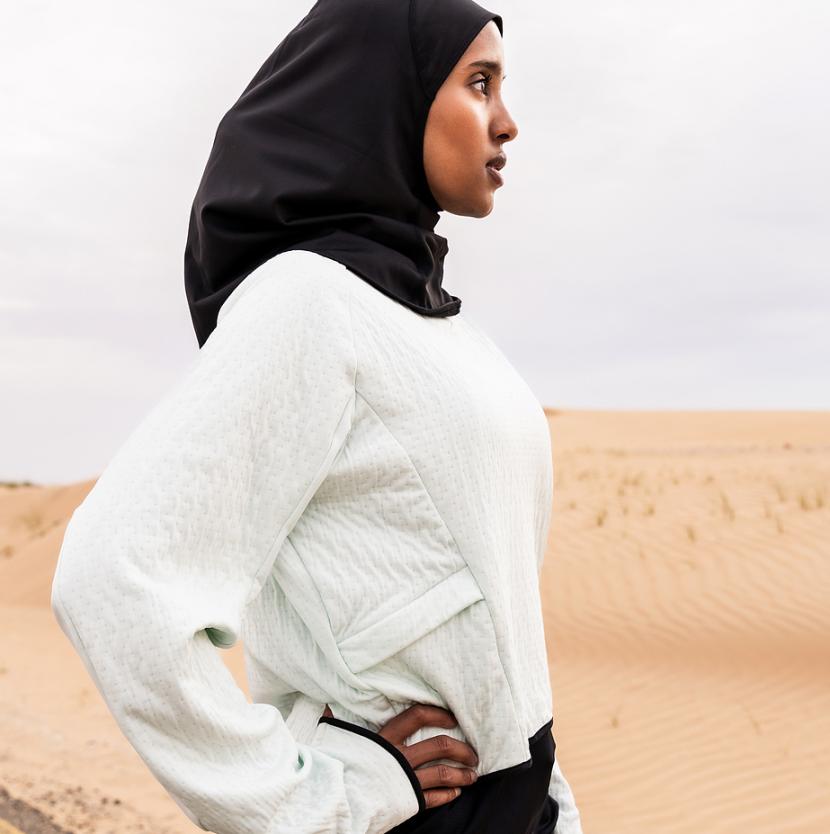
사막 성능 쿨링 헤드스카프
8C PRO 원사를 활용한 중동 시장 혁신 과제: “착용자를 시원하게 유지하고 자외선으로부터 보호해주는 헤드스카프를 개발하세요...”
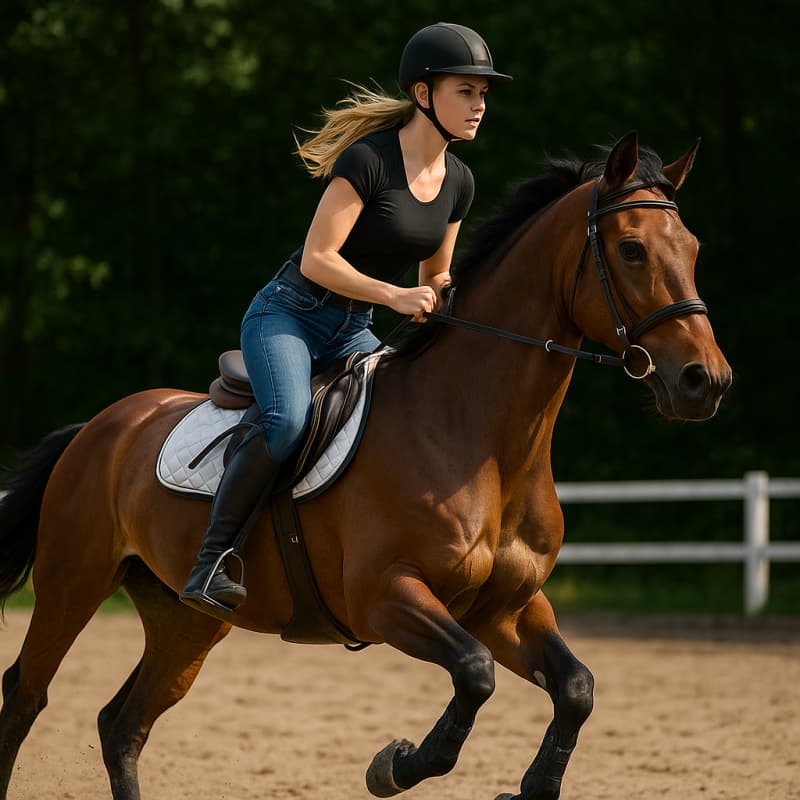
퍼포먼스 승마 레깅스
승마복 혁신 과제: “편안함과 성능을 저해하지 않으면서 안장에서 장시간 착용해도 견딜 수 있는 레깅스를 제작하세요.”