 English
 Español
 Português
 Deutsch
 한국어
한국어 日本語
日本語 Italiano
 Français
 العربية
 Türkçe
Phase change materials in textiles work best as a short-term thermal buffer, not as permanent heating or cooling. The useful question is therefore not simply “Does this fabric contain PCM?” It is: which material route places enough PCM near the body, within the right transition range, without making the textile too heavy, stiff or difficult to wash?
This guide looks at the applications of phase change materials from that development perspective. It separates PCM built into nylon or polyester yarn from microencapsulated PCM applied as a surface finish, then shows where each route can support a real textile brief. For the basic phase-change mechanism, see What Is PCM Fabric?
PCM is useful when the temperature changes faster than the clothing system can respond
A PCM absorbs heat while it changes phase and releases part of that stored heat when conditions reverse. In a textile, this can soften a temperature peak during a transition: leaving a warm lodge for a cold lift, moving between an air-conditioned terminal and a hot apron, or entering bed before the bedding and body microclimate settle.
The effect is finite. Once the available PCM has completed its phase change, it cannot continue absorbing heat at the same rate. It also needs a cooler interval to release stored heat and reset. This is why “thermal buffering” is a more accurate specification than “keeps the wearer at a constant temperature.” Insulation, moisture transport, ventilation and garment construction still do most of the long-duration work.
Two PCM textile routes that buyers should not treat as interchangeable
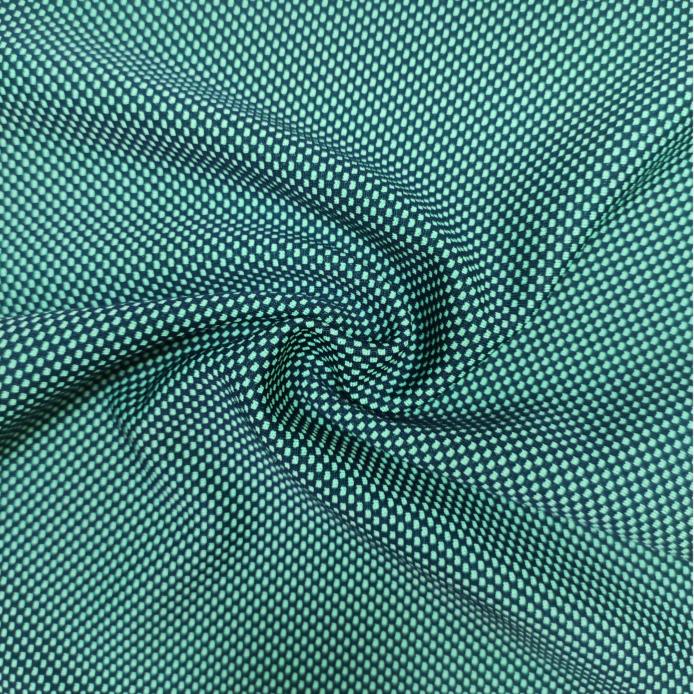
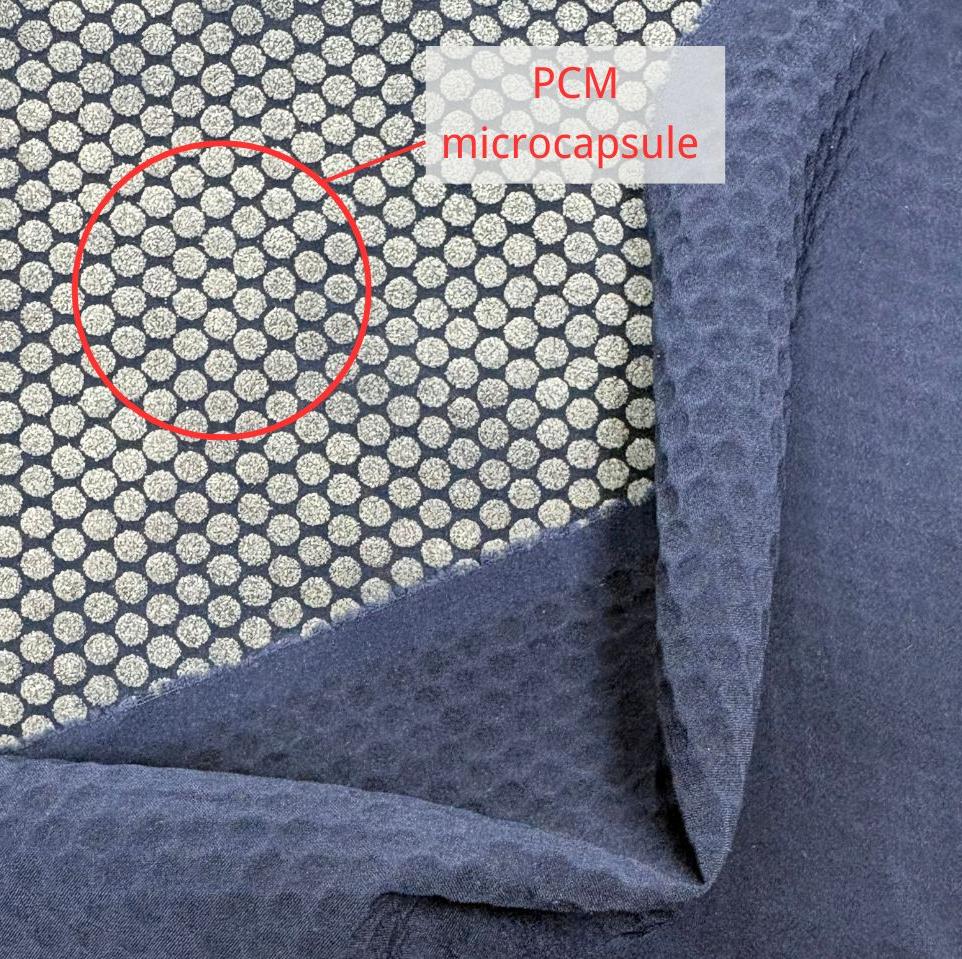
Smartex currently presents two practical supply routes. The main route uses PCM nylon or polyester filament yarn, which allows a mill to design the function into a knitted or woven fabric. A second, less frequently used route applies microencapsulated PCM as a finish to a selected substrate. Both can be described as PCM textiles, but they create different sourcing questions.
| 길 | What the developer controls | Where it tends to fit | 무엇을 확인해야 할까요? |
|---|---|---|---|
| PCM in filament yarn / fabric structure | Yarn share, denier, construction, stretch, fabric weight and placement by panel or zone. | Linings, sports layers and apparel fabrics where hand, permeability and repeatable textile production matter. | Polymer, yarn specification, PCM-bearing yarn percentage, construction, transition range, thermal-storage evidence and processing limits. |
| Microencapsulated surface finish | Base fabric, application side, finish add-on and finishing process. | Bedding, selected liners or projects that already have a suitable base fabric and can accept a surface treatment. | Binder system, finish location, change in hand and air permeability, care method, retained performance and evidence for the finished fabric. |
Where phase change materials make sense in smart textiles
Outdoor and ski apparel
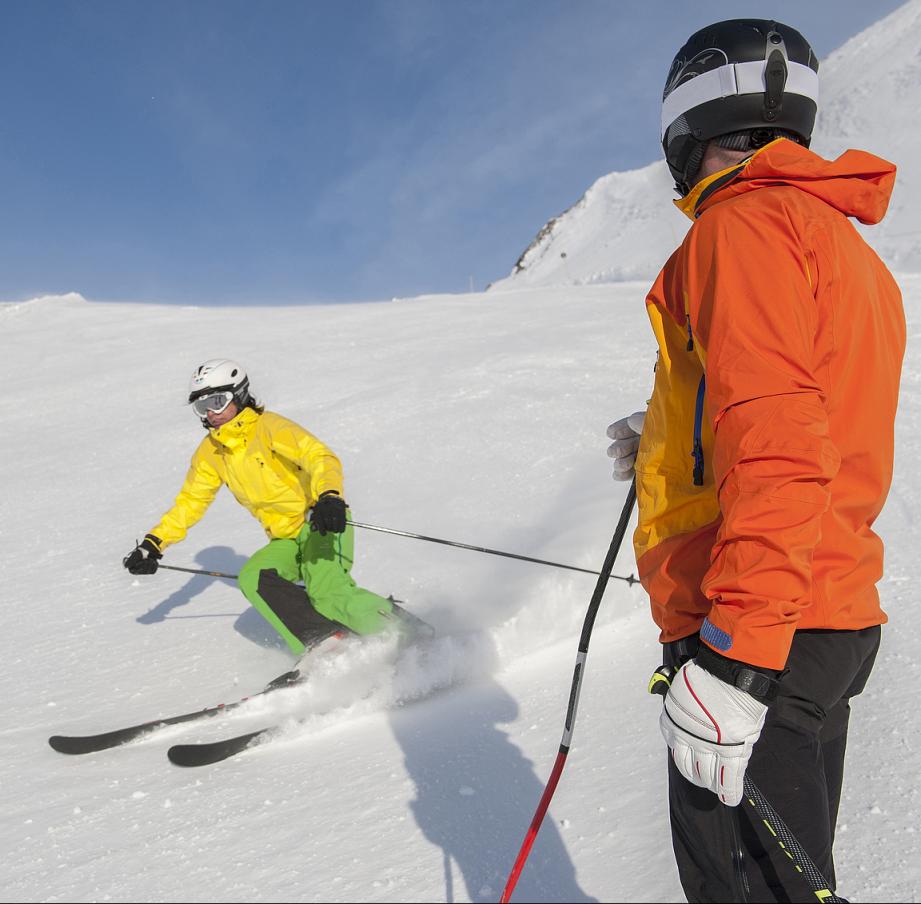
PCM is most relevant around changing activity levels, not during an uninterrupted high-output climb or run. A lining or selected torso zone can be developed to buffer the shift from active movement to a chairlift or rest stop. The shell still needs weather protection, and the clothing system still needs moisture to escape. For a garment-level development route, see the PCM skiwear lining concept.
침구 및 수면 제품
Bedding provides extended body contact and a narrower use environment, which can make PCM easier to position than in a multi-layer jacket. The developer still needs to decide whether PCM belongs on the sleeper-facing fabric, within a quilted layer or in another component. A decorative top fabric that rarely contacts the sleeper is a weak location, even if its laboratory sample shows phase-change behavior.
Uniforms, commuter clothing and controlled indoor transitions
Uniform wearers may move repeatedly between conditioned indoor space and outdoor heat. Here the business question is whether a modest, repeatable buffer improves the transition without increasing fabric weight or reducing breathability. A PCM fabric should be compared with a structurally matched non-PCM control; otherwise weight, color, knit density or finish can be mistaken for the PCM effect.
Footwear, protective equipment and medical textiles
These applications can create localized heat and limited ventilation, but they are also sensitive to thickness, pressure, abrasion, hygiene and care. PCM can be one variable in a liner or insert, while the finished system needs its own validation. Material-level data cannot establish clinical benefit, PPE compliance or whole-product comfort.
Why an attractive PCM comparison chart is not enough
The earlier version of this article included charts showing a comfort zone and percentage improvements in sweat reduction, temperature fluctuation and heat-storage capacity. Those charts did not identify the sample, test method, environmental conditions or source. They have been removed because a number without those details cannot guide a buyer and should not be presented as measured Smartex performance.
A useful comparison begins with the actual supplied form. Differential scanning calorimetry can identify transition temperatures and enthalpy under defined conditions. ISO 11357-3 : 2025 covers determination of melting and crystallization temperatures and enthalpies for applicable plastics; ASTM D3418-21 addresses transition temperatures and enthalpies of fusion and crystallization by DSC. A raw PCM or microcapsule result is not the same evidence as a yarn, finished fabric or washed fabric result.
Ask for an evidence chain, not one headline number
For a B2B program, the evidence should follow the material through development. Start with the exact yarn or finished fabric specification. Then connect the thermal report to that sample code and state whether it was tested before or after dyeing, finishing and care. Finally, compare complete fabrics or garments under the same construction and use cycle.
The most useful supplier pack normally includes the PCM route and location, transition range, enthalpy or heat-storage method, specimen description, fabric composition and weight, care condition, and any observed change after care. It should also state what the report does 지원 prove. DSC can characterize a phase transition; it does not by itself prove that a jacket will keep every wearer comfortable.
Use a small sample matrix before committing to production
A three-sample comparison gives more information than one “PCM fabric” swatch. Sample A is a control without PCM. Sample B introduces the selected PCM yarn or fabric while keeping construction as close as practical. Sample C changes one design variable, such as PCM yarn percentage, fabric weight, treated face or zonal placement. If every variable changes at once, the result may look impressive but will not show what caused the difference.
Record fabric weight, thickness, stretch, air permeability, moisture behavior, hand and the intended care process alongside thermal data. For apparel, specify where the fabric sits in the garment and whether insulation or a membrane separates it from the wearer. For bedding, identify the sleeper-facing side and the layers between the body and the PCM component.
Questions buyers ask about PCM textiles
Does PCM fabric actively cool the wearer?
그렇지 않습니다. It absorbs a limited amount of heat during a phase transition and can reduce a short temperature peak. It does not pump heat away like an active cooling system.
Is microencapsulated PCM always better because it can hold more material?
그렇지 않습니다. A finish may offer a useful loading route, but it can also change hand, permeability and care durability. The best route depends on the base fabric, location and wear cycle.
Can one material report support a garment claim?
그렇지 않습니다. It can support material selection. A finished product claim needs evidence at the fabric or garment level under conditions that match the intended use.
Discuss the right PCM route for your textile
Send the end product, layer position, base material, target fabric weight, activity/rest cycle, care method and the evidence your customer requires. Annie’s Smartex can compare a PCM filament yarn, an existing PCM 원단 or a microencapsulated finishing route before sampling.

관련 게시물
의료용 섬유에 대한 상변화물질(PCM)의 응용
의료 전문가와 환자 모두 의료 현장에서 공통적인 어려움에 직면합니다. 바로 최적의 체온을 유지하는 것입니다. 기존의 의료용 섬유는...

PCM 냉각 소재의 작동 원리: 상변화, 열 완충 및 구매자가 반드시 물어봐야 할 질문들
냉각 섬유 시리즈 | 02 상변화 물질이 섬유에서 어떤 역할을 하는지, 특히 어디에 사용되는지에 대한 실용적인 설명입니다.

단순한 냉방을 넘어: 차세대 여름 섬유에서 자외선 차단과 태양열 관리의 중요성
"시원한 촉감"은 원단이 피부에 닿는 순간 발생하는 현상을 해결하지만, 그 이후의 지속적인 땀과 같은 현상은 해결하지 못합니다.

가정용 직물에 에어로젤 충전재 적용 살펴보기
두꺼운 이불 속에서 너무 더워서 한밤중에 잠에서 깬 적이 있나요? 아니면...