 English
 Español
 Português
 Deutsch
 한국어
한국어 日本語
日本語 Italiano
 Français
 العربية
 Türkçe
The global demand for antibacterial fabric has surged in recent years — not just in medical settings, but across sportswear, intimate apparel, and everyday lifestyle products. Heightened health awareness has pushed brands and manufacturers to look beyond surface treatments toward technologies that deliver permanent, wash-durable performance built into the fiber itself.
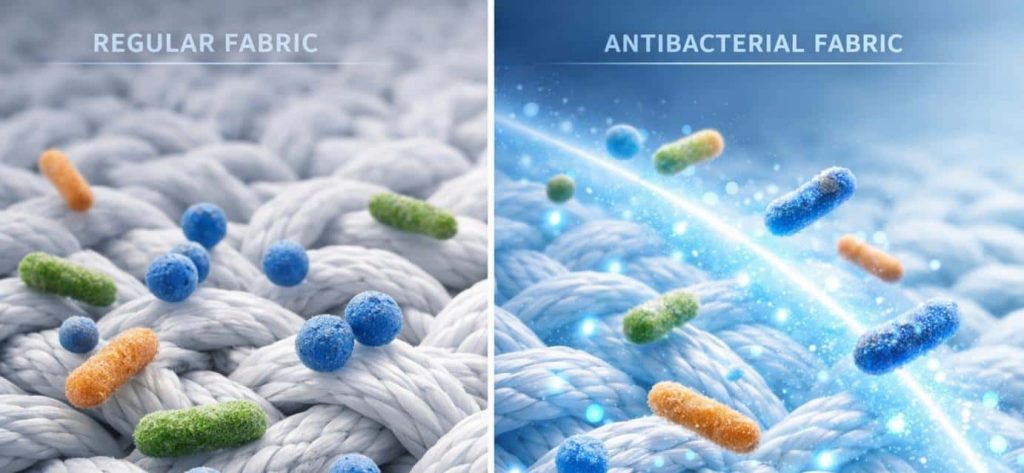
But the market is crowded with competing claims. This guide cuts through the noise with third-party verified test data, clear mechanism explanations, and practical application guidance across 8 leading antibacterial fabric technologies — organized by origin: metal-based, mineral-based, and plant-based.
Table of Contents
- What Is Antibacterial Fabric and How Does It Work?
- Metal-Based Antibacterial Fabrics
- Mineral-Based Antibacterial Fabrics
- Plant-Based Antibacterial Fabrics
- Technology Comparison Table
- Antibacterial Fabric for Sportswear
- Antibacterial Fabric for Medical Applications
- Antibacterial Fabric for Sensitive Skin
- How to Choose the Right Technology
- Frequently Asked Questions
What Is Antibacterial Fabric and How Does It Work?
Antibacterial fabric refers to textiles engineered to prevent the growth and proliferation of bacteria, fungi, and other microorganisms on the fabric surface. The key distinction is where the antibacterial agent lives — on the surface, or inside the fiber itself.
Surface-applied treatments work initially but degrade with washing. Fiber-level integration — where antibacterial agents are spun directly into the fiber during manufacturing — produces performance that is permanent, evenly distributed, and unaffected by laundering. Every technology in this guide uses fiber-level integration.
Performance is measured using standardized protocols. The most widely cited are AATCC 100 (American standard), ISO 20743 (international), and GB/T 20944 (Chinese national standard, shake flask and absorption methods). These protocols measure bacterial reduction rates against specific pathogens — typically Staphylococcus aureus, Escherichia coli, and Candida albicans — after defined contact periods.
Metal-Based Antibacterial Fabrics
Nano Copper Yarn — NaCuX®
Copper’s antibacterial mechanism is multi-layered: copper ions disrupt bacterial cell membranes, interfere with enzyme functions critical for bacterial survival, and generate reactive oxygen species that damage bacterial DNA. This multi-target attack makes it difficult for bacteria to develop resistance — a meaningful advantage over single-mechanism approaches.
What separates NaCuX® Copper Technology from standard copper-treated fabrics is the copper peptide composite — nano copper combined with copper peptides, spun directly into polyester, nylon, or cotton fibers. The result is a fabric that doesn’t just inhibit bacteria; it actively supports skin health. Copper peptides stimulate collagen and elastin production, enhance skin elasticity, and support hyaluronic acid synthesis. For underwear, compression wear, and bedding — products in prolonged skin contact — this dual functionality is a genuine differentiator.
Nano Zinc Yarn
Zinc oxide is one of the few materials that delivers two independent functional benefits in a single fiber: antibacterial protection and UV blocking. The antibacterial mechanism works through reactive oxygen species generation — zinc ions damage bacterial cell structures on contact. The UV-blocking mechanism is physical — zinc oxide particles absorb and scatter UV radiation, with UPF ratings achievable at fiber level without additional finishing.
This combination is particularly relevant for outdoor and activewear applications, where UV exposure and bacterial growth from perspiration occur simultaneously. Fiber-level zinc oxide integration means both properties are permanent — unlike UV-protective coatings that wash out within 20–30 cycles.
Nano Silver Yarn — ISILVERY®
Silver’s antibacterial efficacy is the most extensively documented of any metal ion in textile applications. ISILVERY® incorporates natural silver ions into polyester or nylon fibers without chemical additives — a formulation choice that directly addresses biocompatibility concerns in medical and sensitive-skin applications.
The mechanism is three-pronged: silver ions penetrate bacterial cell walls, disrupt DNA replication, and inhibit cellular respiration. This broad-spectrum action — effective against both gram-positive and gram-negative bacteria, including antibiotic-resistant strains — is why silver remains the default specification for medical textile procurement.
Mineral-Based Antibacterial Fabrics
Volcanic Mud Yarn — Time Capsule®
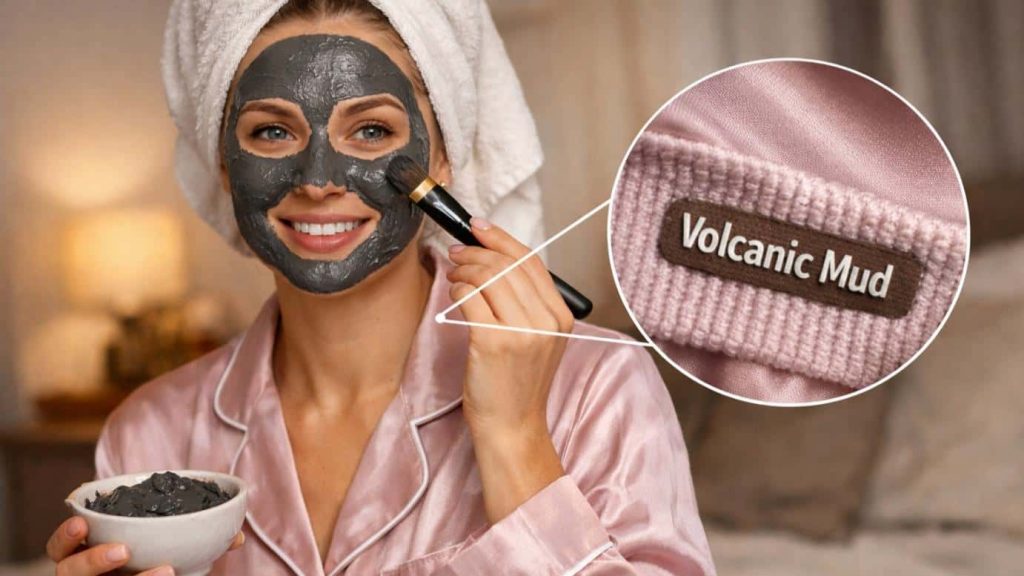
Mineral-BasedVolcanic mud is not a marketing concept — it is a geologically distinct material containing over 35 trace elements including silicon, magnesium, and calcium, formed through millennia of volcanic and hydrothermal activity. Its antibacterial properties arise from this mineral complexity: the combination of trace elements creates an environment chemically inhospitable to bacterial colonization, without relying on ion release or reactive oxygen species.
What makes Time Capsule® particularly interesting for skincare-adjacent textile applications is the breadth of its test data. Most antibacterial fabrics are tested against Staphylococcus aureus and E. coli. Time Capsule® testing includes Propionibacterium — the primary bacteria responsible for acne and skin irritation — a specification that directly addresses the needs of intimate apparel and wellness textile buyers.
Read more about Volcanic Mud Yarn
Graphene Yarn
Mineral-BasedGraphene’s antibacterial mechanism is physically distinct from every other technology in this guide. Rather than releasing ions or generating reactive oxygen species, graphene’s nano-edges mechanically disrupt bacterial cell membranes on contact — a physical cutting action at the nanoscale. This mode of action is not susceptible to bacterial resistance development in the way that chemical approaches can be, and it complements ion-release technologies effectively in blended applications.
Beyond antibacterial performance, graphene’s electrical and thermal conductivity opens a category that no other antibacterial fiber can access: smart textiles and wearable electronics. Graphene yarn can function as a conductive element in sensor-integrated fabrics, heated garments, and e-textile applications — with antibacterial performance as a built-in functional layer rather than an add-on.
Plant-Based Antibacterial Fabrics
Coffee Charcoal Yarn — SmartCoffex®
Plant-BasedCoffee grounds are generated in enormous quantities globally — an estimated 6 million tonnes of spent coffee grounds are discarded annually. SmartCoffex® captures this waste stream, purifying and carbonizing the grounds at above 1000°C to produce nano charcoal particles that are blended with PTA or viscose pulp and spun into fiber.
The microporous structure of coffee charcoal physically traps volatile organic compounds — the molecules responsible for odor — rather than masking them with fragrance. The same porous structure inhibits bacterial colonization by disrupting the surface conditions bacteria require to establish colonies. Coffee charcoal also emits far infrared rays between 4μm and 15μm, raising fabric surface temperature slightly and providing measurable thermal comfort in base layer applications.
Read more about Coffee Charcoal Yarn
Coconut Shell Charcoal Yarn
Plant-BasedAmong the three charcoal-based technologies in this guide, coconut shell charcoal is distinguished by its exceptionally high porosity. Coconut shell’s dense cellular structure produces an activated charcoal with a micropore network that outperforms bamboo and coffee charcoal in raw adsorption capacity — a characteristic that translates directly to superior odor control and moisture absorption in textile applications.
The high surface area of coconut shell charcoal also generates measurable negative ion emission, contributing to air purification effects in close-to-skin applications. For underwear, socks, and bedding — product categories where odor management is a primary consumer concern — coconut shell charcoal’s combination of adsorption capacity and negative ion output makes a strong functional case.
Read more about Coconut Shell Charcoal Yarn
Bamboo Charcoal Yarn
Plant-BasedBamboo charcoal’s structural signature is its cross-sectional honeycomb geometry — a natural consequence of bamboo’s cellular architecture that survives the carbonization process. This structure provides approximately four times the surface area of conventional charcoal, maximizing adsorption capacity for moisture, odors, and airborne pollutants.
Bamboo charcoal fibers emit both far infrared rays and negative ions — a combination that supports microcirculation and creates a comfortable thermal microclimate against the skin. The material’s inherent moisture-wicking and quick-drying profile makes it a natural fit for sportswear and yoga wear, where thermal comfort and hygiene management are simultaneous requirements. Its biodegradable profile and renewable raw material source align with sustainable textile certification programs.
Read more about Bamboo Charcoal Yarn
Antibacterial Fabric Technology Comparison
| Technology | Category | Antibacterial Rate | Wash Durability | Test Standard | Test Institution | Odor Control | Additional Benefits |
|---|---|---|---|---|---|---|---|
| Nano Copper (NaCuX®) | Metal | 99.5%+ | 100+ washes | GB/T 20944 | — | ⭐⭐⭐⭐⭐ | Collagen boost, skin health |
| Nano Zinc | Metal | 99.6% (3 strains) | 80+ washes | — | Internal lab | ⭐⭐⭐⭐ | UPF 50+ UV protection |
| Nano Silver (ISILVERY®) | Metal | >99% (2 strains) | 50+ washes | ASTM E2149-2013a | SGS | ⭐⭐⭐⭐⭐ | Medical-grade, broad-spectrum |
| Volcanic Mud (Time Capsule®) | Mineral | 91–99% (4 strains) | 30+ washes | GB/T 20944.2 / .3 | GTT | ⭐⭐⭐⭐ | Far infrared, acne bacteria |
| Graphene | Mineral | 87–98% (3 strains) | 80+ washes | GB/T 20944.3 | GTT | ⭐⭐⭐⭐ | Conductivity, smart textiles |
| Coffee Charcoal (SmartCoffex®) | Plant | 96% | 50+ washes | GB/T 20944.3 | GTT | ⭐⭐⭐⭐⭐ | Far infrared, eco-friendly |
| Coconut Shell Charcoal | Plant | 96% | 40+ washes | GB/T 20944.3 | GTT | ⭐⭐⭐⭐⭐ | Negative ions, high porosity |
| Bamboo Charcoal | Plant | 96% | 40+ washes | GB/T 20944.3 | GTT | ⭐⭐⭐⭐ | Far infrared, negative ions |
Antibacterial Fabric for Sportswear
Sportswear presents one of the most demanding environments for antibacterial fabric performance. A single training session can raise fabric surface bacterial counts by several orders of magnitude within 30 minutes — warm, moist conditions accelerate bacterial growth, and the mechanical stress of movement distributes bacteria across the fabric surface rapidly.
For performance apparel, the relevant question is not just “does it kill bacteria?” but “does it still kill bacteria after 80 washes in a commercial laundry cycle?” On that metric, nano copper (NaCuX®) leads with 100+ wash cycle durability, followed by graphene and nano zinc at 80+. Coffee charcoal (SmartCoffex®) and nano silver maintain performance at 50+ cycles — adequate for consumer sportswear with normal washing frequency.
Odor control is the consumer-facing benefit that drives purchase decisions in sportswear. Plant-based charcoal technologies — particularly coffee charcoal and coconut shell charcoal — excel here, physically trapping odor molecules rather than masking them. For brands that want to combine odor control with a sustainability narrative, SmartCoffex® built on recycled coffee grounds offers a compelling product story.
Antibacterial Fabric for Medical and Healthcare Applications
Medical textile procurement operates under different criteria than consumer apparel. Efficacy against antibiotic-resistant bacteria, documented third-party testing, and biocompatibility are non-negotiable requirements. Wash durability is critical — hospital linens undergo industrial laundering at high temperatures, often 50–100 cycles per year.
ISILVERY® nano silver is the established specification for medical-grade antibacterial textiles. The SGS-certified test data (Report No. ASH15-038656-03, ASTM E2149-2013a) demonstrates >99% reduction against both Staphylococcus aureus ATCC 6538 and Klebsiella pneumoniae ATCC 4352 — the latter being a gram-negative pathogen associated with hospital-acquired infections. The absence of chemical additives in ISILVERY®’s formulation addresses biocompatibility requirements for clinical environments.
For applications where skin contact is prolonged — patient gowns, wound care textiles, post-surgical compression garments — NaCuX® nano copper‘s skin health benefits (collagen stimulation, anti-inflammatory copper peptide activity) provide additional clinical value beyond infection control.

Antibacterial Fabric for Sensitive Skin
Sensitive skin applications require antibacterial technologies that are not only effective but chemically benign — free from irritants, allergens, and reactive compounds that could trigger dermatological responses. This rules out many surface-applied treatments and narrows the field to fiber-level technologies with documented biocompatibility.
Time Capsule® volcanic mud yarn is particularly well-positioned for sensitive skin applications. Its mineral composition is non-toxic, non-allergenic, and chemically stable — properties verified through GTT testing that includes Propionibacterium inhibition at 95%, directly addressing acne-prone and reactive skin concerns. The far infrared emission also has documented anti-inflammatory effects, supporting skin recovery in close-to-skin applications.
ISILVERY® nano silver‘s formulation without chemical additives makes it the second strong candidate for sensitive skin, particularly in intimate apparel and baby textiles. NaCuX® nano copper‘s copper peptide component actively supports skin barrier function — a benefit that goes beyond passive antibacterial protection into active skin health management.
How to Choose the Right Antibacterial Fabric Technology
A medical textile buyer sourcing hospital linens has fundamentally different requirements than a sportswear brand launching an odor-control collection. Here is a practical framework for navigating the decision:
If wash durability is the primary requirement — industrial laundering, workwear, hospital linens — nano copper’s 100+ cycle performance is the benchmark. No other technology in this guide matches it on this metric.
If medical-grade efficacy and third-party certification are required — nano silver (ISILVERY®) with SGS certification under ASTM E2149 is the documented choice. The test data covers gram-negative pathogens relevant to clinical infection control.
If UV protection is a co-requirement — nano zinc is the only technology in this guide that delivers both antibacterial performance and fiber-level UPF protection in a single yarn. For outdoor apparel and swimwear, this eliminates the need for separate UV-protective finishing.
If sustainability positioning is a brand priority — plant-based charcoal technologies (coffee, coconut shell, bamboo) built on recycled or renewable raw materials offer the strongest environmental narrative, with GTT-certified antibacterial performance at 96% against S. aureus.
If the application involves sensitive skin or skincare claims — volcanic mud (Time Capsule®) and nano copper (NaCuX®) both carry documented skin health benefits beyond antibacterial performance, supporting product positioning in wellness and intimate apparel categories.
Frequently Asked Questions
Looking for an Antibacterial Yarn Supplier?
We manufacture all 8 technologies covered in this guide — with third-party certified test data, custom specifications, and sample programs available for qualified buyers.
Request Samples & Technical Data →
Related Posts

6 Cooling Fabric Technologies Compared: Which Actually Keeps You Coolest? [Lab-Tested 2026]
When a customer reaches out asking for “cooling fabric,” what do they really mean? After years of working with brands...
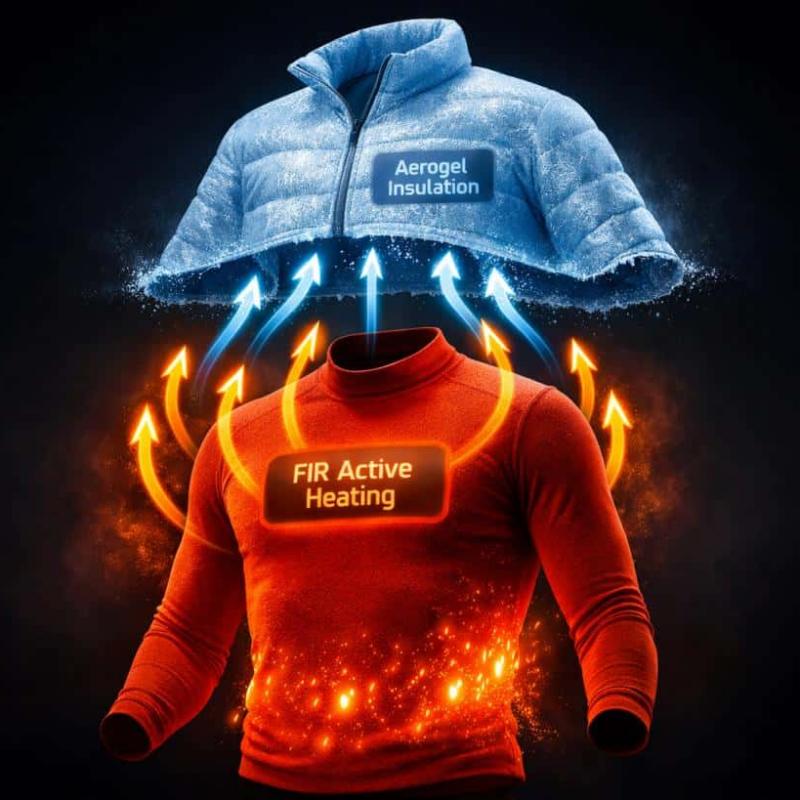
The Warmest Lightweight Winter Technologies in 2026: Aerogel Insulation vs Far Infrared Yarn (And Why You Need Both)
Picture this: it’s -15°C at the trailhead. You’re wearing a jacket rated for extreme cold, layered over a thermal base,...
A Natural Antibacterial Solution for Sustainable Bags & Eco Accessories
Zero-Waste Agricultural Innovation · Pineapple Leaf Spun Yarn Technology The Challenge “We’ve committed to a fully biodegradable product line by...

8C Microporous pro Performance Yarn: 4-in-1 Solution for Moisture-Wicking, Cooling, Antibacterial & UV Protection in Athletic Apparel
You know that moment during a high-intensity workout when your shirt feels damp, your skin feels clammy, and you catch...