 English
 Español
 Português
 Deutsch
 한국어
 日本語
 Italiano
 Français
 العربية
 Türkçe
Antibacterial fabric describes a textile designed to reduce bacterial growth on the material under defined conditions. For a sportswear, bedding or apparel project, choose the fabric route by the fiber, application, care process and test report you need. Metal, mineral and plant-derived additives can be useful starting points, but an additive name alone does not establish an antibacterial result, wash durability, skin benefit or finished-product approval. This guide compares eight routes and shows which evidence makes the comparison usable.
What does “antibacterial fabric” actually establish?
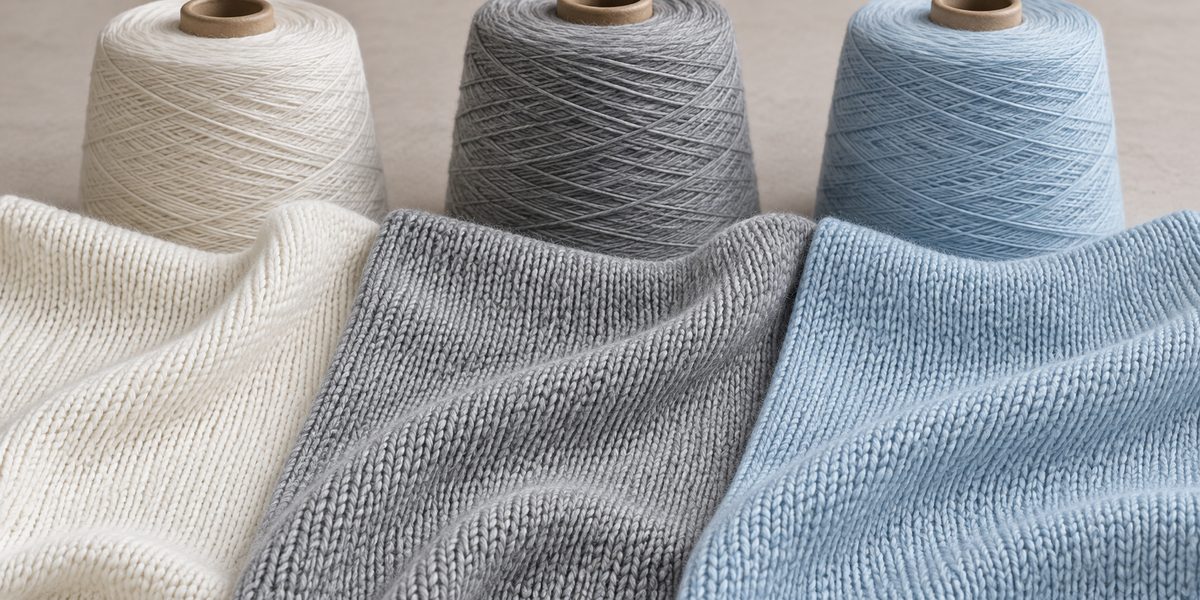
The term describes an intended property of a textile, not a universal mechanism or a health outcome. An active ingredient may be built into a fiber, added during yarn or fabric manufacture, or applied as a finish. Each route has different processing, hand-feel and care implications. Neither built-in nor surface-applied placement proves that performance is permanent; both need testing on the actual textile before and after the care conditions relevant to the product.
ISO 20743:2021 specifies quantitative methods for antibacterial activity across textile types and application routes. AATCC TM100-2019 is another quantitative textile method. A report is useful when it identifies the specimen, organism, method, contact conditions, control, result and care history. Results from different methods or specimen constructions are not a clean head-to-head ranking.
Metal-based routes: copper, zinc and silver
Copper-containing yarn or fabric
Copper-based additives are one development option when a buyer wants an antibacterial textile and can accommodate the chosen base polymer, color and processing route. Annie’s Smartex lists NaCuX® copper yarn as a product route. When comparing it with other options, request the formulation route, actual fabric construction and test report rather than treating the word “copper” as a fabric-level result. A copper-containing material should not be described as improving human skin health without separate evidence for that claim and use.
Zinc-containing yarn or fabric
Zinc systems can be considered when antibacterial and UV-related requirements appear together in a brief. These are separate performance questions. A zinc ingredient does not automatically give a finished fabric a particular UPF or wash lifetime. Keep the antibacterial and UV test results tied to the same yarn, fabric construction and processing state, and distinguish optional customized features from standard product properties.
Silver-containing yarn or fabric
Silver is a familiar antimicrobial additive route, but “silver” is not shorthand for clinical suitability. For a sportswear or home textile program, compare the actual textile-level data, appearance, cost and care route. For any medical or patient-facing use, regulatory, biocompatibility and application-specific evidence become a separate project gate; a textile antibacterial result alone does not establish them.
Mineral and carbon routes: volcanic mud and graphene
Volcanic-mud composite yarn
A mineral powder can be introduced into a suitable fiber formulation, including PA6-based development routes, to explore a combination of textile functions. The exact composition and resulting fabric properties must be checked on the proposed sample. Claims about acne, skin treatment, mineral release or thermal regulation are distinct from a basic antibacterial test and should be supported independently if used in product copy.
Graphene-containing yarn or fabric
Graphene-related products can serve electrical, thermal or surface-function briefs depending on material form and construction. A conductive yarn does not prove antibacterial performance, and a reported antibacterial effect does not make a textile suitable for a wearable sensor. If both functions matter, define both tests and check whether the same final sample meets them. The anti-static textile guide covers the electrical selection task separately.
Plant-derived routes: coffee, coconut and bamboo charcoal
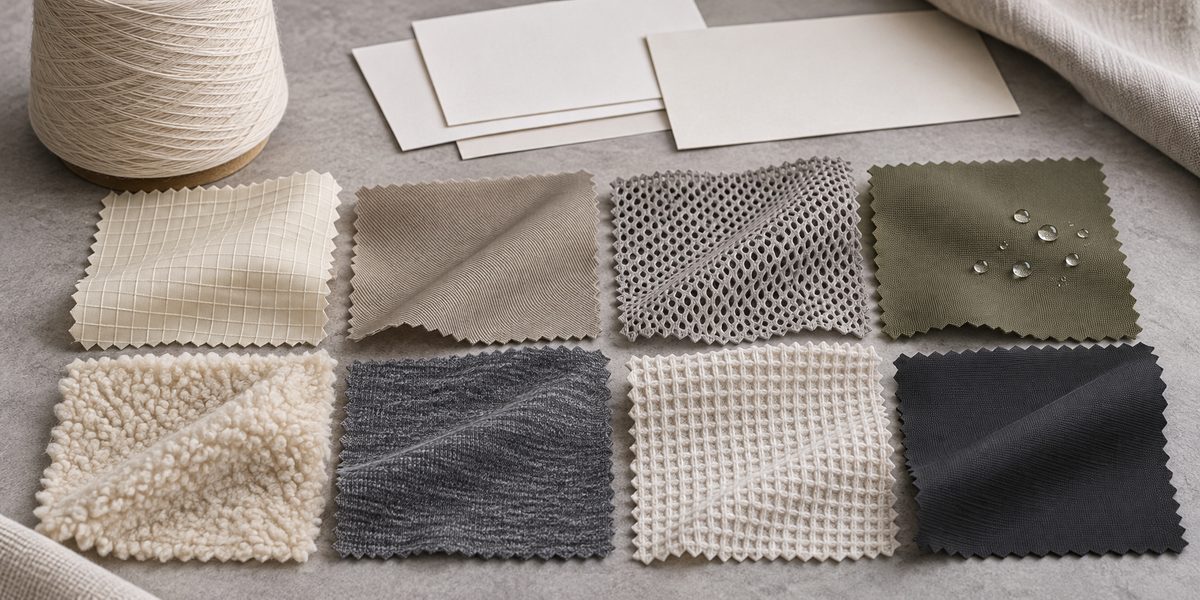
Coffee, coconut-shell and bamboo-derived charcoal are three different raw-material stories. Their origin may matter to a brand’s sourcing brief, but origin alone does not establish biodegradability, odor control or antibacterial activity in the final textile. The carbonization route, additive loading, carrier polymer and fabric construction determine what can be tested and claimed.
Odor adsorption and antibacterial activity are also separate mechanisms. A fabric might reduce a particular odor under one test without showing the same result against bacteria, or vice versa. Ask for a report matching the claim you intend to make. If a recycled or renewable-content claim is part of the project, document the actual feedstock and chain of custody rather than transferring that claim from an ingredient name to the complete fabric.
Eight antibacterial fabric routes at a glance
| Route | Useful starting brief | Evidence to request before a claim |
|---|---|---|
| Copper | Functional yarn for apparel or home textile development | Fabric-level antibacterial report, construction and post-care result |
| Zinc | Antibacterial route with optional separate UV target | Antibacterial and UPF reports on the intended fabric |
| Silver | Antibacterial textile route where formulation and care matter | Specimen-linked activity and care reports; further evidence for medical use |
| Volcanic mud | Mineral composite yarn concept | Actual formulation, textile result and any separate comfort claim |
| Graphene | Electrical or thermal function plus optional antibacterial target | Separate tests for each requested function on the same construction |
| Coffee charcoal | Carbon additive and sourcing story | Origin documents and separate odor/antibacterial tests |
| Coconut charcoal | Carbon additive and sourcing story | Origin documents and separate odor/antibacterial tests |
| Bamboo charcoal | Carbon additive and sourcing story | Origin documents and separate odor/antibacterial tests |
This table identifies development and verification routes. It does not assign performance levels, wash-cycle rankings or a universal “best” option. A buyer can request two or more functions in one fabric; the sample brief should state the desired combination rather than assume functions are mutually exclusive.
What changes for sportswear and next-to-skin apparel?
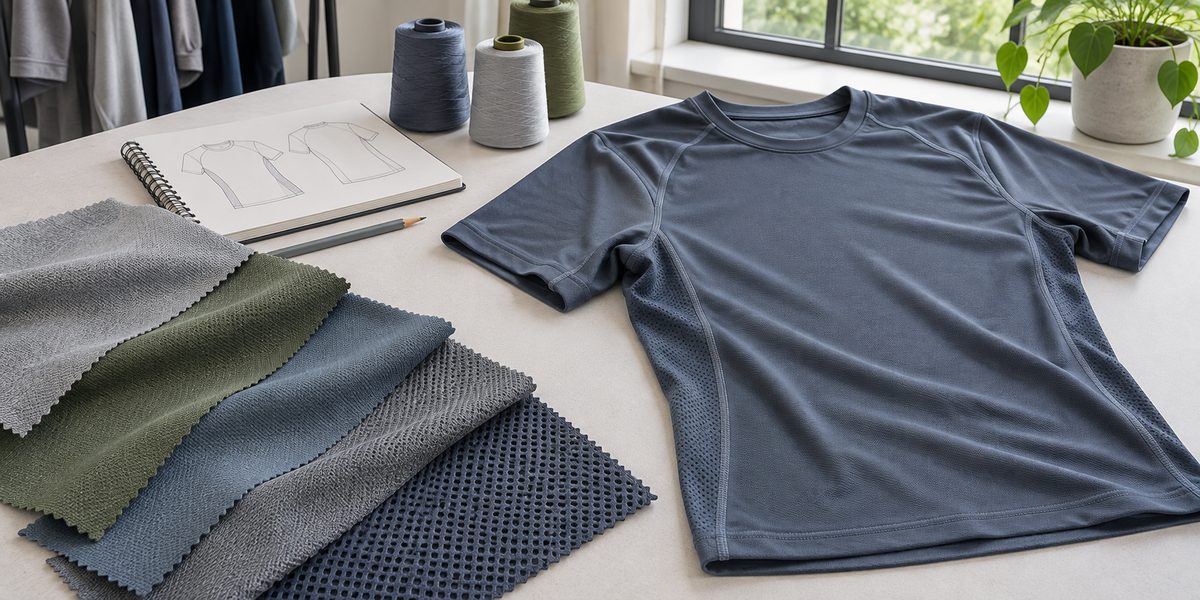
A training top or base layer brings sweat, stretch, washing and skin contact into the same design. Decide whether the main problem is odor perception, bacterial growth on the fabric, drying behavior or a combination. A direct antibacterial test does not answer the odor question by itself. Stretch may come from elastane or fabric construction; it is not an antibacterial powder or a guaranteed property of every functional yarn.
Compare candidate fabrics at similar weight and construction, then test the actual garment program’s care route. If fast drying matters alongside antibacterial activity, the moisture-wicking yarn guide helps define the liquid-management task. Put the target functions in one sample brief so the formulation and structure can be discussed together.
How should medical and sensitive-skin claims be handled?
For medical textiles, start with the exact article and use: a scrub, curtain and patient-contact item can face different requirements. A textile antibacterial test is evidence about the material under the test conditions. It does not establish infection prevention, clinical efficacy, patient safety or a regulated medical-product status. In the U.S., EPA guidance on treated articles also distinguishes claims that protect the treated article from public-health claims. Obtain regulatory review before using health-protection language.
“Sensitive skin” also needs care. Ingredient origin or the absence of a named additive cannot prove compatibility for every wearer. Consider skin-contact testing, chemical restrictions, finishing chemistry and the complete garment, and phrase only the results supported by the relevant evidence.
How do you choose and verify a fabric route?
Write a short decision brief: end use, base polymer, fabric structure and weight, required functions, care conditions, target market and the exact claims you want to support. Request candidate samples and source reports matched to the same material level. Compare like with like: organism, method, control, pre- and post-care specimens and any change in construction. Where an older report is known to exist but has not yet been retrieved, mark the claim as “source confirmed, original report to recover” and wait for specimen and method verification before adding a more specific number.
If the goal is a broad overview, the useful answer is that none of these eight names is a universal winner. Choose the formulation and construction that fits the product, then approve only the claims supported on that sample. The public standards above provide a starting point for specifying the test method.
Discuss an antibacterial fabric sample
Send the end use, fiber and fabric construction, desired combined functions, care route, target market and the test or claim you need to support. We can discuss available yarn and fabric starting points and the evidence needed for your sample. Contact Annie’s Smartex with the brief.

Related Posts
New Revolution yarn with super moisture-wicking combined with cooling touch, antibacterial and Anti-UV
Picture this: You’re halfway through your morning run, and your shirt is already soaked with sweat. Despite its “moisture-wicking” label,...
How to Develop Nano-Zinc Antibacterial Yarn for School Sports Uniforms
See how to build and wash-test nano-zinc antibacterial yarn samples for school sports uniforms without unsupported hygiene or odor claims.
Why Your Gym Clothes Still Smell After Washing — And How Antibacterial Yarn Actually Fixes It
Here’s something most activewear brands won’t tell you: that “fresh out of the dryer” smell doesn’t last because your fabric...
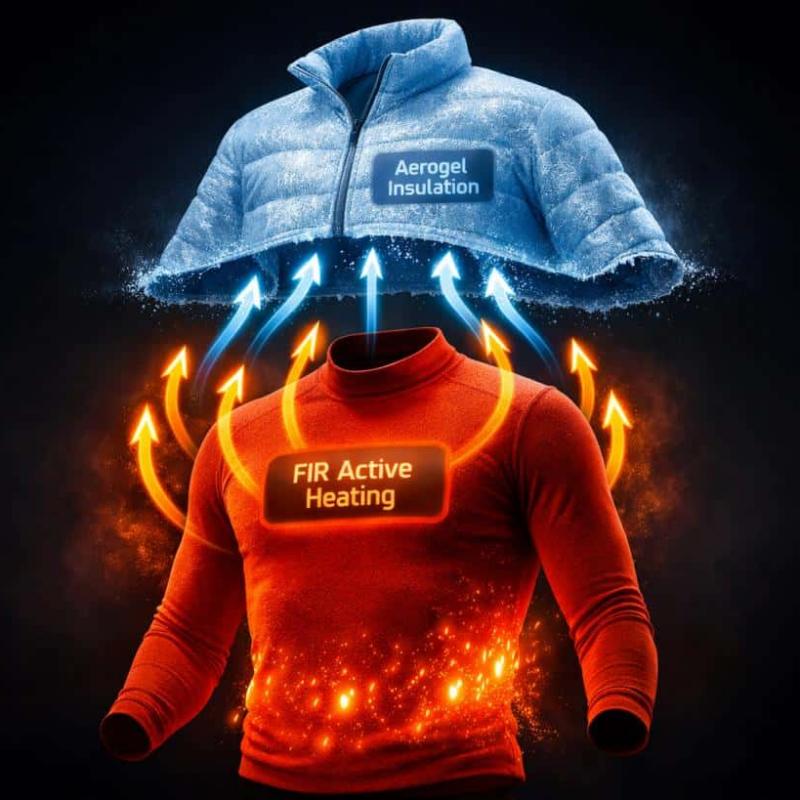
The Warmest Lightweight Winter Technologies in 2026: Aerogel Insulation vs Far Infrared Yarn (And Why You Need Both)
Picture this: it’s -15°C at the trailhead. You’re wearing a jacket rated for extreme cold, layered over a thermal base,...