 English
 Español
 Português
 Deutsch
 한국어
한국어 日本語
日本語 Italiano
 Français
 العربية
 Türkçe
The Problem With “Cooling” as a Category
Walk into any trade show in 2025 and half the booths will have some version of the word “cooling” on their banner. Ice-touch. Arctic feel. Sub-zero comfort. The language is everywhere, but the actual performance gap between products is enormous — and most buyers don’t have a reliable way to tell them apart until samples come back from the lab.
That’s a real problem when you’re sourcing for a summer collection, a performance sportswear line, or a workwear program that ships in six months. Getting the fabric wrong doesn’t just hurt margins. It damages the brand.
2024 was officially the hottest year on record. Global demand for functional cooling textiles is growing at roughly 7–8% annually, and the Asia-Pacific market is outpacing that at over 9%. Consumers aren’t just buying “breathable” anymore — they’re paying a premium for fabrics that can be measured and verified. The question for buyers has shifted from whether to invest in cooling technology to which type actually fits the product.
This guide focuses on three specific fabrics — PCM Nylon, Cool-Touch Nylon, and 8C Pro Polyester — and gives you a practical framework for choosing between them based on Q-max data, application context, construction considerations, and cost.
What Q-max Actually Tells You (And What It Doesn’t)
Before comparing fabrics, it’s worth spending a moment on the metric that dominates cooling fabric spec sheets: Q-max, or maximum instantaneous heat flux density, measured in W/cm².
When a fabric touches skin, heat flows from the body into the material. Q-max captures the peak rate of that heat transfer in the first fraction of a second — specifically around 0.2 seconds of contact. A higher Q-max means the fabric pulls heat away from skin faster at the moment of touch, which is what creates that immediate “cool” sensation.
The two most referenced standards are:
| Standard | Test Condition | Pass Threshold |
|---|---|---|
| GB/T 35263 (China) | ΔT = 15°C | ≥ 0.15 W/cm² |
| JIS L 1927 (Japan) | ΔT = 10°C | ≥ 0.10 W/cm² |
Here’s what the spec sheet won’t tell you: Q-max only measures that first 0.2-second contact window. It says nothing about what happens over the next hour of wear. A fabric with a Q-max of 0.55 will feel dramatically cooler than one at 0.27 the instant you put it on — but if the higher-Q-max fabric has no moisture management, it may feel warmer by the time you’ve been wearing it for 20 minutes.
This distinction matters enormously for product design. Cooling fabrics work through fundamentally different physical mechanisms, and Q-max captures only one of them. Keep that in mind as we look at each option.
Three Cooling Fabrics, Three Different Jobs
PCM Nylon — Q-max: 0.55 W/cm²
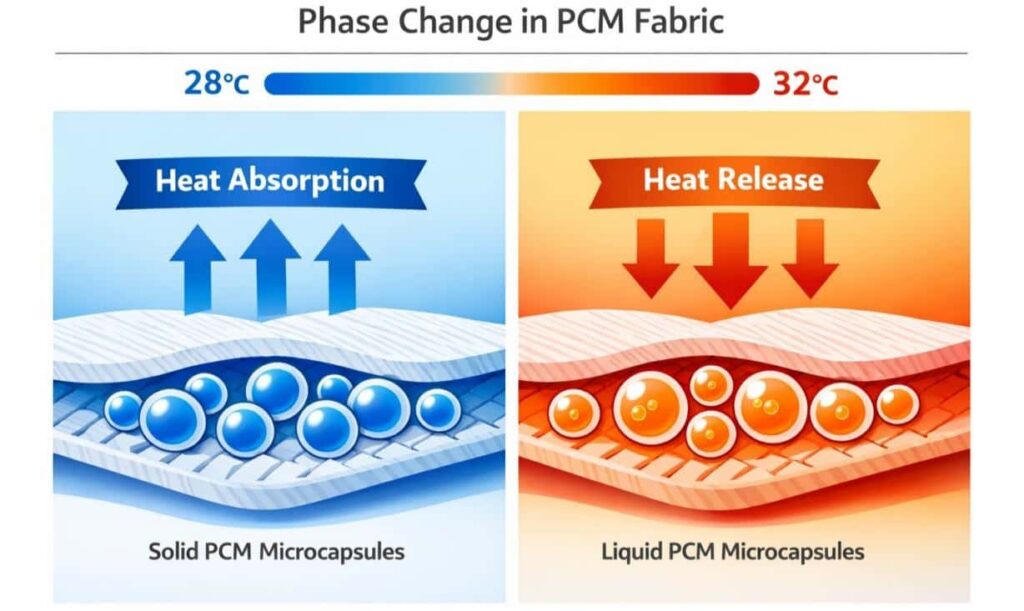
PCM Nylon sits at the top of the Q-max range in this comparison, and the number reflects something real: phase change material (PCM) microcapsules embedded in the nylon fiber absorb heat through a latent heat mechanism rather than simple conduction. When your skin temperature rises, the PCM transitions from solid to liquid, pulling heat out of the microclimate between skin and fabric in the process.
The practical result is a cooling effect that lasts. Independent testing shows PCM fabrics can maintain a 1–4°C reduction in skin-surface temperature for anywhere from 30 minutes to two hours, depending on activity level and ambient conditions. That’s not a marketing claim — it’s a thermodynamic property of the material.
What makes PCM Nylon particularly useful is that it doesn’t rely on sweat or airflow to work. Unlike evaporative cooling, which becomes nearly useless in humid environments above 60–70% relative humidity, PCM operates through heat absorption regardless of moisture conditions. For buyers developing products for Southeast Asian markets, tropical climates, or indoor environments with limited airflow, this is a meaningful advantage.
The trade-off is cost. PCM Nylon is the most expensive option in this group, and the microcapsule structure requires careful handling in fabric construction — aggressive mechanical finishing or high-pressure calendering can compromise capsule integrity over time. It’s best suited for mid-to-high-end product lines where the performance story justifies the price point.
Cool-Touch Nylon — Q-max: 0.37–0.40 W/cm²
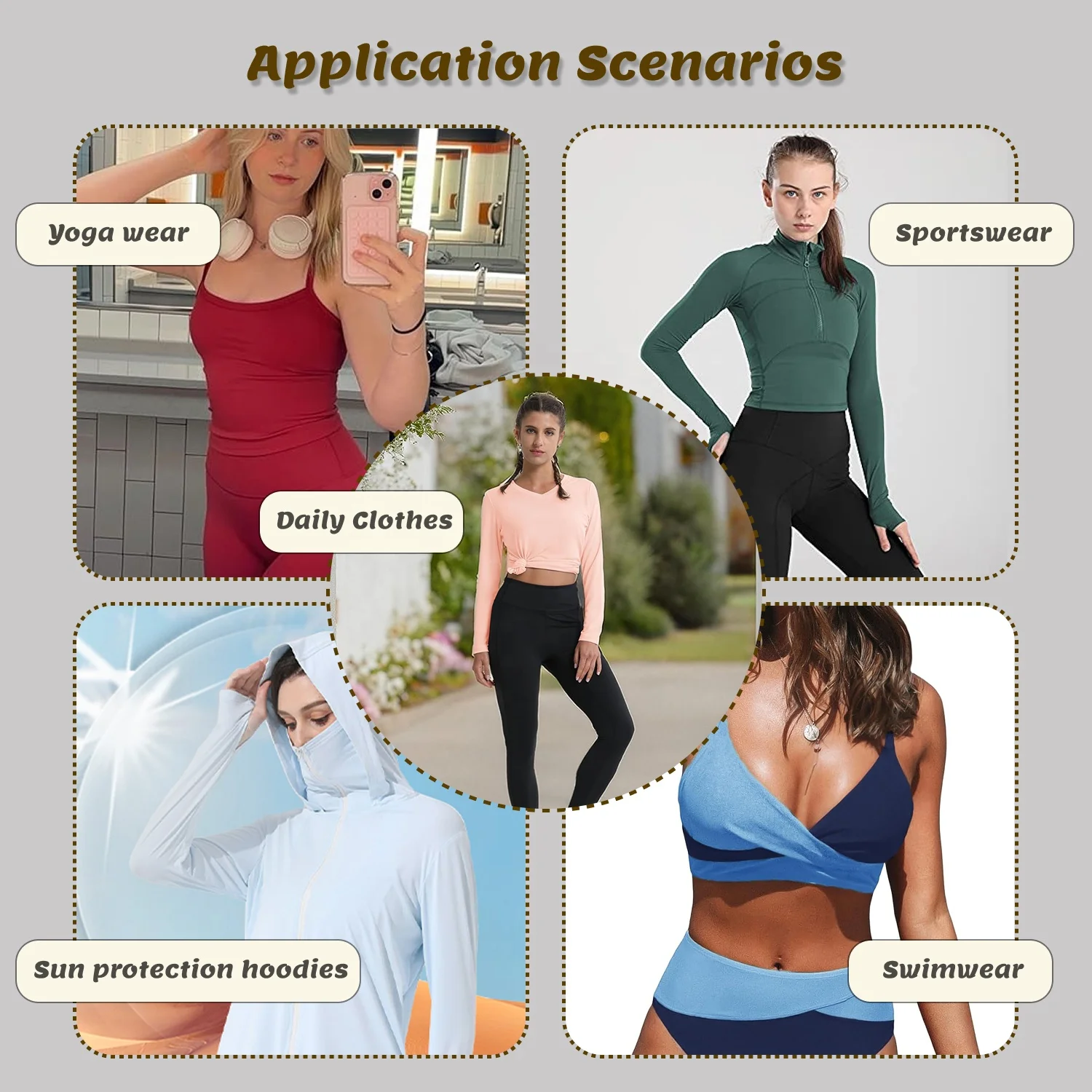
Cool-Touch Nylon delivers its cooling effect through a different mechanism: modified nylon fiber combined with high-conductivity mineral particles — typically mica, jade powder, or similar inorganic fillers — that increase the fiber’s thermal conductivity. The result is a fabric that conducts heat away from skin faster than standard nylon, producing a noticeably cool sensation on contact.
The sensation is real and immediate. Compared to a standard polyester T-shirt, the difference is perceptible within the first few seconds of wear. That “first touch” experience is exactly what drives consumer purchase decisions at retail, which is why Cool-Touch Nylon has become the dominant technology in the mid-market sportswear and summer fashion segment.
Where it differs from PCM is in duration. The cooling effect is front-loaded — strongest at initial contact, then gradually normalizing as the fabric equilibrates to body temperature. For most apparel applications, this is perfectly acceptable. The consumer puts on the shirt, feels cool, and that positive association carries through the wear experience even as the temperature difference narrows.
Cool-Touch Nylon also tends to have better dyeability and a softer hand feel than polyester-based cooling fabrics, which matters for fashion-forward applications where aesthetics carry as much weight as performance.
8C Pro Polyester — Q-max: 0.27–0.35 W/cm²

8C Pro Polyester has the lowest Q-max of the three, but framing it purely as the “weakest” option misses the point of what it actually does. The 8C designation refers to a proprietary cross-sectional groove structure — the fiber is engineered with channels that create a multi-directional siphon effect, pulling moisture away from skin and spreading it rapidly across the fabric surface for evaporation.
The cooling mechanism here is primarily evaporative, not conductive. When sweat is present, the 8C groove structure accelerates moisture transport through capillary action, dramatically shortening the time moisture spends against skin. Less moisture contact means less thermal discomfort, and the evaporation of that moisture at the fabric surface carries heat away from the body in the process.
In dry, hot conditions — think cycling, trail running, or outdoor work in arid climates — this mechanism is highly effective and measurably outperforms fabrics that rely on conduction alone. The fabric stays drier, and a drier fabric feels cooler during sustained activity.
The limitation is climate-dependent. In high-humidity environments above 60–70% RH, evaporation slows significantly and the performance advantage narrows. 8C Pro Polyester is also the most cost-accessible option of the three, making it the natural choice for volume programs or any application where cost efficiency is a primary constraint.
Side-by-Side Comparison
| PCM Nylon | Cool-Touch Nylon | 8C Pro Polyester | |
|---|---|---|---|
| Q-max | 0.55 W/cm² | 0.37–0.40 W/cm² | 0.27–0.35 W/cm² |
| Cooling Mechanism | Latent heat absorption (PCM microcapsules) | Conductive heat transfer (mineral-enhanced fiber) | Evaporative moisture management (groove structure) |
| Cooling Duration | 30 min – 2 hrs | Strongest at initial contact | Active during perspiration |
| Climate Sensitivity | Low — works in any humidity | Low | High — degrades above 70% RH |
| Cost Level | $$$ | $$ | $ |
| Recommended Construction | Fine-gauge knit / rib | Single jersey, fine-gauge weft knit | Mesh / bird’s-eye |
| Best Application | Outdoor / workwear / premium sport | Lifestyle sport / fashion / innerwear | Running / cycling / volume sportswear |
Fabric Construction: The Variable Nobody Talks About Enough
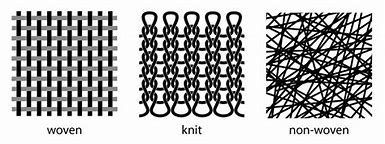
image from:artisanstitch.co.uk
Choosing the right yarn is only half the decision. The same yarn can perform very differently depending on how it’s constructed into fabric — and this is where a lot of sourcing decisions go wrong.
Contact area drives Q-max. A tightly knit single jersey maximizes skin-to-fabric contact, which is exactly what you want for a cool-touch application. A loose mesh structure reduces that contact area, which can drop effective Q-max by 15–30% even with an identical yarn. If you’re building a product around Cool-Touch Nylon’s sensory advantage, don’t undercut it with an open construction.
PCM needs room to work. Phase change microcapsules expand slightly during the solid-to-liquid transition. Overly compressed structures — heavy calendering, tight woven constructions — can restrict this movement and reduce thermal buffering capacity over time. Fine-gauge knits and rib structures tend to preserve PCM performance better through repeated wash cycles.
Moisture management requires directionality. For 8C Pro Polyester to perform at its best, the construction should support unidirectional moisture transport — moving sweat away from skin toward the outer surface. A Janus-structure double-layer construction (hydrophobic inner layer, hydrophilic outer layer) is the engineering solution here, and it’s worth specifying at the fabric development stage rather than trying to compensate with finishing.
| Application | Recommended Construction | Reason |
|---|---|---|
| Cool-touch innerwear / base layer | Fine-gauge single jersey | Maximum skin contact area |
| Performance sport T-shirt | Bird’s-eye or mesh | Moisture management + breathability |
| Outdoor / workwear jacket | Double-layer Janus structure | Directional sweat transport + outer protection |
| Premium sportswear with PCM | Fine-gauge knit or rib | Preserves capsule integrity, maintains loft |
A Single Yarn Has a Physical Ceiling — Here’s How to Break It
This is something worth saying plainly: every cooling yarn has a performance limit built into its physics. A contact-cool fabric can only conduct heat as fast as its thermal conductivity allows. A PCM fabric can only absorb heat until the phase change is complete. An evaporative fabric stops working when the air is already saturated.
The brands building genuinely differentiated cooling products aren’t relying on a single mechanism. They’re engineering yarn combinations that stack multiple cooling modes — and the performance gap between a single-function fabric and a well-designed combination fabric is significant.
🔗 Combination 1: Solar Heat Shielding + Contact Cool-Touch
This is the most commercially accessible multi-function approach. An outer layer incorporating TiO₂ or ZnO particles reflects near-infrared solar radiation — the portion of sunlight (roughly 52% of total solar energy) that converts to heat when absorbed by fabric. Pair that with a Cool-Touch Nylon inner face, and you get a fabric that blocks heat from entering while simultaneously conducting body heat away from skin.
The principle is straightforward: less solar heat entering the fabric means less heat the body needs to manage. In real-world outdoor conditions, this combination can deliver a perceived temperature reduction of 5–7°C — meaningfully more than either technology achieves independently.
🔗 Combination 2: PCM Thermal Buffer + 8C Pro Moisture Management
For high-intensity athletic applications, this pairing addresses two separate failure modes. During peak exertion, the PCM component absorbs excess heat before it builds up in the microclimate. During recovery or lower-intensity periods, the 8C Pro structure efficiently evacuates sweat moisture. The result is a fabric that handles both the thermal spike of hard effort and the lingering dampness of cool-down — a combination that standard single-function fabrics can’t replicate.
🔗 Combination 3: Radiative Cooling Outer + Cool-Touch Inner (Advanced / 2028+)
This is the direction the industry is moving toward for premium and technical applications. Radiative cooling materials — fabrics engineered to emit infrared radiation through the 8–13 μm atmospheric window — are the only passive textile technology capable of cooling below ambient air temperature. Combining a radiative cooling outer layer with a Cool-Touch Nylon inner layer creates a system that both rejects incoming solar heat and actively dissipates body heat. Commercial versions are still maturing (current TRL 4–5), but the first viable products are expected to reach competitive price points by 2028–2032.
“A single yarn has a physical ceiling. The real innovation happens when you engineer the interaction between yarns.”
Cost vs. Performance: Building a Sourcing Decision That Makes Sense
There’s no universal answer to which cooling fabric is “worth it” — it depends entirely on where the product sits in the market and what the consumer is paying for.
Volume / mass-market programs — 8C Pro Polyester is the right foundation. The Q-max is sufficient to pass standard thresholds comfortably, the moisture management is genuinely functional, and the cost structure supports competitive retail pricing. Don’t overspend on PCM technology for a $25 running shirt.
Mid-market performance — Cool-Touch Nylon hits the sweet spot. The Q-max of 0.37–0.40 is strong enough to support a credible marketing claim, the hand feel is premium enough for branded retail, and the cost premium over standard nylon is manageable. This is where most of the market volume will land over the next three to five years.
Premium and technical — PCM Nylon justifies its cost when the product story supports it. A $120 outdoor shirt or a technical workwear program where sustained thermal comfort is a genuine safety or performance requirement — these are the right homes for PCM technology. The performance is real and measurable, and the consumer in this segment is sophisticated enough to understand what they’re buying.
One more consideration that doesn’t show up on spec sheets: durability of the cooling function. Finish-applied cooling treatments degrade with washing. Yarn-level cooling technology — where the functional component is built into the fiber itself — is permanent. For any product that will be washed repeatedly, this distinction is worth asking about explicitly when evaluating suppliers.
Quick Decision Guide
Not sure where to start? Work through these questions:
📍 Where is your target market?
Tropical / high-humidity regions (Southeast Asia, South China, Gulf states) → PCM Nylon or Cool-Touch Nylon. Evaporative cooling loses most of its effectiveness above 70% RH, making 8C Pro Polyester a risky standalone choice in these markets.
💰 What’s the product price point?
- Under $40 retail → 8C Pro Polyester base, potentially blended with cool-touch elements
- $40–$100 retail → Cool-Touch Nylon, or 8C Pro + solar shielding combination
- $100+ retail → PCM Nylon, or a multi-function combination system
🎯 What does the consumer care most about?
- “I want to feel cool the moment I put it on” → Cool-Touch Nylon
- “I need to stay cool during a two-hour run in the heat” → PCM Nylon or PCM + 8C Pro combination
- “I need fast-drying performance at a reasonable price” → 8C Pro Polyester
🔄 How many wash cycles will this product go through?
High wash frequency (activewear, workwear) → prioritize yarn-level technology over finish treatments every time.
Cooling Fabric Is a Category, Not a Commodity
The “cooling fabric” label covers an enormous range of actual performance — from fabrics that barely pass the 0.15 W/cm² threshold to engineered systems capable of sustained sub-ambient cooling. The gap between them is real, measurable, and directly tied to the physical mechanism behind the technology.
PCM Nylon, Cool-Touch Nylon, and 8C Pro Polyester each occupy a distinct position in that range, and each is the right answer for a specific set of product requirements. The mistake is treating them as interchangeable options differentiated only by price.
The brands that will lead this category over the next five years are the ones investing now in multi-function yarn combinations — pairing solar shielding with contact cool-touch, or thermal buffering with moisture management — rather than relying on a single mechanism that hits its physical ceiling under real-world conditions.
Explore the full range of PCM Nylon, Cool-Touch Nylon, and 8C Pro Polyester — including technical specifications and sample requests — at smartexyarn.com.

Related Posts

What Is a Good Q-Max Value for Cooling Fabric? A Buyer’s Guide
What Q-Max measures, how to compare cooling fabric values, which test conditions matter, and what textile buyers should request from...
Dual-Action Cooling Fabric Explained:How IcSnow® Keeps Athletes Coolin Running, Yoga & Beyond
Most cooling fabrics do one thing well. IcSnow® does two — at the same time, from the first rep to...
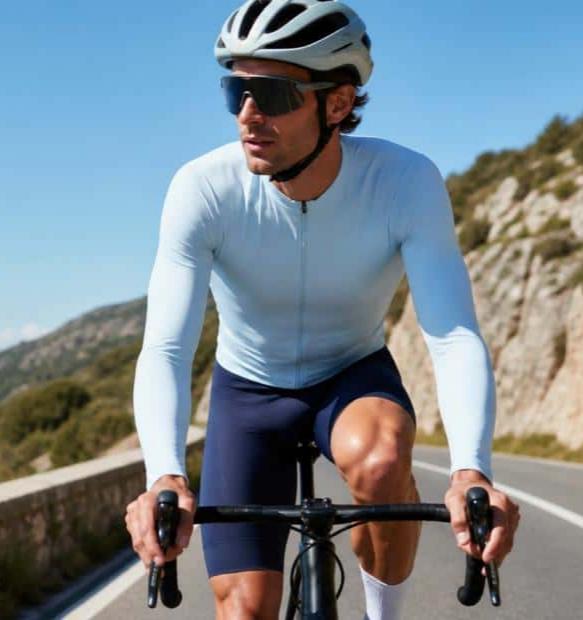
How NIR-Reflective Cooling Fabric Reduces Solar Heat Gain
Cooling Textile Series | 03 A buyer-focused guide to near-infrared reflection, textile construction, color, testing and the difference between heat...
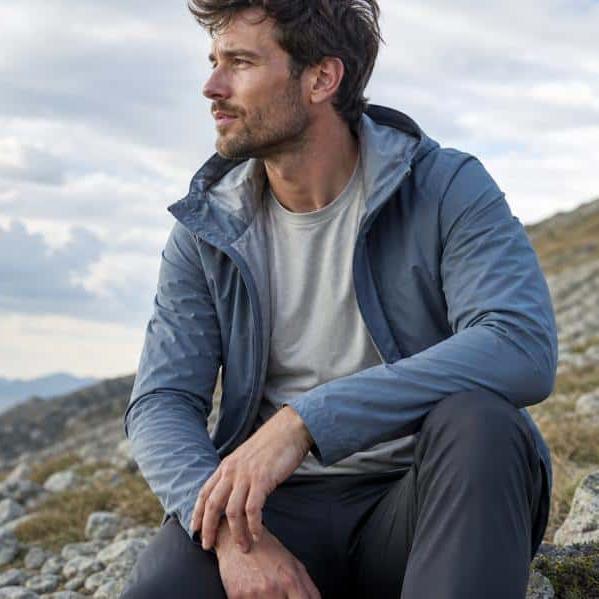
How PCM Cooling Fabric Works: Phase Change, Thermal Buffering and the Questions Buyers Should Ask
Cooling Textile Series | 02 A practical explanation of what phase change material can do in a textile, where its...