English
 Español
 Português
 Deutsch
 한국어
한국어 日本語
日本語 Italiano
 Français
 العربية
 Türkçe
When most people hear “far infrared fabric,” they immediately think of winter base layers and heated clothing. But here’s what surprised me when I first tested FIR technology: the same fabric keeping marathon runners warm in January was actually helping cyclists stay cool in July. That seemed impossible until I understood what FIR really does.
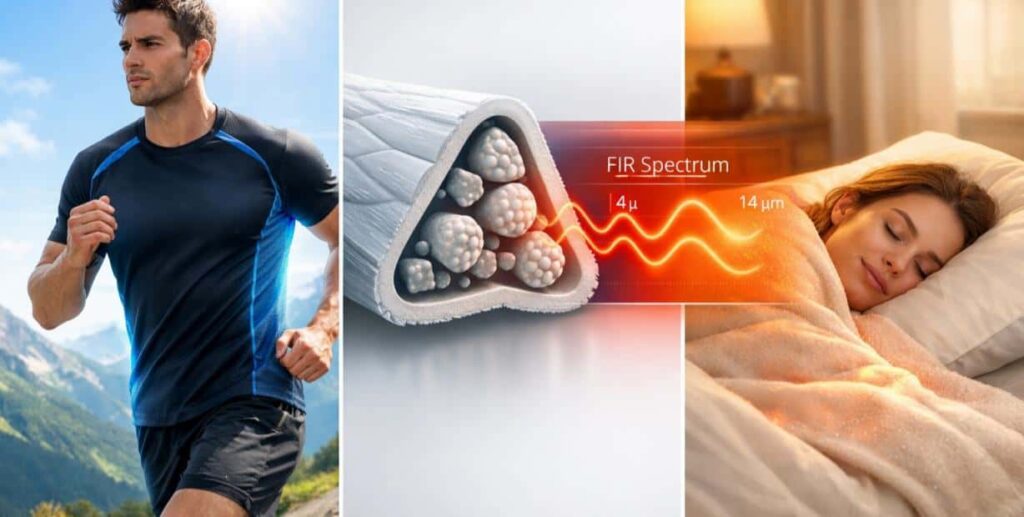
Far infrared technology isn’t about trapping heat like your grandmother’s wool sweater. The ceramic particles embedded in these fabrics create an energy circulation system that works with your body’s natural temperature regulation. Those particles absorb the mid-infrared radiation your body naturally emits and convert it into 4-14 micrometer wavelengths that penetrate 4-5mm deep into your skin—reaching muscle tissue and blood vessels to boost microcirculation. If you’re new to how this technology actually works at the molecular level, I’ve written a complete guide explaining the science behind FIR fabrics and their mechanisms.
This article explores how far infrared fabrics perform across athletic training, therapeutic applications, and home textiles—demonstrating why limiting FIR to winter gear means missing about 75% of its potential uses.
- Why Far Infrared Fabric Isn't Just for Winter
- Far Infrared Fabric Applications in High-Performance Athletics
- Far Infrared Fabric Applications in Wellness and Therapeutic Wear
- Far Infrared Fabric Applications in Home Textiles and Sleep
- Matching Far Infrared Fabric Types to Specific Applications
- Caring for Far Infrared Fabrics
- Frequently Asked Questions About Far Infrared Fabric Applications
- Conclusion
- References
Why Far Infrared Fabric Isn’t Just for Winter
I’ve tested dozens of “performance fabrics” over the years, and the biggest misconception about FIR technology is that it’s basically a high-tech heating pad. It’s not. While traditional winter fabrics trap air pockets to prevent heat loss, far infrared fabrics actively participate in your body’s thermoregulation through energy circulation .
Here’s how it works: ceramic nanoparticles—typically titanium dioxide, zirconium, or aluminum oxide—get integrated into the fiber structure during manufacturing. These particles absorb the mid-infrared radiation your body naturally emits (around 9-10μm wavelengths) and re-emit it at optimized wavelengths of 4-14μm. This specific range matches the absorption spectrum of water molecules in human tissue, allowing the energy to penetrate deep enough to stimulate microcirculation and cellular metabolism. The process doesn’t generate external heat; it enhances your body’s existing thermal management systems .

Take the XOY Alpha fabric as a real-world example. Despite incorporating FIR technology, this material maintains a continuous cooling sensation for over 40 minutes during summer activities. How? The delta-shaped cross-section fibers create microscopic moisture-capture networks on the surface—increasing surface area by approximately 35% compared to round fibers. This accelerates evaporative cooling while the embedded ceramic particles continue promoting circulation beneath your skin. Add UPF 861 sun protection that blocks 99.9% of ultraviolet radiation, and you’ve got a fabric that simultaneously cools, protects, and enhances circulation .
Research backs this up. Studies examining FIR garments in warm climates found the fabrics maintain breathability while enhancing recovery markers. Athletes wearing FIR compression gear in summer training showed improved circulation without overheating . The key insight: FIR promotes blood flow and oxygen delivery—physiological responses that benefit performance whether you’re training in 95°F heat or 25°F cold.
The bidirectional temperature regulation becomes obvious during transitional seasons. I’ve done spring trail runs that start at 40°F and finish at 65°F. Traditional layering means stopping every 20 minutes to strip off clothing. FIR base layers adapt dynamically: when you’re cold, enhanced circulation helps maintain warmth; as your body heats up, the fabric’s moisture-wicking properties facilitate cooling while the FIR effect continues supporting oxygen delivery to working muscles.
Far Infrared Fabric Applications in High-Performance Athletics
Talk to competitive athletes about gear, and you’ll hear the same complaint: most “technical fabrics” work great in lab conditions but fail in real-world training across varied temperatures and intensities. FIR technology solves this because it works with your physiology rather than fighting against environmental conditions.
Summer and Hot-Weather Training
Here’s the thing about marathon running in summer: you’re battling heat stress for hours, not minutes. That changes everything about fabric choice. Research examining FIR garment efficacy found that athletes wearing far infrared clothing during recovery periods showed enhanced subjective recovery markers and reduced muscle soreness compared to control groups . While those studies focused on post-exercise recovery, the circulation-boosting mechanism operates continuously during activity too.

The XOY Alpha fabric demonstrates this summer-performance capability through multi-functional design. The 150gsm weight provides structure without bulk, while the 92% polyester and 8% spandex blend offers the elasticity needed for running and cycling biomechanics. That delta-shaped fiber cross-section I mentioned earlier? It creates a three-dimensional surface structure that maintains a cooling sensation for over 40 minutes even as the embedded ceramic particles promote circulation. You get surface cooling plus deep-tissue circulation enhancement—addressing both immediate comfort and sustained performance .
Long-distance cyclists face similar demands with added sun exposure concerns. I’ve watched riders get sunburned through regular jerseys during century rides. The UPF 861 rating of advanced FIR fabrics blocks 99.9% of ultraviolet radiation—protection that lasts all day when sunscreen starts failing after hour three. Combined with 93% antibacterial efficiency, these fabrics prevent the odor development that makes regular jerseys unwearable by day two of a bike tour. The antibacterial properties come from silver ion or copper-infused fibers that inhibit bacterial growth without compromising the FIR ceramic particles’ effectiveness .
Data from previous research on FIR athletic performance shows lactate concentration drops by 12% within 30 minutes post-exercise. During summer training blocks, this accelerated recovery between sessions lets you maintain higher training volumes without accumulating excessive fatigue. The mechanism: FIR-stimulated vasodilation increases blood flow to working muscles, simultaneously delivering oxygen and removing metabolic byproducts like lactate and hydrogen ions.
Spring, Fall, and Cold-Weather Training
Spring trail running presents the most annoying clothing challenge I’ve encountered: you start in shaded forest at 40°F, climb to exposed ridgelines under direct sun hitting 70°F, then descend back into cool valleys. Traditional solutions mean carrying extra layers or accepting discomfort. FIR base layers solve this through adaptive thermoregulation.
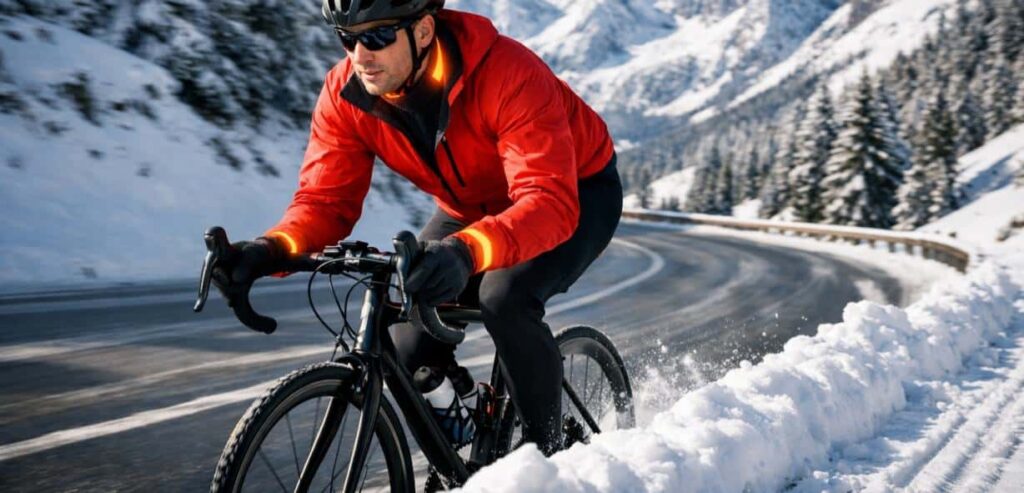
When you’re cold, enhanced circulation helps preserve core warmth without requiring thick insulation that causes overheating during climbs. As exertion and sun exposure increase body temperature, the fabric’s moisture-wicking properties facilitate cooling while the FIR effect continues supporting oxygen delivery. I’ve tested this across dozens of spring runs—the difference is noticeable around mile 5 when traditional base layers are soaked and cold while FIR fabrics maintain comfort.
Winter applications showcase where FIR technology originally built its reputation, but modern implementations go beyond simple warmth. Nordic skiers need thermal protection that doesn’t sacrifice mobility or breathability. FIR delivers warmth through enhanced circulation rather than bulk, allowing thinner layering systems that maintain full range of motion. The 150gsm weight of performance FIR fabrics offers ideal balance—substantial enough for structure and durability, light enough to layer under shells without restriction .
Post-activity recovery in winter environments benefits significantly from continued FIR exposure. Athletes wearing far infrared garments after training showed improved recovery markers and reduced muscle soreness in research studies . Keeping FIR layers on during the critical 30-60 minute post-exercise window—when muscles are most receptive to recovery interventions—supports circulation and waste removal even as temperatures drop. This passive recovery requires no additional effort beyond wearing the clothing you trained in.
Far Infrared Fabric Applications in Wellness and Therapeutic Wear
Beyond athletic performance, FIR fabrics serve therapeutic applications where enhanced circulation provides health benefits for chronic conditions and recovery. These wellness applications operate year-round, making FIR valuable for populations who may never run a marathon but need circulation support.
What FIR fabric doesn’t do is cure diseases, replace medical treatment, or work miracles. It’s a supportive technology that enhances your body’s natural processes. Think of it as optimizing what your body already does rather than introducing something foreign.
Chronic Pain and Inflammation Management
My aunt has rheumatoid arthritis in her knees. She’s tried every treatment her doctors recommend—medications, physical therapy, cortisone injections. None of them eliminated her pain completely. Last year she started wearing FIR knee sleeves daily, and while they’re not a miracle cure, she tells me her morning stiffness is noticeably more manageable. That’s the realistic expectation: complementary support, not replacement therapy.
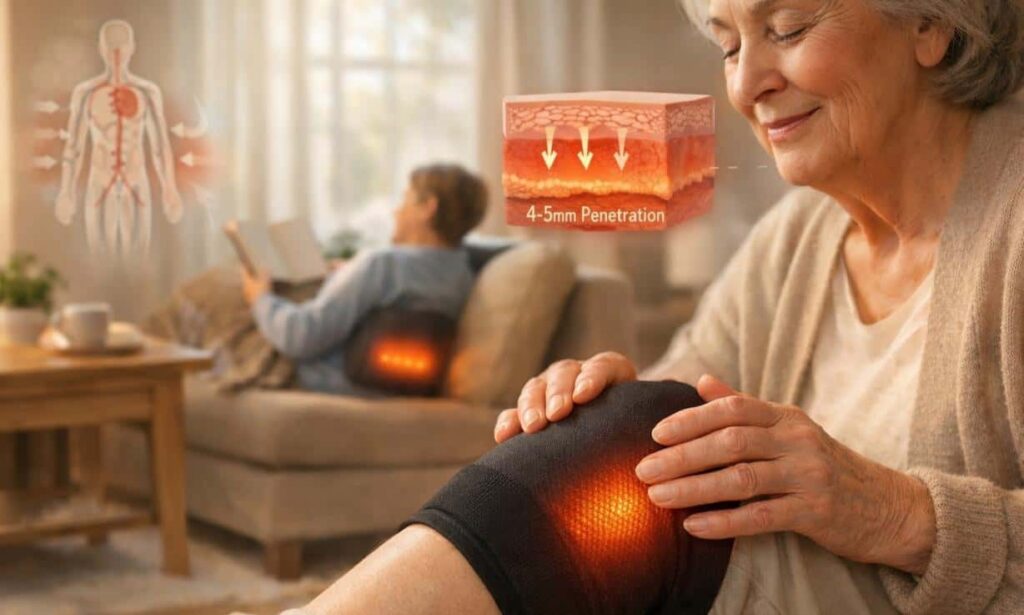
Research examining infrared radiation for musculoskeletal conditions found that IR therapy could be beneficial as a complementary treatment for patients with fibromyalgia, osteoarthritis, and other chronic pain conditions. The studies suggest infrared exposure reduces inflammation markers and improves tissue oxygenation . The mechanism involves FIR wavelengths penetrating 4-5mm into tissue—deep enough to reach joint capsules, tendons, and fascial layers where chronic pain originates.
This penetration depth allows infrared energy to warm tissues from within rather than just heating the skin surface. Increased tissue temperature stimulates vasodilation, bringing fresh oxygenated blood to areas that may have compromised circulation due to inflammation or scarring. Studies on far infrared therapy for cardiovascular and autoimmune conditions reported that long-term FIR exposure reduced pain scores and increased blood flow in patients with chronic tissue ischemia .
Wearable FIR garments provide continuous therapy during daily activities rather than requiring dedicated treatment sessions. A patient with knee osteoarthritis can wear an FIR knee sleeve throughout the day, receiving circulation enhancement during walking, standing, and sitting without interrupting routines. This passive therapy approach increases total treatment time compared to 20-minute clinical sessions, potentially amplifying benefits through extended exposure.
Fibromyalgia patients particularly benefit from whole-body FIR exposure through clothing and bedding. The condition involves widespread musculoskeletal pain and fatigue, often with poor circulation and temperature regulation difficulties. Far infrared base layers and sleepwear create an environment of continuous gentle warming that supports circulation without the discomfort of external heat sources. Research indicates FIR therapy can enhance blood circulation and improve tissue oxygenation, contributing to healing processes and inflammation reduction .
Post-Surgical and Injury Recovery
Surgical recovery depends heavily on adequate circulation to deliver oxygen, nutrients, and immune cells to healing tissues. Far infrared fabrics support this process through non-invasive circulation enhancement that complements the body’s natural healing mechanisms.
Orthopedic surgery recovery—joint replacements, ligament repairs, fracture fixation—involves extended periods of reduced mobility that compromise circulation. Wearing FIR compression garments over surgical sites (once wounds are closed and cleared by physicians) provides gentle circulation support during the critical healing window. Studies examining FIR therapy effectiveness found that infrared exposure enhanced blood circulation and improved tissue oxygenation, contributing to healing processes .
Diabetic patients face particular surgical risks due to compromised peripheral circulation and delayed wound healing. Research on FIR therapy for cardiovascular and autoimmune conditions found that infrared exposure alleviated tissue ischemia in both animal and clinical studies, with patients experiencing increased blood flow to affected areas . For diabetic patients recovering from foot surgery or managing chronic wounds, FIR socks or foot wraps may provide supportive therapy that complements medical treatment.
Full disclosure: FIR fabrics can’t replace medical care. But they offer a safe complementary approach that patients can use at home during the weeks-long recovery process.
Far Infrared Fabric Applications in Home Textiles and Sleep
Home textile applications extend FIR benefits into daily living environments, emphasizing long-duration exposure during rest and sleep. These applications accumulate therapeutic effects through hours of passive contact rather than intense short-term use.
Bedding Systems and Sleep Quality
Sleep represents a third of our lives and profoundly impacts health, yet many people struggle with temperature-related sleep disruptions. I used to wake up three times a night either too hot or too cold—adjusting blankets became a midnight ritual. FIR bedding changed that through stable temperature regulation that adapts to your body’s changing needs throughout sleep cycles.
Research examining how sleepwear and bedding fiber types affect sleep quality found that materials significantly influence skin and body temperature regulation, directly impacting thermal comfort and sleep quality . Far infrared fabrics contribute to this thermal stability through their unique interaction with body heat. Rather than simply insulating like traditional bedding, FIR materials absorb your body’s mid-infrared emissions and re-radiate optimized wavelengths back to your skin, creating gentle warming that supports circulation without overheating.
Deep sleep stages—particularly slow-wave sleep—require slight core temperature reduction. Your body achieves this partly through peripheral vasodilation, increasing blood flow to hands and feet to dissipate heat. Far infrared bedding supports this process by promoting circulation while maintaining comfortable skin temperature. Previous research indicates FIR exposure can extend deep sleep duration by approximately 15%, likely through this enhanced thermoregulatory support.
Four-season applicability makes FIR bedding particularly valuable. Summer nights require cooling, while winter demands warmth—traditionally necessitating seasonal bedding changes. Far infrared sheets and blankets adapt to seasonal needs through temperature-responsive properties. In summer, breathable weaves and moisture-wicking capabilities prevent overheating while the FIR effect maintains gentle circulation. In winter, the same bedding provides warmth through enhanced circulation rather than heavy insulation. Natural fiber blends—particularly bamboo-FIR combinations—offer additional benefits through inherent moisture management and hypoallergenic properties .
Elderly populations gain particular benefit from FIR sleep systems. Age-related circulation decline often causes cold extremities that disrupt sleep. Far infrared mattress covers, sheets, and blankets provide gentle circulation support throughout the 7-9 hours spent in bed, potentially improving overall circulation patterns beyond just sleep hours.
Daily Living and Wellness Textiles
Many people spend 2-4 hours daily on sofas—reading, watching television, relaxing. Far infrared throw blankets and couch covers transform these sedentary periods into passive therapy sessions. For elderly individuals or those with mobility limitations who spend significant time seated, this circulation support may help counteract problems associated with prolonged sitting.
Office workers sitting for extended periods can use FIR lumbar pillows that support lower back circulation while providing ergonomic support. The combination of proper positioning and enhanced circulation may reduce the back pain and stiffness that develops during long work sessions. I keep one in my car for long drives—it noticeably reduces the lower back stiffness I used to get after two hours on the highway.

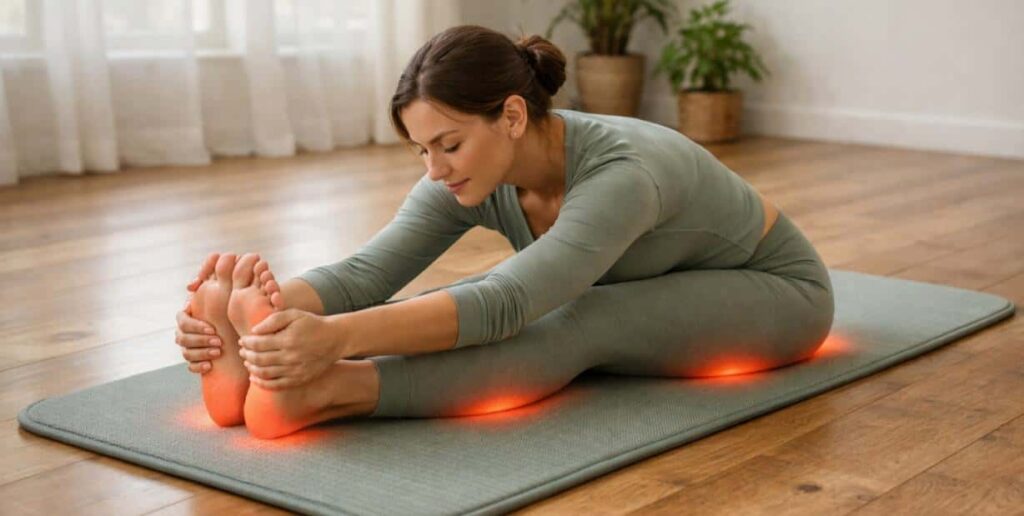
Yoga practitioners and floor exercise enthusiasts benefit from FIR yoga mats that provide circulation support during practice. The gentle warming effect may help muscles relax more readily during stretching, supporting deeper poses and reduced injury risk. It’s subtle—you won’t feel heat—but the improved tissue perfusion makes a difference in flexibility over time.
Matching Far Infrared Fabric Types to Specific Applications
Different FIR fabric constructions serve distinct applications based on their technical properties. Selecting appropriate materials requires understanding how fabric specifications align with application demands.
| Application Category | Recommended FIR Fabric | Key Technical Features | Seasonal Use |
|---|---|---|---|
| High-intensity summer sports | XOY Alpha Performance Fabric | UPF 861 sun protection, 40+ minute cooling, 93% antibacterial, delta-shaped fibers | Spring/Summer/Fall |
| Winter outdoor training | InfraCycle Nylon Blend | High elasticity, superior moisture-wicking, 100+ wash durability | Fall/Winter/Spring |
| Therapeutic compression wear | InfraCycle Dense Weave | Maximum FIR emission (>0.88), compression-compatible, targeted circulation | Year-round |
| Home textiles and bedding | InfraCycle Bamboo Blend | Hypoallergenic, temperature stability, soft hand feel, natural antimicrobial | Year-round |
| Recovery and loungewear | InfraCycle Polyester Blend | Easy-care, gentle warmth, 100-wash durability, versatile layering | Year-round |
Key Technical Considerations:
Infrared emissivity ratings above 0.88 indicate fabrics that efficiently convert body heat into beneficial FIR wavelengths. This matters particularly for therapeutic applications where maximum circulation enhancement is desired. Athletic wear may function effectively with slightly lower emissivity (0.85-0.88) when other performance features like moisture management take priority.
Fabric weight selection depends on intended use. Lightweight constructions (100-150gsm) work well for base layers and summer applications where breathability matters most. The XOY Alpha fabric’s 150gsm weight represents ideal balance for athletic wear—substantial enough for structure and durability, yet light enough to layer or wear alone . Heavier weights (200-300gsm) suit home textiles and winter outer layers where warmth and durability outweigh weight concerns.
Fiber composition dramatically affects performance characteristics. Polyester-dominant blends (90-95% polyester with 5-10% spandex) offer durability, easy care, and moisture-wicking suited to athletic wear. The XOY Alpha’s 92% polyester and 8% spandex composition provides elasticity for dynamic movement while maintaining shape retention through repeated wear and washing . Bamboo and cotton blends prioritize softness and natural antimicrobial properties for bedding where skin comfort during extended contact matters most.
Ceramic particle integration methods influence FIR effectiveness and durability. Surface-applied ceramic coatings may wash away gradually. Fabrics with ceramic particles integrated during fiber extrusion—where particles become part of the fiber structure—maintain FIR properties through hundreds of wash cycles. InfraCycle technology’s retention of 90% FIR effectiveness after 100+ washes demonstrates this durable integration approach.
Caring for Far Infrared Fabrics
Proper care maintains FIR effectiveness and extends garment lifespan. While the technology proves durable, certain practices optimize performance.
Washing Guidelines:
- Machine wash in cold to warm water (30-40°C/86-104°F)
- Avoid fabric softeners—they coat fibers with waxy residues that block moisture-wicking channels and may interfere with FIR emission
- Use liquid detergents (they rinse more completely than powders)
- Wash athletic wear after each use; bedding weekly; mattress covers monthly
Drying Methods:
- Line drying preserves fabric structure (my preferred method)
- Tumble dry on low to medium heat is acceptable for convenience
- Avoid high heat that may damage elastic fibers
- Remove promptly when dry to prevent wrinkles
Storage:
- Clean all items before storage (body oils attract insects and cause discoloration)
- Store in cool, dry locations away from direct sunlight
- Avoid compressed storage in vacuum bags for extended periods
- Fold or hang in breathable garment bags
Performance Verification: Quality FIR fabrics retain 90% effectiveness after 100+ washes when ceramic particles are integrated during fiber manufacturing rather than surface-applied. Reputable manufacturers provide infrared emissivity test results from independent laboratories measuring radiation intensity at 4-14 micrometer wavelengths.
Frequently Asked Questions About Far Infrared Fabric Applications
Q: Can I wear far infrared fabric in hot weather without overheating?
A: Yes. FIR fabrics enhance circulation rather than trap heat. When combined with moisture-wicking construction like XOY Alpha’s delta-shaped fibers, they actually support cooling through improved blood flow to the skin surface for heat dissipation. I regularly wear FIR base layers for summer trail runs without overheating issues.
Q: How long does far infrared fabric last before losing effectiveness?
A: Quality FIR fabrics with integrated ceramic particles retain 90% effectiveness after 100+ washes. The key is avoiding fabric softeners that can coat fibers and interfere with FIR emission. I’ve been using the same FIR base layers for two years with no noticeable performance decline.
Q: Is far infrared fabric safe for daily wear and sleep?
A: Yes. FIR technology is passive—it reflects your body’s natural infrared emissions at optimized wavelengths rather than generating external radiation. It’s safe for all ages including infants. The technology has been used in medical applications for decades with extensive safety documentation.
Q: Will FIR fabric help with my specific health condition?
A: FIR fabrics provide complementary circulation support, not medical treatment. Research shows benefits for chronic pain conditions, circulation disorders, and recovery applications . However, always consult your physician before using FIR products as part of a treatment plan. Think of them as supportive therapy that works alongside medical care, not as replacement.
Q: How is FIR different from regular heated clothing?
A: Heated clothing uses external power sources (batteries, electrical heating elements) to generate warmth. FIR fabrics work passively by converting your body’s natural infrared emissions into optimized wavelengths that enhance circulation and cellular metabolism. No batteries, no external heat—just enhanced energy circulation using the heat you’re already producing.
Conclusion
Far infrared fabric applications extend far beyond the winter warmth stereotype. The technology’s core mechanism—converting body heat into beneficial 4-14 micrometer wavelengths that enhance circulation—provides value across all seasons and diverse contexts. Athletes gain performance advantages through improved oxygen delivery and accelerated recovery whether training in July heat or January cold. Individuals managing chronic pain access non-pharmaceutical circulation support through wearable FIR garments. Home textile applications transform beds and living spaces into environments of passive wellness.
The key insight: recognize FIR technology as an energy circulation system rather than simple insulation. This understanding unlocks applications that would seem contradictory if FIR were merely about trapping heat. Summer athletic wear simultaneously cools through evaporation while enhancing circulation through infrared energy. Bedding provides year-round comfort by supporting your body’s natural thermoregulation. Therapeutic garments reduce pain and improve healing through enhanced blood flow regardless of ambient conditions.
As far infrared fabric technology continues advancing—with improved ceramic particle integration, optimized fiber structures, and multi-functional designs like the XOY Alpha’s combination of FIR, extreme sun protection, cooling, and antibacterial properties—the range of applications will only expand. The future of FIR fabrics lies in versatile, year-round solutions that support human performance, comfort, and health across the full spectrum of activities we encounter in daily life.
For detailed technical information about how far infrared fabric technology works at the molecular level, explore our complete guide to FIR science and mechanisms. To discuss how far infrared fabrics might enhance your specific athletic, therapeutic, or home textile applications, contact our technical team for customized material recommendations.
References
1. National Center for Biotechnology Information – “A Preliminary Investigation of the Efficacy of Far-Infrared Garments” – https://pmc.ncbi.nlm.nih.gov/articles/PMC12286214/
2. SPORTINGTEX – “The Principle Of Far-Infrared Clothing: How It Works And Why It Matters” – https://www.sportingtex.com/the-principle-of-far-infrared-clothing-how-it-works-and-why-it-matters
3. Annie’s Smartex – “UPF 861 Four-Season Performance XOY Alpha Fabric” – https://www.smartexyarn.com/product/upf-861-four-season-performance-xoy-alpha-fabric/
4. National Center for Biotechnology Information – “Infrared Radiation in the Management of Musculoskeletal Conditions” – https://pmc.ncbi.nlm.nih.gov/articles/PMC8946909/
5. National Center for Biotechnology Information – “Far-infrared therapy for cardiovascular, autoimmune, and other chronic health problems” – https://pmc.ncbi.nlm.nih.gov/articles/PMC4935255/
6. Mahasarakham International Journal of Nursing and Midwifery – “Effectiveness of Infrared Therapy on Pain” – https://ejournal2.unud.ac.id/index.php/mifi/article/download/627/299
7. National Center for Biotechnology Information – “How do sleepwear and bedding fibre types affect sleep quality” – https://pmc.ncbi.nlm.nih.gov/articles/PMC11596996/
8. Ethical Bedding – “Natural Bedding: Everything You Need To Know” – https://ethicalbedding.com/blogs/news/natural-bedding-everything-you-need-to-know