 English
 Español
 Português
 Deutsch
 한국어
한국어 日本語
日本語 Italiano
 Français
 العربية
 Türkçe
Recovery wear has evolved far beyond compression tights and cooling sleeves. Today, the most advanced athletic garments are engineered at the fiber level — where the yarn itself becomes the performance technology. XOY Alpha δ-Groove Polyester Yarn represents exactly this shift: a far-infrared modified polyester that doesn’t just manage moisture, but actively responds to the body’s physiological state during and after exercise.
What Is Far-Infrared Technology in Textiles?
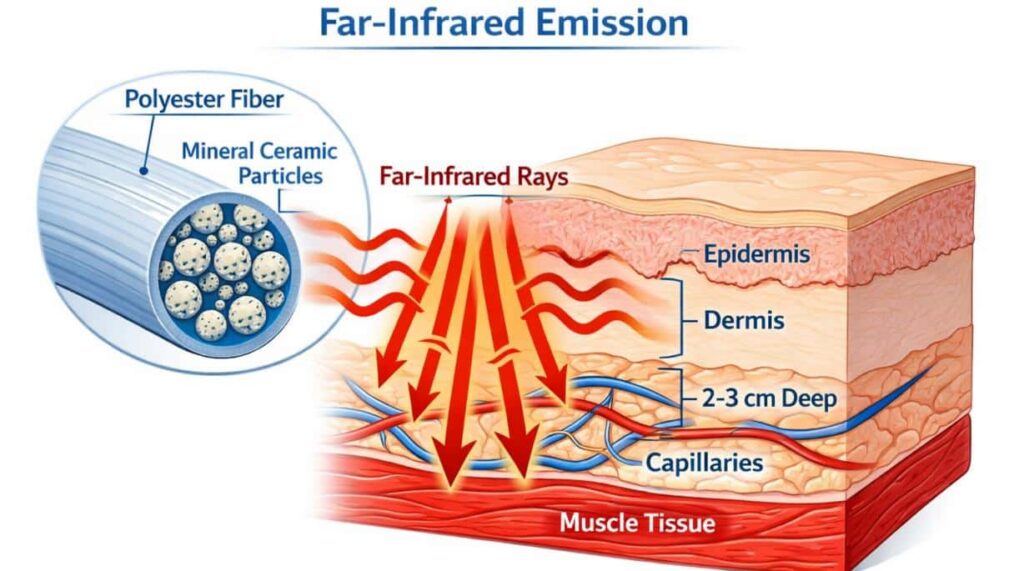
Far-infrared radiation (FIR) refers to electromagnetic waves in the 4–14 µm wavelength range — a spectrum that resonates with the natural thermal emission of the human body. When mineral-based powders such as ceramic particles or tourmaline are embedded into polyester fibers during the melt-spinning process, the resulting yarn absorbs body heat and re-emits it as FIR energy directed back into the skin and underlying tissue.
This isn’t passive insulation. FIR energy penetrates 2–3 cm beneath the skin surface, where it interacts with microvascular tissue. The biological response includes vasodilation of capillaries, improved local blood circulation, enhanced oxygen delivery to muscle cells, and accelerated clearance of metabolic waste products such as lactic acid. These mechanisms are the physiological foundation of what the recovery wear industry calls “active recovery” — and they are now clinically validated.
A 2025 peer-reviewed study published in the Journal of Functional Morphology and Kinesiology by researchers at the University of Notre Dame investigated the efficacy of FIR-emitting garments on neuromuscular recovery following resistance exercise. Participants wearing FIR garments demonstrated statistically significant improvements in countermovement jump height, takeoff velocity, and Modified Reactive Strength Index (mRSI) at 48 hours post-exercise compared to a placebo group — with mRSI showing measurable improvements as early as 24 hours. Subjective recovery perceptions also favored the FIR group within the 48-hour recovery window. This study represents the 11th peer-reviewed publication validating FIR textile technology in clinical settings.
The Problem with Traditional Recovery Wear
Most recovery garments on the market address only one physiological variable. Compression garments reduce swelling through mechanical pressure. Cooling fabrics manage surface temperature through evaporation. Thermal base layers retain heat for muscle warmth. Each of these approaches is static — the fabric behaves the same way regardless of what the body is doing at any given moment.
This is where traditional recovery wear falls short for high-performance athletes. During a marathon, the body simultaneously needs cooling to prevent heat stress and circulatory support to sustain muscle output. During the post-workout recovery window, the priority shifts entirely toward heat retention, FIR stimulation, and reduced inflammation. A fabric that performs optimally in one state often underperforms in the other.
The result is a market full of garments that athletes wear either during exercise or after — rarely both. XOY Alpha Yarn (👈click the link) was engineered to close this gap.
How XOY Alpha Combines FIR with Dynamic Moisture Management
XOY Alpha’s performance architecture begins with its δ-type cross-sectional geometry. Unlike round or conventional trilobal fibers, the δ-groove structure creates three-dimensional surface channels along the fiber length. These microscopic grooves function as capillary networks — drawing sweat away from the skin surface through wicking action and distributing moisture across a larger evaporation area.
The cooling mechanism is precise: when moisture enters the groove network, water molecules become temporarily locked within the fiber matrix, creating controlled evaporation zones. As evaporation occurs, heat is absorbed from the skin surface, generating a sustained cooling sensation that laboratory testing confirms lasts 40+ minutes during continuous physical activity. This is not a surface treatment or a coating — it is structural cooling built into the fiber geometry itself.
The far-infrared component operates through a different but complementary mechanism. Mineral powders — including ceramic particles with high FIR emissivity — are incorporated directly into the polyester matrix during melt extrusion. These particles are permanently embedded, not applied to the surface, which is why XOY Alpha maintains its FIR emission performance through 50+ wash cycles. When the body is at rest or in low-activity states, the mineral particles absorb residual body heat and re-emit it as FIR radiation, stimulating microcirculation in the underlying tissue.
The dynamic interaction between these two systems is what makes XOY Alpha genuinely different. During high-intensity exercise, sweat production activates the δ-groove moisture management system, prioritizing cooling and temperature regulation. As activity decreases and sweat production drops, the FIR emission system becomes the dominant active mechanism, shifting the garment’s physiological function toward circulatory stimulation and recovery support. The same garment, the same fiber — two distinct performance modes triggered by the body’s own physiological state.
Clinical Evidence: FIR’s Measurable Impact on Athletic Recovery
The scientific foundation for FIR in recovery wear has grown substantially in recent years. CELLIANT, one of the most extensively studied FIR textile technologies, now has 11 peer-reviewed clinical publications supporting its efficacy. The 2025 University of Notre Dame study added critical neuromuscular performance data to this body of evidence, demonstrating that FIR garments can accelerate return-to-baseline performance metrics following high-intensity resistance training.
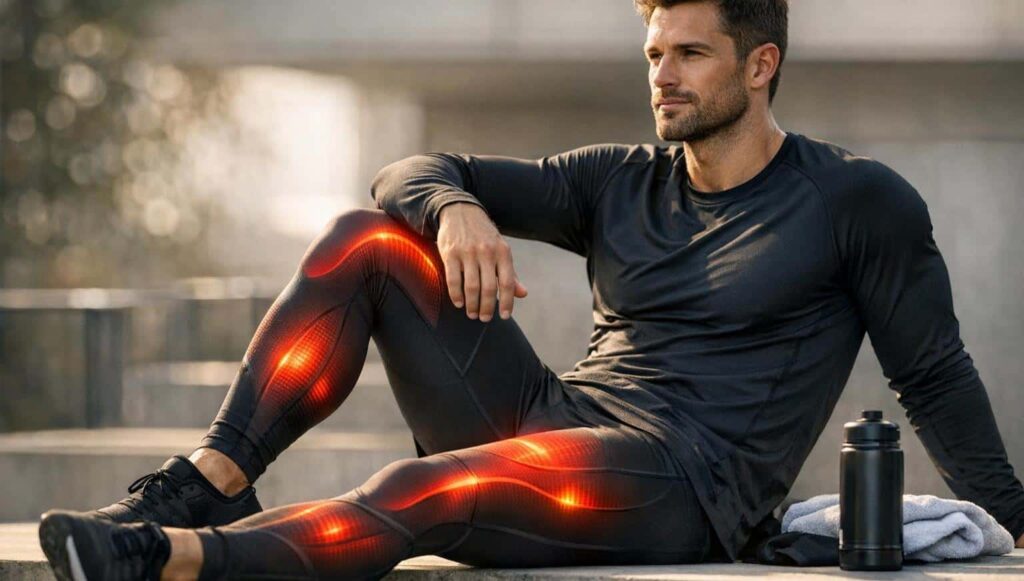
Key findings from the 2025 study are directly relevant to recovery wear applications:
- Jump height and takeoff velocity recovered significantly faster in the FIR group at 48 hours post-exercise, indicating improved neuromuscular readiness
- mRSI improvements were observable at 24 hours, suggesting FIR may compress the early recovery timeline
- Subjective recovery perceptions aligned with objective metrics, with FIR group participants reporting feeling recovered within the 48-hour window
For fabric developers and athletic wear brands, these data points translate directly into product positioning. Recovery wear incorporating FIR yarn is not marketing language — it is a measurable physiological intervention that can be validated through standardized performance testing.
The FIR wavelength range of 2.5–20 µm used in the study aligns with the emission spectrum of the mineral powders embedded in XOY Alpha’s polyester matrix, making the clinical findings directly applicable to garments manufactured with this yarn.
UPF 861 and Antibacterial Properties: The Full-Spectrum Performance Profile
Recovery wear is increasingly worn across multiple contexts — post-training sessions, outdoor recovery walks, travel, and sleep. This multi-context usage demands a broader performance profile than FIR and moisture management alone.
XOY Alpha addresses this through two additional integrated technologies. Zinc ions and titanium dioxide nanoparticles embedded within the fiber matrix provide UV protection rated at UPF 861 — blocking over 99.9% of harmful ultraviolet radiation. This is not a surface coating that degrades with washing; the UV-blocking minerals are part of the fiber structure, maintaining protection durability equivalent to the FIR and moisture management systems.
The same zinc ion integration that contributes to UV protection also delivers 93% antibacterial efficacy against common odor-causing microorganisms. For recovery garments worn during extended periods — overnight compression, multi-hour post-training wear, or travel — antibacterial performance is a functional requirement, not a marketing addition. Laboratory testing confirms this efficacy is maintained through 50+ wash cycles, meeting the durability standard expected of premium athletic textiles.
Applications: Recovery Wear, Compression Garments, and Athletic Base Layers
XOY Alpha’s dual-mode performance profile — active cooling during exercise, FIR recovery stimulation at rest — makes it particularly well-suited for garment categories where the wearer transitions between high and low activity states.
Recovery tights and compression leggings represent the most direct application. Athletes wearing XOY Alpha-based compression garments benefit from moisture management during training and FIR circulatory stimulation during the post-workout recovery window, without needing to change garments. The 50+ wash durability ensures consistent performance across a full training season.
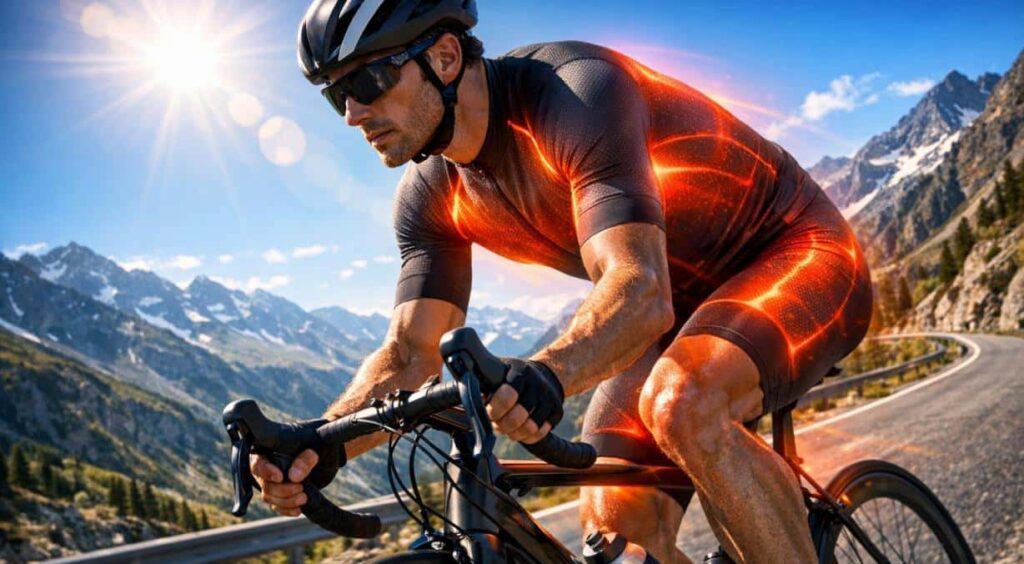
Athletic base layers for endurance sports — marathon running, cycling, triathlon — benefit from the sustained 40+ minute cooling effect during competition, while the FIR component supports recovery during lower-intensity training phases and rest days.
Outdoor and adventure apparel gains additional value from the UPF 861 protection, making XOY Alpha-based fabrics appropriate for high-altitude environments, extended sun exposure during hiking or climbing, and beach sports where UV protection is a primary requirement.
Therapeutic and medical-adjacent garments — including post-surgical compression wear, rehabilitation garments, and sleep recovery products — represent a growing market segment where FIR’s clinically validated circulatory benefits align directly with therapeutic goals. CELLIANT’s FDA classification as a general wellness medical device, and its Class 1 Medical Device designation across multiple international markets including Japan, the EU, Australia, and Canada, establishes the regulatory precedent for FIR textiles in this category.
Why the Japanese Recovery Wear Market Leads FIR Adoption
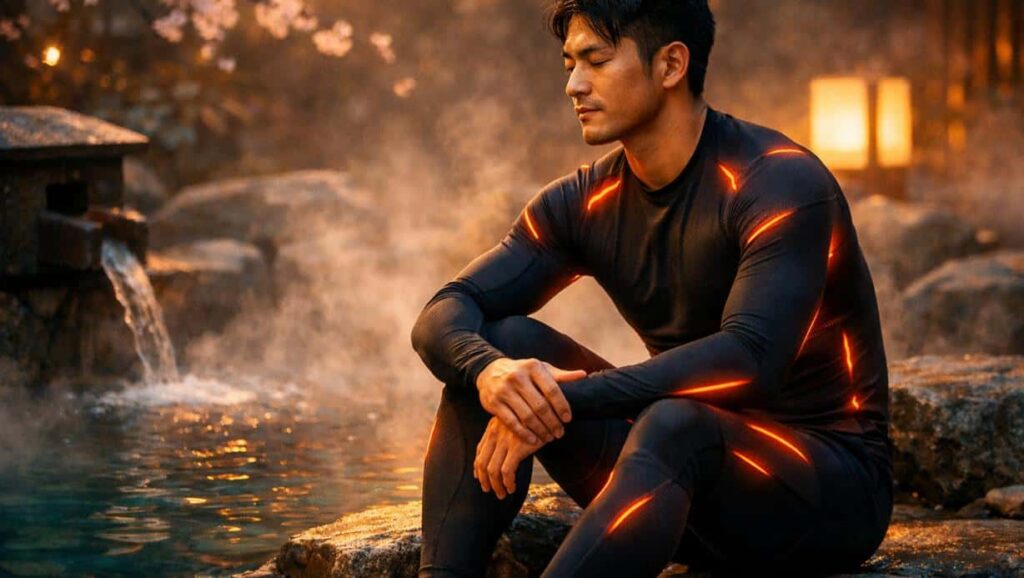
Japan represents the most mature consumer market for FIR recovery textiles globally. Japanese consumers have a well-established cultural framework for understanding the health benefits of far-infrared exposure — rooted in the tradition of onsen (hot spring) bathing, where natural mineral-rich waters emit FIR radiation as part of their therapeutic effect. This cultural familiarity creates a consumer base that is uniquely receptive to FIR textile technology.
Japanese regulatory recognition has further accelerated market development. CELLIANT holds Class 1 Medical Device designation in Japan, and the Japanese market has seen significant investment from domestic brands in FIR-integrated recovery wear, compression garments, and sleep products. For yarn suppliers and fabric developers targeting Japanese athletic wear brands, FIR performance data — particularly wash durability and emission consistency — is a standard procurement requirement rather than a differentiating feature.
For brands developing products for the Japanese market, XOY Alpha’s permanent mineral integration and 50+ wash cycle durability directly addresses the technical specifications that Japanese buyers prioritize. The combination of FIR emission, moisture management, and antibacterial performance in a single yarn also aligns with the Japanese market’s preference for multi-functional textiles that deliver measurable, certifiable health benefits.
The Engineering Advantage: Permanent Integration vs. Surface Treatment
A critical distinction in the FIR yarn market is the difference between permanently integrated mineral powders and surface-applied treatments. Surface treatments — whether applied through padding, coating, or finishing processes — degrade with repeated washing, mechanical stress, and UV exposure. The FIR emission performance of surface-treated fabrics typically declines significantly within 10–20 wash cycles, undermining the long-term value proposition of recovery wear products.
XOY Alpha’s mineral powders are incorporated into the polyester matrix during melt extrusion — the same manufacturing stage at which the fiber cross-section geometry is formed. This means the FIR-emitting particles, UV-blocking minerals, and antibacterial zinc ions are structurally part of the fiber, not applied to its surface. Wash durability testing confirms consistent performance through 50+ cycles, providing the functional longevity that premium recovery wear brands require to support product warranties and long-term brand credibility.
This permanent integration approach also enables the modular formulation flexibility that makes XOY Alpha adaptable across different performance specifications. The mineral powder blend can be adjusted to optimize FIR emissivity, UV protection level, or antibacterial efficacy depending on the target application — allowing fabric developers to work with a single yarn platform across multiple product lines.
Conclusion: A New Standard for Recovery Wear Yarn
The convergence of far-infrared technology and dynamic moisture management in a single polyester yarn represents a meaningful advancement in recovery wear engineering. XOY Alpha δ-Groove Polyester Yarn delivers what the market has been building toward: a fiber that actively responds to the body’s physiological state, providing cooling support during exercise and circulatory recovery stimulation at rest — permanently, durably, and without compromise to UV protection or antibacterial performance.
For fabric developers, athletic wear brands, and recovery garment manufacturers seeking a yarn that performs across the full activity-to-recovery spectrum, XOY Alpha provides both the technical foundation and the clinical evidence base to support premium product positioning in the global recovery wear market.
References:
1. Lever JR, et al. “A Preliminary Investigation of the Efficacy of Far-Infrared-Emitting Garments in Enhancing Objective and Subjective Recovery Following Resistance Exercise.” J Funct Morphol Kinesiol. 2025;10(3):280. doi:10.3390/jfmk10030280
2. CELLIANT. “New Study Expands the Clinical Research Supporting CELLIANT Infrared Technology.” January 28, 2026.

Related Posts
4-in-1 Solution for Antibacterial, Deodorizing, Cooling, and Moisture Management in Sportswear
Imagine you’ve just finished an intense yoga class or a long-distance cycling session. Although you feel refreshed, your sportswear emits...
Far-Infrared Fabric for Performance Apparel: What Buyers Should Specify and Test
Learn how to specify and test far-infrared fabric for performance apparel, compare construction routes, review FIR evidence and prepare a...

Far-Infrared Running Base Layer: Balancing Warmth and Sweat Management
A proposed two-route fabric development plan for a cool-weather far-infrared running base layer, comparing a 235 gsm winter-weight knit with...

Recover Faster, Perform Better, Sleep Deeper: How InfraCycle® Max Infrared Fabric Works Across Three Wellness Worlds
Most infrared fabrics promise one thing: warmth. InfraCycle® Max promises something bigger. Recovery. Performance. Sleep. Three distinct wellness worlds —...