 English
 Español
 Português
 Deutsch
 한국어
한국어 日本語
日本語 Italiano
 Français
 العربية
 Türkçe
Pineapple leaf fiber (PALF) is a cellulose-rich fiber extracted from the leaves left after pineapple cultivation. The extracted bundle is not automatically a soft apparel yarn: it still has to be cleaned, separated, conditioned and prepared for the intended spinning system. That distinction matters because a raw PALF sample, a PALF blend yarn and a finished fabric can have very different composition, handle and performance claims.
This guide answers the material question behind searches for “pineapple fiber” and “pineapple leaf fiber.” It does not replace the specifications on our raw pineapple leaf fiber page or the running composition on our PALF–Modal spun yarn page. If you are comparing samples, begin by identifying which material stage a supplier is actually offering.
What Is Pineapple Leaf Fiber?
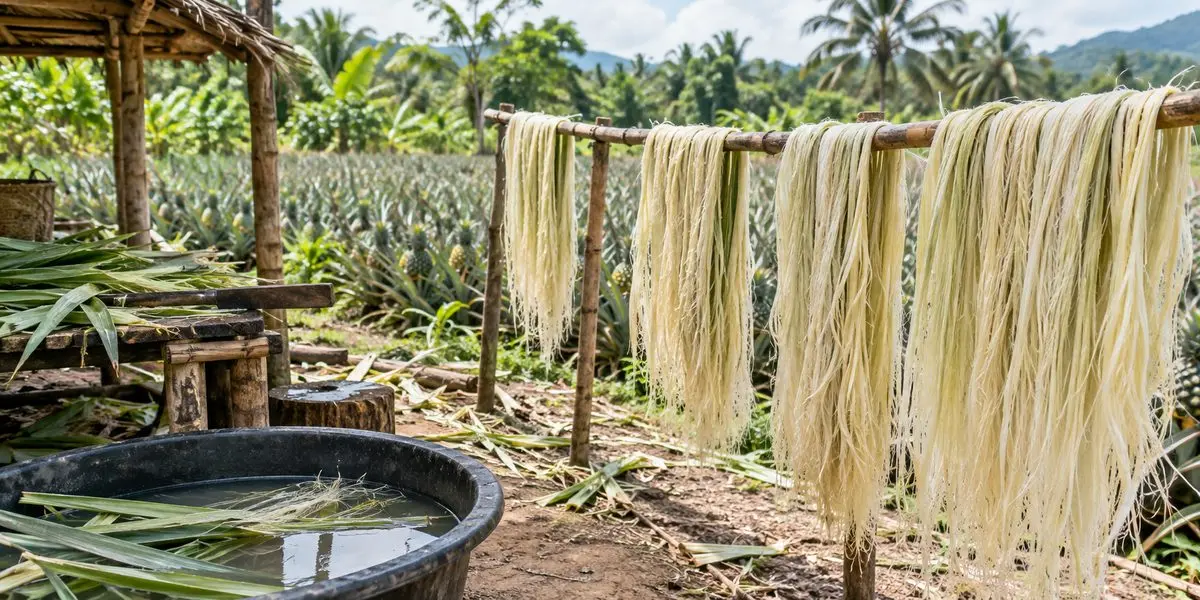
PALF comes from the vascular fiber bundles inside pineapple leaves. These bundles contain cellulose together with hemicellulose, lignin and pectin. Their composition and geometry help explain why PALF can be strong and lustrous, but also why an untreated bundle may feel too coarse or inconsistent for a lightweight apparel fabric.
A 2025 review in the Journal of Natural Fibers describes PALF from plantation through extraction, processing and end use. For a buyer, the practical point is simple: “pineapple fiber” identifies the botanical source, not a finished textile specification. Variety, leaf maturity, extraction route, residual non-cellulosic material, fiber length and preparation all affect what happens next.
How Do Pineapple Leaves Become Spinnable Textile Fiber?
The route usually begins with leaf collection and mechanical scraping or decortication to release the long bundles. Washing and drying remove loose plant matter. Depending on the target product, further retting, degumming, softening, cutting and opening may be needed before the fiber can enter cotton, bast-fiber or another spinning route.
There is no honest one-line claim that every PALF supply is “chemical-free.” Published textile trials use different combinations of mechanical, physical, biological and chemical preparation. One study produced a 30/70 PALF–cotton yarn after physical–mechanical separation and controlled treatment; it also reported remaining challenges in fiber cohesion, uneven diameter and manual pretreatment. See the study’s method and limitations, not just its headline result.
Leaf, Fiber, Yarn and Fabric Are Not the Same Product
| Material stage | What you are buying | What still has to be confirmed |
|---|---|---|
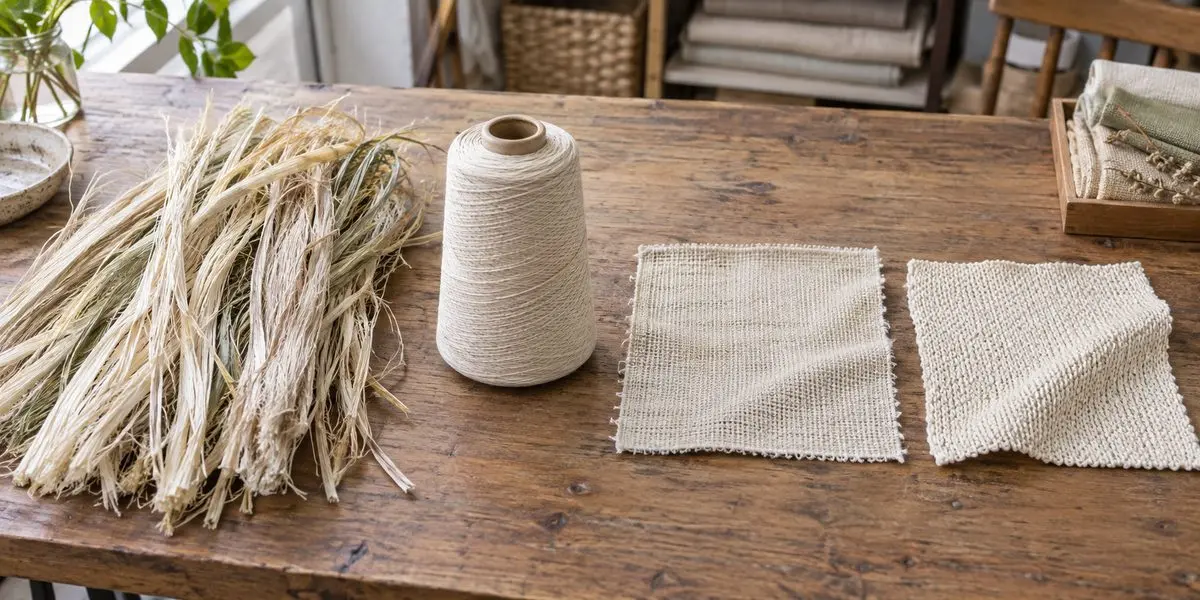
| Extracted PALF | Prepared leaf-fiber bundles or staple | Length distribution, cleanliness, residual gum, moisture, preparation route and compatible spinning system |
| Spun yarn | PALF alone or, more commonly, PALF blended with another fiber | Exact blend composition, yarn count, twist, evenness, strength and knitting/weaving performance |
| Fabric | A woven or knitted construction using a specified yarn | GSM, structure, finish, handle, dimensional stability, pilling, care and any functional test |
| Pineapple-based sheet material | A nonwoven or composite that may include binders, coatings or other polymers | Full composition and end-of-life route; do not assume it is the same as PALF yarn or woven piña cloth |
This separation also prevents a common sourcing error: a finished material described as “pineapple” may use leaf fiber as only one constituent. The percentage and the other constituents determine what can be said about the yarn, fabric and end of life.
Can Pineapple Leaf Fiber Be Spun at 100%?
Research shows that high-PALF and 100% PALF yarn routes are technically possible under particular preparation and spinning conditions. That does not mean every supplier’s running apparel yarn is 100% PALF, or that a high-PALF construction will deliver the hand, consistency and price a brand needs.
Blending is often the commercial bridge. The 2025 review notes that coarse appearance and brittleness have limited broad acceptance of 100% PALF fabrics, while blends with cotton and other fibers have been developed for apparel. Another open study describes the adjustments needed to process PALF on existing spinning equipment. You can review its discussion of fiber preparation and yarn processing in the full paper.
Annie’s Smartex currently lists a running spun-yarn specification of 10% pineapple leaf fiber and 90% Modal. The blend uses Modal to support softness and drape; it must not be described as a 100% PALF yarn. If you need a different ratio, availability and spinnability should be confirmed before it becomes a development target.
What Does PALF Change in Fabric Development?
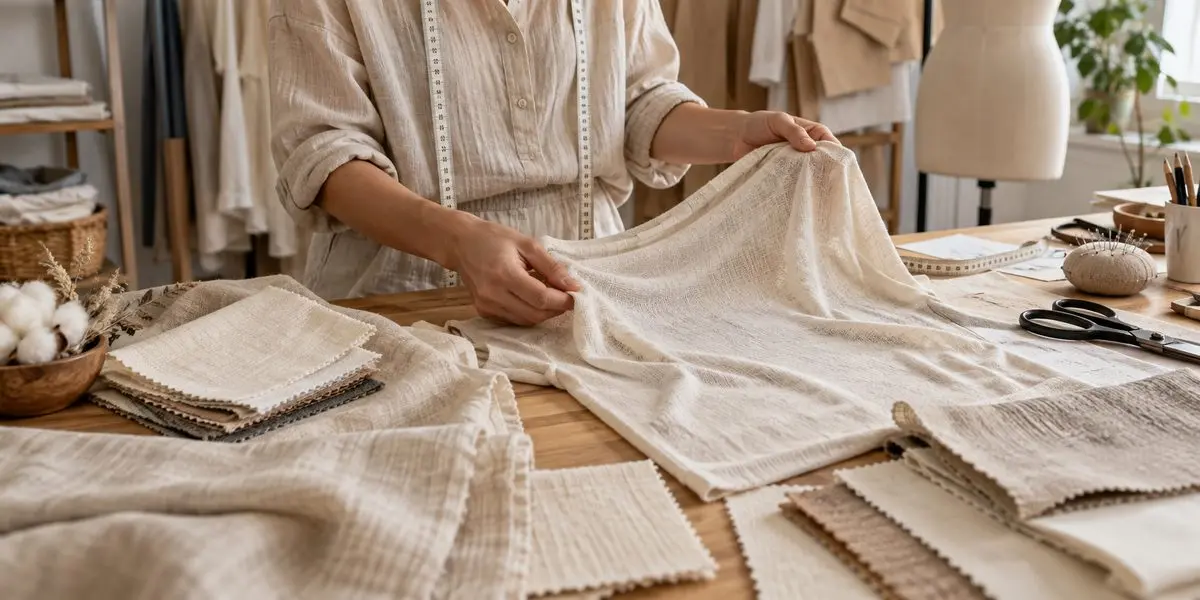
PALF can add a recognizable plant-fiber story and a more structured natural texture. It may also introduce variation in fineness, color, stiffness and process behavior. For a mill, that means the fiber percentage cannot be chosen in isolation: yarn count, companion fiber, twist, knit or weave structure and finishing all influence whether the fabric feels crisp, dry, soft or unstable.
For lightweight casual apparel, start with the available yarn and compare it with a control in the same construction. Changing the blend, yarn count and fabric structure at once makes it impossible to learn which variable caused a difference. Our PALF kidswear development concept shows how to turn that principle into a sample plan.
Which Sustainability and Antimicrobial Claims Need Evidence?
Using a residue stream is meaningful, but it does not by itself prove a lower-impact finished fabric. Extraction yield, water and energy use, treatment chemistry, transport, blend partners, dyeing, garment life and end-of-life conditions all influence the result. “Biodegradable” also needs a defined test object and environment; a raw plant fiber claim cannot automatically be transferred to a dyed fabric, coated product or blended garment.
Annie’s Smartex positions its PALF material as naturally bacteriostatic and deodorizing. Before a brand repeats that claim, the supporting report should identify the tested sample, composition, organism, method, control and any wash conditioning. We have not located the original report in the current WordPress media library, so this revision does not state a percentage reduction, wash duration or “permanent” performance.
What Should You Put in a PALF Sample Request?
Tell the supplier whether you need raw fiber, spun yarn or finished fabric. For a useful first discussion, include the intended product, target hand, yarn count or fabric construction, preferred blend partner, dyeing/finishing route, care conditions and the exact claim you hope to support. If antimicrobial performance matters, specify the target test method and wash condition instead of asking whether the material is simply “antibacterial.”
If your project begins with a soft apparel yarn, review the running 10% PALF / 90% Modal specification. If you are evaluating the raw material or another blend route, begin with the pineapple leaf fiber supply form.
Frequently Asked Questions
Is pineapple leaf fiber the same as Piñatex?
No. PALF is the extracted leaf fiber. Piñatex is a branded sheet material with its own composite construction. A woven PALF fabric, a PALF blend yarn and a pineapple-based sheet should not share specifications or end-of-life claims without composition evidence.
Is all pineapple leaf fiber yarn 100% PALF?
No. Many apparel yarns are blends because another fiber can improve processing, softness or consistency. Request the exact percentage and make sure “natural” is not being used to conceal the total yarn composition.
Is PALF automatically antibacterial after spinning and finishing?
No automatic conclusion is safe. The claim has to be demonstrated on the relevant sample. Ask what was tested: raw fiber, yarn, greige fabric, finished fabric or garment, and under which method and conditioning.
Discuss a PALF Fiber or Yarn Sample
Send us your target end use, supply form, blend requirement, yarn or fabric construction, care conditions and any claim that needs testing. We can use those details to decide whether the running PALF–Modal yarn or a different development route is the more realistic starting point.

Related Posts
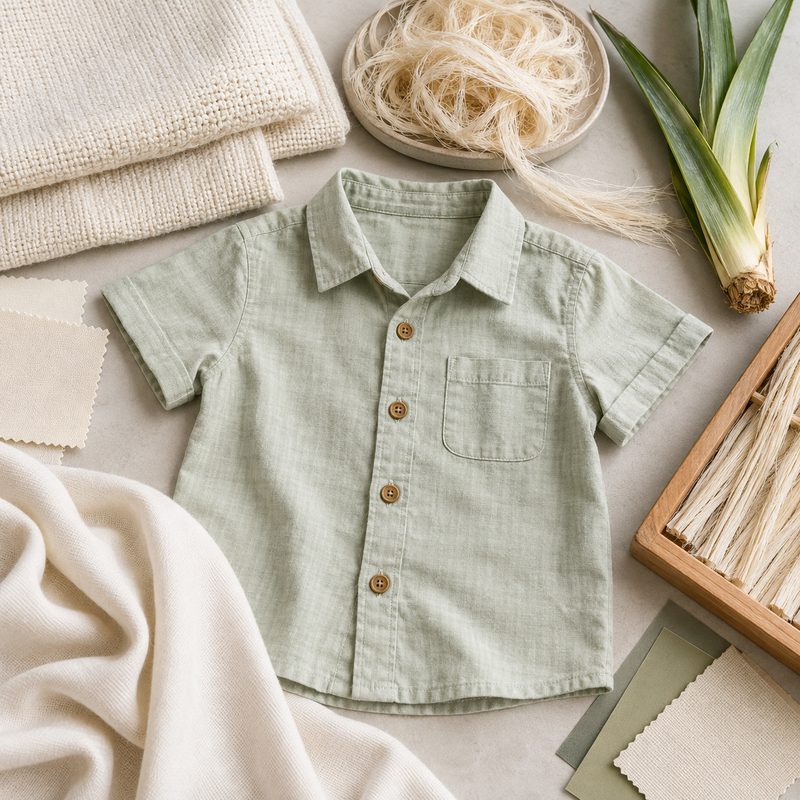
Pineapple Leaf Fiber Kidswear: Balancing Natural Texture and Everyday Softness
See how a 10% PALF / 90% Modal yarn could be evaluated for lightweight kidswear through controlled samples, fabric checks...
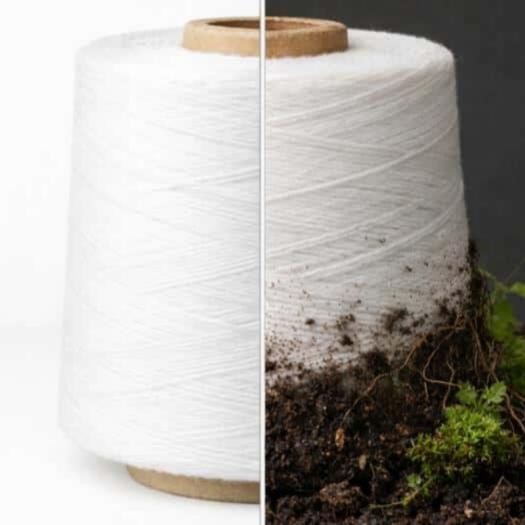
What Are Sustainable Yarns? A Complete Guide to Eco-Friendly Textile Innovation
Let’s be honest — “sustainable yarn” is one of those terms that gets thrown around so much it’s starting to...

What is PCM Fabric? The Smart Textile That Adapts to Your Body Temperature
The Temperature Problem Nobody Talks About You’re 20 minutes into your morning run. Your body’s generating heat, but the air...

Beyond Cooling: Why UV Protection and Solar Heat Management Matter in Next-Generation Summer Textiles
“Cool touch” solves what happens the instant fabric meets skin. It does not solve what happens after — sustained sweat,...
I want to study about the processing of pineapple leaf to fabric. I woulf oike to start a manufacturing unit and there is an availability of plenty of pineapple leaves in my lovality
Hi, thanks for sharing your interest! Starting a pineapple leaf fiber (PALF) processing unit is a great idea, especially with abundant raw material in your locality — that’s actually the biggest advantage in this industry, since transportation and leaf spoilage are common bottlenecks elsewhere.
The core process involves three stages: decortication (mechanical extraction of fiber from the leaf, usually using a decorticator machine), degumming/retting to remove pectin and lignin, and finally combing/spinning into usable yarn. Mechanical extraction is generally preferred over chemical methods since it avoids heavy water and chemical use, keeping the fiber’s natural antimicrobial and biodegradable properties intact.
For a small-to-mid scale unit, initial investment mainly goes into the decorticator machines and drying/combing equipment — yield is typically around 2-3% fiber by leaf weight, so volume matters. Given rising global demand for sustainable textiles, this could be a very promising venture.
Hi Annie,
That was a great insite for PALF, can you provide me more details on the machinery used for this process. I have plenty of raw material around.
Regards
Jayant Singhal
Hi,
In China, these machines are easy to find.
I. Raw Material Pre-treatment Stage
Pineapple leaf collection and conveying equipment: Specialized field collection machines and belt conveyors handle the centralized transport and feeding of pineapple leaves.
Pineapple leaf washing machine: Uses vortex spraying and flexible brushes to remove soil and insect eggs from the leaf surface, accommodating the leaves’ thorny nature and irregular shapes.
II. Fiber Extraction Stage
Small-scale manual fiber extraction equipment: Suitable for household-level operations; manual assistance facilitates fiber scraping and extraction; low cost and easy to operate.
Semi-automatic pineapple leaf fiber extraction equipment: Suitable for small-to-medium-scale processing; enables batch stripping of leaf pulp and reduces labor intensity.
Automatically adjusting grinding-type fiber production equipment: Uses floating grinding wheels of varying sizes to adapt to different leaf thicknesses, preventing fiber breakage and supporting continuous industrial production.
Specialized automatic fiber scraping machine: Industrial-grade batch extraction equipment capable of efficient pulp stripping; currently being optimized to reduce impurity content in the fiber.
III. Fiber Post-treatment Stage
Fiber washing and bleaching equipment: Includes washing tanks and bleaching units to remove residual gums and pigments from the fiber surface, enhancing whiteness.
Degumming and drying equipment: Performs biological or chemical degumming while simultaneously drying the fiber to ensure moisture content meets standards and to prevent adhesion during subsequent processing.
IV. Opening and Spinning Stage
Textile opening machine: Loosens compressed fiber clumps into a fluffy state with minimal damage, preparing the material for spinning.
Opening-cleaning-carding unit/Carding machine: Further cards and removes impurities from the opened fibers to produce uniform fiber slivers, tailored to the processing characteristics of pineapple leaf fibers.
Spinning auxiliary equipment: Draw frames and spinning frames twist fibers into yarn; supports the production of blended yarns combining pineapple leaf fibers with materials such as cotton or chemical fibers.