 English
 Español
 Português
 Deutsch
 한국어
한국어 日本語
日本語 Italiano
 Français
 العربية
 Türkçe
Cooling Textile Series | 02
A practical explanation of what phase change material can do in a textile, where its physical limits sit and how to specify it with confidence.
PCM fabric uses phase change material to absorb heat while it melts and release heat while it solidifies. It can buffer short temperature swings around the body. It has a finite capacity, so it needs a suitable phase-change range, a compatible carrier and a chance to recharge before it can repeat the cycle.
PCM extends comfort beyond the first cool touch
Q-max cooling works at the instant skin touches a fabric. That first sensation can be valuable, yet it naturally fades as the fabric and skin-side surface approach thermal equilibrium. Phase change material addresses a different time scale. It absorbs part of the heat that accumulates during a temperature rise, then releases the stored energy later as the system cools.
This makes PCM relevant to situations with changing conditions. A runner can move from warm-up to high effort and then recovery. A traveler can leave outdoor heat for air conditioning. Sleepwear and bedding can experience shifts in skin temperature through the night. PCM is designed to reduce the abruptness of those changes when the formulation and textile construction match the use case.
How the phase-change cycle works in a textile
Textile PCM is often used in microencapsulated form. Each capsule contains a material that changes state within a selected temperature range. When heat rises into that range, the PCM moves from solid toward liquid and absorbs latent heat. When the temperature falls, it resolidifies and releases stored heat.
The important word is buffering. PCM slows a temperature change while it is actively changing phase. It does not create unlimited cooling, and it does not replace breathability, sweat transport or sun protection. Once the PCM has melted, it needs cooling time to return to solid form before the same heat-storage effect is available again.

What needs to be specified before selecting a PCM
PCM is not one material with one fixed temperature. The phase-change range must be chosen around the relevant use condition. A formulation intended for close-to-skin summer comfort may be different from one intended to stabilize bedding, workwear or a garment used across cold and warm transitions.
| Specification | Why it matters in the finished textile |
|---|---|
| Phase-change temperature | The PCM must activate in the temperature range the wearer will actually experience. |
| Latent-heat capacity | Capacity indicates the amount of heat that can be buffered, subject to the textile mass and PCM loading. |
| Carrier and integration route | A surface finish, filament system and staple-fiber system make different trade-offs in handle, processing and durability. |
| Fabric construction | Weight, porosity, stretch and fiber blend affect how quickly heat reaches the PCM and how the product feels. |
| Care requirement | The appropriate wash and abrasion tests should reflect the end product and its expected service life. |
Heat-storage capacity is useful only with the test context
Annie’s Smartex lists PCM microencapsulated finished fabric with a stated heat-storage capacity of 40 to 60 J/m2. Its natural PCM nylon and polyester fabric listing gives an average of 39 J/m2 and a peak value of 60 J/m2. These figures help compare the published product routes. They should not be treated as a universal performance rating for every PCM fabric.
A buyer should request the full test conditions, the sample construction and the unit when comparing capacity data. The value only becomes commercially useful when it is connected to a garment weight, a wearer scenario and a target care life.

Surface finish, synthetic filament and staple fiber serve different needs
PCM can be added to an existing fabric through a microencapsulated finish. This route can be practical when a brand needs to apply PCM to a chosen construction. Annie’s Smartex presents this route on its PCM Temperature Regulation Fabric page. The durability discussion then centers on capsule retention, abrasion and the wash target.
PCM integrated within a synthetic filament is a different development route. It can be suited to engineered woven and knit fabrics where yarn consistency and repeated performance are important. The loading level, spinning conditions, dyeing route and desired hand feel all need to be considered together. The same product family includes natural PCM nylon and polyester options for this type of performance-textile development.
Skinkey PCM Lyocell staple fiber adds a third option for next-to-skin applications. Annie’s Smartex positions it for sleepwear, intimate apparel and premium bedding, where softness and skin comfort are part of the material choice. A staple route also gives brands flexibility to build a yarn blend around the desired hand and construction.
| PCM route | Possible strengths | Questions to resolve before approval |
|---|---|---|
| Microencapsulated fabric finish | Flexible application to selected fabrics | How much capacity and appearance remain after the required wash and abrasion cycle? |
| PCM synthetic filament | Engineered yarn system for knit or woven performance fabrics | What are the processing, dyeing, loading and hand-feel constraints? |
| PCM staple fiber | Soft, close-to-skin yarn development potential | Which blend and construction preserve comfort while meeting the thermal target? |
Relevant Annie’s Smartex product routes
| Development need | Relevant product route | Why it belongs in the discussion |
|---|---|---|
| PCM added to a selected fabric construction | PCM Temperature Regulation Fabric | Provides a published reference point for finished-fabric PCM routes and heat-storage figures. |
| Close-to-skin PCM yarn development | Skinkey PCM Fiber | Relevant for temperature-buffering textile development where yarn-level integration and skin comfort matter. |
| Soft PCM carrier for sleepwear and premium bedding | Skinkey PCM Lyocell Staple Fiber | Positions the PCM system in a Lyocell staple-fiber route for next-to-skin applications. |
PCM works best as part of a cooling-textile system
PCM is one route within a larger comfort system. Q-max supports the first cool touch. Moisture-management structures move sweat toward an evaporation surface. NIR-reflective yarns can reduce solar heat absorption in direct sun. PCM helps buffer temperature changes within its selected transition range. For example, 8C Pro moisture-wicking yarn can be considered where rapid sweat movement is part of the application, while PCM addresses a separate thermal-buffering requirement.
| Technology | Main action | When it adds the most value |
|---|---|---|
| Q-max cool touch | Fast initial heat transfer from skin to textile | When first-contact comfort matters |
| PCM | Latent-heat buffering around a selected temperature | When the wearer experiences short heat spikes or repeated temperature changes |
| Moisture-wicking structure | Sweat transport that supports evaporation | During active use where airflow and humidity allow evaporation |
| NIR reflection | Reduced solar heat absorption | In sun-exposed outdoor clothing and equipment |
PCM should be marketed as temperature buffering with disclosed test evidence. Avoid promising continuous refrigeration, an unlimited cooling duration or a blanket sweat-reduction percentage unless that result is demonstrated for the exact product and stated test conditions.
Where PCM earns its value in real applications
PCM is most relevant where activity level or ambient conditions change. Annie’s Smartex lists applications including sportswear, outdoor equipment, winter sports, bedding, casual wear, technical workwear, footwear and seating products. The three scenarios below show why the same thermal-buffering principle can be adapted to very different products.
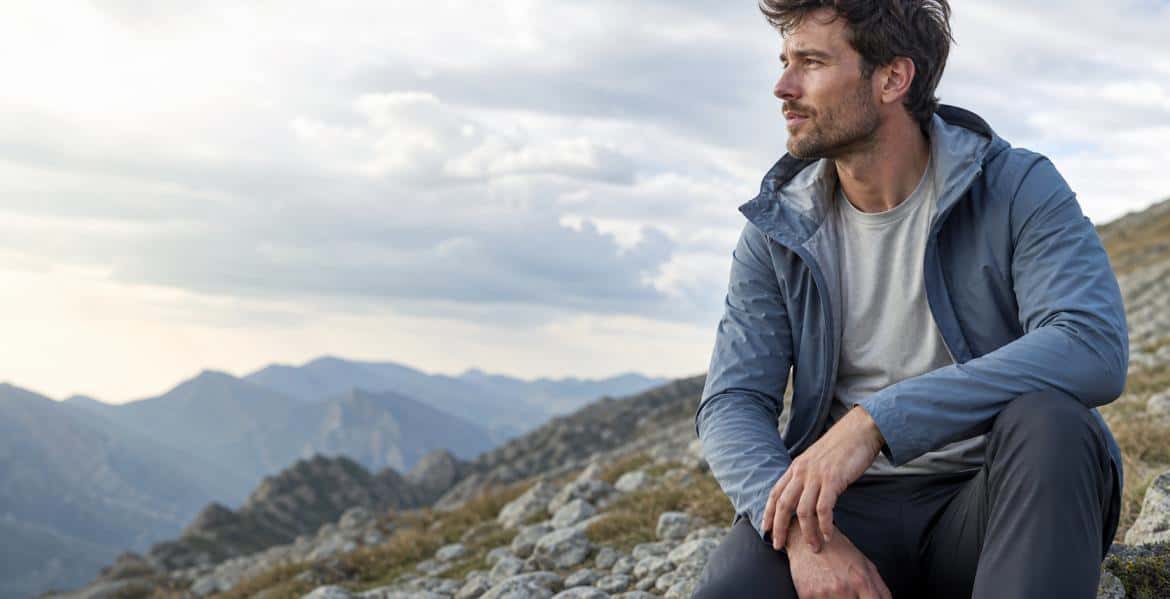
Outdoor and travel apparel
Useful when weather, altitude, exertion and rest periods change across the day. This is a natural use case for PCM temperature-regulation fabric in lightweight shells, layers and travel garments.

Winter sports and active layers
Cross-country skiing and similar activities combine high exertion with rapid cool-down periods. PCM can help buffer those temperature transitions when the phase-change range and fabric construction are selected for the use case.

Bedding and sleep comfort
Sleep products face a different rhythm of temperature change. Skinkey PCM Lyocell staple fiber is relevant to next-to-skin sleepwear, premium bedding and soft home-textile development.
Buyer checklist for PCM fabric development
- Define the wearer, climate and activity profile before selecting the phase-change range.
- Request capacity, unit, test method and sample details for the exact yarn or fabric.
- Choose the integration route that matches the intended hand feel, manufacturing route and care requirement.
- Set wash and abrasion requirements before approving the marketing claim.
- Test PCM with breathability and moisture-management data because thermal comfort is a complete system result.
PCM and contact cooling answer different comfort questions.
The complete Cooling Textile Guide compares all five cooling routes, explains which data to request and maps technology choices to climate and end use.
Get the Cooling Textile GuideSources and product references
Annie’s Smartex PCM Temperature Regulation Fabric
Skinkey Temperature Regulating PCM Fiber
Skinkey PCM Lyocell Staple Fiber

Related Posts
Application of Phase Change Materials(PCM) in Medical Textiles
Medical professionals and patients alike face a common challenge in healthcare settings – maintaining optimal body temperature. Traditional medical textiles...
Applications of Phase Change Materials in Textiles: Routes, Uses and Limits
PCM textiles can buffer short temperature changes, but the yarn, fabric or finishing route determines how they should be specified...
How to Choose the Right Cooling Fabric: A Buyer’s Guide to PCM Nylon, Cool-Touch Nylon & 8C Pro Polyester
The Problem With “Cooling” as a Category Walk into any trade show in 2025 and half the booths will have...
Dual-Action Cooling Fabric Explained:How IcSnow® Keeps Athletes Coolin Running, Yoga & Beyond
Most cooling fabrics do one thing well. IcSnow® does two — at the same time, from the first rep to...