 English
 Español
 Português
 Deutsch
 한국어
한국어 日本語
日本語 Italiano
 Français
 العربية
 Türkçe
A cool-weather running top should protect during the opening kilometers without trapping heat and moisture on a climb. This far-infrared running base layer concept turns that conflict into two fabric routes a brand can sample and compare.
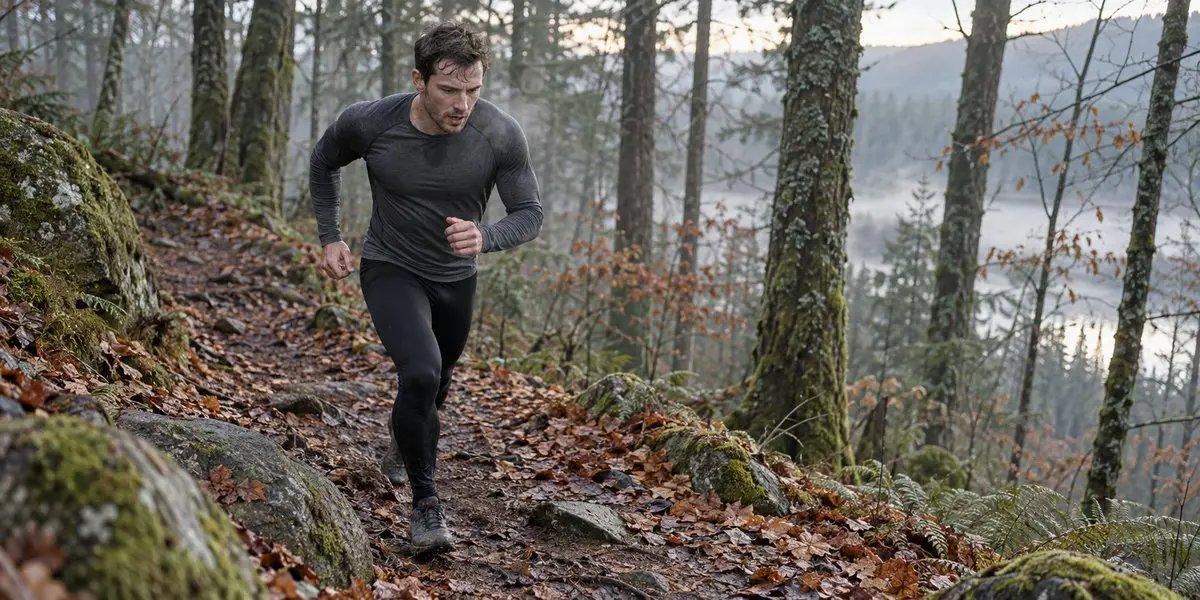
The Challenge: Warm at the Start, Dry After the Climb
A runner leaving home at 8°C may want more coverage than after ten minutes uphill. Add a wind shell and the microclimate changes again. A useful far infrared running base layer brief needs an activity level, layering system, temperature range and moisture target.
Our far-infrared fabric buyer guide explains what buyers should specify and test. This case applies that logic to one decision: prioritize fabric substance or faster moisture release?
Two Far-Infrared Running Base Layer Solutions
Route A: more substance for cooler, lower-output use
InfraCycle JS3474 is listed as 92% InfraCycle polyester 150D/144F and 8% spandex 40D, at 235 gsm and 150 cm wide. Its weight suits a winter-weight prototype, easier training or limited layering.
Route B: less mass for higher-output or milder use
XOY Alpha fabric is listed as 92% polyester and 8% elastane, at 150 gsm and 150 cm wide. It suits sustained effort or use below a shell. Verify FIR, moisture, antibacterial and UV functions separately for the supplied lot and garment.
The Main Construction Decision: 235 gsm or 150 gsm?
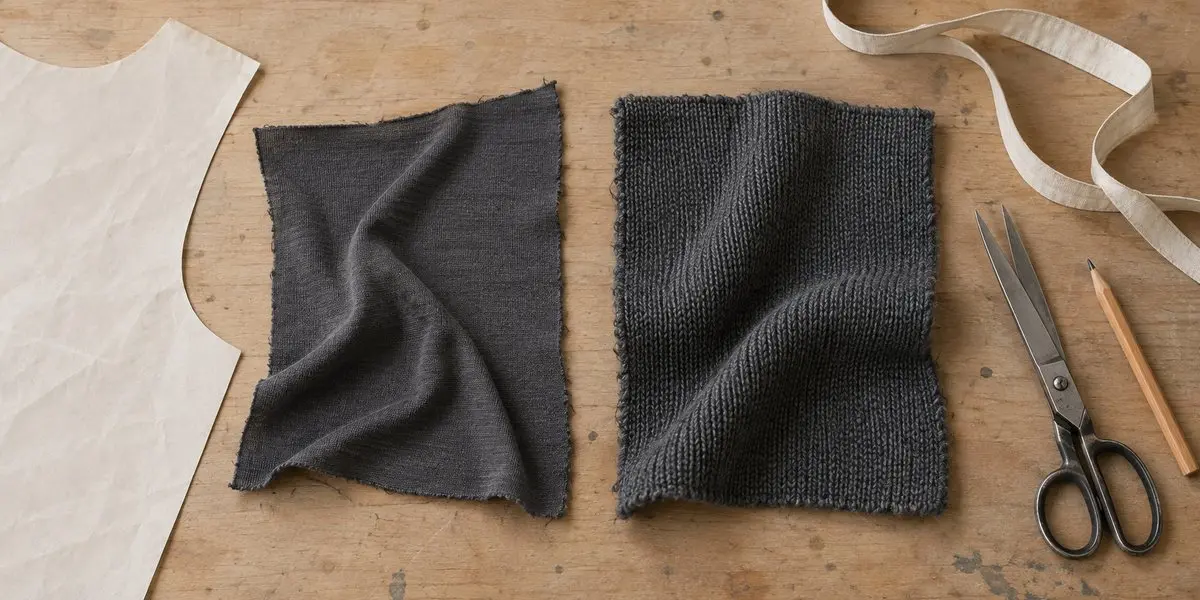
GSM is not a comfort score. Like a travel mug’s wall thickness, more material changes heat loss, bulk and handling. Base-layer weight also works with knit density, air permeability, stretch, fit, brushing, seams and the shell.
A 235 gsm route may suit an easy cold start but feel excessive during tempo work. A 150 gsm route may suit high output yet offer too little stand-alone protection in wind. The sample plan should expose this tradeoff rather than hide it behind a “four-season” label.
A Controlled Two-Route Sample Plan
Use the same long-sleeve pattern, fit target, seam type and care sequence where practical. Keeping the garment constant makes the fabric difference easier to interpret.
| Prototype | Scenario | Decision criteria |
|---|---|---|
| A: InfraCycle JS3474, 235 gsm listed specification | Cooler conditions, easier pace or stand-alone use | Warm-up comfort, moisture build-up, stretch, seam feel and drying after intended care |
| B: XOY Alpha, 150 gsm listed specification | Shoulder season, sustained running or use below a shell | Sweat transfer, cling, air movement, opacity, recovery and seam stability |
If fit or finish changes, record it so brushing, garment ease or the shell is not mistaken for a fiber effect.
What the Finished Base Layer Still Needs to Prove
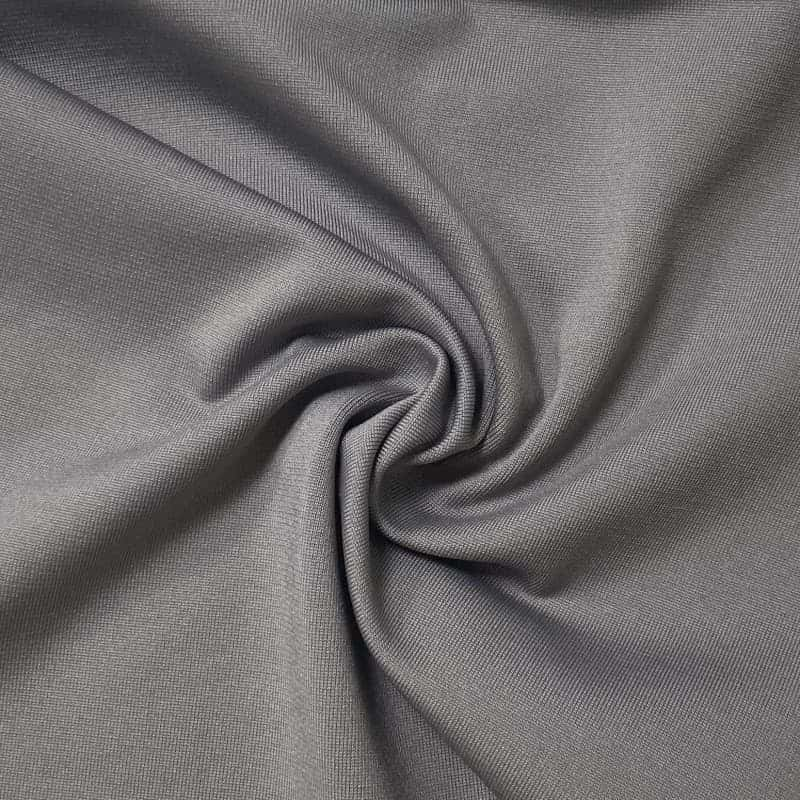
FIR testing needs a named method, spectral range, temperature and conditioning. SGS notes that evaluation may include emissivity, temperature-rise and spectral testing; these are not interchangeable labels. See the SGS FIR textile overview.
A systematic review of FIR-emitting garments found limited, heterogeneous human evidence, so fabric descriptions cannot establish recovery claims. HKRITA’s athlete trial project shows why garment construction and wear protocol matter.
Check the prototypes for moisture management, thermal and drying behavior, air permeability, stretch and recovery, dimensional stability, pilling, colorfastness and seam comfort. State whether each FIR result belongs to fiber, fabric or garment and whether it was measured before or after laundering.
The Development Decision
Choose Route A when substance and cooler, lower-output comfort dominate the brief. Choose Route B when sustained activity, layering and moisture release matter more. Keep both if the range needs separate winter and shoulder-season products. A credible far-infrared running base layer is a defined use condition, construction, controlled prototype and evidence-matched claim package—not just a material name.
Build the RFQ for a Running Base-Layer Sample
Send the target climate and activity level, stand-alone or layered use, garment fit, preferred GSM, stretch requirement, color and finish route, care sequence, destination market and exact claim you intend to support. We can discuss the 235 gsm InfraCycle route, the 150 gsm XOY Alpha route or a yarn-led alternative.

Related Posts
Lightweight Warmth Without Bulk: The Aerogel + Far Infrared Yarn System Built for Base Layers, Knitwear and Everyday Apparel
There is a quiet shift happening in performance apparel development. Brands are no longer asking “how warm is it?” —...
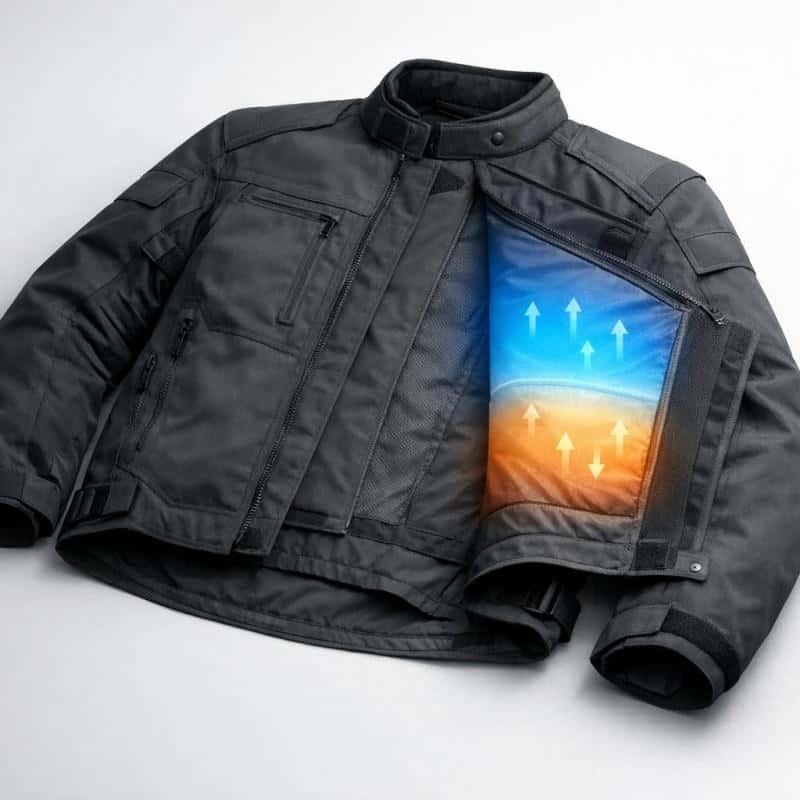
PCM Thermal Management Solution for Motorcycle Jacket Inner Layer | Case Study
Thermal Comfort Engineering · PCM Microencapsulated Temperature Regulation Inner Layer The Challenge “Our riders are sweating through the first 10...

Far-Infrared Recovery Yarn with Dynamic Moisture Management: How XOY Alpha Redefines Recovery Wear Performance
Recovery wear has evolved far beyond compression tights and cooling sleeves. Today, the most advanced athletic garments are engineered at...
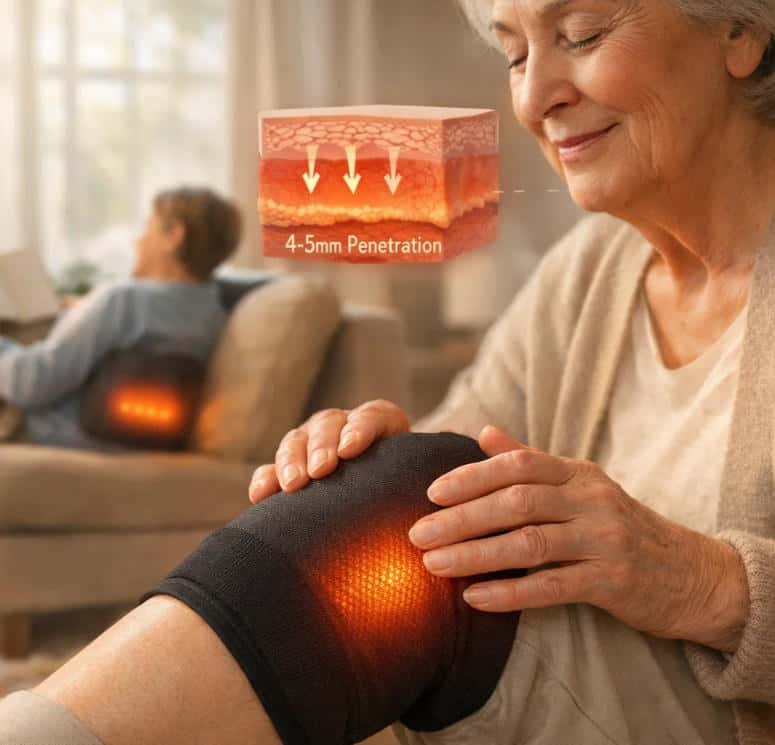
Far Infrared Fabric Applications: Beyond Winter Warmth to Year-Round Performance
When most people hear “far infrared fabric,” they immediately think of winter base layers and heated clothing. But here’s what...