 English
 Español
 Português
 Deutsch
 한국어
한국어 日本語
日本語 Italiano
 Français
 العربية
 Türkçe
FIR textile buyer guide
Far-infrared fabric can be a useful route for performance apparel, but the purchase decision should not begin with a wellness slogan. It should begin with the garment: where it will be worn, how close it sits to the body, how much stretch and moisture movement it needs, and which FIR claim you intend to support.
For a buyer, the practical question is not simply “Does this fabric contain FIR material?” You need to know how the function is integrated, what the test report actually measured, whether the tested sample matches the fabric you are sampling, and what remains true after dyeing, finishing and care. This guide turns those questions into a usable specification and sample plan. It complements our general explanation of far-infrared fabric; here, the focus is the buying decision.
Is Far-Infrared Fabric a Good Fit for Your Garment?
FIR textiles make the most sense when the fabric stays reasonably close to the wearer and the product has a clear thermal-comfort, performance or recovery-wear story. Base layers, fitted training tops, leggings, compression-style garments and some sleepwear constructions are logical starting points. A loose shell worn over several layers may still contain FIR-active material, but the wearer–fabric relationship is different and the same claim should not be assumed.
Think of it like a phone charger. Owning the charger is not enough; the plug, cable and device still need to work as one system. In the same way, FIR-active yarn is only one component. Fabric mass, knit structure, elastane content, finishes, garment fit and the test conditions all influence the finished result.

A useful example is a fitted training top for cool morning runs. You may want a soft stretch knit, sweat transport and a fabric-level FIR result. That brief gives your supplier something testable. “We want an energy fabric for all sports” does not.
What an FIR Textile Actually Does—and What It Does Not
Far-infrared textiles commonly use mineral or ceramic-based functional particles. These can be incorporated into the polymer before the fiber is spun, or added through a later fabric treatment. Under suitable thermal conditions, the material absorbs and emits infrared energy. The exact wavelength description and performance claim should come from the relevant material and test documentation, not from a generic diagram.
For buyers, the integration route matters. Fiber-level incorporation can be attractive when you want the functional material built into the yarn rather than sitting only on the fabric surface. A finish can offer a different development route, but its add-on level, hand feel and wash durability must be checked. Neither route is automatically better. They answer different manufacturing and cost questions.
FIR emission is also not the same thing as heat generation. The fabric does not create energy from nowhere. A lightweight FIR jersey may support a thermal-comfort concept, but it will not behave like a thick brushed fleece or an insulated jacket. That distinction keeps product claims understandable and prevents a sample from being judged against the wrong expectation.
Independent research on FIR-emitting sports garments has reported potentially useful outcomes in some conditions, while also noting differences in garment design, protocols and study quality. That is a strong reason to treat scientific literature as background evidence rather than proof for every new fabric or garment. The tested product, construction and claim still need to line up. See the systematic review of FIR-emitting garments in sport.
Specifications Buyers Should Put in the FIR Fabric Brief
A good FIR inquiry reads like a development brief, not a shopping wish list. If you specify only “far-infrared polyester fabric,” you may receive options that differ in weight, stretch, construction and intended use. The table below shows the variables that prevent that mismatch.
| Variable | Why it changes the decision | How to write it in an RFQ |
|---|---|---|
| End use and garment fit | Determines skin proximity, stretch demand, moisture load and realistic claims. | “Close-fitting long-sleeve running base layer for cool conditions.” |
| Fiber and FIR integration route | Separates an FIR-active yarn route from a later fabric finish. | “State whether the FIR material is embedded in the fiber or applied as a finish.” |
| Composition and yarn specification | Influences hand feel, dyeing, stretch recovery and supply continuity. | “Polyester/elastane knit; provide yarn denier/filament data where available.” |
| Fabric construction | Single jersey, interlock and other constructions change weight, stability and moisture behavior. | “Provide construction, GSM, usable width and stretch/recovery data.” |
| Color and finishing route | Dyeing and additional finishes can change the submitted material and the final claim package. | “Quote greige and finished options; list all functional finishes.” |
| Target FIR evidence | “FIR tested” is incomplete without a method, result, sample identity and date. | “Provide the full report and identify whether fiber, yarn, fabric or garment was tested.” |
| Care durability | A before-wash result cannot answer a post-care claim. | “Propose care cycles and repeat the agreed FIR test on the finished fabric.” |
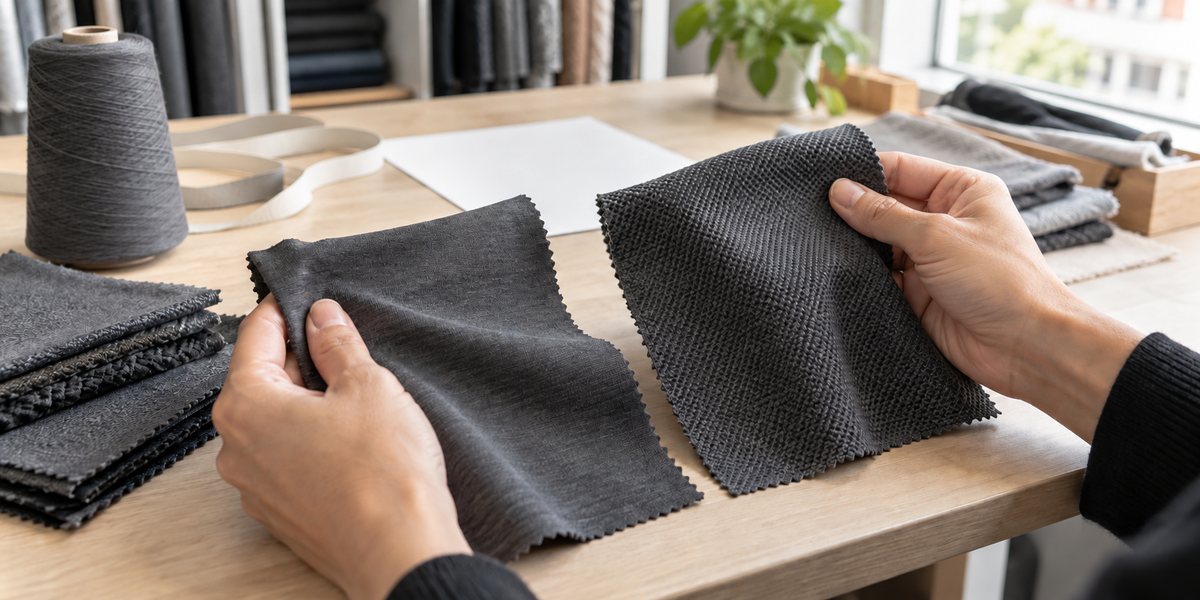
Here is a concrete starting point. The InfraCycle® grey knitted fabric JS3474 is listed as 92% InfraCycle® polyester 150D/144F and 8% spandex 40D, at 235 gsm and 150 cm width. Those details immediately suggest a different development route from a lightweight summer jersey. They do not, by themselves, prove how your finished garment will perform after your dye, print, sewing and care process.
How to Read FIR Test Evidence Without Getting Lost in the Report
A report is useful only when it answers the question you are asking. For FIR textiles, buyers commonly need to understand emissivity and, where relevant, temperature-rise evaluation. SGS describes testing under GB/T 30127:2013 for far-infrared textile properties, covering textile samples such as fiber, yarn and fabric. Confirm the current method and market relevance with the laboratory before placing a claim on packaging.
Do not stop at the headline number. Read the report the way you would check a passport: the identity matters as much as the stamp. Match the report to the supplier, material name, composition, color or finish, sample level, test method and issue date. If the report covers a yarn but you are buying a dyed stretch fabric, ask what evidence connects the two.
A practical evidence check
- Sample identity: Is the tested item the same yarn or fabric code being quoted?
- Test level: Was the result measured on fiber, yarn, finished fabric or a complete garment?
- Method and conditions: Does the report name the method, conditioning and measured property?
- Before and after care: If durability is part of the claim, are post-care results included?
- Claim boundary: Does the marketing statement stay within what the report measures?
Be especially careful with physiological statements such as improved circulation, faster recovery or reduced fatigue. A fabric emissivity result is not a clinical outcome. If your brand wants to make a physiological claim, the evidence plan must be designed for that specific finished product, target market and wording.
Two Fabric Routes for Different Performance-Apparel Briefs
Two FIR fabrics can both be technically relevant and still belong in different sample matrices. The fastest way to choose is to start with garment conditions rather than asking which material has the longest feature list.
Route A: substantial stretch knit
The 235 gsm InfraCycle® polyester/spandex knit is a sensible starting point when you are developing a fitted top, leggings or another garment that benefits from more body and stretch. Ask for stretch and recovery direction, pilling, dimensional stability, moisture behavior and FIR evidence on the exact finished fabric.
Route B: lightweight multi-function activewear
The XOY Alpha activewear fabric is listed as 92% polyester and 8% elastane, 150 gsm and 150 cm wide. It is positioned around moisture management, antibacterial, UV and FIR functions. Buyers should review each function under its own test method rather than treating one report as proof of the entire package.
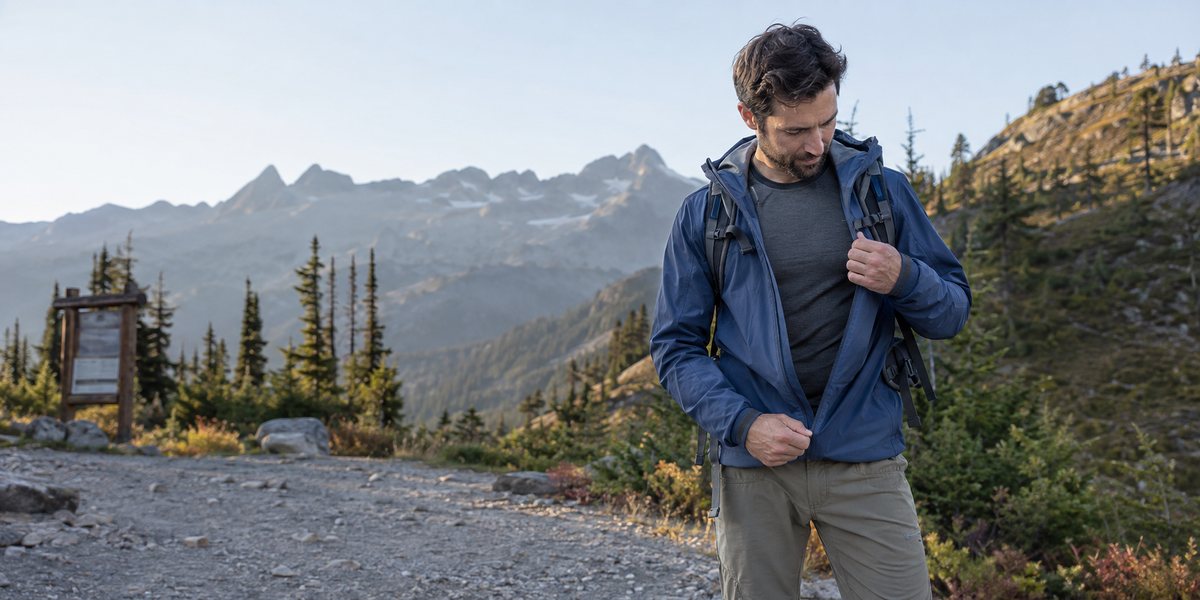
If you want to control the fabric construction yourself, a yarn route may be more appropriate. The XOY Alpha functional polyester yarn gives a mill the option to develop its own knit or woven structure. That flexibility also creates more validation work: the resulting fabric needs to be evaluated after construction, dyeing and finishing.
A simple sample matrix could compare one heavier stretch knit and one lightweight activewear knit in the same target color. Keep the garment pattern and care procedure consistent. You will learn more from that controlled comparison than from reviewing five unrelated swatches with five different marketing stories.
Common FIR Buying Mistakes That Turn Into Expensive Samples
The most common mistake is asking whether FIR fabric “works” without defining what “works” means. Is the target an emissivity result, a temperature-rise result, wearer comfort, post-exercise recovery positioning or a multi-function activewear story? Those are different questions.
Another trap is stacking claims faster than the evidence can support them. FIR, antibacterial, quick dry and UV protection may coexist in one fabric, but each function has its own mechanism and verification route. One attractive test-report image does not validate all four. Ask for separate, readable reports and connect each report to the quoted fabric code.
It is also easy to overlook ordinary textile performance. A high FIR result will not rescue poor colorfastness, weak stretch recovery, excessive pilling or a hand feel your wearer dislikes. The technology should survive the same commercial questions as any performance fabric: Can it be cut and sewn reliably? Does it retain shape? Does it manage sweat? Will the buyer accept the touch?
Public research projects such as the HKRITA FIR functional-textile athlete trial show why the garment and usage protocol matter. For your own range, treat the sample garment as the decision unit. The yarn or fabric report is the starting evidence, not the finish line.
Prepare This FIR Fabric RFQ Before You Request Samples
A useful RFQ can fit on one page. Include the garment type, intended season and activity, fit, target fabric weight, composition preference, stretch direction, color, construction, moisture-management requirement, FIR claim you want to evaluate, required market, preferred test method, care protocol and estimated order quantity. If you have a benchmark garment, describe what you want to keep and what needs to change.
For a performance base layer, your request might read: “We are developing a close-fitting polyester/elastane running top for cool mornings. Target 180–240 gsm, four-way comfort stretch, dark grey, moisture management and a fabric-level FIR result. Please identify the FIR integration route, provide the exact fabric specification and full test report, and quote sample and bulk options. We plan to evaluate the finished garment after repeated care.”
Discuss an FIR Fabric or Yarn Sample
Send us your end use, target GSM, composition, stretch, construction, color, required functions, test market and estimated quantity. Annie’s Smartex can discuss available FIR fabric or yarn routes and the project-specific sampling questions that need confirmation.
Technical scope: FIR material, fabric and garment performance are different validation levels. Specifications, sample availability, testing, care durability, compliance, MOQ and lead time must be confirmed for the individual project.

Related Posts
Water-Repellent Polyester Yarn for Outdoor Fabrics: What Buyers Should Specify and Test
Water-repellent polyester yarn can reduce surface wetting, but it does not automatically make outdoor fabric waterproof. Learn what to specify,...

How PCM Cooling Fabric Works: Phase Change, Thermal Buffering and the Questions Buyers Should Ask
Cooling Textile Series | 02 A practical explanation of what phase change material can do in a textile, where its...

Lightweight Warmth Without Bulk: The Aerogel + Far Infrared Yarn System Built for Base Layers, Knitwear and Everyday Apparel
There is a quiet shift happening in performance apparel development. Brands are no longer asking “how warm is it?” —...

Far-Infrared Recovery Yarn with Dynamic Moisture Management: How XOY Alpha Redefines Recovery Wear Performance
Recovery wear has evolved far beyond compression tights and cooling sleeves. Today, the most advanced athletic garments are engineered at...