 English
 Español
 Português
 Deutsch
 한국어
한국어 日本語
日本語 Italiano
 Français
 العربية
 Türkçe
A hiking backpack meets the ground long before its fabric reaches a tensile test machine. The base rubs against rock; the lower corners fold under a full load. Making every panel heavier can address wear, but adds material where it may do little useful work.
For a lightweight daypack, UHMWPE backpack fabric is worth exploring first as a targeted base-panel reinforcement. Keep a conventional shell as the control, then compare the reinforced fabric and its sewn join. This development route starts with yarn selection and ends with a decision about where reinforcement earns its weight.
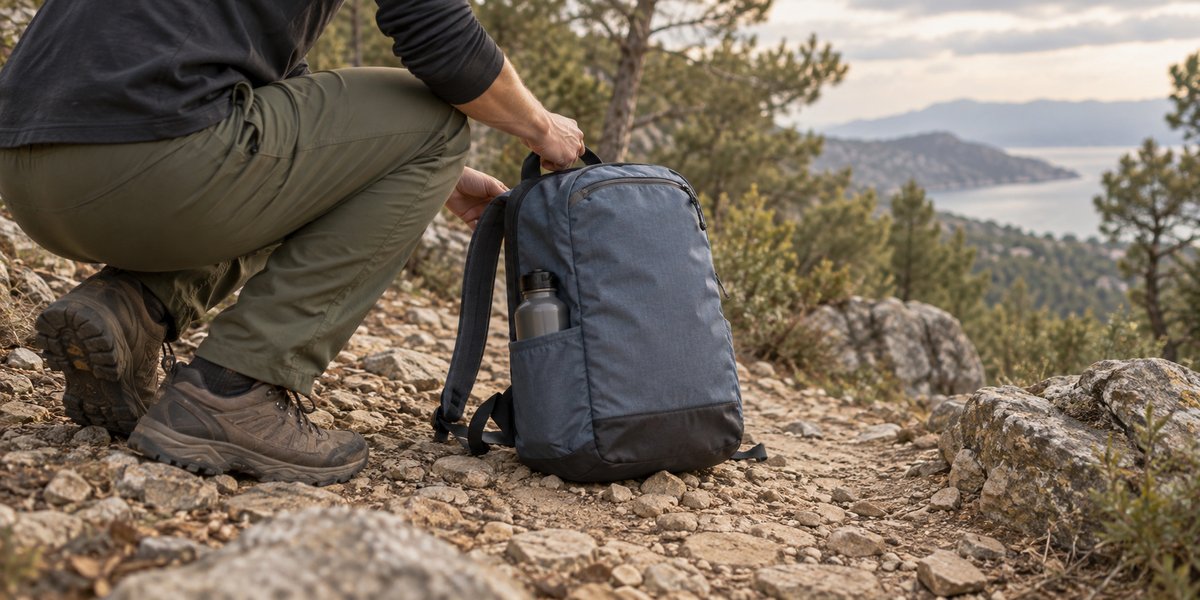
Start with the Base, Where the Bag Meets the Ground
The working brief is a daypack for hiking brands: a flexible main body, a base that tolerates repeated ground contact, and a join that stays intact when the bag is packed. These are proposed development requirements, with acceptance limits to be agreed before sampling.
For your first pattern, mark the bottom panel, lower corners and the seam joining the base to the body. Keep shoulder-strap anchoring as a separate assembly question. A tougher bottom fabric will not resolve an attachment that pulls out elsewhere.
Full-shell reinforcement remains an option if field use exposes most of the bag to rubbing. For this brief, however, a limited base panel makes the comparison easier to interpret and reduces the amount of new construction you introduce at once.
Choose a UHMWPE Yarn Route, Then Build the Fabric
UHMWPE means ultra-high-molecular-weight polyethylene. Its combination of low density and high strength relative to weight explains its appeal in reinforcement textiles. FIBER-LINE’s material overview also identifies abrasion resistance as a useful property. That is a reason to investigate the fiber, rather than a finished-backpack performance result.
The Smartex UHMWPE yarn range is the material starting point. Its product page lists fine and heavier yarn options and asks buyers to confirm the count, twist, color, package and processing route. Send a target fabric construction to narrow those choices; choosing a thicker yarn by itself does not establish a more durable bag.
A woven nylon or polyester ground with UHMWPE reinforcement is one candidate to discuss with your fabric mill. Compare that against a conventional higher-density base fabric. The latter may be the simpler choice if it meets your wear target within the weight and cost allowance.
Commercial backpack fabrics already use different combinations of reinforcement, companion yarn and backing. ULA’s fabric descriptions, for example, distinguish woven faces from laminated constructions. They demonstrate available construction approaches; their branded specifications are not specifications for a proposed Smartex fabric.
The Join Deserves as Much Attention as the Panel
A base panel changes the fabric at a stressed edge of the bag. If the reinforcement remains intact but the adjacent shell opens around the stitches, the material change has not solved the assembly problem.
Make a joined sample using the intended shell, base, seam allowance and sewing thread. Record stitch type and density. After loading, inspect whether the failure begins in the thread, within the fabric, or through yarn movement beside the stitch line. That observation tells you whether to change the sewing setup, the fabric construction or the reinforcement placement.
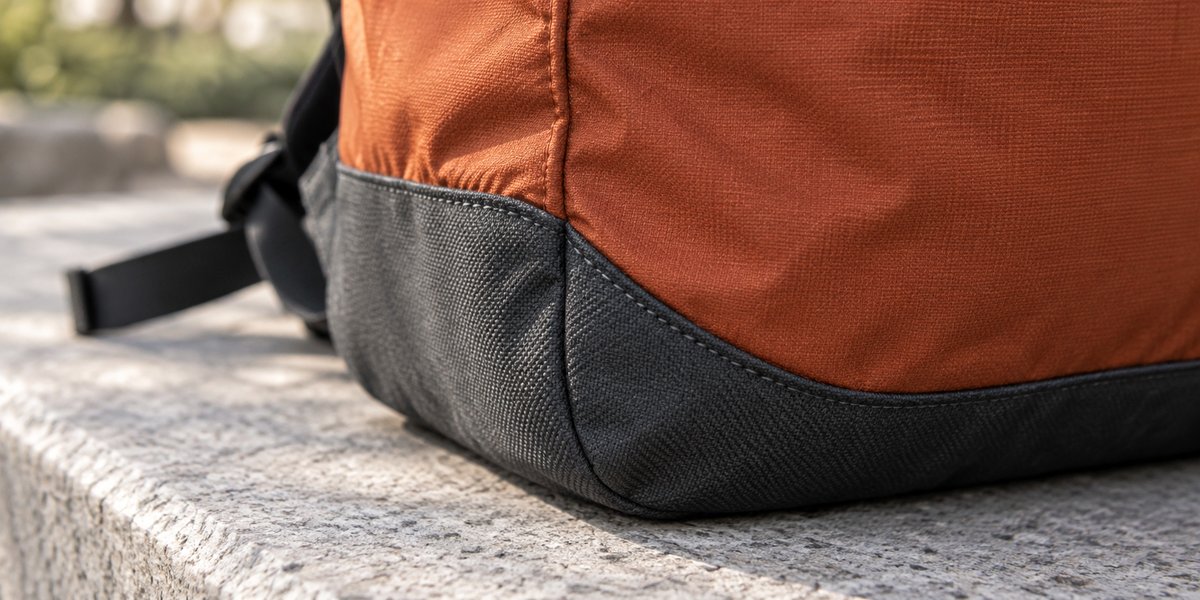
Also settle the finish before committing to a production route. Coating, lamination and other heat-exposing operations need compatibility checks with the selected yarn and fabric. If rain protection is part of the brief, define the backing, seams and closures separately. The outdoor-fabric water-repellency guide helps separate surface wetting from water penetration.
Compare Three Samples Before Changing the Whole Bag
Keep the pack pattern, lining, hardware and main shell constant. The proposed comparison below changes the base strategy while leaving you a meaningful control. Report both fabric mass per area and the total weight added to the finished pack, including extra seam or backing material.
| Sample | Base construction | Decision it supports |
|---|---|---|
| A · Control | Current nylon or polyester shell fabric continued across the base | Establish where wear and seam failure begin. |
| B · Conventional reinforcement | A heavier conventional woven base, with the same panel outline | Check whether a straightforward fabric change meets the target. |
| C · UHMWPE candidate | UHMWPE-reinforced woven base developed with the mill, using the same outline | Assess whether wear performance and join integrity justify the weight and cost difference. |
If C needs a different sewing setup, record that as a second-stage variant. Silently changing both the fabric and the seam makes it harder to explain the outcome. A useful result can be a decision to keep B: the purpose of this comparison is to select a workable construction, not to force a particular fiber into the bag.
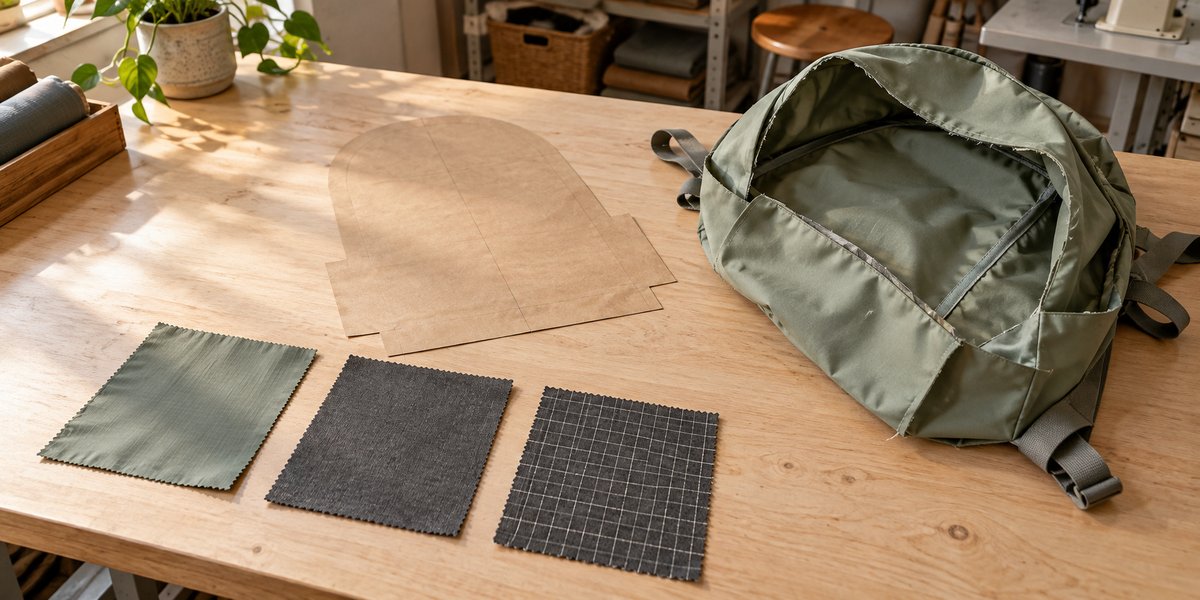
Evaluate Wear and Seams at the Right Level
Use a fabric abrasion method that fits the actual surface. ISO 12947-2:2016 covers specimen breakdown under Martindale abrasion, but excludes coated fabrics, including laminated fabrics. Its scope points to the ISO 5470 series for coated-surface abrasion. Ask the laboratory to select the applicable method and agree on pressure, abrasive, conditioning and failure endpoint before comparing results.
For the woven seam samples, ASTM D1683/D1683M-22 provides a method for evaluating failure in sewn seams. Record the assembly details alongside the result. Neither this seam test nor a flat-fabric abrasion result establishes the service life of a backpack.
Follow with assembled-pack loading and ground-contact trials based on the intended use. Specify the carried load, packing arrangement, contact surface, repetition and inspection criteria in advance. Check the lower corners, body-to-base join and strap attachments, including after the intended cleaning procedure.
For UHMWPE backpack fabric, the outcome sought here is a documented material-and-assembly choice. If you also plan to market the bag for waterproofness or cut protection, define those claims and their relevant evaluation separately from this base-wear comparison.
Bring the Pack Construction to the Sample Discussion
Send your pack drawing, current shell and base construction, fabric-weight allowance, expected load, wear locations, finishing route and required tests. Include a reference swatch if available, plus your sample quantity and estimated production demand.
Annie’s Smartex can discuss an appropriate UHMWPE yarn starting point. The fabric mill and bag maker can then use that brief to define the woven panel and sewn assembly for comparison.

Related Posts
Lightweight Warmth Without Bulk: The Aerogel + Far Infrared Yarn System Built for Base Layers, Knitwear and Everyday Apparel
There is a quiet shift happening in performance apparel development. Brands are no longer asking “how warm is it?” —...
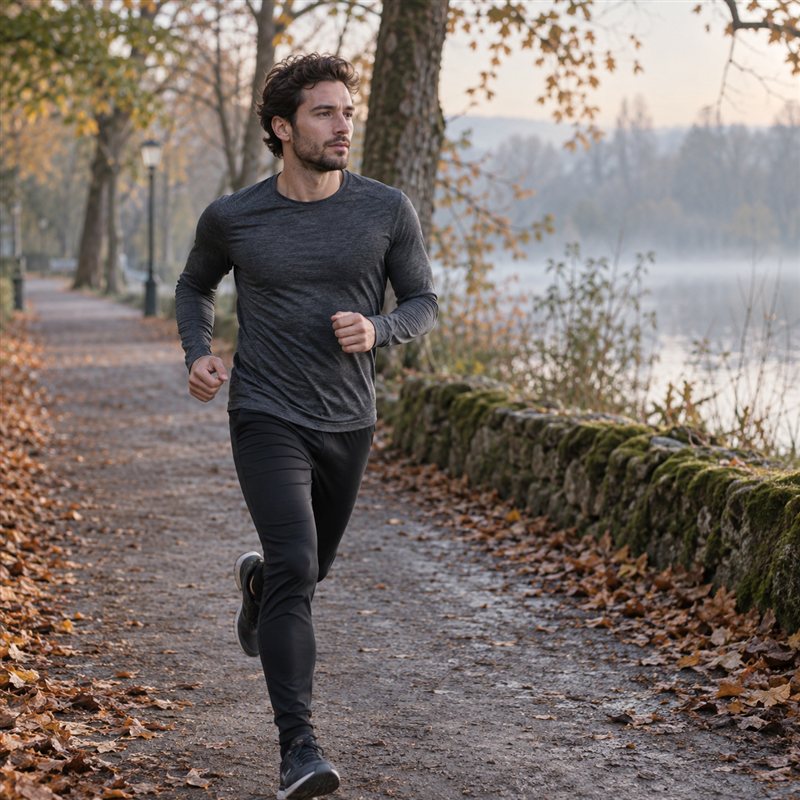
Far-Infrared Running Base Layer: Balancing Warmth and Sweat Management
A proposed two-route fabric development plan for a cool-weather far-infrared running base layer, comparing a 235 gsm winter-weight knit with...
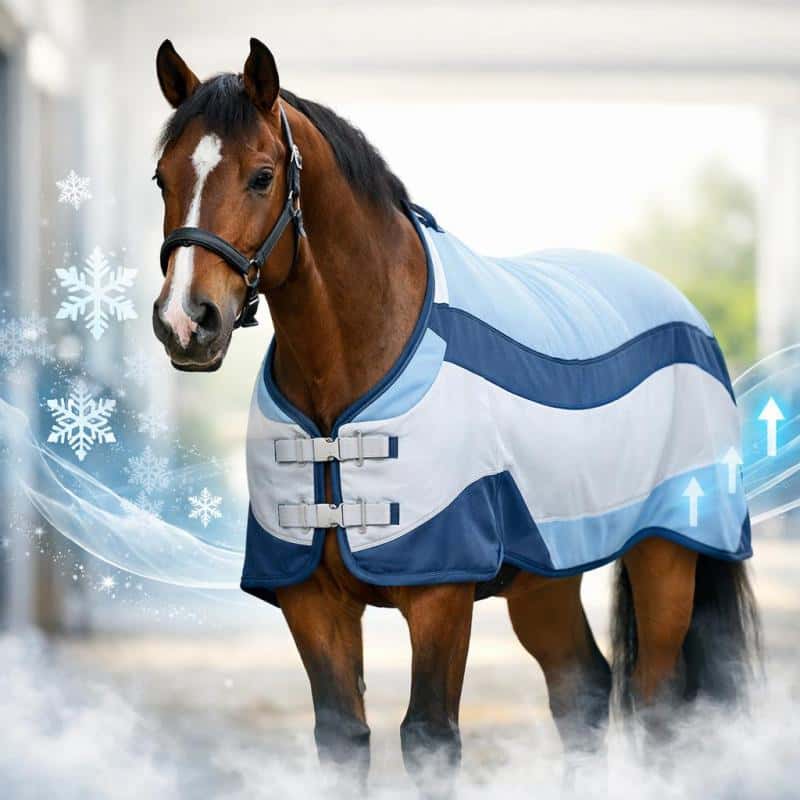
The Horse Blanket That Cools Without Ice, Water, or Electricity — Just Physics
Smart Thermal Regulation for Equine & Companion Animal Gear · PCM Phase Change Material Fabric The Challenge “Our competition horses...
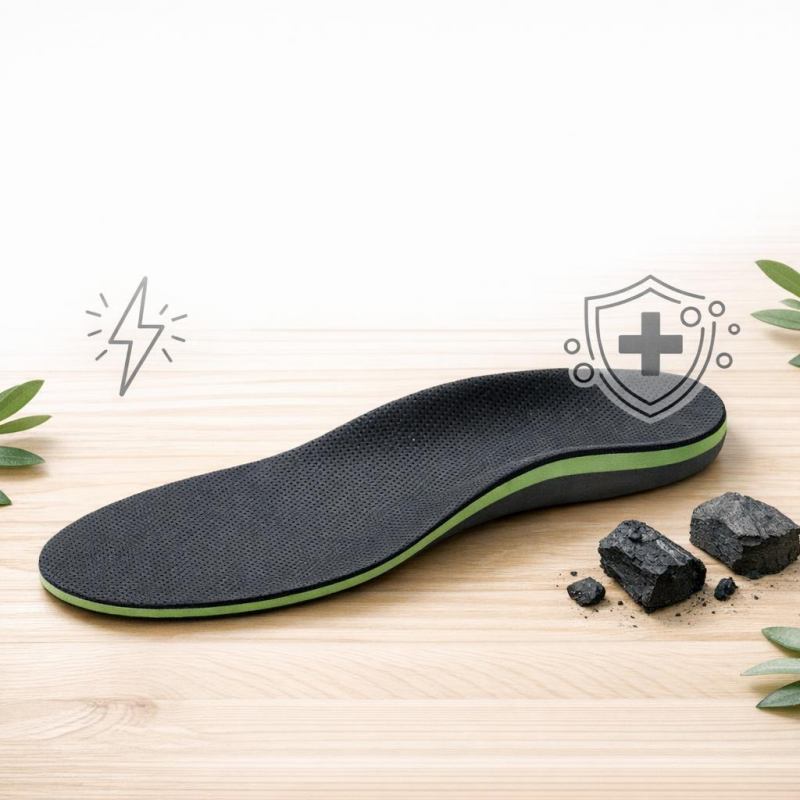
The Insole That Neutralizes Odor, Kills Bacteria, and Grounds Static — Without Any Chemical Coating
Anti-Static Footwear Innovation · Olive Charcoal Recycled Polyester Filament Technology The Challenge “Our current insoles control odor for the first...