 English
 Español
 Português
 Deutsch
 한국어
한국어 日本語
日本語 Italiano
 Français
 العربية
 Türkçe
Creative Textile Lab · Development concept
A woven seat that must work before and after you sit
After a car has stood in the sun, its seat can be painfully hot. Later, with the cabin cooled, the first touch may feel different; during a longer drive, the back and cushion can become damp. This concept explores how IcSnow® BNX™ and an optional 8C Pro moisture-management component could be developed into a woven textile seat cover that addresses those moments through different parts of the seat.
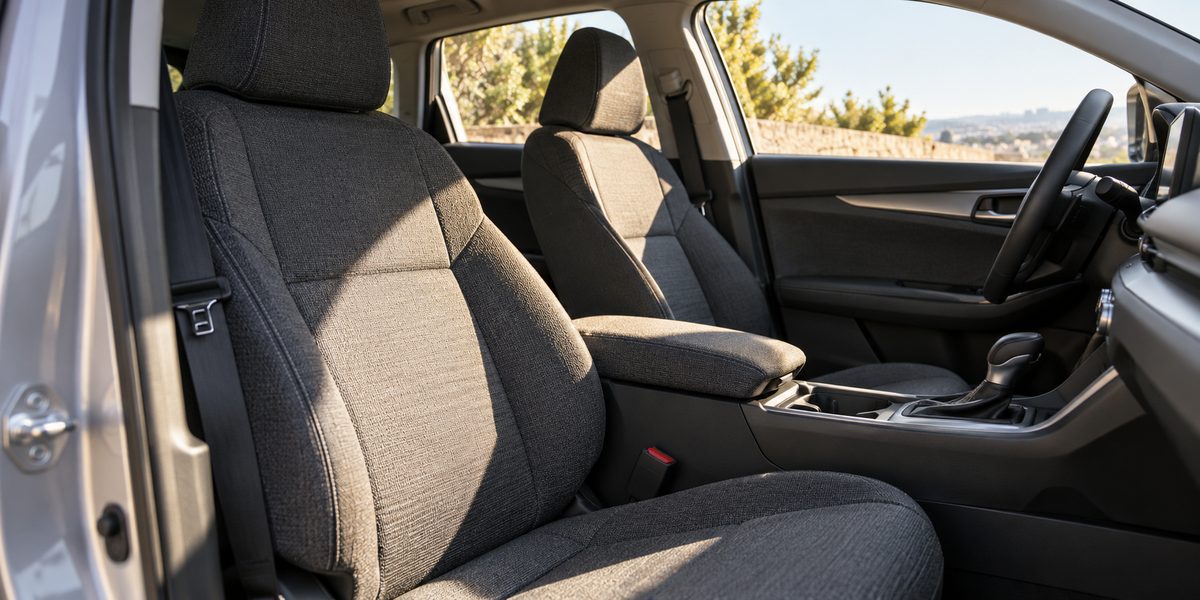
The challenge changes during the trip
A single “cooling seat” claim can conceal three competing requirements. Solar energy heats the cover before anyone sits down. The first contact is shaped by the temperature difference between skin and fabric. Prolonged sitting compresses the layers and restricts the route by which sweat can escape. Improving one moment does not automatically improve the others.
Limit heat taken up by the final colour and cover construction.
Interpret cool touch only with the seat-to-skin temperature direction.
Keep moisture moving through a viable exit path in the full assembly.
If a sun-heated seat is warmer than skin, faster contact heat exchange can make it feel hotter. A high q-max value alone is therefore a poor answer to the parked-sun problem. The broader BNX fabric guide explains why the contact, UV and solar measurements need separate interpretation.
Build the solution from the seat outward
Use an existing woven seat-cover fabric as the control. Develop a colour-matched BNX yarn candidate in a polyester or nylon route that can meet the target weave, hand and finishing needs. The present BNX HDPE route is for home textiles, so its separate q-max result is not a reason to put it into an automotive brief.
BNX’s h-BN component offers a heat-spreading route, but heat spreading alone cannot keep a seat from absorbing sunlight. The candidate must be compared with the control in the intended colour for solar response and surface heating. Two charcoal textiles can look alike yet absorb near-infrared light differently. UV protection answers another question and cannot stand in for this comparison.
An optional 8C Pro component could help spread moisture at the cover. It becomes useful only if the backing, adhesive, foam and any seat ventilation support vapour transfer or evaporation. A continuous impermeable film behind the cover would turn spreading into a damp patch rather than a drier seating experience.
Three samples reveal which layer matters
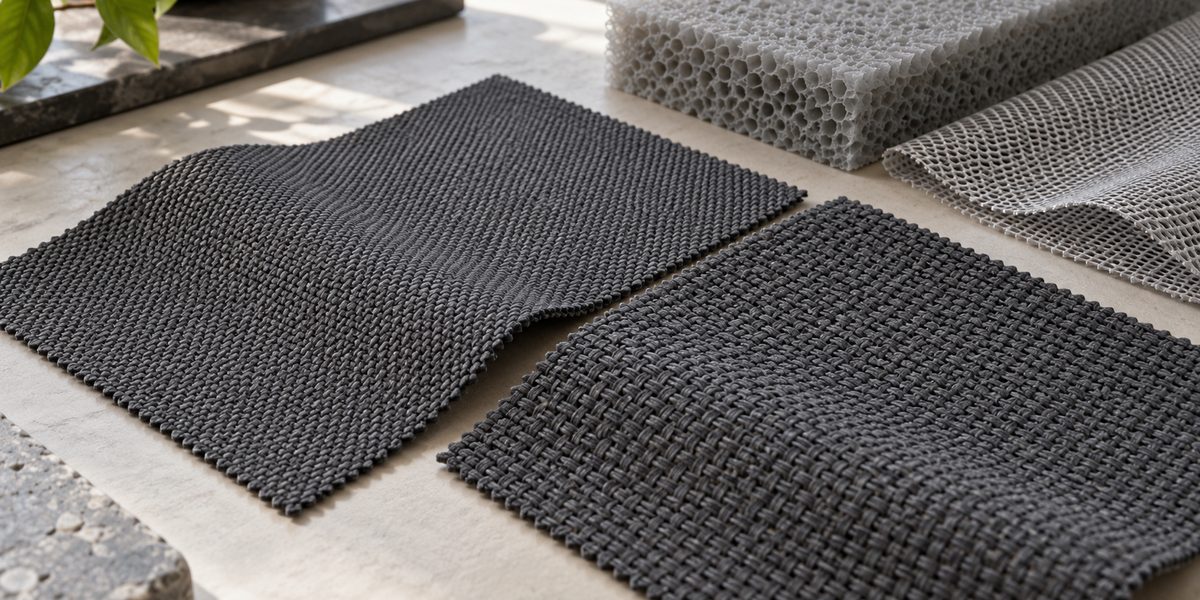
The first prototype set should change one decision at a time. Begin with the current textile seat cover and its known backing. Make a BNX face-fabric candidate as close as practical in colour, weight, weave and finish. Only after that comparison should the team add a moisture-management variant with a documented backing, adhesive pattern or ventilation path. This sequence makes it possible to tell whether a difference comes from the yarn, the face construction or the layers behind it.
Keep the present woven textile, backing and foam as the baseline.
Hold colour and construction close; compare contact and sun response.
Keep the selected face and alter the documented route through the assembly.
A highly absorbent face over a sealed back is an alternative worth rejecting early if moisture accumulates at the contact area. Conversely, if the BNX candidate feels different at first touch but the sun-exposed surface heats just as much, the next change belongs in the solar-facing design rather than the q-max target.
What would make the design change course?
Measure the cover temperature after a defined parked-sun exposure, then repeat first-contact evaluation after a documented cabin cool-down. During occupancy, observe temperature and humidity at the back and cushion while recording clothing, body pressure and ventilation state. The most useful result is not an isolated “cooling” score; it is knowing which stage improves and which layer limits the next stage.
BNX sample results from a white knit and a separately tested white thermal-blocking specimen cannot predict the temperature of a dark woven seat. The actual cover and full laminate must supply the answer.

Keep the complete seat in view
A promising material sample still has to survive upholstery processing and the requirements of the destination vehicle programme. Review abrasion, seam behavior, colourfastness, cleaning, ageing, flammability and any market-specific rules on the appropriate finished construction. ISO 11092:2026 can characterize steady-state thermal and water-vapour resistance of multilayer upholstery. Advance the design only after the finished seat meets the destination programme’s requirements.
Development concept notice. This case presents a material-and-application development concept informed by anonymized market inquiries and Annie’s Smartex technical research. It is not an offer for an off-the-shelf product and does not state that a specific finished product is commercially available or validated for this use. Sample availability, specifications, performance, compliance, manufacturability and care durability must be confirmed through project-specific development and testing. No confidential customer or project details are disclosed.
Define the first woven-seat prototype
Share the current textile cover, target colour and weave, backing and foam, ventilation state and the moment you most need to improve. Include the parked-sun and occupied-use conditions that the sample should be judged against. Discuss a woven-seat sample brief.

Related Posts
Boron Nitride Cooling Fabric: Cool Touch, Sun Heat and What BNX Tests Actually Show
Boron nitride cooling fabric can improve first-touch heat transfer, but it cannot answer every heat problem with one measurement. IcSnow®...

How to Choose the Right Cooling Fabric: A Buyer’s Guide to PCM Nylon, Cool-Touch Nylon & 8C Pro Polyester
The Problem With “Cooling” as a Category Walk into any trade show in 2025 and half the booths will have...

Why Cool Touch Yarn Is Redefining Summer Apparel in 2026
Quick Answer: Cool touch yarn is a functional fiber engineered to reduce skin-contact temperature by actively drawing heat away from...

Beyond Cooling: Why UV Protection and Solar Heat Management Matter in Next-Generation Summer Textiles
“Cool touch” solves what happens the instant fabric meets skin. It does not solve what happens after — sustained sweat,...