 English
 Español
 Português
 Deutsch
 한국어
한국어 日本語
日本語 Italiano
 Français
 العربية
 Türkçe
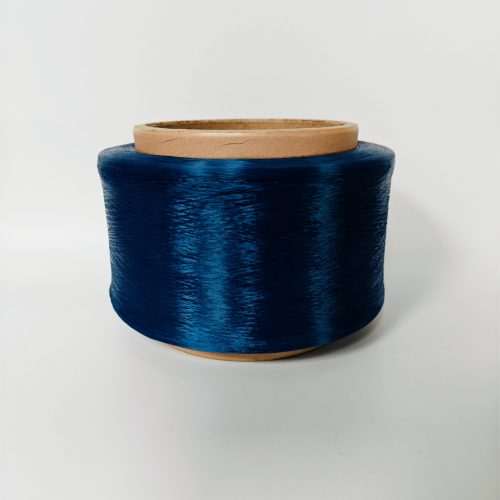
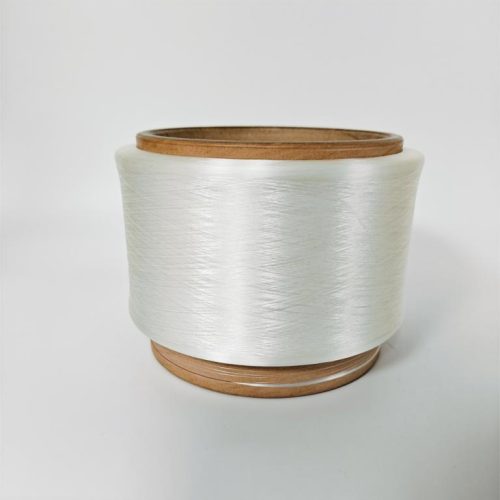
IcSnow® BNX™ brings boron nitride into cooling yarn development for fabric-level heat management. Choose a polymer and textile construction for the use condition, then check cool touch, UV protection and solar heat response as separate properties. A quick heat transfer at first touch can feel cool when the textile is cooler than skin; it can feel hot when a sun-heated surface is warmer. BNX therefore provides a material route and sample evidence, not a promise that every finished product remains cool.
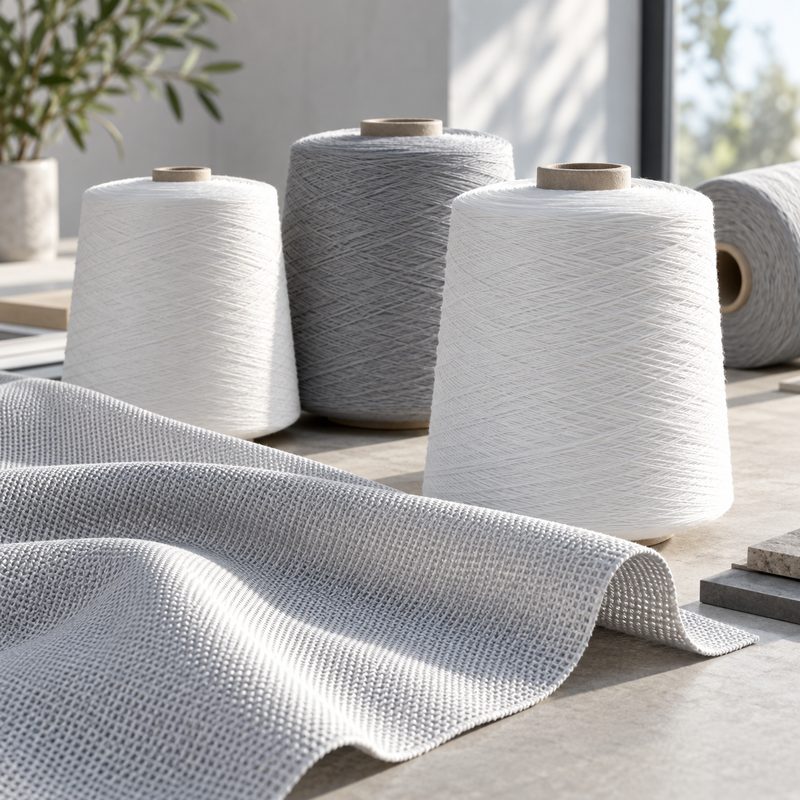
What BNX changes in a textile development brief
Hexagonal boron nitride has a layered structure with strong in-plane heat transport. Incorporated into a polymer system, it offers a route to spreading contact heat through a fiber. Measured performance depends on dispersion, polymer, loading, yarn formation, construction, finishing and the final fabric. If your brief also includes UV protection or lower solar heat gain, request separate optical testing on the finished colour and construction. A UV-protective fabric need not absorb less solar energy.
Choose the polymer route before choosing a number
| BNX development route | Where to explore it | Result from an individual fabric sample |
|---|---|---|
| Polyester basis | Textile constructions where dyeing, hand and cost need balancing. | q-max 0.270 W/cm² at ΔT 20°C. |
| Nylon basis | Soft, flexible contact surfaces and apparel constructions. | q-max 0.350 W/cm² at ΔT 20°C. A separate white knit measured 0.31 W/cm² at ΔT 15°C. |
| HDPE basis | Currently scoped to home textiles, in listed 200D, 300D and 400D yarn sizes. | q-max 0.433 W/cm² at ΔT 20°C; dyeing and process temperature constrain use. |
The three ΔT 20°C results came from differently constructed fabrics. They do not rank the polymers under controlled identical conditions, and none is an automotive upholstery result. HDPE is not offered here as an automotive-seat route.
What has been measured in fabric samples
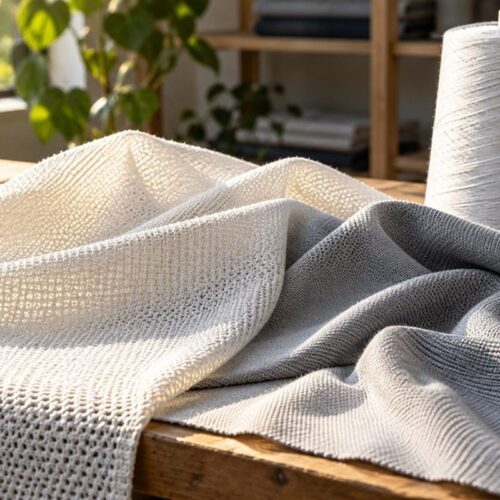
A white nylon knit measured q-max 0.31 W/cm² at a 15°C temperature difference under GB/T 35263-2017. The same submitted knit recorded UPF >50 (reported as 74) under GB/T 18830-2009. A separately tested white fabric recorded a 52.5% thermal-blocking rate under GB/T 41560-2022 at a 10 mm sample-to-blackboard distance. These are results for the specified samples and methods, not a combined result for one construction. The thermal-blocking rate is neither NIR reflectance nor a predicted temperature reduction in a garment or seat. Ask for the corresponding test records when selecting a sample.
For a closer look at how to compare contact, sunlight and moisture results, read our BNX cooling fabric guide.
UV, sunlight and long-wave emission need separate decisions
UPF concerns ultraviolet transmission. Solar heat gain includes visible and near-infrared energy, which a visually similar colour may absorb differently. Radiative cooling in the 8–13 μm band remains a development direction for BNX; final-fabric spectral-emissivity evidence is needed before making that claim. For a sun-exposed product, compare spectral or solar reflectance and a defined heating test on colour-matched finished samples. For prolonged contact, examine moisture and vapour pathways in the whole assembly.
From yarn to a relevant sample
Start with the end use, colour and construction, then identify a conventional control with comparable mass, thickness and finish. Ask which fabric face is tested, how it will be bonded or backed, and whether pores remain open. For upholstered seating, the cover, adhesive, backing, foam and any ventilation need to work together. 8C Pro’s moisture-management route may be discussed as a separate, optional development component; its apparel positioning is not proof of seat performance.
Applications and availability
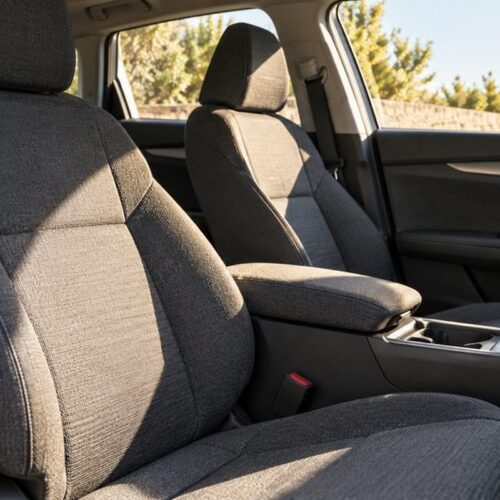
Polyester and nylon provide development routes for clothing and related textiles; the present HDPE route is for home textiles. For seating, explore our woven textile car-seat development concept. It is a proposed application, not an available or automotive-qualified finished product. For another IcSnow formulation, see our cooling nylon yarn; its test results apply to that product’s samples. Our q-max guide explains the contact test in more detail.
Start a BNX sample discussion
Tell us the target textile, polymer preference, colour, construction, intended exposure, backing or lamination, and the claim you need to verify. Include a control fabric if you have one. We can use those details to discuss an appropriate BNX development route and the evidence needed for the final fabric.


Reviews
There are no reviews yet.