 English
 Español
 Português
 Deutsch
 한국어
 日本語
 Italiano
 Français
 العربية
 Türkçe

Creative Textile Lab · Development concept
A white thobe looks effortless until the fabric has to do everything at once. It needs enough body to hang cleanly and enough cover to stay opaque, yet it will be worn through bright sun, warm rooms and the walk between them. If you are developing a cooling thobe fabric, the useful question is where the cloth can feel better without changing the familiar silhouette.
IcSnow® BNX™ and 8C Pro suggest one direction: give the skin-facing and outer sides of a woven cloth different jobs. The idea is worth a sample, especially if your current white thobe fabric feels warm or holds moisture. The weave still has to look and behave like a thobe fabric.
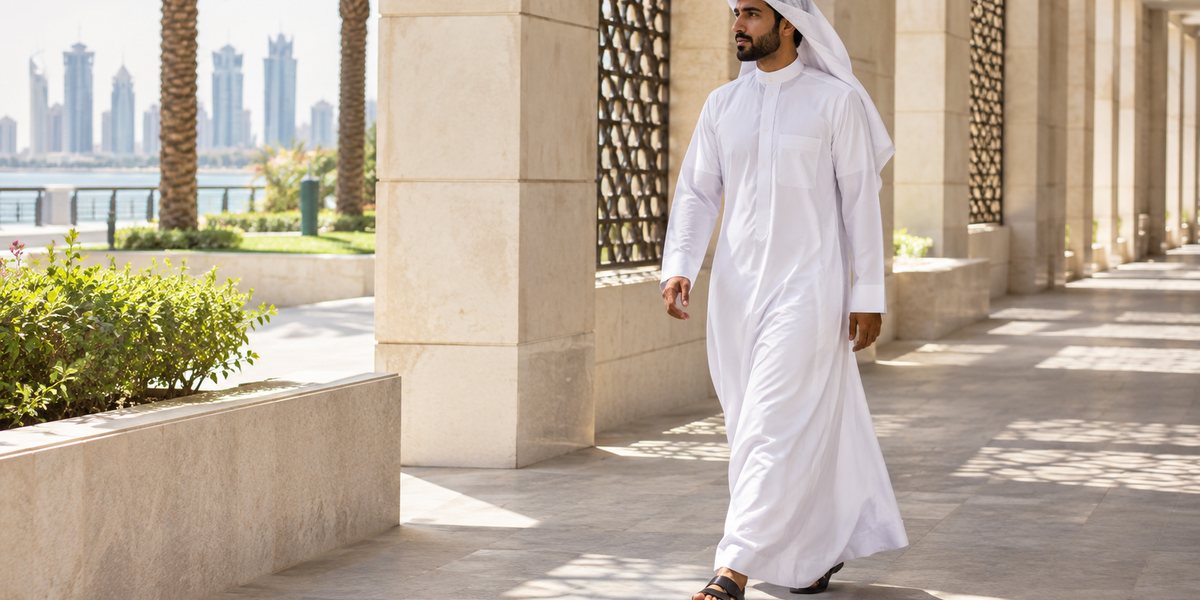
The white thobe must cover without feeling closed in
Opacity and airflow pull the fabric in different directions. A tighter weave can give you the crisp, modest appearance buyers expect, but may feel less comfortable when the wearer moves from an air-conditioned room into strong sun. Open the weave too far and the cloth may lose cover and structure. The wearer also notices more than the first touch: fabric that feels pleasant on the arm can cling once the day becomes humid.
So the brief is not “make the coolest fabric.” It is to keep the white colour, drape and everyday wearability while giving the inside face a better contact feel and the cloth a practical way to handle moisture.
Where could BNX and 8C Pro help?
Let BNX meet the skin
IcSnow® BNX™ offers a cool-touch yarn route. That matters at the moment the wearer puts on the thobe or the cloth brushes the arm. The cool sensation comes from the way heat moves at contact; it may change when the fabric has warmed in the sun. For this garment, BNX belongs on a face that actually touches the wearer, not merely in a yarn name on the specification.
Give 8C Pro a role in moisture movement
8C Pro brings a moisture-management route to the discussion. One woven sample could place it in the warp and BNX in the weft, with the weave adjusted to expose more BNX toward the body. That is a construction choice, not an automatic effect of crossing two yarns. The mill should show you both fabric faces before the design moves on.
Keep the cloth looking like a thobe
The first swatch may solve one problem and create another. More cover can make white less sheer but add weight. A smoother inner face may improve first touch while changing drape. Set the sample beside the thobe fabric your buyer already accepts, in the same light and over a contrasting underlayer. The comparison is easier to judge when the familiar cloth is on the table.
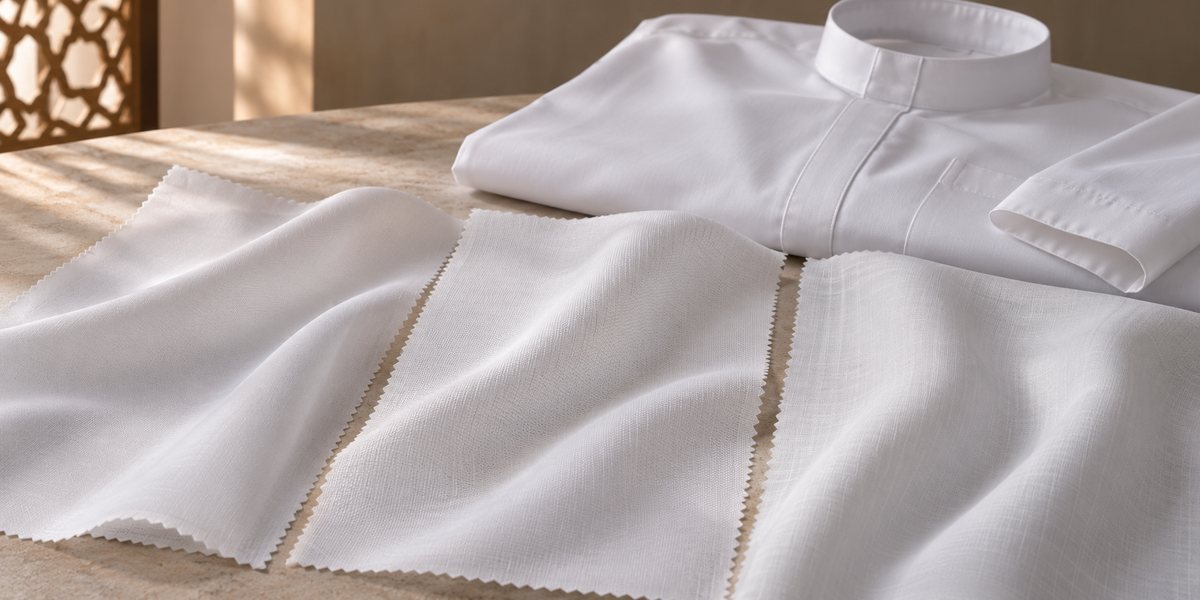
What should the first woven sample look like?
Start with the colour and garment shape, then work back to the cloth. Ask for a white or intended light-shade woven sample with a clear inner and outer face. Place BNX where it can be felt against skin; use 8C Pro where the chosen weave can make its moisture role useful. Keep the mass and finish near your current thobe fabric so that a different weight does not explain every difference you see.
You may find that a BNX-led fabric is already the better answer. If adding 8C Pro makes the cloth heavier or changes its hand without improving how it handles moisture, the simpler construction deserves another look. A good development route leaves room to make that choice.
Compare three fabrics in one thobe shape
| Fabric | What to look for | What the result changes |
|---|---|---|
| Your current white thobe fabric | Opacity, drape, feel and care baseline | Defines what the new fabric must preserve |
| BNX-led woven sample | Inner-face touch with similar shade and weight | Shows whether BNX alone gives the design enough value |
| BNX × 8C Pro woven sample | Touch plus moisture handling, without losing cover or drape | Shows whether the second yarn earns its place |
Make the strongest candidate and the control into the same simple thobe pattern. The collar, underarm and side seams add layers that a flat swatch cannot show. Wear and care feedback from those prototypes will tell you which fabric is worth another round.
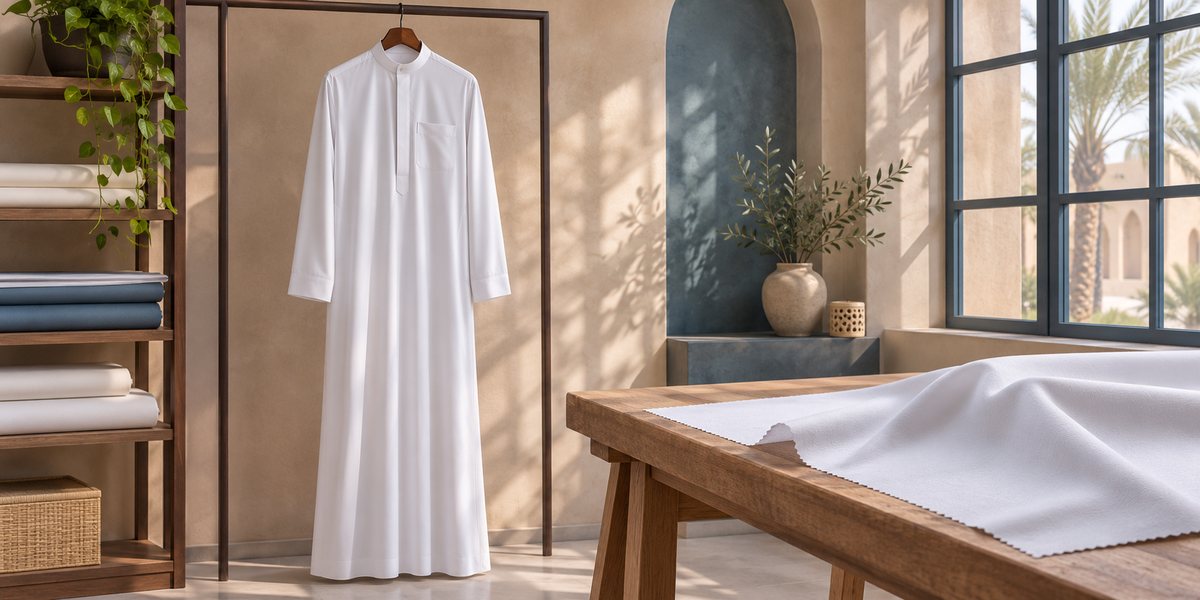
What would make you change the design?
If the fabric is too sheer, adjust cover before pursuing a stronger cooling claim. If it hangs stiffly, revisit the weave or yarn mix. If the combined cloth feels good at first touch but becomes clammy in wear, compare moisture movement and drying with the current fabric. These are useful reasons to change a sample; a single headline number is not.
Existing BNX fabric tests give the team a starting conversation about contact feel and sunlight, but they were run on individual fabrics, not this woven thobe. Before you describe the finished garment as UV protective or cooler in sun, check the actual shade and construction under the relevant method. That keeps the product story close to what the wearer will receive.
Develop a BNX cooling thobe fabric sample
Send us the thobe style, intended shade, current fabric and the one improvement you most want to feel or see. We can discuss a BNX-led woven sample, an optional 8C Pro version and a fair comparison with your existing cloth.

Related Posts

How to Choose Cooling Fabric: PCM, Cool-Touch, 8C Pro
How Do You Choose Cooling Fabric? Choose cooling fabric by the problem the finished product must solve: PCM nylon helps...

Knitted Car Seat Fabric: Beyond Cool to the Touch
Creative Textile Lab · Development concept A knitted seat cover that must work before and after you sit After a...
Sun Hoodie Fabric: Balancing UV Coverage and Sweat Comfort
Develop sun hoodie fabric with a clearer sample plan. Compare IcSnow nylon, UV coverage, heat shielding and fit using matched...

New Revolution yarn with super moisture-wicking combined with cooling touch, antibacterial and Anti-UV
Picture this: You’re halfway through your morning run, and your shirt is already soaked with sweat. Despite its “moisture-wicking” label,...