 English
 Español
 Português
 Deutsch
 한국어
 日本語
 Italiano
 Français
 العربية
 Türkçe
Protective textile development · Buyer guide
If you are sourcing cut-resistant sleeve yarn for glass handling, start with the exposed arm area and the glove-to-sleeve junction, then choose a yarn and knit that can hold coverage through the actual lifting motion. UHMWPE can be a useful lightweight starting route. It is not a cut rating by itself: the finished sleeve construction and the intended hazard decide what must be tested. A sleeve that scores well as a flat material sample can still leave the wrist uncovered when the worker reaches for a suction handle.
Where does a glass-handling sleeve need to protect?
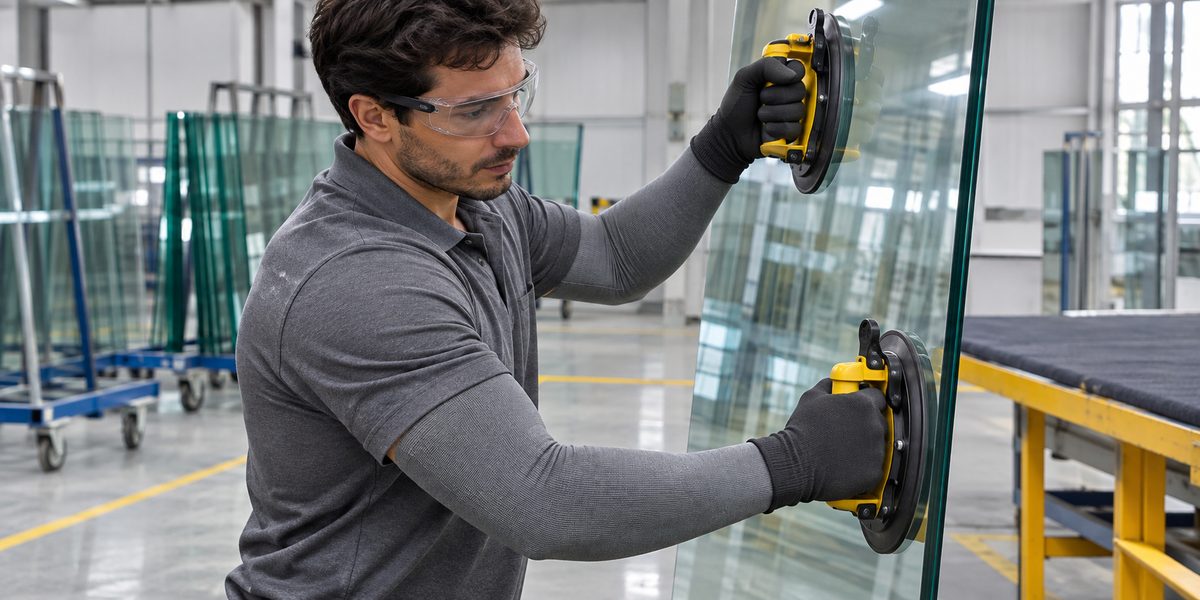
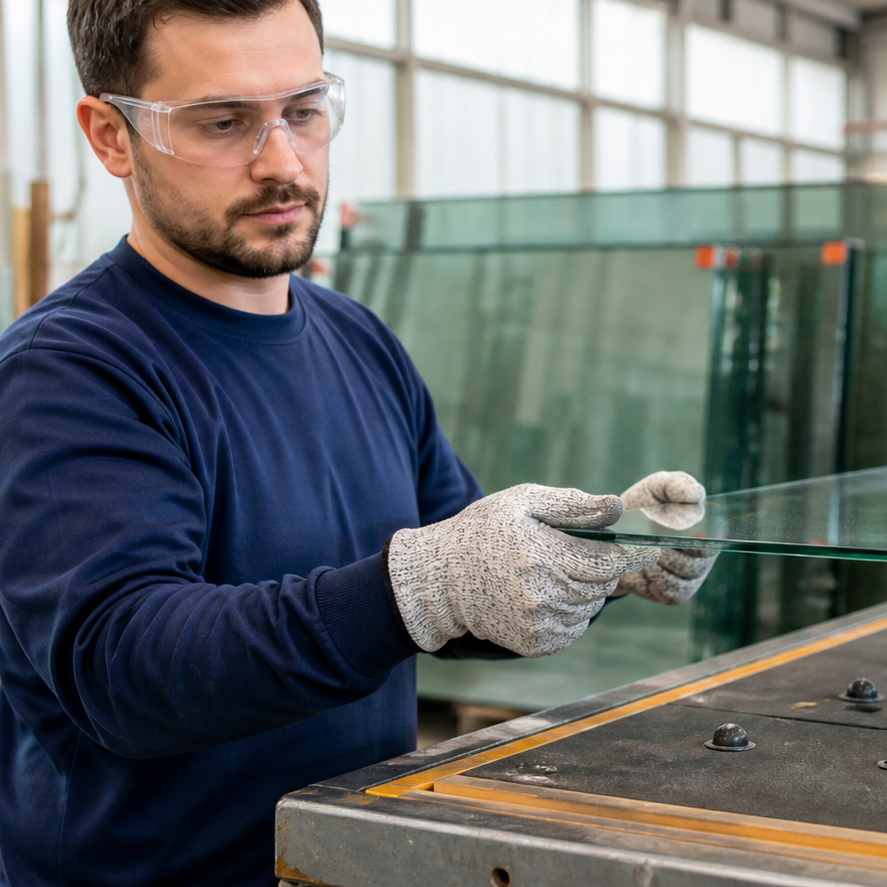
Map the task before selecting yarn. A person moving flat glass may raise the elbow, rotate the forearm and grip a lifting handle while a glove cuff shifts against the sleeve. The exposed zone may be the wrist, forearm or upper arm. A long sleeve on a product sheet does not tell you which areas stay covered during those movements.
Ask the PPE team to specify the glass edge exposure, handling method, other hazards, glove model and required covered length on the wearer. The relevant glove may already have a cuff or gauntlet. Your sleeve needs to work with that interface, rather than duplicate it. For direct hand protection and glove yarn selection, our UHMWPE glove yarn guide has a separate job; this page focuses on the arm sleeve.
That distinction changes the first conversation with a supplier. “We handle glass” is too broad: carrying a smooth pane with suction handles, loading cut sheets onto a rack and reaching around a framed panel expose the arm in different ways. The buyer should describe where a sharp edge could actually meet the sleeve and which motions pull it out of position. If the main risk is at the palm, a different glove may be the priority. If the exposed strip is above the glove, extra sleeve length and a better wrist junction may matter more than a higher yarn specification.
Which yarn route belongs in a first sample?
UHMWPE yarn offers a lightweight, high-strength basis for a knitted protective textile. It may suit a sleeve brief that values mobility and low bulk. A higher cut target can require a different yarn construction, reinforcement or denser knit, with possible costs in weight, hand feel and flexibility. ADAMAS® cut-resistant yarn is another candidate to discuss when the target and knitting route justify it; its yarn-page performance statements must be matched to the actual material and test report before being used as a finished-sleeve claim.
Do not transfer a glove rating to a sleeve, and do not use a cut test as evidence for puncture, contact heat or power-tool hazards. ASTM F2992-23 measures how a material resists a smooth sharp edge under defined conditions; its scope explicitly excludes other failure modes. For heat-adjacent work, ask the PPE specialist to evaluate a suitable alternative system rather than assuming a UHMWPE sleeve covers that hazard.
There is a practical tradeoff behind the fiber choice. A lower-bulk UHMWPE-based sleeve may be easier to place beneath a glove cuff, while a reinforced yarn or more substantial construction may change the cut result at the material level. Either route can disappoint if the sleeve stretches, slides or makes the wrist too thick for a secure grip. Para-aramid is another material family to evaluate when the work introduces a heat question, but the actual garment construction and the relevant test evidence still determine suitability. Treat these as candidate systems for the same use, not a universal winner list.
How do you specify cut-resistant sleeve yarn and knit?
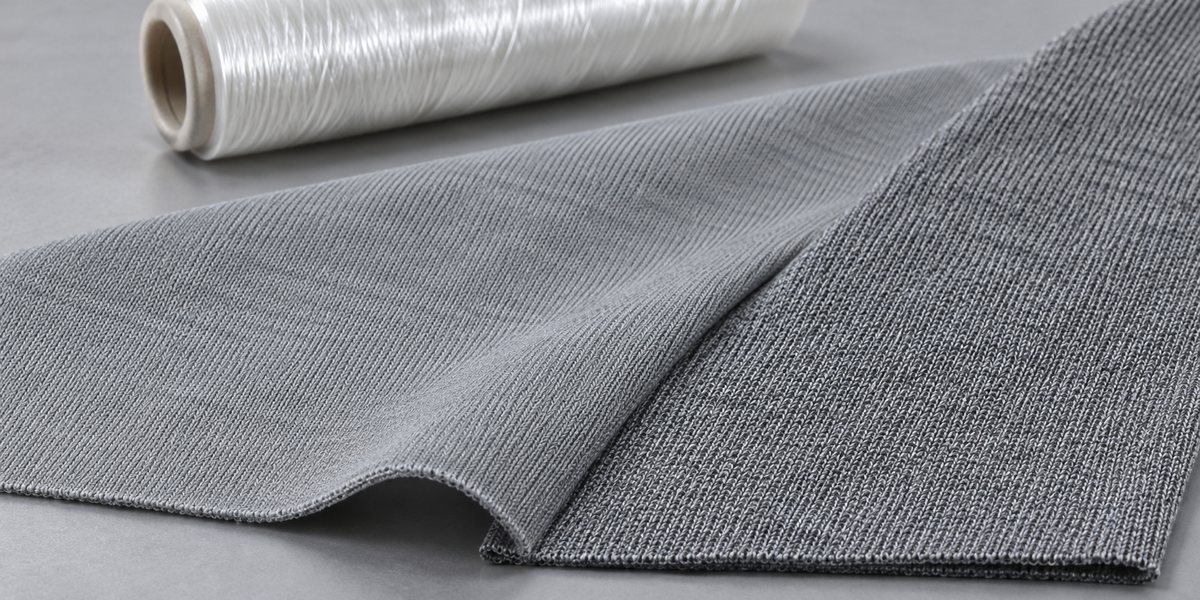
Give the knitting mill a specification that can be reproduced. Yarn count and construction affect machine compatibility and the feel of the fabric; stitch structure, plies and local reinforcement affect thickness, flexibility and how the sleeve moves on the arm. A tighter structure is not automatically the best choice if it bunches under the glove or limits elbow bend.
| Specify | Why it changes the decision | What to compare in samples |
|---|---|---|
| Yarn construction and count | Controls knitting route, bulk and compatibility with other components. | Supplier yarn identity, package details, knit feasibility and traceable yarn data. |
| Knit structure and fabric weight | Changes coverage, stretch, bulk and material use. | Finished-sleeve movement and cut result at the relevant material locations. |
| Wrist and upper-arm finishes | Determine whether the sleeve stays over the required area. | Glove overlap, cuff pressure, slippage and elbow mobility across sizes. |
| Care route | Laundering can change dimensions, fit and measured performance. | Pre- and post-care fit and test results using an agreed care protocol. |
The table is a sample brief, not a performance ranking. Hold the glove, sleeve length and handling task constant when comparing knit options so you know which variable caused a change.
When you write “yarn count” into the RFQ, identify the unit and the construction behind the number. Linear density describes the mass of a given yarn length; it says little about the finished sleeve unless you also know whether the yarn is single, plied, wrapped or combined with another component. Stretch can be designed through the knit and an elastic component, but that component has a different job from the cut-resistant yarn. If a proposed yarn requires a different machine setup, the mill should tell you before a trial is treated as a simple material substitution.
Fabric weight and knit density deserve the same caution. A heavier sample may contain more material, yet its extra bulk can change fit inside the glove. The comparison is no longer a simple question of which fiber is stronger. Ask the mill to make at least one comparison where sleeve dimensions and intended glove stay fixed. If the cut result improves but the cuff now folds under the glove, you have learned something useful: the yarn route may be viable, but the interface needs redesign before purchase.
Why does the glove-to-sleeve interface matter?
The wrist is a separate design problem from the yarn. A thumb opening, an extended cuff or an overlap under the glove may help the sleeve stay in place, but each can add bulk where the worker needs grip and freedom of movement. The upper-arm finish can also roll or migrate if its tension is wrong for the wearer.
Build the sleeve with the actual glove proposed for the job. Check reach, rotation and repeated handling gestures with more than one wearer size. A fit problem found here may be solved by cuff construction rather than a more expensive yarn. OSHA’s PPE assessment guidance also treats gloves and sleeves as selected equipment whose protection and care must be understood for the task.
Look at the junction in both directions. When the worker reaches upward, does the glove cuff ride toward the hand while the sleeve moves toward the elbow? When the worker bends the wrist around a lifting handle, does the sleeve bunch into the palm or create pressure at the thumb opening? A quick static fit photo will miss both problems. Try the chosen glove over and under the sleeve edge where the design permits, and record which arrangement preserves coverage without interfering with the handle. The employer’s PPE assessment still decides whether that arrangement is appropriate for the task.
What should a useful first sample matrix contain?
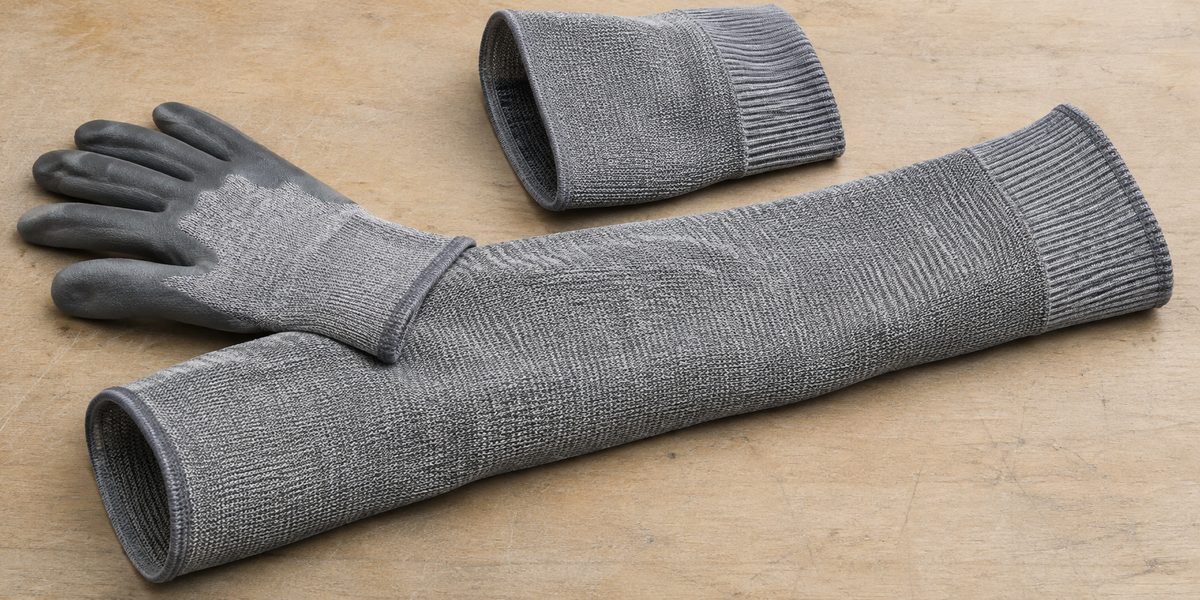
Begin with two controlled routes: a UHMWPE-based knit aimed at lower bulk, and a reinforced or different-density route aimed at the required cut target. Keep sleeve length, glove and intended use the same. If the upper arm slides, vary the retention finish separately instead of changing yarn, knit and cuff at once. For each route, note the yarn identity, structure, weight, dimensions and intended care method.
Record the decision rule before sampling: the selected route must meet the agreed cut target on the relevant tested construction, maintain coverage during the handling task and remain workable with the chosen glove. If either sample fails, the result points to the next change—material construction, fit or interface—rather than a vague request for a “stronger yarn.”
A useful sample review has three separate observations. The laboratory report tells you what was tested for cutting resistance. The fit trial tells you whether the sleeve remains where protection is needed. The wearer and glove trial tells you whether the design can be used repeatedly without the material folding or the glove losing its intended fit. Record each observation against the sample code. That prevents an attractive flat-fabric result from hiding a poor garment interface and stops a comfortable prototype from being presented as protective before its construction is tested.
Which tests support the purchasing decision?
For a U.S. hand-and-arm protection brief, use the current ANSI/ISEA 105-2024 classification and the specified test method, including ASTM F2992-23 where applicable. Ask for the test specimen construction, location, method, edition and result—not only a level printed on a yarn cone. Confirm which locations of the finished sleeve and any reinforced panels the report represents.
Separate the cut result from wear trials. A laboratory cut result cannot establish glove compatibility, secure upper-arm fit, dimensional stability after care, puncture resistance or protection against machinery. The workplace risk assessment determines the required PPE combination and acceptable level. If a supplier has reports, request the original records and match them to the proposed sample; do not assume that an unfiled report never existed.
Read the report as a comparison tool rather than a badge. Check whether the tested piece used the same yarn blend, knit and reinforcement as the sleeve you will buy. Ask where the specimen came from if the sleeve has a different wrist, forearm and elbow structure. Check the standard edition, cutting method, conditioning and the reported value behind any classification. If your care instructions allow laundering, agree on the pre- and post-care specimens before promising durability. A report for a previous version can guide development, but it should not silently become evidence for a changed construction.
Send a sleeve brief that a yarn supplier can act on
Tell us the glass-handling motion, required covered arm zones, glove model, target cut classification and edition, preferred knit route, wearer size range, care cycle and sample quantity. Those details make cut-resistant sleeve yarn selection a concrete development decision. We can discuss suitable UHMWPE yarn or other available yarn starting points against that brief. Send the project requirements for a sample discussion.

Related Posts
UHMWPE Cut-Resistant Yarn for Gloves: ANSI A2–A9 Guide
A practical buyer guide to matching ANSI A2-A9 targets with UHMWPE yarn construction, denier, blends, glove gauge, testing and MOQ.

How to Choose Cooling Fabric: PCM, Cool-Touch, 8C Pro
How Do You Choose Cooling Fabric? Choose cooling fabric by the problem the finished product must solve: PCM nylon helps...

How to Choose Anti-Static Yarn for Industrial Workwear: A Buyer’s Guide
Choosing the wrong anti-static yarn can cost your business more than just money. I’ve seen electronics manufacturers lose entire production...

Aerogel Cooling Sleeves: NASA-Inspired Technology Keeps You 10°C Cooler Longer
Twenty minutes. That’s how long most cooling sleeves actually work. You pull them on, feel that initial chill, and think...