 English
 Español
 Português
 Deutsch
 한국어
한국어 日本語
日本語 Italiano
 Français
 العربية
 Türkçe
The global cooling fabrics market hit USD 2.42 billion in 2023. It’s growing at 7.7% CAGR. And yet, most “cooling” fabrics on the market today are still just regular polyester with a marketing label slapped on top.
That’s a problem — and buyers are starting to notice.
I’ve spent time analyzing what separates genuinely high-performance cooling yarns from the noise. The answer keeps coming back to one thing: fiber architecture. Not coatings. Not finishing treatments. The actual physical structure of the yarn itself.
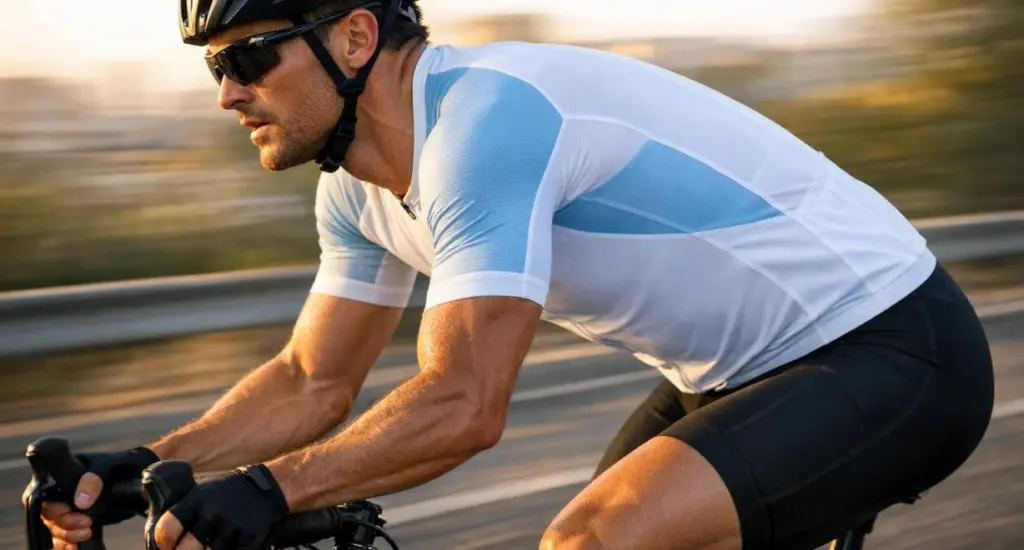
This article breaks down the science, compares the leading technologies available in 2026, and explains exactly what to look for when you’re sourcing cooling fabrics for your next summer collection. If you’re a brand, a designer, or a textile buyer, this is the guide I wish existed when I started evaluating performance yarns.
Why Standard Polyester Fails in Summer Heat?
Let me be direct: conventional polyester was never designed for thermal comfort. It was designed for durability and cost efficiency. The fact that it became the default material for athletic wear is more a story of economics than performance.
Here’s the core problem. Standard polyester has a smooth, dense fiber structure. Sweat hits the surface and has nowhere to go. It pools against your skin. You feel clammy. Your body temperature rises. Performance drops.
Brands sourcing summer collections in 2026 are no longer accepting this trade-off. According to Polaris Market Research, the cooling fabrics market is expanding rapidly precisely because consumer tolerance for discomfort has hit a floor. Buyers now walk into sourcing conversations with a three-point checklist:
- Moisture Vapor Transmission Rate (MVTR) — how fast does moisture leave the fabric?
- Thermal conductivity — does the fabric actually feel cool on contact?
- Wash durability — does the performance last beyond 20 wash cycles?
A fabric that can’t answer all three with verified data isn’t competitive anymore. Full stop. The era of vague “breathable fabric” claims is over — and the brands still making those claims are losing shelf space to competitors who can back up their specs with test reports.
How Does Cooling Fabric Actually Work? The Science of Moisture and Heat Transfer
Most people think cooling fabrics work by being “thin” or “light.” That’s not how it works.
Real cooling performance comes from three distinct physical mechanisms working together — and understanding them is the difference between sourcing a genuinely functional fabric and paying a premium for a placebo.
Capillary action is the first mechanism. When a fiber has microscopic channels or grooves in its cross-section, moisture is pulled through those channels by surface tension — the same physics that makes a paper towel absorb water. The more surface area those channels create, the faster and more completely moisture moves away from skin.
Thermal conductivity is the second. This is what creates the “cool touch” sensation. Certain minerals — jade, mica, ceramic particles — have naturally high thermal conductivity. When integrated into fiber structure, they draw heat away from skin on contact. This is measurable using the Q-max value standard: higher Q-max means a more immediate cooling sensation. Mineral-integrated cooling yarns are now the fastest-growing category in performance textiles precisely because of this measurable, verifiable cool-touch effect.
Evaporation rate is the third. Once moisture reaches the outer fabric surface, how quickly does it evaporate? This is where fiber cross-section design matters again — a larger exposed surface area means faster evaporation, which means the cooling cycle completes faster and repeats more efficiently.
The best cooling yarns in 2026 engineer all three mechanisms simultaneously. The worst ones address only one — usually with a surface coating that degrades after washing.
What Are the Best Cooling Yarn Technologies Available in 2026?
Here’s an honest comparison of the four main cooling yarn technologies on the market right now. I’m not going to tell you one is universally better than the others — the right choice depends on your end-use application. But I will tell you exactly what each one does well and where it falls short.
Ceramic particle cooling yarns embed mineral powders with high thermal conductivity directly into the fiber during extrusion. The immediate cool-touch sensation is their strongest selling point — Q-max values are consistently high. The limitation is that ceramic particles alone don’t solve moisture management. You get the cool-touch, but without a structural wicking mechanism, sweat still accumulates. Best for: premium lifestyle and athleisure where the tactile experience matters more than heavy sweat management.
One-way moisture transfer yarns — like SiPHONiX® — use a hydrophobic core with moisture-permeable outer layers to push sweat directionally outward. The inner surface stays dry even when the outer surface is saturated. This is genuinely clever engineering. The limitation is that directional wicking doesn’t address thermal conductivity — the fabric moves moisture well but doesn’t necessarily feel cool on contact.
Conductive cooling composite yarns blend conductive fibers with wicking structures to address both heat dissipation and moisture management. These are gaining traction in technical sportswear and emerging smart textile applications. The trade-off is complexity — blended constructions are harder to customize and often carry higher MOQs.
Microporous channel polyester — the category that 8C Pro belongs to — takes the most structurally integrated approach. The fiber cross-section itself is engineered into a multi-channel groove design, maximizing capillary surface area at the fiber level. Combine that with mineral integration for thermal conductivity, and you get a yarn that addresses all three cooling mechanisms without relying on surface treatments that wash out.
That structural integration is, in my view, the most defensible long-term approach. Coatings fade. Fiber architecture doesn’t.
Microporous Polyester Explained: How 8C Pro Delivers Cool Touch, Fast Dry, and UV Protection in One Yarn
Let me give you the specific numbers, because this is where 8C Pro separates itself from the field.
The foundation is the 8C-shaped microporous channel structure — a 3D groove design that creates dramatically more capillary surface area than conventional round or trilobal cross-sections. The result: sweat dispersal happens 7 times faster than standard materials. We’re talking 2 seconds for moisture transfer versus the 10–15 seconds conventional fabrics require. In a high-intensity workout, that difference is the gap between comfort and distraction.
The cool-touch performance comes from Taiwanese jade, crystal, and mica minerals embedded directly into the fiber during production — not applied as a post-treatment coating. This matters enormously for wash durability. The cooling sensation doesn’t degrade after 50 wash cycles because it’s not a surface treatment. It’s part of the fiber.
UV protection reaches UPF 100+ through integrated zinc ions — a specification that significantly exceeds the UPF 50+ standard seen in most competing products. And those same zinc ions deliver the antimicrobial function: 95% reduction in bacterial growth against Staphylococcus aureus, verified through AATCC Test Method 100.
Four functions. One yarn. No layered treatments competing with each other.

What I find most compelling about 8C Pro isn’t any single data point — it’s the fact that these properties are structurally integrated rather than additively stacked. Most multi-functional yarns achieve their specs by combining separate treatments, which creates durability trade-offs. 8C Pro’s architecture avoids that problem by design.
Which Summer Apparel Categories Benefit Most from Cool-Touch Fabrics?
Not every application needs every function. Here’s how to think about category fit:
High-intensity athletic wear — running, cycling, HIIT — is where the 7x moisture-wicking speed delivers the most direct performance benefit. When sweat volume is high and sustained, the speed of moisture transfer determines whether an athlete stays in the zone or starts managing discomfort. This is the category where wicking architecture matters most.
Yoga and studio fitness prioritizes skin feel and odor control over raw wicking speed. A 90-minute hot yoga session in a fabric that stays fresh and cool-to-touch is a fundamentally different product experience than one that simply “dries fast.” The antimicrobial function is the differentiator here — 95% bacterial reduction means the fabric doesn’t develop odor even after repeated use between washes.
Outdoor and adventure apparel — hiking, trail running, water sports — makes UPF 100+ non-negotiable. Extended sun exposure combined with physical exertion is exactly the use case this yarn was engineered for. According to Alibaba’s SS26 market insights, UV protection has moved from a premium feature to a baseline expectation in outdoor summer collections.
Travel and everyday athleisure is the fastest-growing application category in 2026. The consumer behavior shift here is real: people want a single garment that performs from morning commute to midday workout to evening dinner. Cool touch, odor resistance, and quick dry in one fabric eliminates the need for outfit changes — and that convenience is a genuine purchase driver.
Medical and technical textiles represent an emerging frontier that most brands haven’t fully explored yet. Verified antimicrobial performance combined with skin-safe mineral composition opens real doors in compression garments, rehabilitation wear, and patient-facing medical textiles. If you’re a brand with distribution in healthcare or wellness, this is an underserved opportunity.
What Should Brands and Buyers Look for When Sourcing Cooling Fabrics in 2026?
I’ve seen a lot of sourcing decisions go wrong because buyers focus on the wrong criteria. Here’s what actually matters:
Demand test reports, not spec sheets. A spec sheet is a marketing document. A test report from an accredited laboratory is evidence. For antimicrobial performance, the standard is AATCC Test Method 100. For UV protection, ask for the actual UPF test report — not just the claimed rating. For moisture wicking, AATCC 195 or equivalent. If a supplier can’t produce these documents, that tells you everything you need to know.
Ask specifically whether functional properties are fiber-integrated or coating-based. This is the single most important durability question in performance yarn sourcing. Coatings and surface treatments degrade with washing — typically within 20–30 wash cycles. Fiber-integrated properties, where minerals or ions are embedded during extrusion, maintain performance across the garment’s full lifespan. The answer to this question determines whether you’re buying a performance fabric or a performance illusion.
Evaluate customization depth. The best functional yarn suppliers in 2026 don’t just sell you a standard product — they work with you to adjust denier, filament count, mineral composition, and functional additives based on your specific end-use requirements. This customization capability is what separates a strategic supplier from a commodity vendor.
Check certifications for your target market. OEKO-TEX Standard 100 and bluesign certification are increasingly required by European and North American retail partners. If you’re sourcing nano-particle or mineral-integrated yarns, confirm that the specific compounds meet REACH compliance. This is not optional for brands with serious retail distribution ambitions.
Clarify MOQ and lead time before you fall in love with a product. Functional yarns carry higher MOQs than commodity polyester. If you’re testing a new category or developing a limited run, negotiate sample quantities and pilot order terms upfront. The best suppliers will work with you on this — the ones who won’t are telling you something about how they prioritize customer relationships.
Frequently Asked Questions
What is the difference between cool-touch fabric and moisture-wicking fabric?
Cool-touch refers to the immediate thermal sensation when fabric contacts skin — driven by thermal conductivity of the fiber material. Moisture-wicking refers to the speed and efficiency of sweat transport away from skin — driven by fiber cross-section architecture and capillary action. High-performance fabrics like 8C Pro deliver both simultaneously, but they are distinct mechanisms that can exist independently.
How long does the cooling performance of microporous polyester last after washing?
For fiber-integrated technologies where minerals are embedded during extrusion — as in 8C Pro — cooling performance is permanent and does not degrade with washing. For coating-based cooling fabrics, performance typically begins to decline after 20–30 wash cycles. Always ask your supplier which category their product falls into.
What UPF rating do I need for outdoor summer apparel?
UPF 50+ blocks 98% of UV radiation and is the standard minimum for outdoor performance apparel. UPF 100+ — the rating achieved by 8C Pro — blocks 99%+ and provides meaningful additional protection for extended outdoor use, high-altitude activities, and water sports where UV reflection amplifies exposure.
Is antimicrobial yarn safe for skin contact?
Zinc ion-based antimicrobial yarns like 8C Pro are widely considered safe for skin contact and are used in medical textiles. Confirm OEKO-TEX Standard 100 certification for your specific application, particularly for children’s wear or medical-adjacent products.
Can cooling yarn be customized for specific performance requirements?
Yes. Advanced suppliers offer customization of denier, filament count, mineral composition, and functional additives. 8C Pro, for example, can be configured with different mineral blends to optimize for cool-touch intensity, wicking speed, or antimicrobial performance depending on the end-use application.
Ready to Source the Right Cooling Yarn for Your 2026 Summer Collection?
8C Pro microporous polyester delivers measurable results across four functions — cool touch, 7x faster moisture wicking, UPF 100+ UV protection, and 95% antimicrobial performance — all through fiber-integrated technology that doesn’t wash out.
If you’re building a summer collection that needs to perform as hard as it’s marketed, this is the yarn worth evaluating.

Related Posts

Why Cool Touch Yarn Is Redefining Summer Apparel in 2026
Quick Answer: Cool touch yarn is a functional fiber engineered to reduce skin-contact temperature by actively drawing heat away from...

How to Choose the Right Cooling Fabric: A Buyer’s Guide to PCM Nylon, Cool-Touch Nylon & 8C Pro Polyester
The Problem With “Cooling” as a Category Walk into any trade show in 2025 and half the booths will have...

Beyond Cooling: Why UV Protection and Solar Heat Management Matter in Next-Generation Summer Textiles
“Cool touch” solves what happens the instant fabric meets skin. It does not solve what happens after — sustained sweat,...
Aerogel Fabric for Summer Apparel: How Heat Blocking Outperforms Every Cooling Treatment on the Market
I’ve been in functional textiles for over 20 years. In that time, I’ve seen a lot of “breakthrough” cooling materials...