 English
 Español
 Português
 Deutsch
 한국어
 日本語
 Italiano
 Français
 العربية
 Türkçe

On a cold ride, the back of your hand meets the wind while your palm holds the bar and your fingers reach for the brake. A bulky glove may feel warm off the bike yet make that movement awkward. This winter cycling glove concept explores a different allocation: examine an aerogel textile on the hand’s exposed side, keep the grip side comparatively lean, and compare both with a familiar insulated control. The aim is a glove construction worth sampling, not a claim that a finished ShowarmX cycling glove already exists.
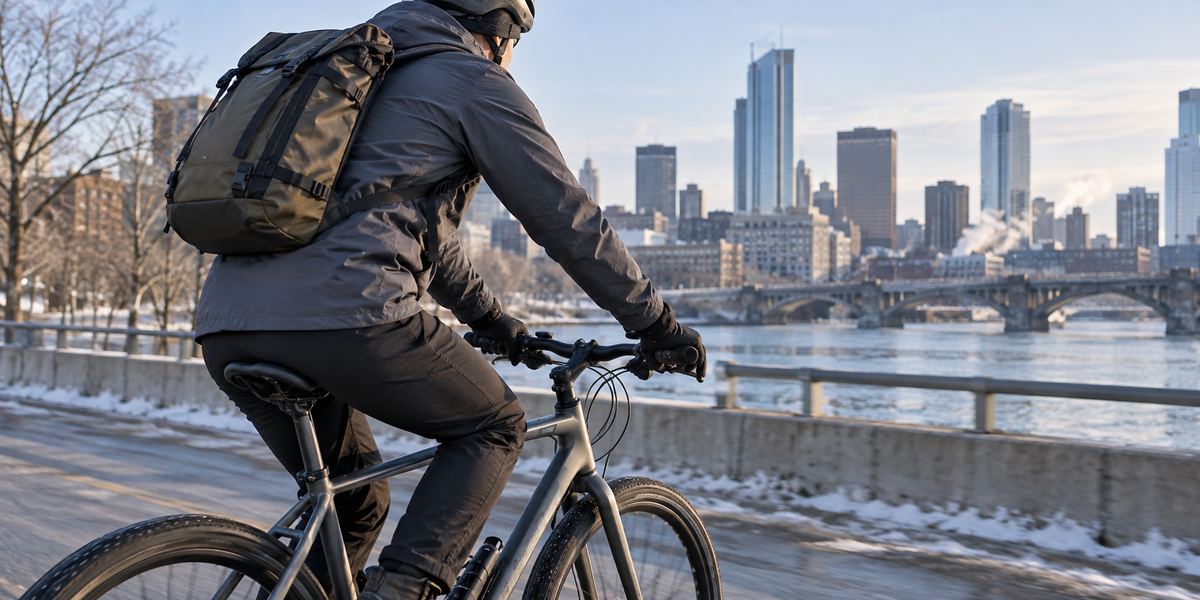
The challenge: warmth where wind hits, control where hands grip
A commuter may hold the handlebar for long stretches, brake repeatedly and open a bag or phone at a stop. Add insulation everywhere and the palm grows thicker around the grip; reduce it everywhere and the back of the hand may feel exposed. This case follows that single conflict. Industrial protective gloves have different hazards and standards, so the existing aerogel industrial-glove concept is a related material example, not a cycling specification.
Three construction decisions shape the first sample
01 / Start at the back of the hand
The ShowarmX aerogel thermal fabric is listed for warm-glove applications. A proposed dorsal panel can investigate its use without assuming that the listed fabric has been validated in this glove. Put the candidate textile beneath a suitable outer shell, then check whether added layers make the knuckles stiff. A full-hand aerogel layer is an alternative, but it would make the grip question harder to answer in the first round.
02 / Keep the palm readable
Use the same palm fabric and grip finish in the control and experimental glove. Keep insulation out of the primary contact patch at first so the cyclist can still feel the bar. This is a construction choice, not a rule that the palm never needs warmth. If the grip side becomes the cold spot during evaluation, add a separate palm variant rather than changing both sides at once.
03 / Resolve the finger and cuff junctions
A warm back panel means little if finger seams leak wind or the cuff leaves a gap at the jacket sleeve. Let the first prototype compare a modest finger-back extension with a simpler hand-only panel. Check seam bulk during a brake-lever reach and confirm the cuff can sit under or over the intended sleeve. Those decisions affect comfort as much as the textile choice.
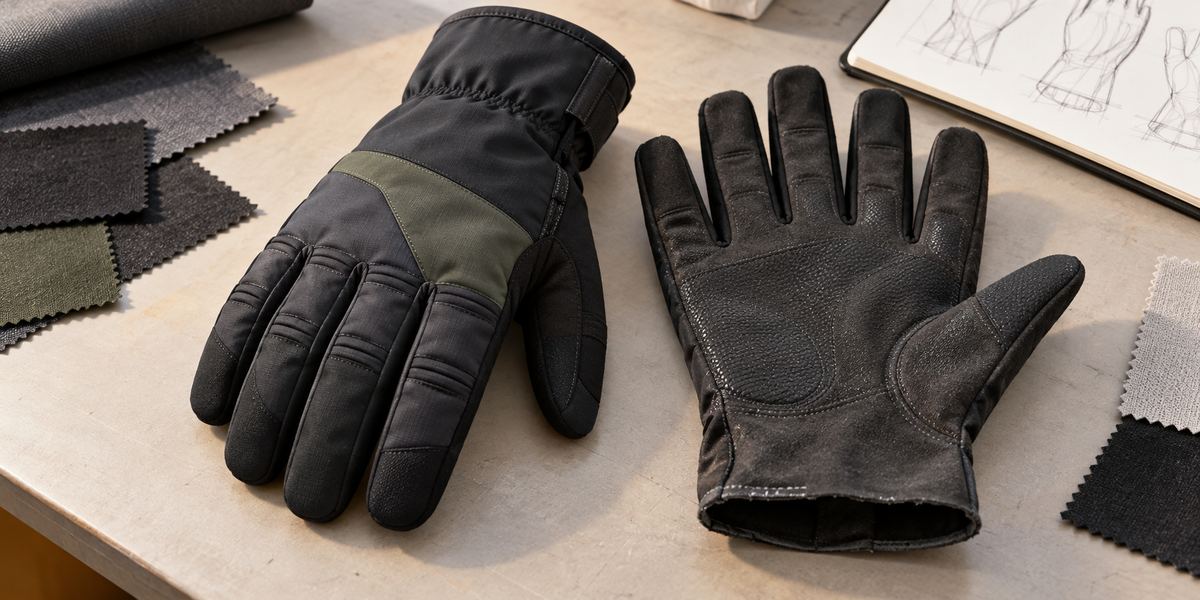
The material trade-off behind that layout
ShowarmX also has a listed thermal padding route. Fabric and padding are different starting points: a fabric panel might simplify cutting and seam placement, while padding would need an enclosing construction and careful control of bulk. Ask for the actual hand, thickness and assembly options before choosing either. The useful comparison is the glove you can sew and operate, not an isolated conductivity claim from a material page.
Wind-facing coverage and water management belong in the same brief. A breathable shell may admit air at seams; a tighter shell may change moisture build-up. The aerogel component should be evaluated inside the selected shell and lining system, with a conventional glove made to the same pattern as the control.
Proposed outcome: two gloves that answer one question
Make Control A with the chosen shell, palm, lining, pattern and conventional insulation. Make Sample B with the same pattern and palm, replacing only the dorsal insulation zone with the proposed ShowarmX construction. Record panel area, layer order, seam allowances, total glove mass and thickness at the grip. If B restricts finger movement, try a smaller back panel before increasing material complexity. If A and B feel similarly warm but B improves bar feel, that is useful design feedback; it is not a proven performance result here.
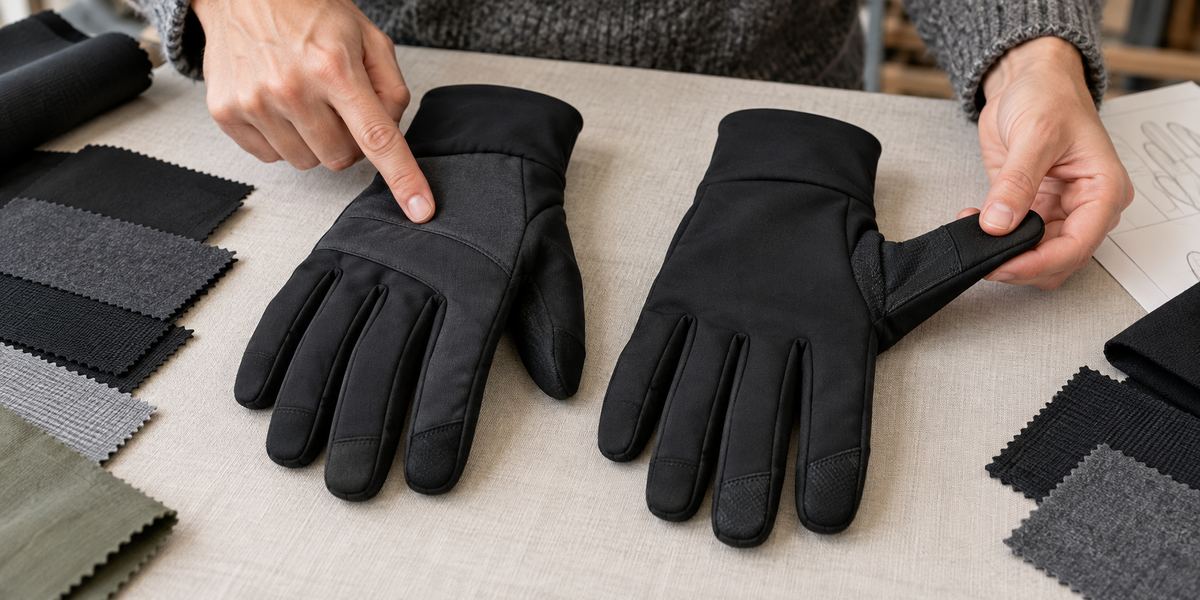
What would make the concept ready for a product decision?
Evaluate the assembled gloves on the intended handlebar and brake setup, not just on a flat swatch. Compare grip security, finger reach, seam pressure, fit after repeated flexing, and warmth under stated wind and temperature conditions. Check the planned care route and wet-use conditions separately. Material-level thermal data can guide selection, but finished-glove comfort, durability and any protective claim require tests on the relevant construction.
Development concept notice. This case presents a material-and-application development concept informed by anonymized market inquiries and Annie’s Smartex technical research. It is not an offer for an off-the-shelf product and does not state that a specific finished product is commercially available or validated for this use. Sample availability, specifications, performance, compliance, manufacturability and care durability must be confirmed through project-specific development and testing. No confidential customer or project details are disclosed.
Bring the glove brief to a material discussion
Share the riding temperature and wind range, handlebar and brake type, target fit, shell and palm materials, cuff design, care method and the grip movement you cannot sacrifice. Review the ShowarmX thermal fabric, then contact Annie’s Smartex to discuss whether a dorsal-panel sample is feasible.

Related Posts

ShowarmX® Aerogel Thermal Fabric: The Lightest Insulation Fabric That Works in Both Summer and Winter
Key Takeaways Here’s a question most fabric buyers never think to ask: What if the same fabric keeping you warm...
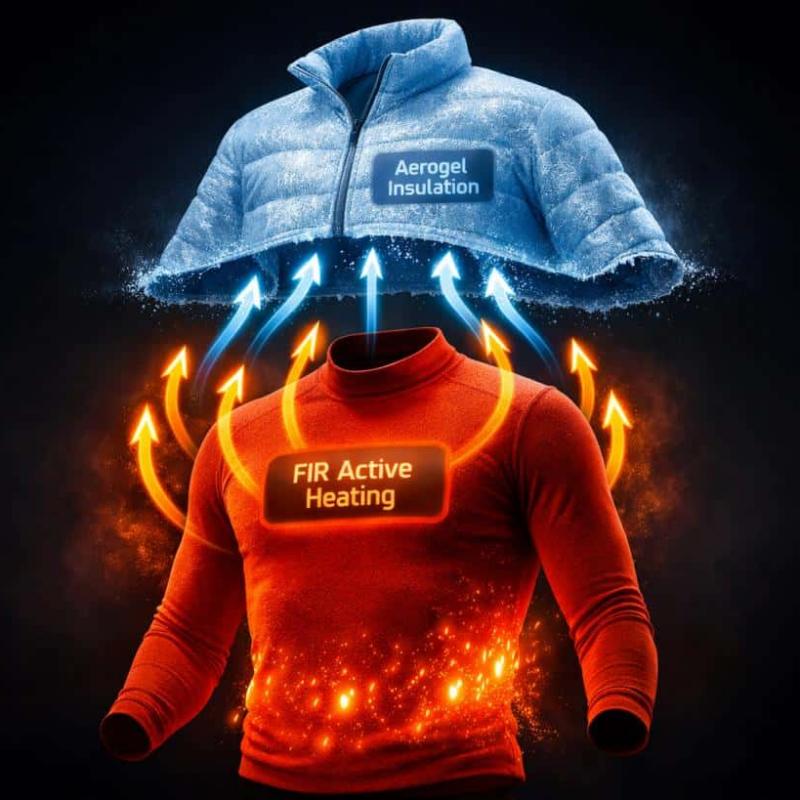
The Warmest Lightweight Winter Technologies in 2026: Aerogel Insulation vs Far Infrared Yarn (And Why You Need Both)
Picture this: it’s -15°C at the trailhead. You’re wearing a jacket rated for extreme cold, layered over a thermal base,...
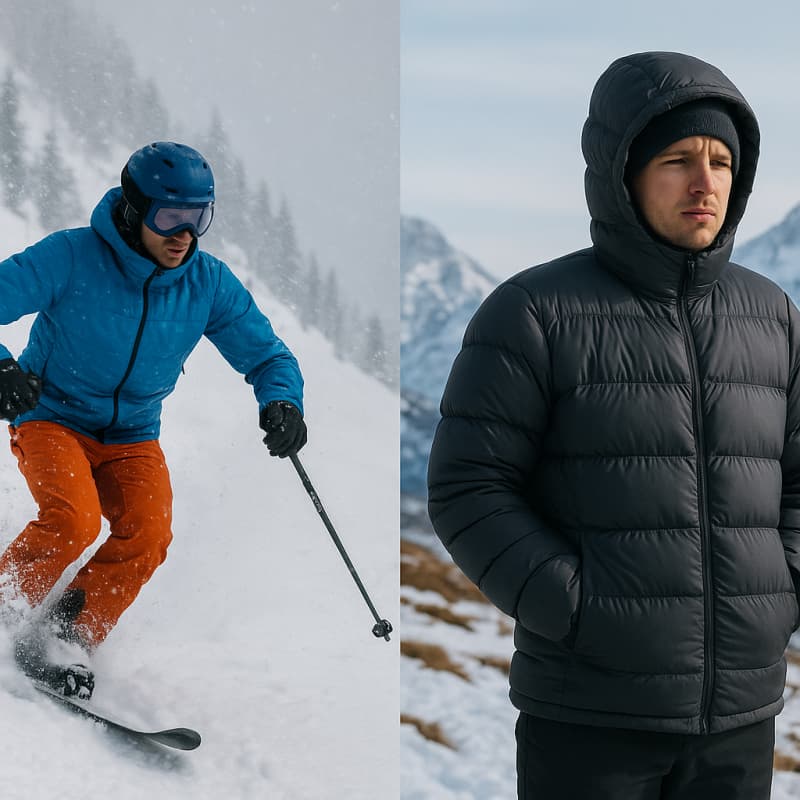
Aerogel Fiber vs Down Insulation: Which is Better for Winter Clothing?
You’ve probably stood in an outdoor gear store, holding two jackets that look almost identical, trying to figure out which...
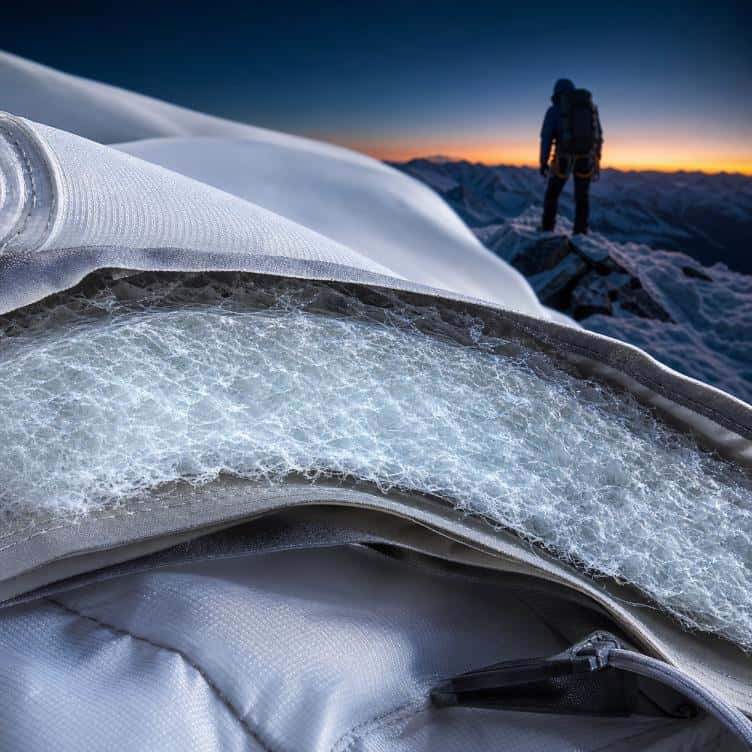
Low-Density Aerogel Fiber Padding: An Ultra-Light Alternative to Down Insulation
Aerospace-Grade Insulation Yarn Innovation · ShowarmX® Ultra-Light Aerogel Thermal Padding Technology The Challenge “Our down jackets keep climbers warm until...