 English
 Español
 Português
 Deutsch
 한국어
 日本語
 Italiano
 Français
 العربية
 Türkçe

Creative Textile Lab · Development concept
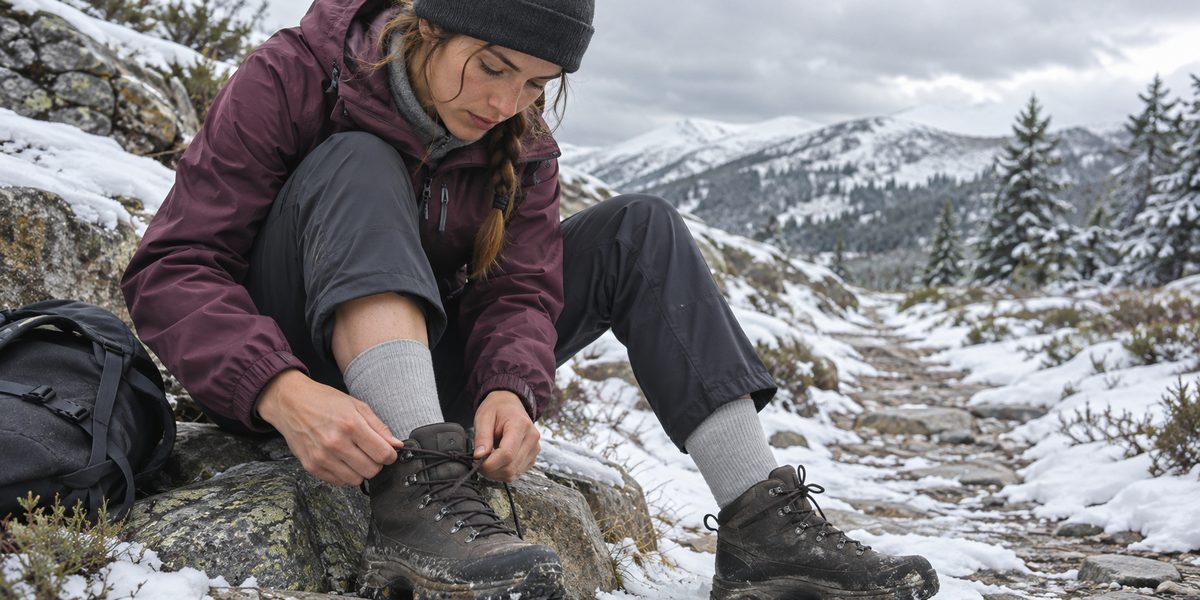
A winter hiker sits on a rock to tighten a boot. The sock feels generous at the heel, yet the forefoot is already close to the boot lining. Adding the same thick cushion across the whole foot might make the sock look warmer on a display table while leaving too little space for the toes on the trail. This winter hiking socks concept starts with that conflict: keep useful warmth and cushioning where they help, without crowding the boot or trapping moisture where the foot works hardest.
The boot sets the limit on bulk
For a hiking brand, “make it warmer” sounds like a yarn request. On the foot, it is also a fit request. A boot has a fixed internal volume, and a thicker sock takes some of that room. Too much material at the forefoot may change how the toes move, where the upper presses and how the boot laces. The same sock may feel comfortable in a roomier winter boot and cramped in a close-fitting hiking boot. You cannot solve that by selecting a warmer-sounding fiber name alone.
The development brief therefore names the footwear, activity and intended season before it names the sock blend. The aim here is a crew-length sock for active winter walking, where the wearer alternates between climbing, stopping and restarting. This is different from a stationary camp sock, and it is different from the odor-control or recovery sock stories already covered elsewhere on the site.
Start with a crew shape that stays inside the boot
A crew-length sample gives coverage above a mid-height boot without putting a thick knit under the boot collar. That height is a starting choice, not a promise that every brand needs the same silhouette. The cuff must hold the sock without a hard band; the leg should not fold into the boot; and the heel pocket needs to stay aligned through walking. A sock that slides forward can bunch at the toes even when its flat measurements look correct.
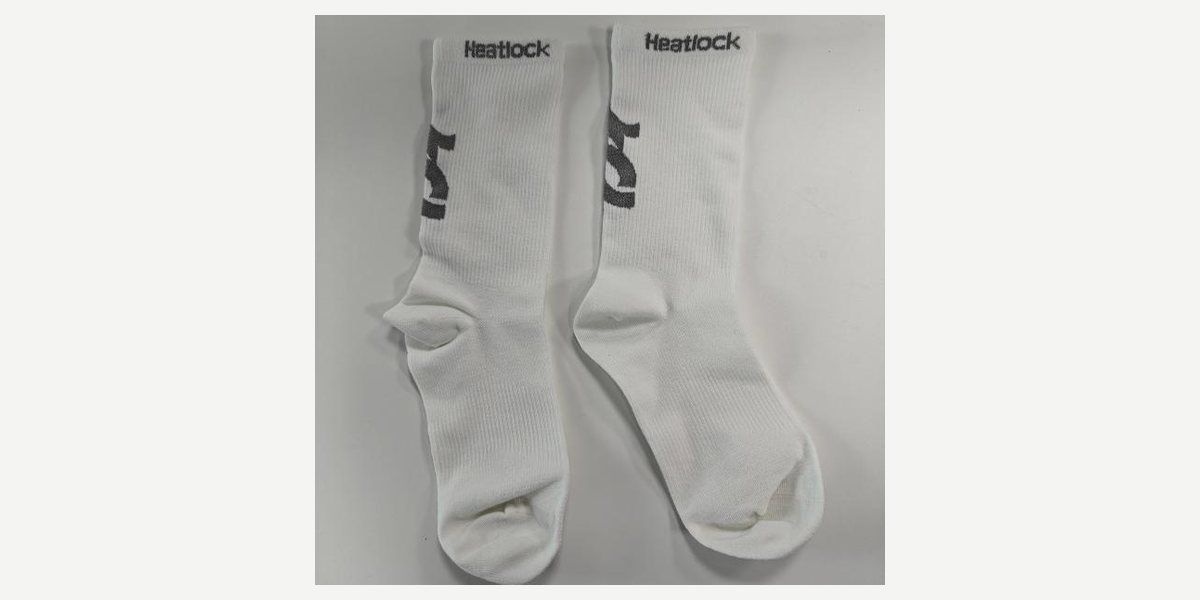
The Heatlock® finished-sock platform offers crew and ankle samples and allows yarn ratio, cushioning, knit structure and size range to be reviewed around a buyer brief. For this concept, the crew form is the better place to begin because the boot collar and moving lower leg are part of the design problem. If the buyer’s actual boot has a lower collar, an ankle version could be compared later; it should not be treated as the same sample with the top cut off.
Give each component a job in the knit
The platform combines an aerogel-polyester insulation route, an FIR-focused polyester route and a wool blend. These are material options within a configurable sock, not three guaranteed outcomes. In a first concept, wool-blend comfort and moisture buffering would inform the next-to-skin feel, while the insulation-focused component would be explored in areas where extra warmth is sought without simply piling on thickness. The FIR component has a different evidence question: if the final product will make a far-infrared claim, that claim needs an agreed method and a report on the relevant sock construction.
There is a reason to keep this architecture open. If the brand wants a soft hand, a stable heel and room in the toe box, the yarn mix cannot be selected in isolation from loop density and placement. More of one component may change cost, elasticity, dry feel or knitting behavior. The proposed direction is to use the platform as a set of adjustable material roles, then let a real boot fitting show whether the arrangement is useful. The related RecovX™ wool-blend yarn provides a material discussion point; yarn properties should not be copied into a finished-sock warmth claim.
Move cushioning instead of adding it everywhere
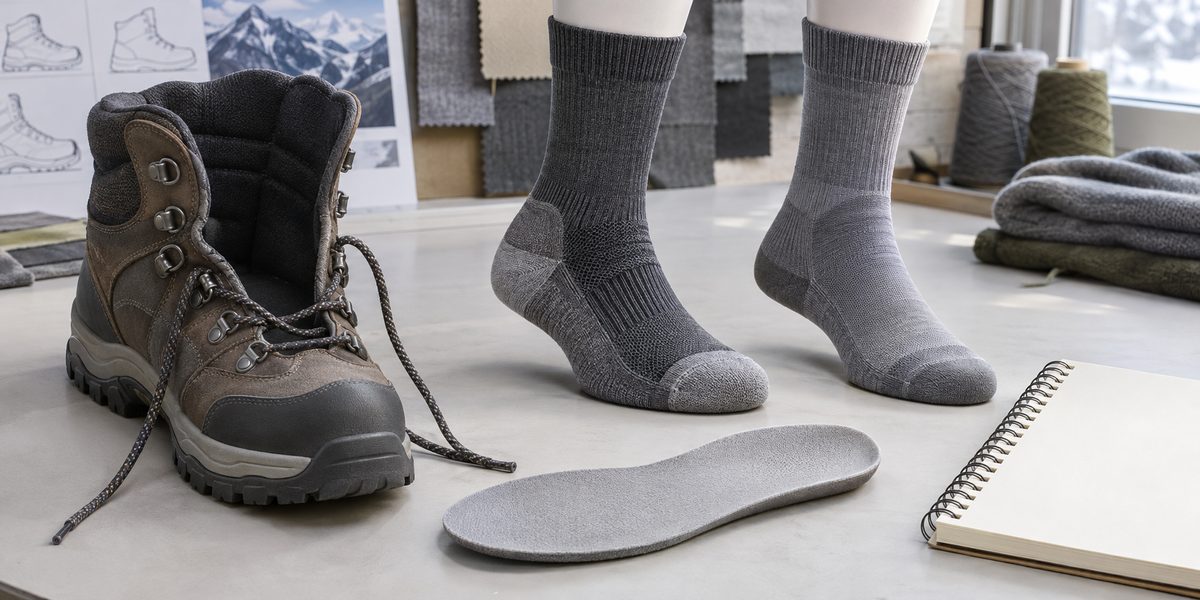
The most useful sample comparison changes one visible choice. Route A keeps a lower-profile forefoot and adds cushioning at the heel and sole contact areas. Route B carries a more even cushion through the foot. Both use the same crew length and target boot. Route A may leave more toe space, but a thin forefoot could feel less protected during long descents. Route B may feel plush in a hand test yet crowd the boot where the toes need movement. Neither route can be selected from a fabric swatch alone.
That comparison also clarifies what the buyer should not do. A very thick sock is an obvious alternative, and it may suit a roomy insulated boot or low-activity setting. For an active hiking boot with limited volume, it is a different product proposition. The case does not reject thick socks as a category; it explains why this particular development brief would test localized cushion and lower forefoot bulk first.
What would the first fitting tell the team?
Put both proposed socks in the exact boot model and size range the brand intends to sell with or recommend. Observe toe movement while standing and descending, heel placement after walking, folds under the laces and whether the cuff stays above the collar. Ask wearers to change socks between routes in the same conditions, then record what changed. The question is specific: did shifting cushion improve usable boot space without creating a new hot spot or an unstable heel?
If the low-profile route helps fit but loses the intended feel, the next sample could restore a small amount of cushioning in a defined zone. If both routes crowd the boot, changing yarn count or knit density may be more useful than moving the same amount of bulk around. If the sock feels good when dry but behaves differently after active walking, the team needs to examine moisture and care conditions before freezing the specification. These are proposed decision rules, not reported trial results.
Performance boundaries for winter hiking socks
The material story must be tested at the level of the sock you plan to sell. Insulation-focused aerogel polyester in a yarn system does not establish a temperature rating for a finished sock inside a boot. Wool content does not establish drying speed for every construction. An FIR-focused component does not establish a physiological or recovery benefit. Those claims require the relevant method, specimen and scope, and some uses may need further regulatory review.
The practical evidence set is narrower and more useful: identify yarn composition and sock structure; record thickness, dimensions and fit after care; compare the proposed routes in the target boot; and choose a thermal or FIR test only for a claim the brand actually intends to make. A report on a different sock, fiber or panel can inform the next sample but should not be presented as proof for this one. Our aerogel-fiber guide helps with material identification; this case stays with the boot-and-sock decision.
Turn the boot fit into a sample brief
For winter hiking socks, share the target boot type, sock size range, activity, crew or ankle preference, desired cushion zones, yarn and wool-blend preferences, care instructions and any claim you want to support. We can discuss the Heatlock® sample platform against that brief and decide which two constructions are worth comparing. Contact Annie’s Smartex with the footwear and sock requirements.

Related Posts
Hollow Polyester Hiking Midlayer: Warmth at the Rest Stop
A hiking midlayer development concept: compare hollow and solid polyester knits, decide where to place loft, and check the finished...

Lightweight Warmth Without Bulk: The Aerogel + Far Infrared Yarn System Built for Base Layers, Knitwear and Everyday Apparel
There is a quiet shift happening in performance apparel development. Brands are no longer asking “how warm is it?” —...
Far Infrared Fabric Applications: Beyond Winter Warmth to Year-Round Performance
When most people hear “far infrared fabric,” they immediately think of winter base layers and heated clothing. But here’s what...

Beyond Down: How Aerogel Fiber Fill Revolutionizes Winter Warmth with 3.27 Clo Value
Are you tired of paying premium prices for down? You’re not alone. With down prices soaring by 40% in the...