 English
 Español
 Português
 Deutsch
 한국어
 日本語
 Italiano
 Français
 العربية
 Türkçe

Um visitante repousa a mão no antebraço de um robô de serviço. A superfície deve ser acolhedora, mas o tecido também precisa ser removível para limpeza e deixar as vias de refrigeração da máquina desobstruídas. Esse é um ponto de partida útil para o desenvolvimento de tecidos refrigerados e fáceis de limpar para robôs humanoides : criar um tecido que reúna as funções necessárias e, em seguida, moldá-lo de acordo com as áreas de contato, movimento e vias de refrigeração do robô.
A single fabric can be developed to combine cooling touch, antibacterial activity and easy-clean properties. The combination starts with the yarn formulation and components, then takes shape through knitting or weaving. UHMWPE yarn and easy-clean polyester offer starting points for a fabric brief that combines the functions you need. Research on oriented UHMWPE textiles also makes heat spreading worth exploring. In a finished cover, yarn direction, shell contact and airflow help shape the heat path. Here is how to turn the material brief into a thin, soft cover, and where a seam, opening or air gap matters as much as the yarn.

Tecidos para robôs humanoides: comece pela superfície de contato.
When developing humanoid robot clothing, begin with a part that has a clear job. A forearm panel, a torso contact area or a removable pad gives the textile a defined job. On a forearm, the visitor encounters the surface. Around an elbow, the assembly needs clearance. Beside an air outlet, an opening may do more for heat removal than a different fiber.
Figura Figura 03 introdução describes textile coverings and washable soft goods that can be removed without tools. That makes removal and cleaning part of the design brief: decide how an operator reaches the shell and takes off a panel before settling its fabric and fastening.
For your design, mark the places people touch, the parts that move and the panels an operator needs to open. That drawing turns “soft wearables for embodied AI” into a set of manageable material decisions. A soft contact fabric and a clear service opening can work together without becoming one continuous garment.
Um toque de frieza é apenas o começo.
Uma superfície pode parecer fria ao toque porque o calor se transfere da mão, mais quente, para o tecido. Se esse mesmo tecido ajuda um robô em funcionamento a dissipar calor é uma questão à parte: o calor da carcaça precisa de um caminho para uma superfície mais fria ou para o ar em movimento.
A kitchen countertop offers a familiar comparison. Its initial feel can be cooler than a towel in the same room because they exchange heat with your hand differently. For a textile cover over a working robot, also examine how heat moves during sustained operation. Fabric thickness, contact with the shell, backing and ventilation all belong in that design decision.
Se a capa estiver em contato com uma superfície quente, considere para onde o calor pode ir depois de atingir o tecido. Um revestimento isolante pode interromper o caminho que você estava tentando criar. Um tecido que conduz mais calor para a sua superfície externa também pode fazer com que essa superfície fique mais quente durante o uso. O objetivo é ter um caminho de calor eficiente e uma temperatura de toque adequada simultaneamente.
Research on UHMWPE fibers and woven fabrics reports substantial heat transport along aligned yarn directions. That makes yarn orientation worth exploring in a robot cover. The next question is how much heat the proposed fabric can move once its backing, contact with the shell and airflow are included.
UHMWPE Yarn: Design the Contact Face and Heat Path Together
Smartex UHMWPE yarn is the material starting point for this robot-cover concept. Highly oriented UHMWPE fibers can conduct heat effectively along the fiber direction, which makes yarn alignment and fabric construction worth investigating for a panel near a warm shell. Compare actual yarn and fabric samples under the intended construction before estimating the cover’s operating temperature.
Think of a thin removable forearm panel with a smooth outer face and an opening underneath. Compare a UHMWPE-containing construction with a reference fabric at similar mass and thickness. Yarn direction, knit or weave, backing and contact with the shell all affect where heat can travel. A bulky seam or insulating layer may matter more than the fiber choice.
Ask the knitting or weaving supplier about the available yarn count, construction and finishing route for the selected UHMWPE specification. Check any processing temperature, bonding, coating and care conditions against the yarn’s limits. If a cooler accessible surface is part of the brief, assess it during the robot’s intended operating cycle alongside component temperature; better heat spreading can also make a touch surface warmer.
A limpeza fácil começa com a remoção da mancha.
A reception robot may collect hand oils. A robot carrying food may encounter grease or sauce. The stain tells you more about the cleaning requirement than a broad “washable” label does.
For a washable fabric for robot covers, separate three questions: does a liquid wet the surface, does the mark come out during cleaning, and does the panel still fit afterward? Repellency, soil release and washability describe those different tasks. An antibacterial requirement addresses a different part of the brief; visible stains call for a soil-release and cleaning check.
O fio de filamento de poliéster de fácil limpeza Cleenzo oferece um ponto de partida para discutir a remoção de manchas, juntamente com os outros requisitos da capa. Para um antebraço frequentemente manuseado, compare o tecido proposto com o poliéster convencional sob a rotina de cuidados pretendida. Observe tanto a remoção de manchas quanto se a capa limpa mantém a sensação e o ajuste necessários para a parte.
A norma AATCC TM130-2025, "Remoção de Sujeira: Método de Remoção de Manchas Oleosas" , aborda a remoção de manchas oleosas após a lavagem doméstica. Isso pode servir de base para um guia de lavagem. Um lenço desinfetante representa uma exposição diferente, com seu próprio agente, concentração e tempo de contato.
| Ideia de design | Candidato a fio | Escolha que molda o tecido |
|---|---|---|
| Um painel de contato suave no antebraço | UHMWPE-containing fabric | Yarn count, fabric thickness, low-bulk edges and accessible-surface temperature. |
| Um painel removível que mancha com frequência | Poliéster Cleenzo de fácil limpeza | O tipo de solo, a rotina de cuidados e o ajuste após a limpeza são típicos dessa região. |
| A heat-path comparison | UHMWPE-containing and reference fabrics | Comparable mass, thickness, backing and airflow; measure both component and touch-surface temperatures. |
These starting ideas can also be combined in one fabric brief. Functional powders can be incorporated through a customized masterbatch and spinning formulation; yarn components and fabric construction provide further ways to combine properties. Copper- or zinc-based additives can support an antibacterial requirement, while an elastane component can provide stretch. The roles differ: elastane contributes stretch as a yarn or fabric component, while the additive package supports the specified material function. The selected combination should be agreed for the chosen polymer and processing route.
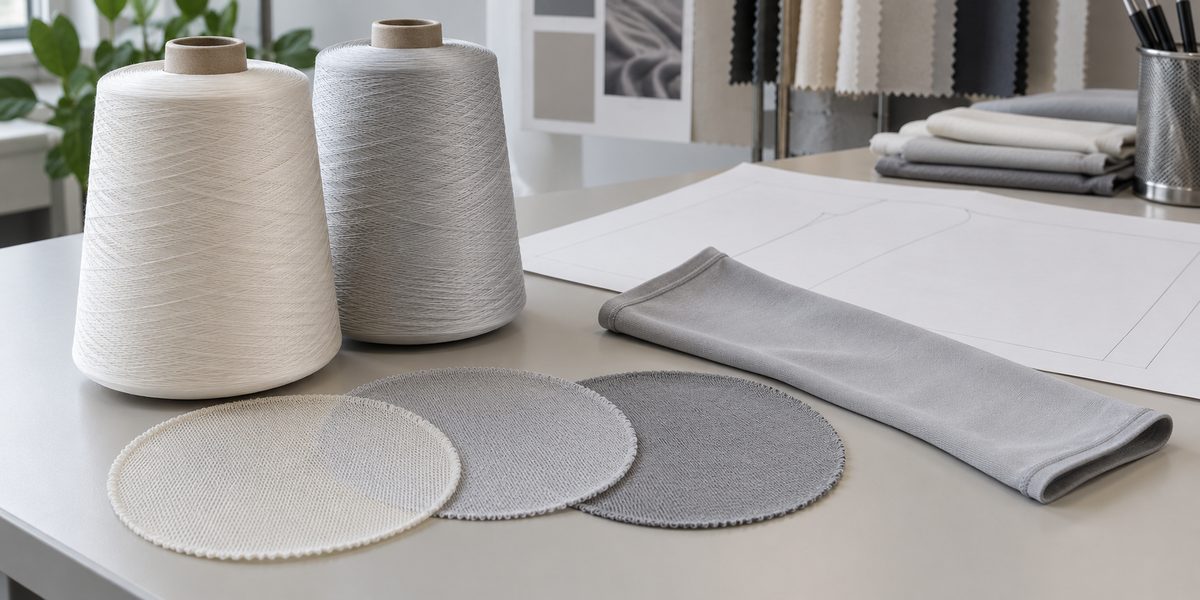
O Tecido multifuncional XOY Alpha illustrates this broader approach. Its product description combines functional powders in the polyester matrix with a shaped fiber cross-section, bringing several properties into one textile. For a robot cover, the useful lesson is to write a combined material brief, then assess heat transfer under the robot’s own contact and airflow conditions.
Um tecido fino ainda pode parecer rígido na costura.
O punho de uma camisa pode ser confortável ao longo do tecido e firme na dobra da costura. Um painel robótico apresenta o mesmo problema de design têxtil: o que sua mão toca é tanto a borda montada quanto o tecido. Uma amostra lisa é apenas o começo.
Ao desenvolver tecidos para vestimentas de robôs, compare uma amostra plana com uma peça costurada ou com acabamento. Se a borda se tornar a parte mais difícil de trabalhar, alterar sua posição ou reduzir seu volume pode ser mais eficaz do que trocar o fio. Registre as especificações do filamento, a estrutura da malha, a massa e a espessura do tecido para que o fornecedor têxtil possa reproduzir a construção desejada.
Stretch also comes from the whole construction. Yarn elasticity, knit recovery and fastening tension affect how the panel moves. A robot-cover pattern needs to follow the rigid shell and preserve joint clearance, even when a familiar apparel construction inspires its shape.
Dê espaço para a capa sair do robô
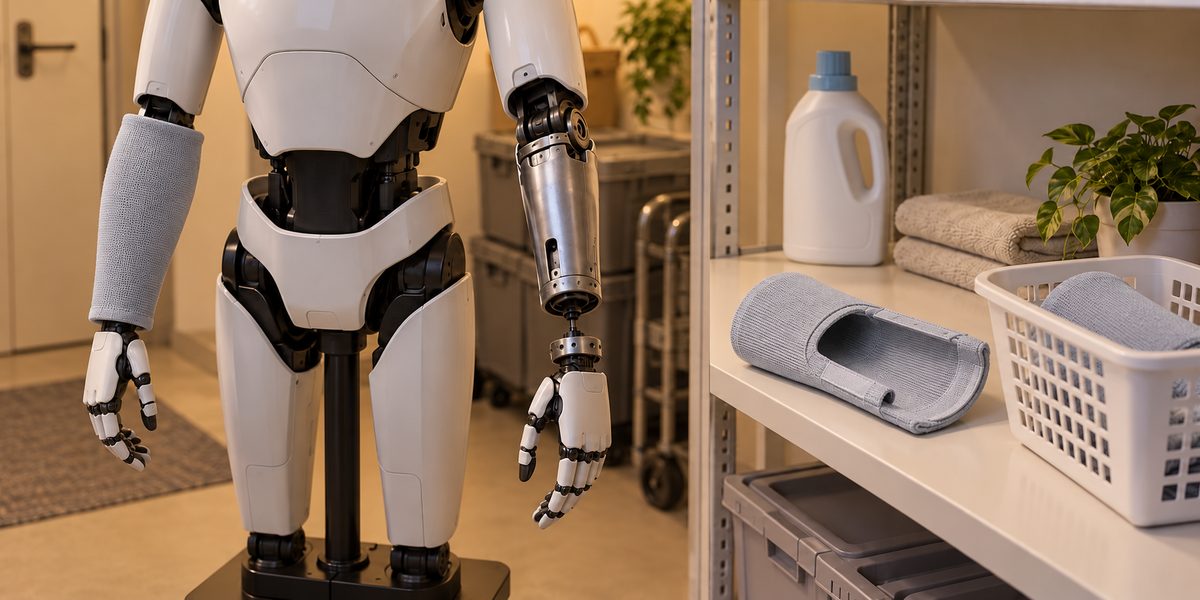
Uma manga justa torna-se difícil de remover quando a mão é mais larga do que a abertura. Uma faixa de antebraço que se abre na parte inferior oferece outra abordagem: ela se desdobra ao redor da concha, deixando a superfície de contato lisa. removable forearm-cover concept Essa ideia é explorada através da escolha de materiais e padrões.
Leave the wrist and elbow clear through movement, and preserve cooling outlets and service access. If the textile lies above a tactile sensor, assess the actual layers with that sensor: thickness and stiffness change how a touch reaches it. Include sensing response and pinch-zone checks when evaluating the assembled cover.
Transforme uma ideia de design em uma primeira amostra.
Para tecidos destinados a robôs humanoides, um pequeno painel de contato é um ponto de partida útil. Compare um tecido de referência com um candidato personalizado, utilizando o mesmo padrão. Se o seu projeto exige toque refrescante, facilidade de limpeza e atividade antibacteriana, mantenha esses requisitos juntos na amostra. Registre a composição, o pacote de aditivos e a construção para que você possa rastrear qual alteração afeta a sensação ao toque, os cuidados ou o ajuste.
Na plataforma, acompanhe os limites operacionais e compare as coberturas sob a mesma carga de trabalho, condições ambientais e fluxo de ar. Observe as temperaturas dos componentes e das superfícies acessíveis, a posição do painel durante o movimento e seu encaixe após a limpeza. Essas observações indicarão o que deve ser alterado em seguida: a estrutura do tecido, uma borda, uma abertura ou o próprio material.
Você pode começar a discussão sobre o material com um esboço da peça, das funções que deseja combinar e do método de cuidado pretendido. Inclua qualquer necessidade de elasticidade, uma cor específica ou uma superfície de contato lisa. Um desenho preciso pode ser feito posteriormente, à medida que a construção ganha forma.
Tem em mente um painel de contato para robôs? Compartilhe o esboço da sua aplicação com a Annie's Smartex para discutirmos uma solução personalizada com fios e tecidos funcionais para sua primeira amostra.

Artigos relacionados
Como escolher o tecido refrescante certo: um guia de compra para nylon PCM, nylon Cool-Touch e poliéster 8C Pro.
O problema com a categoria "Refrigeração": Entre em qualquer feira comercial em 2025 e metade dos estandes terá...

Isolamento térmico ≠ Aquecimento! Como escolher a tecnologia térmica certa para tecidos de outono/inverno
Ao comprar roupas de inverno, você já reparou nas etiquetas que anunciam “isolamento térmico”, “geração de calor” ou “tecnologia de aquecimento”? Muitas pessoas...

Além do resfriamento: por que a proteção UV e o gerenciamento do calor solar são importantes nos tecidos de verão da próxima geração.
O "toque fresco" resolve o problema que ocorre no instante em que o tecido entra em contato com a pele. Não resolve o que acontece depois — a transpiração prolongada,...

Solução de fácil limpeza para tecidos de uniformes escolares infantis.
Tecnologia Cleenzo™ de Liberação de Sujeira · Sobrevivendo ao Almoço, ao Recreio e a Mais de 30 Lavagens O Desafio “A caixa de entrada de todos os pais está igual na sexta-feira:...