 English
 Español
 Português
 Deutsch
 한국어
 日本語
 Italiano
 Français
 العربية
 Türkçe
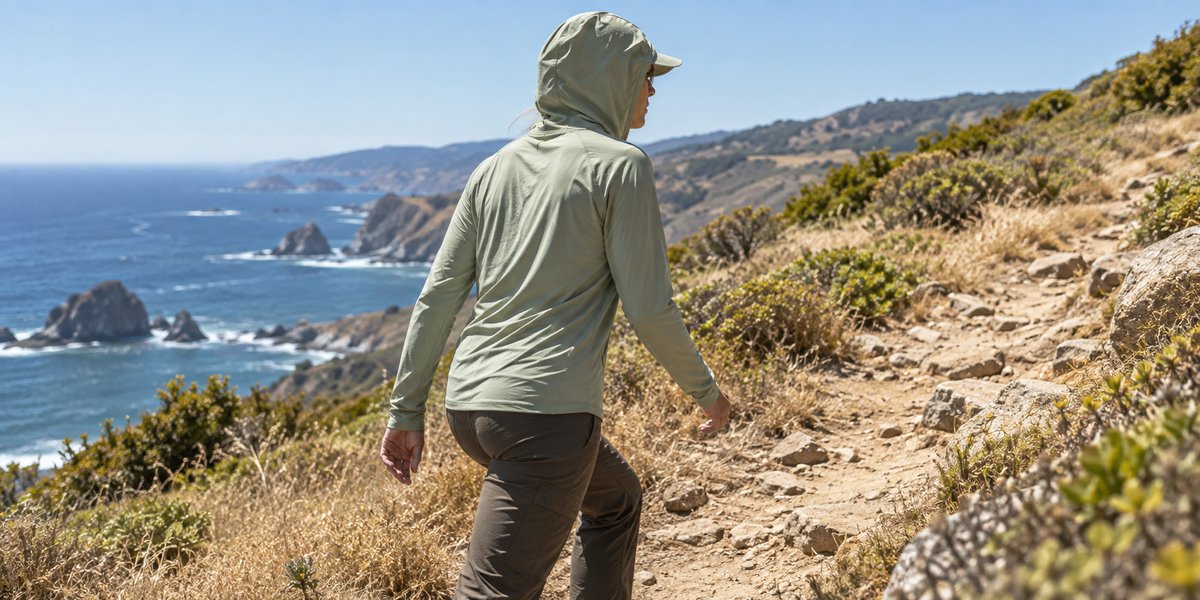
A sun hoodie can cover your arms and neck yet feel clammy halfway up a climb. Opening up the fabric may help air move, but it also changes the structure responsible for coverage.
For an outdoor brand developing sun hoodie fabric, the useful starting point is a matched material comparison, followed by a moving fit check. IcSnow® nylon is one candidate to explore. The decision rests on how the finished fabric and garment work together.
Keep coverage when the wearer moves
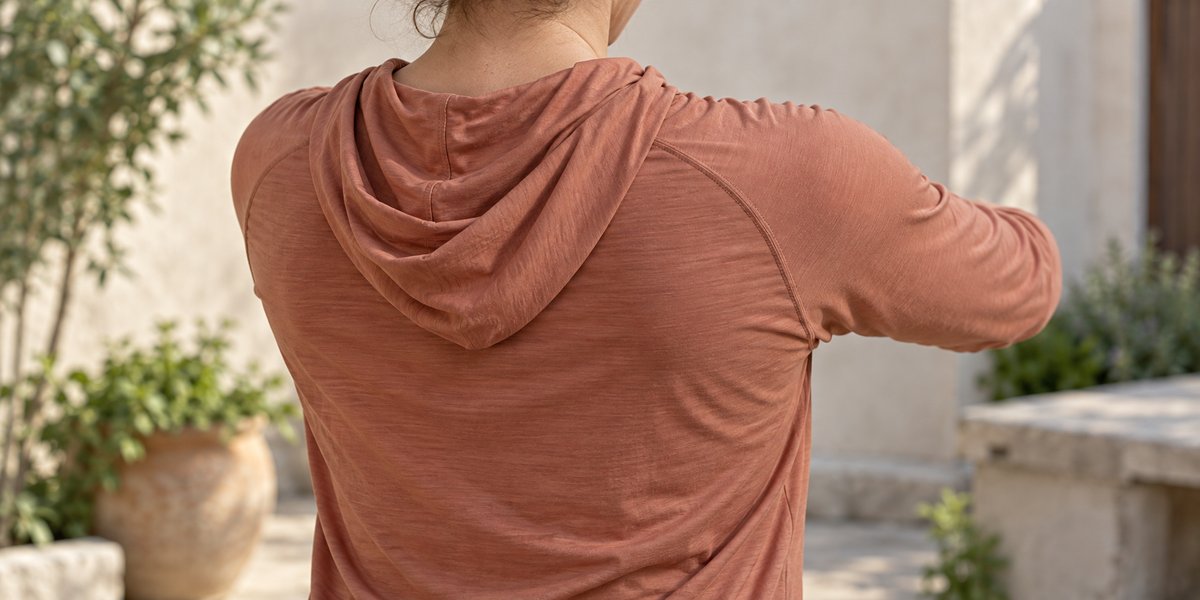
Picture the fit check: reach forward, lift both arms, then turn the head with the hood up. Does the hem rise? Do the shoulders pull tight? Does the hood turn with the head or leave the neck exposed? These observations help identify where to adjust the pattern before committing to a fabric.
ARPANSA’s clothing guidance explains that construction, stretch, moisture and coverage can affect sun protection. UPF—ultraviolet protection factor—describes UV protection; it does not describe drying speed or how cool a garment feels.
A denser construction may be worth sampling where coverage is difficult to maintain, but the change also affects weight, hand and air movement. Keep the target use in view: a close-fitting training top and a loose hiking layer place different demands on the same fabric.
Compare IcSnow with a useful control
IcSnow® Cooling-NIR Reflective Nylon Yarn is offered for textile development involving contact cool touch, UV protection and solar heat shielding. Its published report images give you specific results to examine before discussing a sample construction.
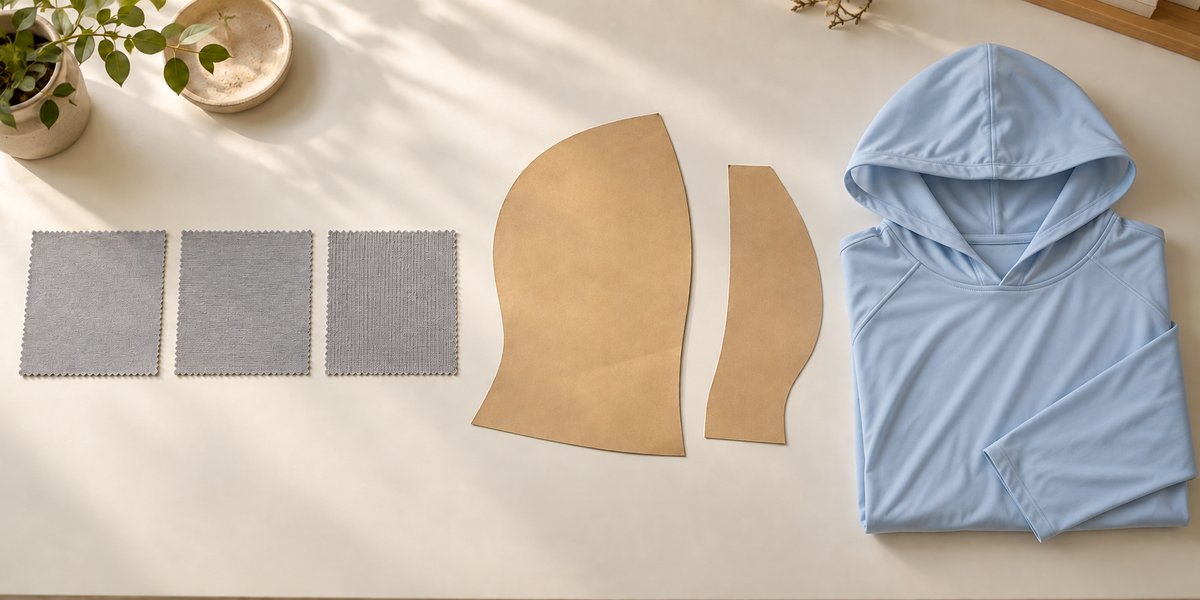
Start with a conventional nylon control made as close as practical to the candidate’s color, construction and finished weight. If the two fabrics differ in all three, a favorable result will be difficult to attribute to the functional material. Record unavoidable differences on the sample sheet.
A mill with an established base fabric may also propose a functional finishing route. That option deserves a comparison on processing, hand and care performance. Neither the yarn route nor a surface treatment should be selected solely because its description sounds more durable.
For the broader material framework, see the differences between cool touch, UV protection and solar heat management. Here, those functions become separate questions for one hoodie construction.
Read each report against its own specimen
The published contact-cooling report records a Qmax result of 0.32 J/(cm²·s) under GB/T 35263-2017, the method for testing and evaluating textiles’ cool feeling on contact. The stated temperature difference is 15°C and the specimen is a grey-white woven fabric. Qmax describes peak contact heat flow, so this result is relevant to the initial touch sensation, rather than an hour-long outdoor comfort claim.

The heat-shielding result page identifies GB/T 41560-2022 for textile heat-shielding performance. It reports 43.9% before washing and 45.8% after five washes. These are the stated test results, not a NIR-reflectance percentage or evidence that repeated washing improves performance.

The UV result page reports UPF greater than 50 under GB/T 18830-2009, the textile UV-protection evaluation method. The UV and shielding images are second pages of their reports. Their first pages and specimen details are needed to connect those results to a particular sample. This case therefore uses them to define the evidence to request, rather than to certify the proposed hoodie.

Change the fabric before changing everything else
Begin with the matched material pair. Once you have compared the fabrics, use the more promising route to explore the hood and shoulder fit. This sequence makes the next development decision easier: you can see whether to adjust the material, construction or pattern.
| Proposed sample | Keep comparable | Decision it supports |
|---|---|---|
| Conventional nylon control | Color, construction, finished weight and finishing route, where practical | Establish a baseline for judging the functional candidate. |
| IcSnow material candidate | The same pattern and documented fabric variables | Decide whether the measured benefit, hand and processing behavior justify further sampling. |
| Fit or construction variant | The selected material and color; record the specific change | Resolve shoulder tension or hood coverage without confusing the result with a new material. |
If UV performance falls short in a relevant stretched state, revisit the construction or fit. If coverage is satisfactory but the garment feels clammy, investigate liquid transport, drying, air movement and fit. Increasing a UV rating alone does not answer that comfort problem.
Give the finished hoodie its own acceptance criteria
Agree the target market, intended care and relevant conditioning with the testing laboratory before comparing results. Evaluate representative finished colorways and constructions, including wet or stretched states where appropriate to the method and use. Retain the sample identity and processing history with each report.
The garment review then checks what a flat swatch cannot show: hood and sleeve coverage during movement, seam placement, recovery and the feel of the chosen construction. You may reject a material for poor hand or drying even when a separate UV result is suitable. That is a useful development outcome—it tells you what to change before a larger run.
Build your sun hoodie fabric sample brief
Send your intended activity and market, colorways, construction, finished weight range, stretch needs and care expectations. Include your current control fabric and the UV, heat-shielding or comfort question you want the next sample to answer.

Related Posts
Far-Infrared Running Base Layer: Balancing Warmth and Sweat Management
A proposed two-route fabric development plan for a cool-weather far-infrared running base layer, comparing a 235 gsm winter-weight knit with...
Winter Cycling Gloves: Balancing Aerogel Insulation and Grip
On a cold ride, the back of your hand meets the wind while your palm holds the bar and your...
Pineapple Leaf Fiber Kidswear: Balancing Natural Texture and Everyday Softness
See how a 10% PALF / 90% Modal yarn could be evaluated for lightweight kidswear through controlled samples, fabric checks...

Why Wool Needs a New Kind of Partner?Beyond Winter Warmth: Wool Comfort, Thermal Buffering and Body-Responsive Wellness in One Yarn
The design thinking behind a three-in-one, all-season yarn system — combining wool comfort, aerogel thermal buffering and far-infrared body-responsive wellness....