 English
 Español
 Português
 Deutsch
 한국어
한국어 日本語
日本語 Italiano
 Français
 العربية
 Türkçe
Boron nitride cooling fabric can improve first-touch heat transfer, but it cannot answer every heat problem with one measurement. IcSnow® BNX™ brings hexagonal boron nitride (h-BN) into yarn development; particular fabrics made through this route have recorded q-max results under specified test conditions. If your product faces sunlight, prolonged body contact or trapped moisture, you need different measurements on the finished colour and construction. The useful choice is not the largest number on a cooling-yarn sheet. It is a fabric whose mechanism matches the moment you want to improve.
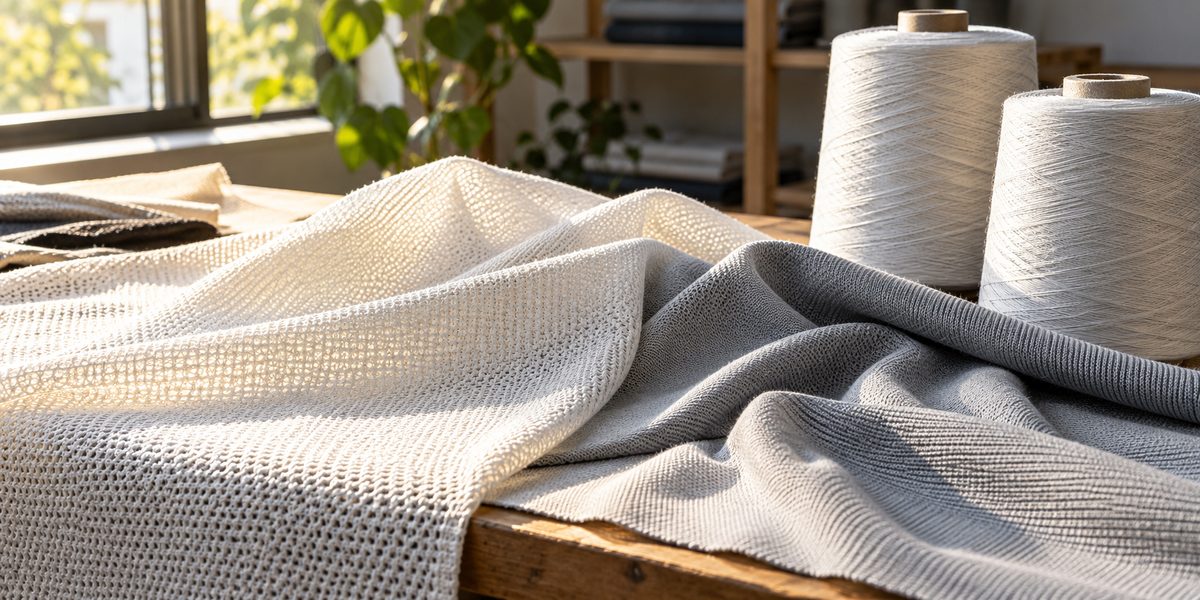
What h-BN contributes to a cooling fabric
Hexagonal boron nitride has a layered crystal structure that conducts heat efficiently along the plane of its platelets. Inside a polymer fiber, a well-dispersed platelet network offers a way for contact heat to spread. That physical property makes h-BN an interesting ingredient, but an ingredient cannot set the result for every yarn. Platelet loading and orientation, dispersion, polymer choice, spinning conditions and yarn geometry all affect the pathway. The fabric then adds thickness, density, surface texture, finishing and whichever face touches the user.
This distinction matters when you compare offers. A claim about pure h-BN thermal conductivity is not a measured conductivity for a filled polymer filament, still less for a finished knit. BNX development can begin in polyester or nylon; the route and construction have to be chosen for the product. The BNX cooling yarn page sets out those material directions. For procurement, ask which exact fabric generated a quoted result before using it as a design target.
Q-max tells you about the first contact, not the next hour
Q-max is the peak heat flow when a temperature-controlled surface first meets a textile. Under GB/T 35263-2017, it is used to evaluate the transient cool sensation of textiles. A white BNX nylon knit measured 0.31 W/cm² at a 15°C temperature difference. A separate set of development fabrics measured 0.270 W/cm² for polyester, 0.350 for nylon and 0.433 for HDPE at a 20°C difference. Those three fabrics have different constructions. Their numbers cannot rank the polymers as if they were identical controlled samples, and the 15°C result is not directly comparable with the 20°C set.
Temperature direction changes the experience. If the textile is cooler than skin, rapid heat flow away from the body can feel cool. If a seat has become hotter than skin in a parked car, faster heat transfer can make the first contact feel hotter. Q-max cannot demonstrate “not hot after sun exposure.” It also says nothing by itself about whether heat and sweat can leave during prolonged wear or sitting. For the contact question, the useful comparison holds fabric mass, construction, finish, tested face and temperature difference as constant as practical. Our q-max buyer guide covers the metric in greater detail.
Sunlight requires a different set of measurements
UV protection addresses ultraviolet radiation reaching the user. A white BNX nylon knit recorded UPF >50 under GB/T 18830-2009. A separately tested white fabric recorded a 52.5% thermal-blocking rate under GB/T 41560-2022, using a 10 mm sample-to-blackboard distance. These are different sample results. The thermal-blocking percentage is not NIR reflectance, and neither value predicts the temperature of a coloured garment or car seat.
Visible colour alone is a poor proxy for solar heat gain. Two fabrics that look like the same charcoal shade can have different near-infrared absorption. Research on colour-matched surfaces with different solar responses illustrates why visible appearance and the invisible part of sunlight should be assessed separately; it is a physics example, not BNX product evidence. For a sun-exposed textile, compare spectral or total solar reflectance on the final colour, along with a defined heating test using matched backing and exposure. A UV result still has its own role, but it cannot substitute for that solar comparison.
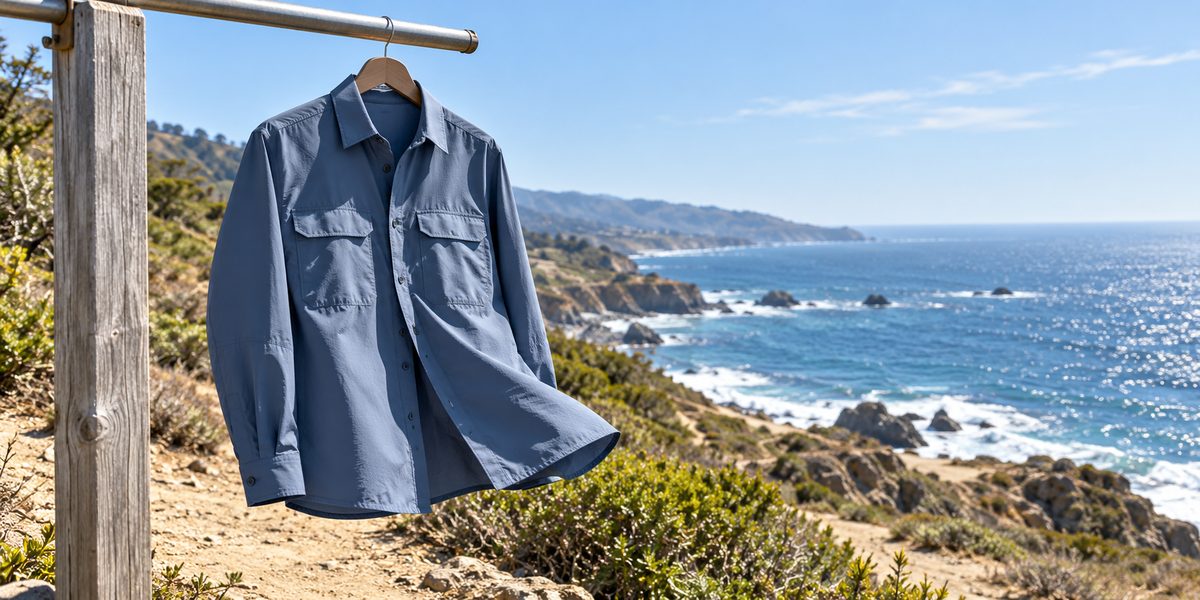
Do not fold radiative cooling into the solar claim
Thermal emission in the 8–13 μm atmospheric window is another potential design pathway. It requires spectral-emissivity and solar-reflectance data for the exact finished fabric. No such final-fabric result is established for the BNX constructions described here, so “radiative cooling” and “below ambient” should stay out of the finished-product claim. This is especially relevant when comparing clothing, bedding and upholstered seats: their exposure to sky, body and surrounding surfaces differs, and a material tested in one geometry cannot prove the effect in another. Our NIR guide addresses solar reflection separately.
Long use depends on the path for moisture and heat
First-touch heat flow fades in importance once skin and textile move toward the same temperature. The next question is how body heat and moisture escape. A sports garment can expose large fabric areas to moving air; a pillowcase rests over layers of fill; a seat cover is compressed against backing, adhesive and foam. A yarn that spreads liquid across the face may increase the wetted area but still leave moisture at the user if the back of the assembly blocks vapour or airflow.
That is where an optional 8C Pro moisture-management route can enter a development brief. Its role is to help absorb and distribute moisture for drying where evaporation is possible. It does not make a sealed laminate breathable. For upholstery or another multilayer product, ISO 11092:2026 provides methods for steady-state thermal and water-vapour resistance, including multilayer upholstery assemblies; the standard itself does not set a comfort specification. A 2026 automotive-seat study likewise examined how textile architecture and lamination affect the seated microclimate. Those methods help identify which layer is limiting performance, while occupied-use evaluation answers the actual product question.
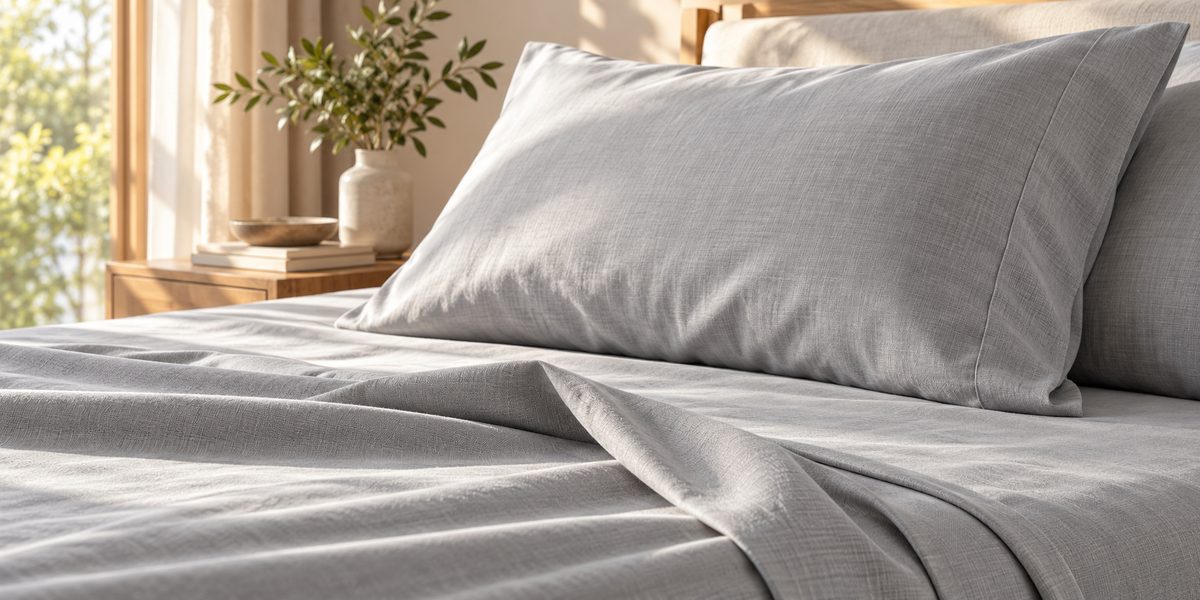
Match the BNX route to the product, not to a single q-max ranking
| Development route | Where to begin | Decision that still needs a sample |
|---|---|---|
| Polyester basis | Explore fabric constructions where dyeing, hand and processing flexibility matter. | Does the finished colour and construction meet the contact and solar brief? |
| Nylon basis | Explore soft, flexible, next-to-skin fabrics. | Does the final knit or weave retain the required feel, appearance and measured result? |
| HDPE basis | Current BNX scope is home textiles; listed yarn sizes are 200D, 300D and 400D. | Can the processing limits and fabric hand work for the intended home product? |
These are development choices, not a performance ranking. The HDPE sample’s higher q-max came from a different fabric at ΔT 20°C and does not make it suitable for apparel or automotive upholstery. If a buyer needs several functions at once, combine components and construction deliberately, then test the actual composite. Polyester versus nylon is only one part of that decision.
Build one comparison that can change your choice
Start with your present fabric and make one BNX candidate that stays close in colour, weight, construction and finishing. Keep a clear sample identity from yarn through the tested fabric. For a contact-touch brief, compare the same face and temperature difference. For a sun brief, compare final colour under the same exposure and backing. For a long-use brief, record where moisture goes in the complete assembly, not only how far it travels across a loose swatch. If the candidate wins one test but loses hand, drying or processing compatibility, that is a reason to adjust the construction rather than declare the material a universal success or failure.
For a car-seat development example, the woven textile seat concept shows how the same heat questions become decisions about the cover, backing and foam. It is a proposed application, not a tested BNX seat.
Start with the condition you need to improve
Share your intended product, polymer preference, target colour and construction, and a control fabric if available. State whether the priority is first touch, sun exposure or comfort during extended contact; you can request several functions together. We can then discuss a BNX yarn route and the test records and finished-fabric comparisons needed for that brief.

Related Posts
How to Choose the Right Cooling Fabric: A Buyer’s Guide to PCM Nylon, Cool-Touch Nylon & 8C Pro Polyester
The Problem With “Cooling” as a Category Walk into any trade show in 2025 and half the booths will have...
How NIR-Reflective Cooling Fabric Reduces Solar Heat Gain
Cooling Textile Series | 03 A buyer-focused guide to near-infrared reflection, textile construction, color, testing and the difference between heat...
6 Cooling Fabric Technologies Compared: Which Actually Keeps You Coolest? [Lab-Tested 2026]
When a customer reaches out asking for “cooling fabric,” what do they really mean? After years of working with brands...
Best Cooling Fabric Technology: The Ultimate Guide (Beat Heat by 3-5°C)
Have you ever felt like your clothes were sticking to you during a workout? Or maybe you’ve experienced that uncomfortable,...