 English
 Español
 Português
 Deutsch
 한국어
 日本語
 Italiano
 Français
 العربية
 Türkçe

A winter midlayer does not create heat; it slows the heat leaving your body. For octagonal hollow polyester yarn, the design question is whether its hollow center and eight-lobed outside help a finished knit hold enough still air without adding weight. The center replaces some polyester with air. The outer shape may change how filaments touch and how much space remains between them after knitting and finishing. If that structure keeps useful thickness while limiting air movement, it can improve the fabric’s warmth-to-weight balance.
Annie’s Smartex lists octagonal hollow polyester yarn in FDY 50D/48F and 75D/72F. Those options give you a starting point for the fabric comparison below. For the broader hollow-versus-solid choice, see our hollow polyester guide.

What does warmth mean in a thermal knit?
Your body supplies the heat. The knit changes how quickly that heat reaches colder surroundings, whether it travels through polyester and still air or escapes with moving air and evaporating moisture. This is insulation, a different job from a material that generates heat; our insulation-versus-heating guide explains that wider distinction.
Thermal resistance, R, describes how strongly a layer slows heat flow. For the same temperature difference, a higher R means less heat escapes per square metre. A simple steady-state model relates resistance to layer thickness L and effective thermal conductivity keff:
Suppose two knits have the same keff. If one keeps 1.25 mm of thickness where the other keeps 1.00 mm, its calculated resistance rises by 25%. A yarn shape is useful when it helps preserve that thickness at a chosen fabric weight. Knit density, fiber contact and air permeability can change keff too, which is why thickness and resistance need to be compared together.
What does an octagonal hollow polyester yarn actually change?
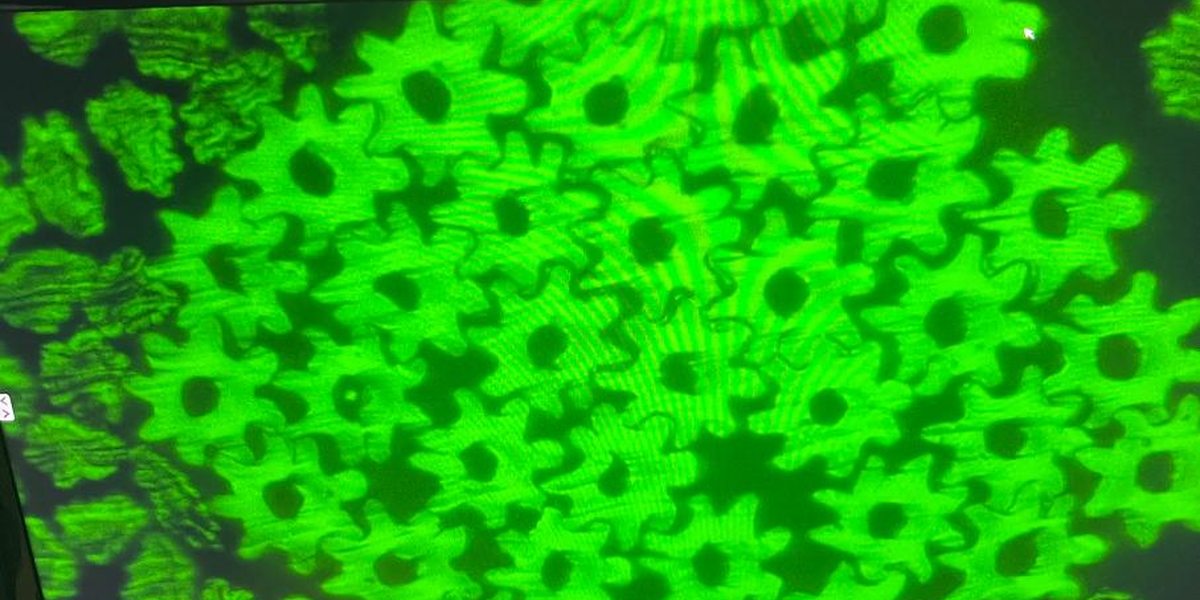
Compare three filaments with similar outside dimensions. A solid round one fills its cross-section with polyester. A round hollow one replaces some of that polymer with a central air space. An octagonal hollow one changes the outside as well: eight projecting lobes and the grooves between them alter where neighboring filaments meet. The result can change yarn packing and the spaces the knit holds, even when the polymer is the same.
The product is listed as FDY filament, so the question for a fabric developer is what happens when those filaments are gathered into yarn and knitted into loops. Filament count, yarn processing, stitch length and finishing can preserve or flatten the spacing suggested by the cross-section. The display below shows the central opening and lobed edge; “eight fins” refers to the outer profile, not eight separate holes.
Why does the air between filaments matter so much?
The hollow center is easy to see in a cross-section, but a textile also holds air outside its filaments. Picture 100 cm³ of loose fiber filling. If the outside contours of all its fibers occupy 5 cm³, and one quarter of that volume is hollow, the cores hold 5 × 25% = 1.25 cm³ of air. About 95 cm³ of air lies among the fibers. A knitted fabric has its own spacing, yet the same design question remains: how much useful air space does the finished structure retain around the yarns?
Removing the center can lower polymer mass while keeping an outside size that helps support the yarn. The lobed edge may alter contact and leave room between adjacent filaments. Together, these changes offer a route to greater thickness at a chosen fabric weight. They also affect how tightly the knit packs, so the amount and location of air must be judged in the fabric rather than inferred from the cross-section alone.
That structural detail can reverse an attractive drawing. In a study of polyester interlock fabrics, round and hollow-round fibers produced fabrics with higher thermal resistance than triangular and W-shaped fibers; the latter settled more closely and produced denser fabrics. For your project, the useful comparison is what this eight-lobed filament does after knitting and finishing, alongside a round hollow and a solid control.
What happens when wind or sweat disturbs that air layer?
Air inside a fine filament cavity has little room for buoyancy-driven circulation. Wind through connected pores in a knit is a different route for heat loss. A fabric can be thick and light yet still feel cold when moving air replaces the air it holds. The interlock study above found that its round-section fabrics had both higher thermal resistance and higher air permeability. That combination is a useful reminder to judge an insulating midlayer with its intended outer layer as well as on its own.
Sweat introduces another path. Liquid between fibers changes the local heat-transfer conditions, while evaporation draws heat from the garment and skin. The lengthwise grooves on a shaped filament may provide paths for liquid to spread, but spreading and drying are separate behaviors controlled by wetting chemistry, yarn arrangement, knit faces and finish. For an active layer, decide whether the larger problem is sweat remaining against skin or slow drying after exertion, then compare those outcomes alongside thermal resistance.
Where could this yarn work in a finished garment?
A light winter midlayer beneath a wind shell is the clearest starting point. The shell slows moving air; the knit beneath it needs to hold useful thickness without making the layering system bulky. If the garment will sit under backpack straps, compare the candidate and control knits after light compression as well as when relaxed. The hiking midlayer concept develops that garment decision in more detail.
A thermal base layer asks a different question: can a finer knit provide a comfortable skin-side surface while moving sweat away before it cools the wearer? A knitted inner layer for a winter jacket has another constraint: it must fit and slide within the shell while adding useful insulation. The listed 50D/48F and 75D/72F FDY options give fabric developers two yarn sizes to trial, but neither cross-section alone decides skin feel, drying or jacket warmth. Pick the garment role first, then knit and compare the relevant fabric and layer combination.
Which three yarn routes make a useful first comparison?
“Warmer” can mean two different things for a buyer: the same resistance at lower fabric mass, or more resistance at the same mass. Compare the octagonal hollow candidate with both a round hollow and a solid polyester control when you can source them. The round hollow route helps reveal whether the outer lobes add value beyond a hollow center; the solid route gives a familiar baseline. Keep polymer, intended yarn size, machine, knit construction and finishing as close as practical.
| Proposed route | Heat-flow question | Match or record |
|---|---|---|
| Octagonal hollow polyester | Does the finished knit hold useful thickness and thermal resistance at the target GSM? | FDY option, knit setting, finish, GSM, thickness, air permeability and thermal resistance. |
| Round hollow polyester | Do the outer lobes change retained loft or air movement beyond the hollow core? | Polymer, yarn size and finish; note any difference in hollow ratio. |
| Round solid polyester | Does either hollow route improve warmth-to-weight over the familiar baseline? | The same garment role and any unavoidable yarn-size substitution. |
Measure fabric mass per area, relaxed thickness, air permeability and thermal resistance together. At the same GSM, a higher resistance would improve the warmth-to-weight result. At the same thickness, it would improve warmth within a fixed layering space. A sample that is warmer only because it is thicker has answered a different design brief.
The listed 50D/48F and 75D/72F options are each about 1.04 denier per filament by simple division. Their total yarn size and filament count differ together, so a comparison between them cannot isolate the effect of the octagonal shape. Choose the option that suits the knit, then look for controls with a comparable yarn size and construction. If a round hollow control is unavailable, a solid polyester control can still show whether the new yarn improves the finished fabric brief.
How should you judge the finished fabric?
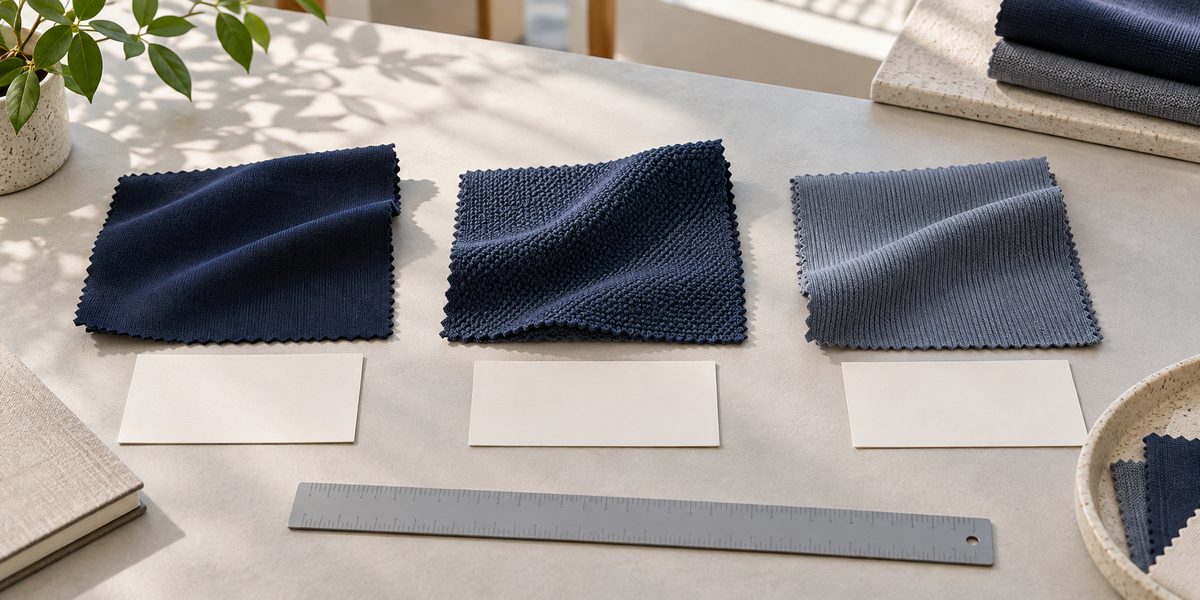
The cross-section identifies a design; the finished swatch shows what it becomes. Knit the candidates on the same machine toward the same construction, and record stitch setting, yarn count, finish and fabric mass. Measure thickness and air permeability after finishing, then repeat the relevant checks after the care route your garment will use. If the fabric sits under a shell or backpack strap, its thickness under light pressure matters more than a relaxed swatch alone.
ISO 11092:2026 provides a steady-state method for comparing thermal and water-vapour resistance of fabrics and multilayer assemblies. Test the intended layer stack when that is the product you are designing. For an active midlayer, add a separately specified liquid-spreading and drying comparison, because a dry thermal-resistance result does not answer what happens during exertion. Together, the measurements tell you whether the octagonal yarn helps your actual fabric goal: warmth at lower mass, warmth in less space, or a better balance with moisture handling.
When is octagonal hollow polyester yarn the right next sample?
It is worth sampling when your current thermal knit is too heavy for the warmth it gives, or when you need to preserve insulation beneath a shell. Choose the outcome before choosing the yarn: greater measured resistance at the same GSM, similar resistance at lower GSM, or similar warmth in a thinner layer. That keeps a promising cross-section tied to a decision you can make from the finished swatches.
Start with one useful fabric brief: state the garment, target GSM and thickness, knit construction, current control fabric, intended shell or layer stack, and finishing and care route. Include which of the three outcomes above would make you change materials. Annie’s Smartex can then discuss the listed FDY options against that brief.
Discuss an octagonal hollow yarn sample
Share your target fabric and current control so the first sample addresses a real warmth-to-weight decision. Contact Annie’s Smartex.

Related Posts
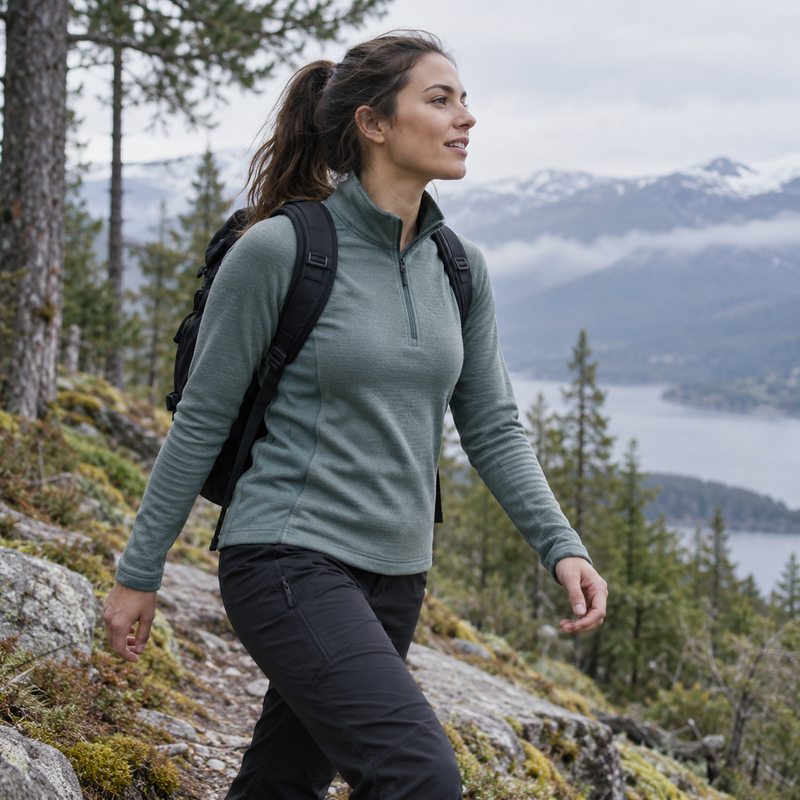
Hollow Polyester Hiking Midlayer: Warmth at the Rest Stop
A hiking midlayer development concept: compare hollow and solid polyester knits, decide where to place loft, and check the finished...
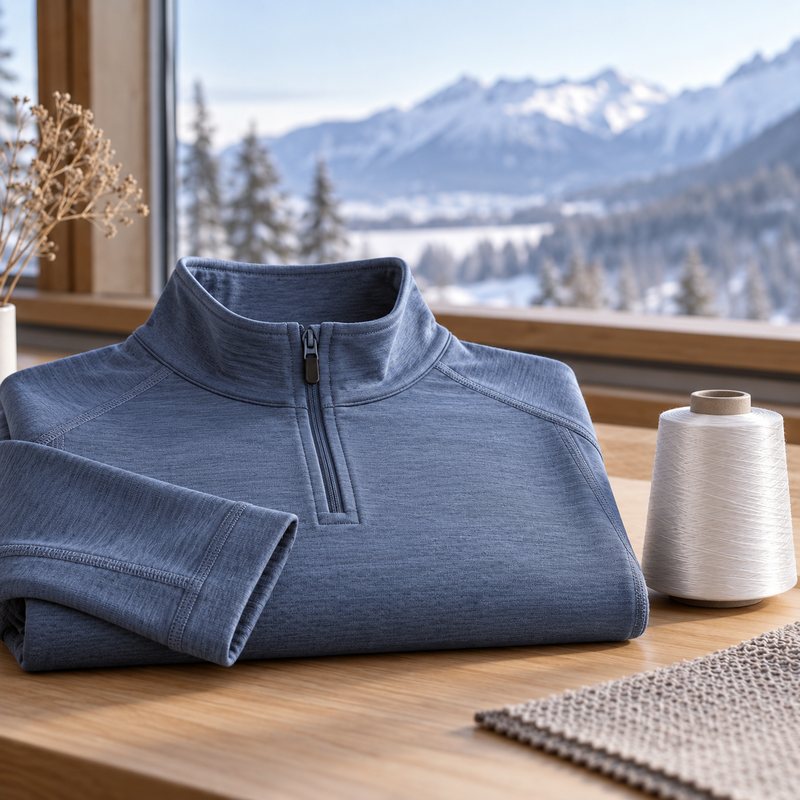
How Does Hollow Polyester Yarn Keep Fabrics Warm Without Bulk?
When can hollow polyester yarn make a winter fabric lighter? Compare knit construction, solid polyester alternatives and finished-fabric warmth before...

Water-Repellent Polyester Yarn for Outdoor Fabrics: What Buyers Should Specify and Test
Water-repellent polyester yarn can reduce surface wetting, but it does not automatically make outdoor fabric waterproof. Learn what to specify,...

Why Wool Needs a New Kind of Partner?Beyond Winter Warmth: Wool Comfort, Thermal Buffering and Body-Responsive Wellness in One Yarn
The design thinking behind a three-in-one, all-season yarn system — combining wool comfort, aerogel thermal buffering and far-infrared body-responsive wellness....