 English
 Español
 Português
 Deutsch
 한국어
한국어 日本語
日本語 Italiano
 Français
 العربية
 Türkçe
Hollow polyester yarn can help make a winter fabric lighter without giving up the air spaces that provide insulation. If you are trying to fit a warm midlayer beneath a shell, the useful question is not whether a hollow filament is “warm” by itself. It is whether a finished knit made from it delivers enough thermal resistance at the weight, thickness and hand feel your garment needs. A dense fabric can squander the idea; an open fabric can lose heat in wind. Here is how to tell which outcome you are buying.
This guide explains the material and the comparison. The ShowarmX® hollow polyester yarn page lists the current product route, while the hiking midlayer development concept applies it to one garment brief.

What the hollow core changes—and what it does not
Compare two polyester filaments with similar outside dimensions. One is solid; the other has a small cavity along its length, rather like the opening through a very fine straw. The cavity replaces part of the polymer with air, so the hollow filament can use less polymer for that outside size. The analogy ends at the filament: your finished knit also holds air between loops and at any raised surface. Those larger spaces may matter as much as the cavity inside each filament.
That is why a microscope image or a hollow-degree percentage is a description of the yarn, not a warmth rating for a jacket. Annie’s Smartex describes ShowarmX® as a polyester fiber with a hollow degree of at least 22%. Its product page also states a 22% fiber-weight reduction against a conventional fiber of the same thickness. Those are product-page claims at fiber level; they do not establish the weight saving or thermal performance of every fabric made from it. Changing yarn count, stitch density or finishing changes the amount and location of air in the textile.
Why a lighter yarn may produce a disappointing winter knit
A winter midlayer needs enough stable air space to slow heat transfer, but it also has to survive movement, laundering and the pressure of another layer. A tightly compacted knit can reduce thickness and suppress loft. A very loose one can feel comfortable indoors yet allow moving air to strip heat outdoors. Brushing can increase surface loft, but it changes pilling, appearance and care. These are construction choices, not properties that follow automatically from a hollow cross-section.
Wet comfort introduces a second trade-off. A fabric that insulates at rest may feel clammy on an uphill climb if sweat accumulates under the shell. Hollow polyester is not inherently a one-way moisture-transfer system, and “breathable yarn” does not describe the whole garment. Compare the finished knit’s water-vapour resistance and drying behavior, then consider vents, base layer and shell together. The moisture-wicking fabric guide explains why spreading liquid sweat and moving water vapour are different jobs.
The yarn specification matters before the fabric test
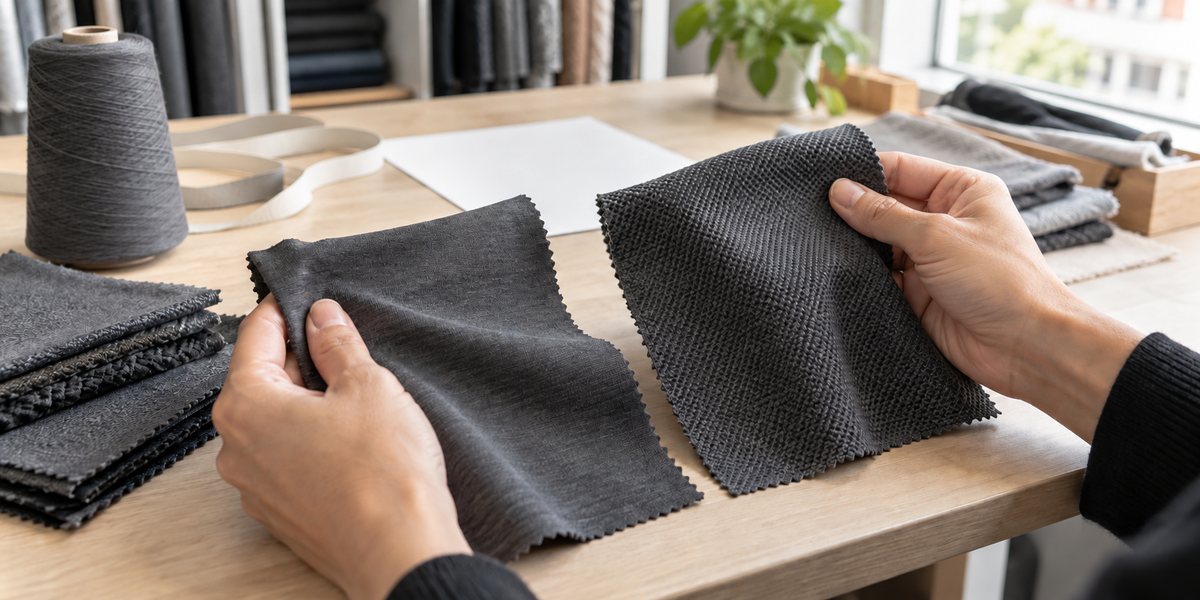
The ShowarmX® product page lists polyester filament options including 75D/48F, 150D/96F and 300D/192F in DTY/FDY routes. D is denier, a measure of yarn mass per length; F is the number of filaments in the bundle. Dividing each listed D by F gives the same nominal 1.56 denier per filament, while the total yarn count changes. That arithmetic does not tell you the hollow degree, softness or warmth of a finished knit. It does show why you should record both numbers when comparing samples. A finer total yarn may suit a closer-to-body knit; a heavier one may be considered where structure or bulk is wanted. DTY and FDY differ in processing and feel, so name the offered variant on the sample sheet rather than simply writing “hollow polyester.” Confirm current availability, exact composition and hollow-degree method for the version proposed.
Ask the knitter what changes when a hollow yarn replaces the incumbent: machine gauge, loop length, feed tension, fabric width after relaxation and finishing behavior. If the yarn swap forces a different construction, that is a valid development path, but it is no longer a clean comparison of cross-sections alone. Recording the change makes the result useful rather than deceptively simple.
Where it fits in a winter clothing system
A next-to-skin layer is judged first by skin feel, sweat handling and drying. A hiking midlayer has a different job: provide useful warmth while allowing enough movement and fitting comfortably under a shell. A wind shell or insulated outer jacket changes the airflow and compression around the midlayer. Hollow polyester can be evaluated in any of these roles, but one favorable midlayer sample does not prove a base layer or outerwear claim.
For a pack-worn garment, shoulder pressure may flatten a lofty knit even when the torso panel looks promising on the table. For a commuter jacket, bulk at the neck and sleeves may matter more than a small fabric-weight saving. State the garment role and the failure you are trying to avoid before asking for a yarn. The narrower hiking midlayer concept shows one way to turn this into a panel and layering decision.
Hollow polyester, solid polyester, fleece or aerogel?
These options solve related but different problems. Conventional solid polyester gives a useful control because it can be knitted in a comparable structure. Brushed fleece changes the surface and air volume, so its apparent warmth cannot be credited to fiber chemistry alone. Aerogel insulation is another material route, often placed in a separate layer or filling; it answers a different construction brief. The site’s aerogel versus down article covers that wider insulation choice.
| Route | Useful when | Question before approving it |
|---|---|---|
| Hollow polyester knit | A lighter insulating knit may meet the garment’s weight and bulk limits | Does the finished knit improve the agreed warmth-to-weight outcome after finishing and care? |
| Solid polyester knit | A familiar process, hand feel or cost is more important than the proposed weight saving | Does the baseline already meet the brief without a material change? |
| Brushed polyester fleece | Loft and familiar winter hand feel are priorities | How do pilling, packed bulk and recovery compare at the intended weight? |
| Separate insulating layer | The garment can accept a different jacket architecture | Where does the layer sit, and what happens to fit, movement and care? |
No row is an absolute winner. If a hollow knit underperforms a well-designed solid or brushed control at the same garment weight, the fabric result should drive the choice.
Two comparisons that answer different questions
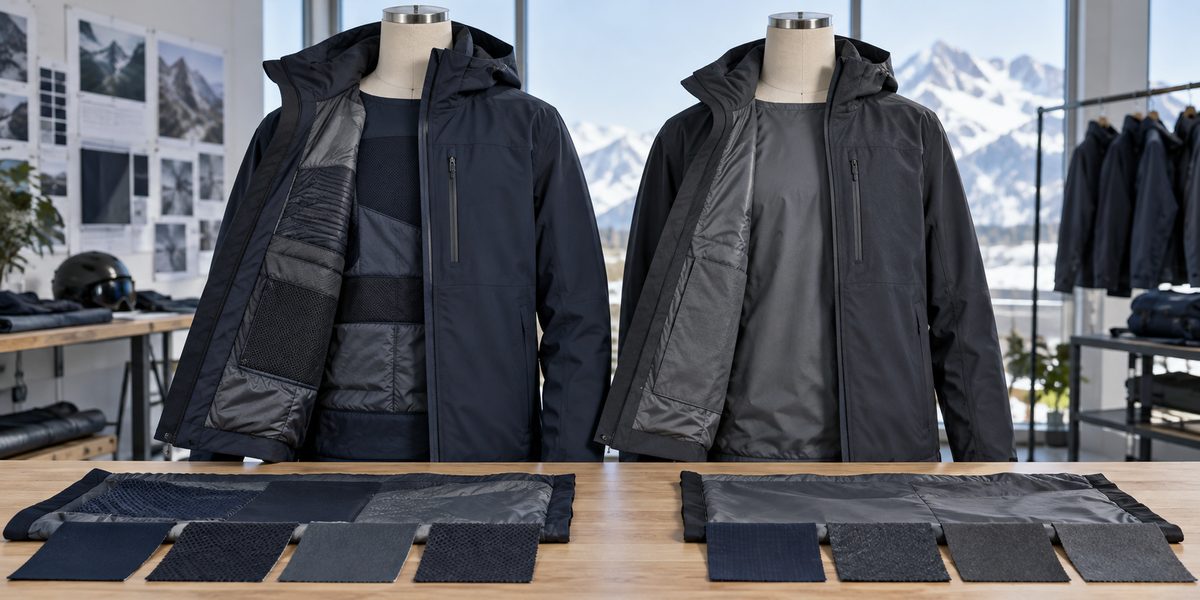
To study the yarn substitution, compare hollow and solid polyester in as nearly the same knit and finish as practical. Record the resulting GSM, thickness, hand feel and thermal resistance. To study the garment brief, compare at an equal finished weight or equal target warmth, whichever matters to your product. That comparison asks whether a designer can spend any saved mass on more loft, keep the garment lighter, or retain the baseline. Mixing the two questions can make a lighter sample look artificially good or unfairly poor.
Measure after the intended dyeing and finishing, and repeat the relevant checks after an agreed care procedure. ISO 11092:2026 describes steady-state thermal and water-vapour resistance testing for fabrics and multilayer assemblies. Specify the tested specimen and layer arrangement; a fabric result is not a temperature rating for a person. ISO 6330:2021 can provide a domestic washing and drying procedure, but a wash method alone does not prove durability. A source report should identify the actual sample, method and result.
What to send for a meaningful hollow-yarn trial
Instead of asking for “the warmest hollow yarn,” describe the intended garment, target fabric weight and thickness, knit structure, companion yarns, shell or lining, washing route and the current control fabric. Ask which ShowarmX® count and DTY/FDY option is available for that construction, then agree whether the trial seeks lower weight, lower bulk or improved thermal resistance. Those are different success criteria. Include the minimum acceptable hand feel and appearance after care, so a lab number does not overrule the product’s wearability.
The decision to make
Hollow polyester is a credible route for a lighter winter knit when the construction preserves useful air space and the full garment still works during movement. If you have a target fabric or an existing solid-polyester control, send the construction, weight, layer arrangement and care requirements to Annie’s Smartex. The team can discuss a suitable ShowarmX® yarn starting point and the comparison samples to request.

Related Posts

Lightweight Warmth Without Bulk: The Aerogel + Far Infrared Yarn System Built for Base Layers, Knitwear and Everyday Apparel
There is a quiet shift happening in performance apparel development. Brands are no longer asking “how warm is it?” —...
Hollow Polyester Hiking Midlayer: Warmth at the Rest Stop
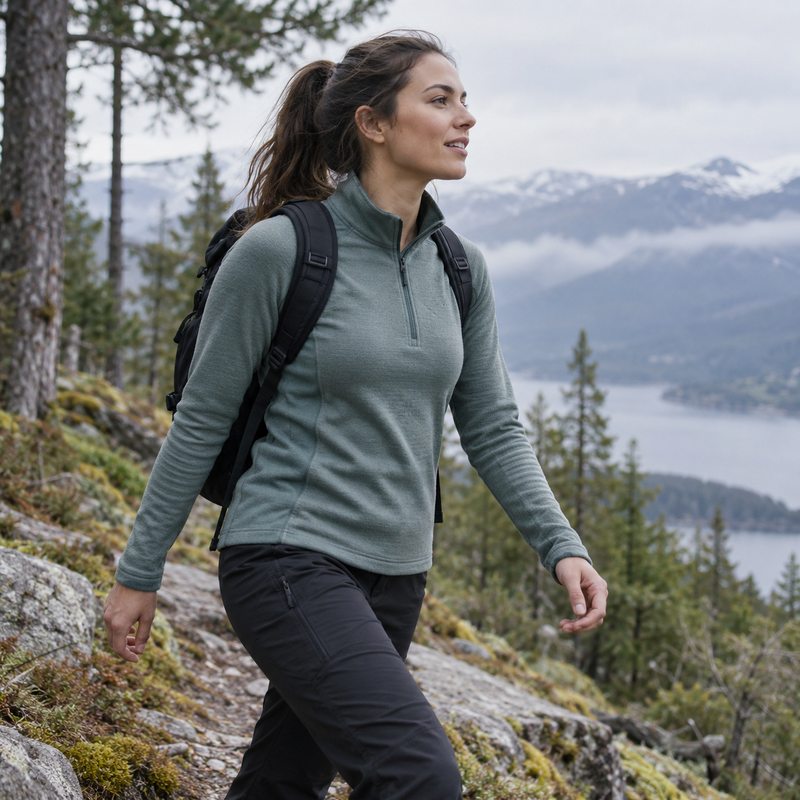
A hiking midlayer development concept: compare hollow and solid polyester knits, decide where to place loft, and check the finished...

Water-Repellent Polyester Yarn for Outdoor Fabrics: What Buyers Should Specify and Test
Water-repellent polyester yarn can reduce surface wetting, but it does not automatically make outdoor fabric waterproof. Learn what to specify,...

Does Antibacterial Fabrics Really Work? an ultimate guide
The Skepticism Around Antibacterial Textiles In a world increasingly concerned with hygiene and health, antibacterial fabrics have gained significant attention....