 English
 Español
 Português
 Deutsch
 한국어
 日本語
 Italiano
 Français
 العربية
 Türkçe

The brush is clean, but the cuff has already brushed through a stripe of blue paint on the table. A long sleeve keeps the school shirt covered while a child reaches for the water pot. It also puts another piece of fabric close to every wet edge on the worktop. For a washable art smock, the development question is as much about where paint collects as it is about which fabric comes off the roll.
For this design, start with a woven easy-clean fabric candidate and a low-bulk cuff that sits close enough to stay out of the work area. Compare that construction with a smooth wipe-clean material in the same pattern. A school or supplier can judge both against the clean-up routine it actually has.

The challenge is at the edge of the sleeve
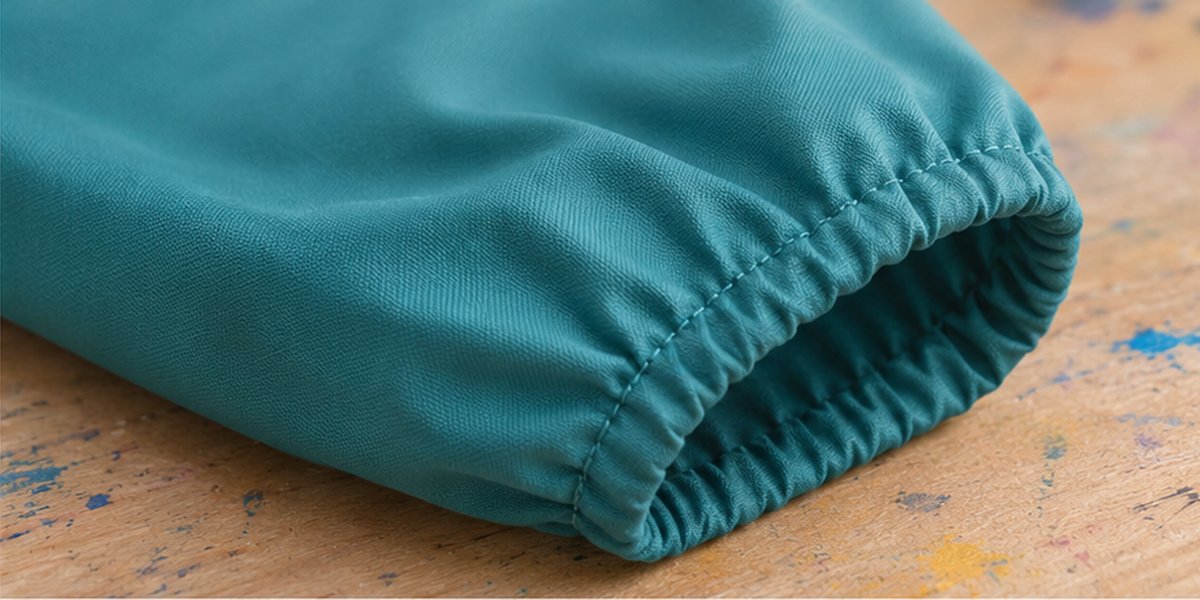
A loose, straight sleeve is straightforward to sew. The opening gives children room to pull it over a jumper, but the edge can fall against the table whenever an elbow bends. Make the opening too tight and a child may push the sleeve up to get it out of the way. That exposes the very part of the sleeve you aimed to cover. You want enough room to dress over normal classroom layers and enough control at the wrist to keep the cloth from dragging.
Start the fitting at the table. Have the prototype sit over a typical school jumper and check what happens during reaching, bending and turning the wrist. Check placement with a few representative arm and wrist sizes before settling on the pattern. A good flat measurement helps the factory cut a repeatable sleeve. It takes the movement check to see where the cuff ends up in use.
Give the cuff just enough structure
A proposed woven sample uses a narrow enclosed elastic in the cuff. Keep the gathering shallow and keep the exposed seam allowance inside. That keeps the opening close to the wrist, with fewer deep folds across the outside where paint could settle. A split in the fabric choice or a change in elastic tension can alter both the reach test and how readily the cuff opens for washing, so settle on the approximate opening before asking a mill to adjust the fabric.
The alternative is a straight, lightly bound cuff with a smaller opening. It gives you a flatter exterior to wipe and a useful comparison with the elastic route. Try it if the target size range fits through easily and the sleeve stays in place. If it rides over the hand or catches on layers, the elastic route is worth more development. Use the same body size and sleeve length in both so the fitting isolates the cuff change.
Choose fabric for the clean-up routine
After a lesson, some classrooms rinse each cover at a sink. Others collect a batch at the end of the day and wash it later. A smooth plastic surface is a sensible reference when prompt wiping is the priority. Crayola’s reusable smock illustrates that route and the use of elastic cuffs. A woven fabric is a candidate when the program wants a less rigid garment and expects to launder it. Give it the same paint challenges and check how easily the surface and seams clean under that routine.
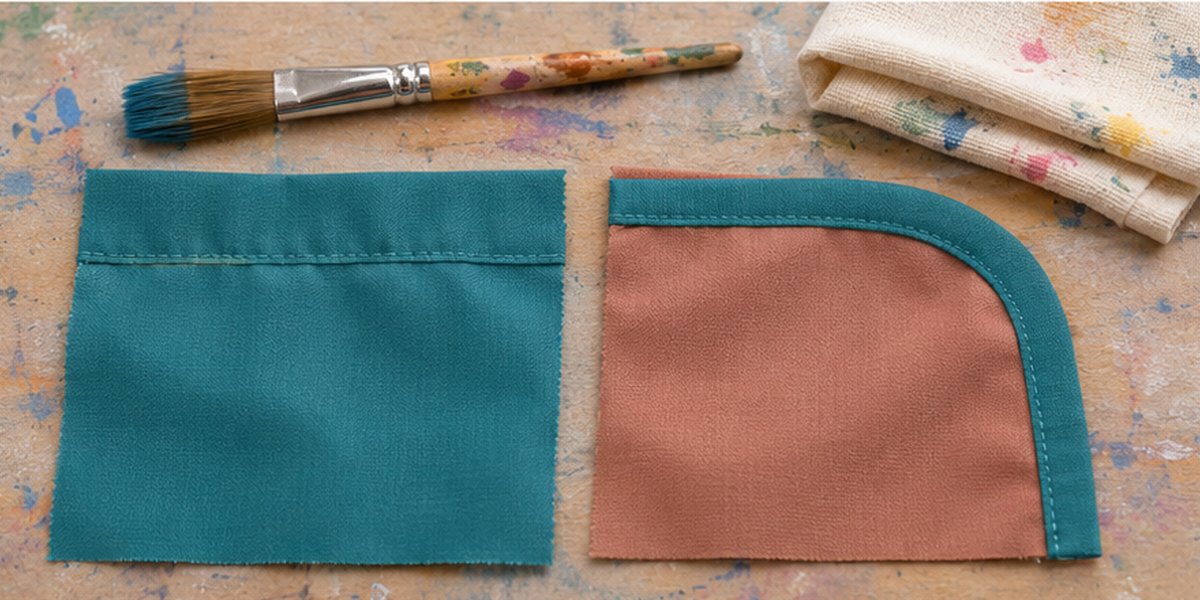
Smartex’s Cleenzo™ easy-clean fabric gives you a starting material to discuss. Its listed use includes children’s clothing. The new question is whether the chosen fabric, color and cuff construction work with the specific classroom paints. A stain that comes out of a flat swatch can leave color along a stitched fold. Include a small sewn section when screening fabrics and keep a plain comparison swatch so you can tell whether the seam or the fabric drove the difference.
Keep the front panel easy to reach and clean
A large front pocket looks convenient in a sketch. On a shared smock it creates a ledge and a second layer where diluted paint can gather. Propose a smooth front without a pocket for the initial classroom sample. Move brush storage to the tabletop. That lets a teacher quickly see the areas that need attention and avoids asking a sewer to add a heavily layered feature before the core sleeve design is settled.
Keep the back closure away from the usual paint contact zone and check whether the chosen closure catches a sweater or creates a stiff spot during seated work. Prototype the closure in both materials. Using the same pattern makes the effect of drape easier to see. If one candidate stands away from the body, that may be acceptable for a quick wipe-clean cover but awkward if the group will wear it for an entire lesson.
What the proposed samples should tell you
Use two woven cuff prototypes to settle the opening. Once you have a workable shape, compare the woven route and a smooth wipe-clean reference in that shape. Use actual water-based classroom supplies selected by the buyer. Record product and color, time before cleaning, the permitted clean-up procedure and whether any material transferred to a light layer underneath. Review the cuff and body separately. A little residual color on a dark front may be acceptable for a shared classroom smock, while transfer to a child’s sleeve may rule it out.
Check the same samples after the planned care routine, including whether the cuff still opens and returns to its original position. For longer-term use, agree how many care cycles represent the buyer’s needs and review that condition before final approval. Keep laundering compatibility, stain removal, paint penetration and fit as separate observations. Evaluate the finished design, including closures and elastic, against the requirements of its intended age group and sales market.
Build a washable art smock fabric brief
Share the age and size range, sleeve sketch, typical layers, classroom paint list and the school’s wipe or wash routine. Use the easy-clean school uniform concept to see how a different classroom garment frames cleaning, and the soil release overview for material background. Send the art smock brief to Annie’s Smartex to discuss sample fabric for the first cuff comparison.

Related Posts

Knee Pain Relief Brace for Seniors Solution
How Germanium Far-Infrared Technology Restores Joint Circulation The Challenge “Our customers wear knee braces all day — but the pain...

Winter Hiking Socks: Warmth Without Crowding the Boot
Creative Textile Lab · Development concept A winter hiker sits on a rock to tighten a boot. The sock feels...

Cooling Thobe Fabric: Balancing Sun Coverage and Cool Touch with BNX
Creative Textile Lab · Development concept A white thobe looks effortless until the fabric has to do everything at once....
Winter Cycling Gloves: Balancing Aerogel Insulation and Grip
On a cold ride, the back of your hand meets the wind while your palm holds the bar and your...