 English
 Español
 Português
 Deutsch
 한국어
 日本語
 Italiano
 Français
 العربية
 Türkçe

If a duvet feels too warm soon after someone gets into bed, where should you place phase-change material (PCM)? Start with the sleeper-facing shell. Compare a PCM-treated version with an untreated version made from the same base fabric and quilt construction. A layer buried deeper in the duvet has a longer heat path and deserves its own sample trial. The choice is about where heat can reach the material, not simply how much PCM you add. Our PCM fabric explainer covers the mechanism; the comforter concept explores a finished-product idea. Here, the decision is where the PCM goes.
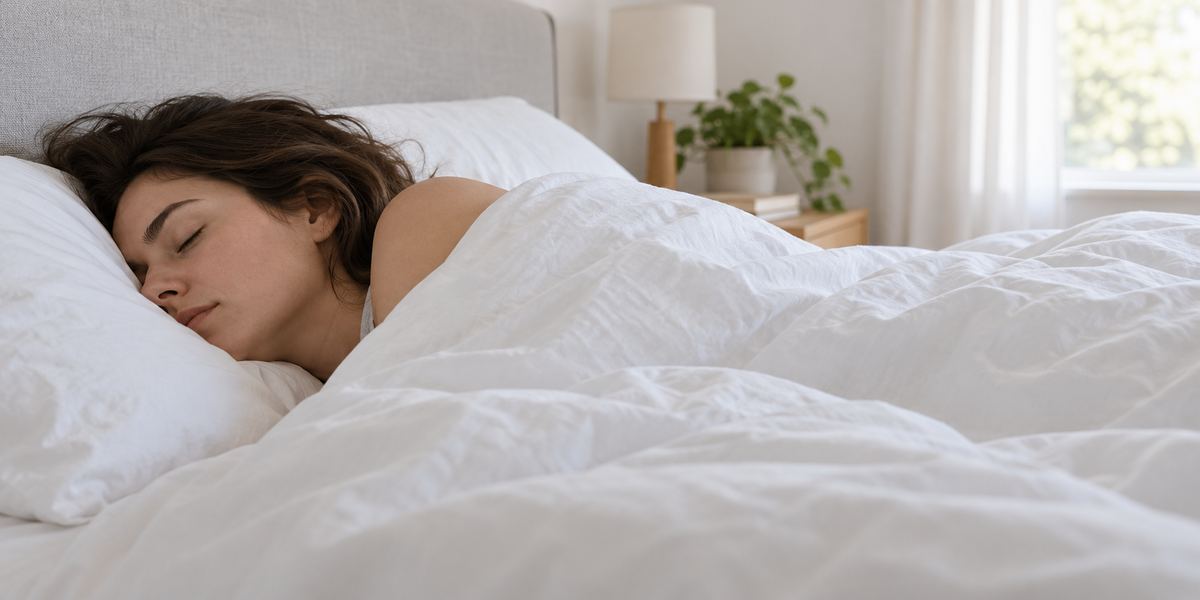
What does PCM placement change in bedding?
PCM absorbs heat while changing phase within its designed temperature range and releases heat as it returns to its earlier state. In a duvet, that exchange happens through fabric, air spaces and fill. Moving the PCM farther from the sleeper changes the path heat must travel before reaching it. Placement is therefore a product-design decision, not merely an ingredient choice.
Name the moment you want to change. Is it the first few minutes under the cover, or a longer period after the duvet has warmed through? The former points toward the inner shell. The latter may justify a middle-layer trial, provided the PCM’s transition range and heat capacity fit the use condition. A filled structure raises a separate question about insulation and loft.
Start with the surface closest to the sleeper
For a first prototype, an inner-facing treated fabric offers the clearest comparison. Annie’s Smartex lists a PCM finishing fabric for bedding and apparel with a stated 28°C transition point for its microcapsules. Use that as a specification to verify against the intended bedding conditions, not as a measured comfort result for a duvet. Ask which face receives the finish, how the treatment changes hand feel and fabric weight, and which care conditions apply.
Do not assume that direct skin contact is always desirable. A sheet may sit between the duvet and body, and a heavy or rough treated shell could spoil the feel you are trying to improve. Keep the sheet in the test setup if it is part of normal use.
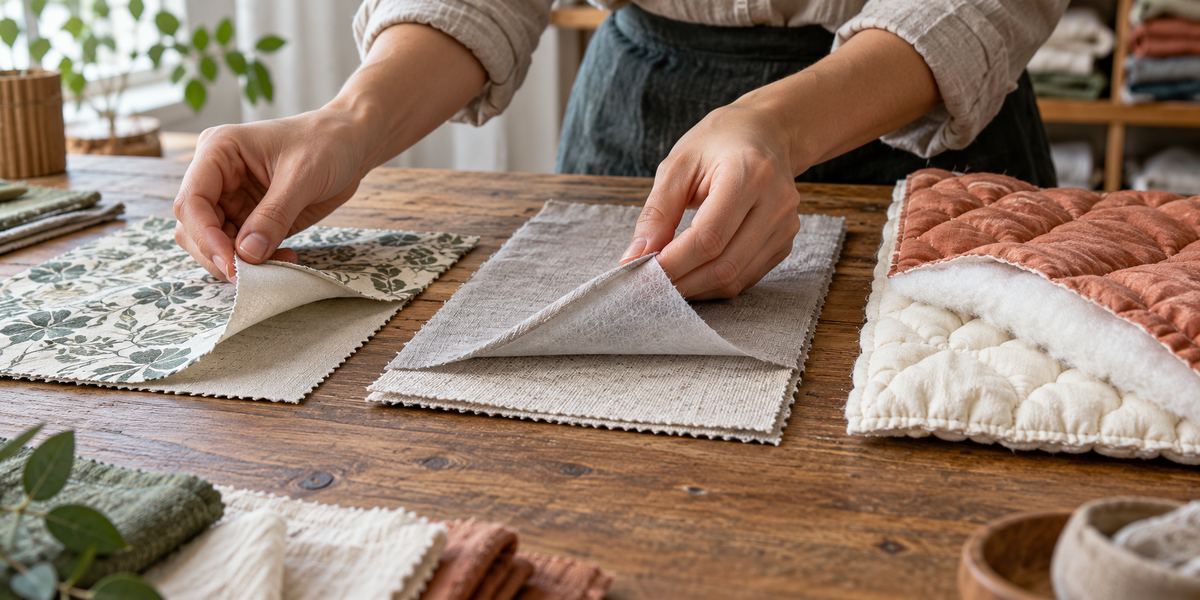
When would a middle layer make sense?
A middle layer gives you more freedom to protect the outer appearance and preserve a preferred skin-facing fabric. The trade-off is an extra barrier between body heat and PCM. Before choosing it, specify the shell, interlining and quilting pattern. The useful question is whether the assembled quilt responds differently from an otherwise identical control, not whether an isolated PCM swatch changes temperature.
A middle layer becomes more interesting if your chosen face fabric cannot be finished or if preserving its feel matters more than the fastest surface response. Confirm that a suitable PCM-bearing interlayer can actually be made before using it as the production design.
Why not put PCM straight into the fill?
Fill already has a job: retaining air and providing the loft and weight that define the duvet. A PCM-bearing fill may change those properties, the way material settles, or the cleaning route. It also places much of the PCM away from the sleeper-facing surface. If your brief is specifically about a surface feeling warmer or cooler for a short period, investigate the shell before altering the fill.
Keep the distinction between thermal buffering and insulation clear. PCM can absorb and release a finite amount of heat during a phase transition; conventional fill influences ongoing heat loss through the whole bedding assembly. A claim about one cannot establish the other.
A three-sample matrix that isolates placement
| Prototype | Construction | Decision it answers |
|---|---|---|
| A: control | Chosen shell, fill, quilting and sheet; no PCM | What does the base duvet feel and measure like? |
| B: inner shell | Same build with a proposed PCM-treated sleeper-facing shell | Does near-surface placement add useful buffering without harming feel or care? |
| C: middle layer | Same base build with a proposed PCM-bearing interlayer | Is a less exposed location useful enough to justify added construction? |
Use the same base cloth for A and B. If the finishing binder changes the cloth, add a binder-only control where feasible; otherwise record the difference rather than crediting PCM alone. Hold duvet size, fill mass, quilting layout, sheet and room conditions constant. Record the mass and thickness of each assembly. Compare the whole quilt as well as its component fabric, before and after the agreed care cycles.
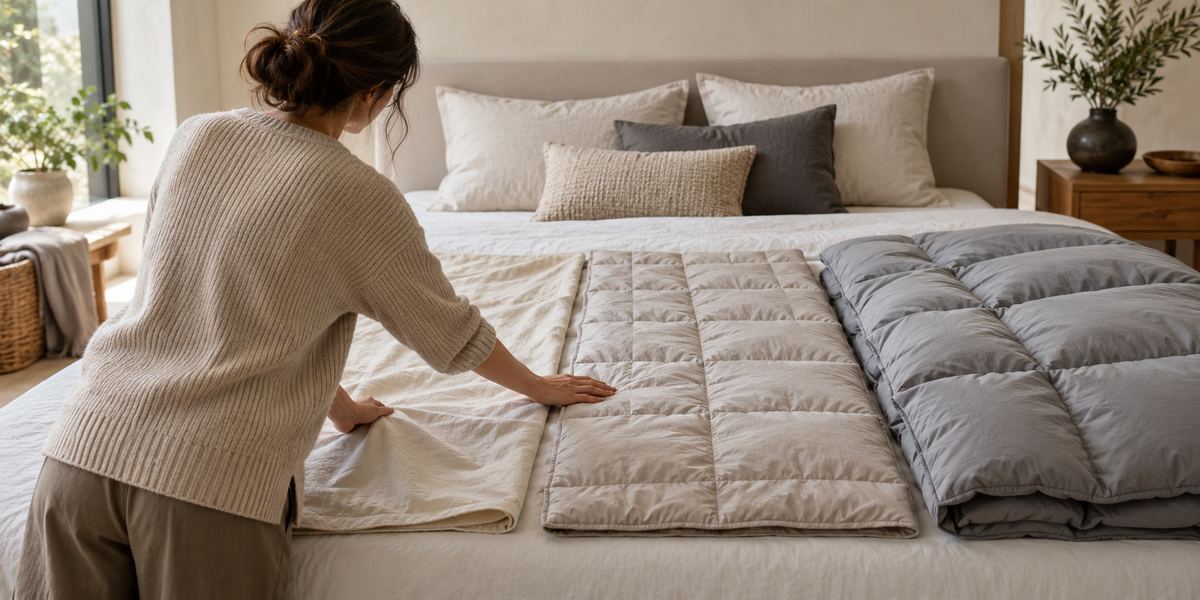
Which tests answer the buyer’s real question?
Ask for the PCM material’s transition range and measured heat-storage capacity, identifying whether the specimen is raw PCM, treated fabric or an assembled textile. A sweating guarded hotplate can compare thermal and water-vapour resistance of suitable textile specimens, but those figures do not describe a whole night’s sleep. For the product trial, record temperature over the same heating, cooling and reset cycle for each sample, with the same room conditions and sheet. A single warming curve cannot tell you whether the PCM has released its stored heat before the next cycle.
Watch for a common interpretation error: one cooling trace may show a short delay in warming, yet say little about later comfort or moisture. If the control and PCM versions differ in shell weight or loft, rebuild the pair before making a commercial claim.
Choose the first bedding PCM prototype
For a duvet brief focused on short warm spells near the sleeper, begin with the inner-shell comparison. If you must preserve a particular face fabric, evaluate a middle layer as a second route. Treat a PCM fill as a separate design task.
Request a bedding sample discussion
Send your intended product type, shell composition and weight, fill and quilting plan, target use conditions, sheet configuration, care method and the exact comfort claim you hope to assess. We can discuss the listed PCM finishing fabric and available development options. Contact Annie’s Smartex with that brief so the first sample answers a real placement question.

Related Posts

How PCM Cooling Fabric Works: Phase Change, Thermal Buffering and the Questions Buyers Should Ask
Cooling Textile Series | 02 A practical explanation of what phase change material can do in a textile, where its...
Application of Phase Change Materials(PCM) in Medical Textiles
Medical professionals and patients alike face a common challenge in healthcare settings – maintaining optimal body temperature. Traditional medical textiles...

Applications of Phase Change Materials in Textiles: Routes, Uses and Limits
PCM textiles can buffer short temperature changes, but the yarn, fabric or finishing route determines how they should be specified...

Far-Infrared Fabric for Performance Apparel: What Buyers Should Specify and Test
Learn how to specify and test far-infrared fabric for performance apparel, compare construction routes, review FIR evidence and prepare a...