 English
 Español
 Português
 Deutsch
 한국어
한국어 日本語
日本語 Italiano
 Français
 العربية
 Türkçe
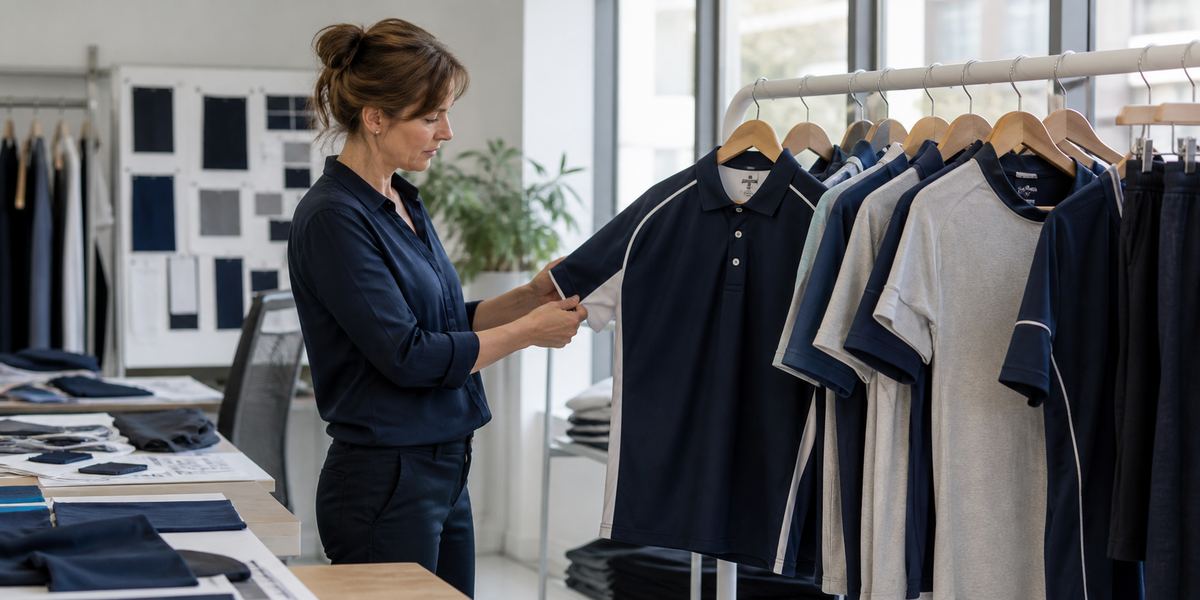
The Challenge: Antibacterial Performance Must Survive the School Wash Routine
Consider a common schoolwear development brief. The uniform supplier wants a cotton-rich sports polo that feels familiar, handles sweat and frequent laundering, and supports a measurable antibacterial claim instead of relying on a vague “fresh” finish. This approach can build a wash-tested school sportswear sample matrix, but yarn alone cannot prove odor control, medical benefit or finished-garment durability.
Putting “antibacterial” on a hangtag is easy; building evidence for the claim is the difficult part. That means choosing a yarn construction, defining the claim, building matched control fabrics and agreeing how antibacterial activity and durability will be tested.
The Development Path: From Antibacterial Yarn to a Testable Uniform
This is an application-development scenario, not a claim of a completed customer project. The goal is to show how a buyer can turn antibacterial yarn into a controlled sampling plan.
Define the claim before selecting the yarn
Decide whether the product brief concerns measured antibacterial activity, odor management, UV protection or a combination. These are different claims with different tests. Antibacterial performance does not automatically prove odor reduction, skin protection or medical benefit.
Choose a yarn form that fits the polo construction
For a cotton-rich hand feel, the nano-zinc antibacterial spun yarn lists Ne32s and Ne40s running options, each described as 30% nano-zinc polyester fiber and 70% cotton. The finer or coarser option should be selected through fabric trials, not from count alone.
Build a controlled fabric matrix
Keep the knit structure, dye route and finishing as consistent as possible. Compare each nano-zinc candidate with a control matched as closely as possible for nominal count, polyester/cotton ratio, knit structure, dye route, finish and finished GSM. Record width, shrinkage, color, pilling, bursting strength, moisture behavior and hand feel alongside antibacterial results.
Test before and after the intended care cycle
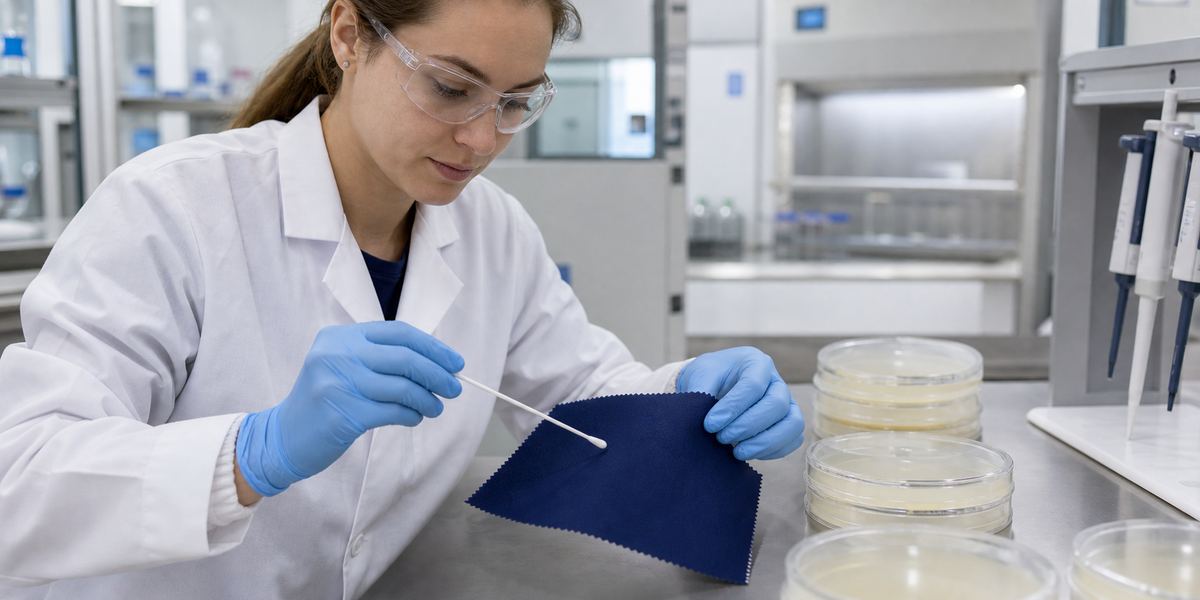
ISO 20743:2021 specifies quantitative methods for antibacterial activity in textile products. ISO 6330:2021 provides domestic washing and drying procedures for textile testing. The buyer and laboratory should agree the applicable test organism(s), select the ISO 20743 inoculation and enumeration method, define specimen conditioning, and set a project acceptance criterion. Also record the wash/dry procedure and cycle count used before retesting.
Validate the finished polo and its market claims
Seams, rib collars, trims, printed areas and mixed-fabric panels may not share the same fiber content. Test clearly identified representative garment materials or areas; do not extend a result from the body fabric to untreated collars, trims, prints or mixed-fiber panels. Review labeling and biocidal-product rules in the target market before approving antibacterial or anti-odor language.
Proposed Outcome: A Matched-Control Uniform Development Matrix
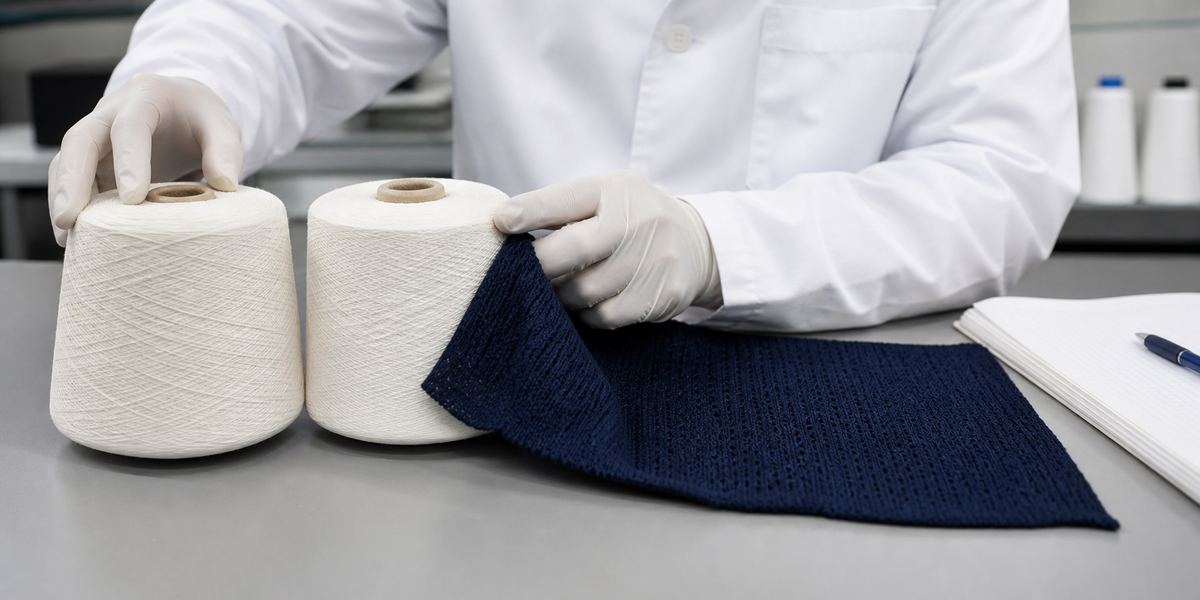
The outcome is a controlled comparison—not an unverified “permanent antibacterial” promise. Each functional sample has its own closely matched control so the buyer can separate a nano-zinc yarn effect from a yarn-count or fabric-construction difference.
The mill should document every difference between the samples. If the yarn count forces a change in knit gauge, fabric weight or finish, the comparison is no longer a single-variable experiment—and the test report should say so.
What Should the School Uniform Specification Include?
| Specification field | What to define | Why it matters |
|---|---|---|
| Yarn | Ne32s or Ne40s running option; listed 30% nano-zinc polyester fiber / 70% cotton composition; lot identification | Provides traceability from yarn to fabric and garment. |
| Fabric | Knit structure, finished GSM, width, color, finish and dimensional tolerances | Ensures the samples are compared on a consistent fabric construction. |
| Antibacterial test | Method, organism(s), specimen type, conditioning and acceptance criterion | “Antibacterial” has no useful procurement meaning without a defined test. |
| Care durability | Wash/dry procedure, detergent, drying route, cycle count and post-care retest | Matches the claim to the way the uniform will actually be maintained. |
| Wear performance | Shrinkage, colorfastness, pilling, bursting strength, seam and collar appearance | A hygiene function cannot compensate for a polo that loses shape or color. |
| Claims and compliance | Target market, label wording, chemical-safety and restricted-substance documents, treated-article requirements, and any UV test if an anti-UV claim is planned | Verify whether nano-material or biocidal-product rules apply; a yarn feature does not automatically authorize a finished-product claim. |
| Commercial terms | Sample quantity, sample lead time, production MOQ, forecast volume and color program | Allows the supplier to distinguish a running yarn from a custom development. |
Does Antibacterial Yarn Also Control Odor?
Odor in sportswear can involve bacteria, sweat chemistry, detergent residues, drying conditions and soil retained by the fabric. ISO 20743 measures antibacterial activity under defined laboratory conditions; it does not measure whether wearers notice less odor.
If odor management is a commercial objective, add a separate odor-related evaluation or structured wear-and-care trial. Keep the marketing language tied to the evidence. For a wider comparison of zinc, copper, silver, mineral and plant-based approaches, see our antibacterial fabric technology guide.
How to Review the Polo After Repeated Washing
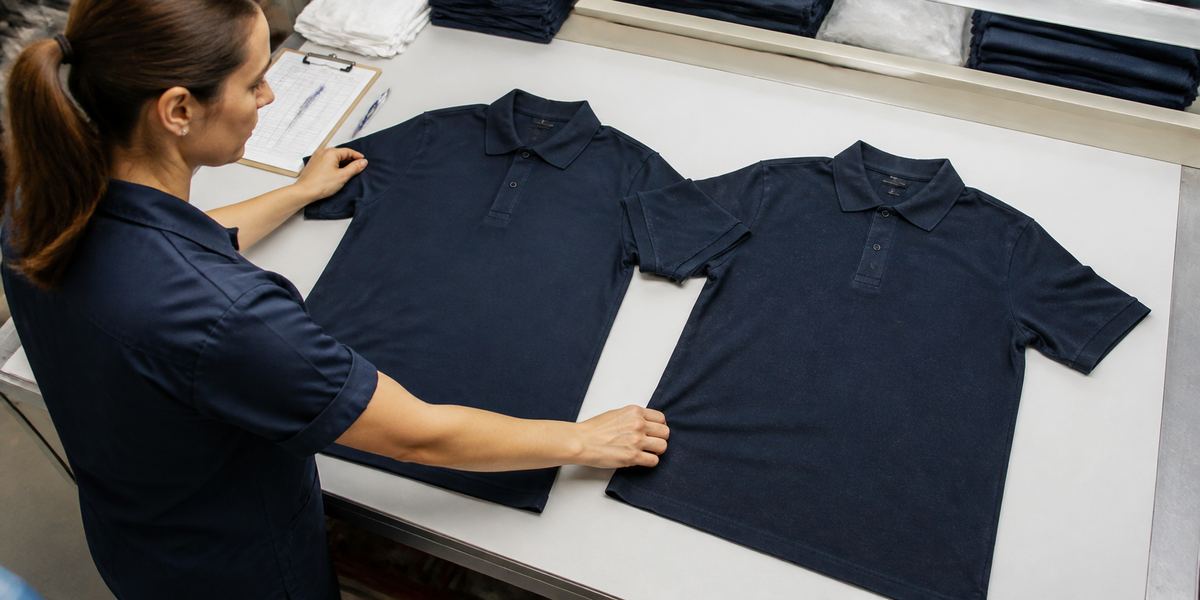
Retesting antibacterial activity is only one part of the approval. Lay the washed garment beside an unwashed reference and inspect the complete product:
| Appearance | Color change, staining, pilling, fuzzing, collar curl and print/trim condition |
| Dimensions | Body length, chest width, sleeve length and skew after the selected care procedure |
| Mechanical performance | Fabric strength, seams, snagging and abrasion appropriate to school sports use |
| Functional result | Antibacterial test repeated on the agreed specimen after the agreed number of cycles |
| User assessment | Fit, hand feel, thermal comfort, drying and any structured odor trial defined by the buyer |
Common Buyer Questions About Nano-Zinc Antibacterial Yarn
Is nano-zinc yarn permanently antibacterial?
Do not assume so. Durability depends on how the function is incorporated, the fabric process and the care conditions. Define the wash procedure and cycle count, then retest the fabric.
Should a school sports polo use Ne32s or Ne40s?
It depends on the desired fabric. Yarn count interacts with machine gauge, stitch length, GSM, opacity, hand feel and cost. Knit both options in controlled prototypes before choosing.
Does the yarn automatically provide UPF or anti-UV performance?
No. The product is presented as an antibacterial and anti-UV nano-zinc yarn, but the finished fabric’s UV protection depends on construction, color, stretch and finishing. Test the actual fabric before stating a UPF value.
Can antibacterial yarn prevent infections at school?
No such conclusion should be made from the yarn alone. Antibacterial textile activity under a laboratory method is not the same as clinical protection or disease prevention.
What should I send when requesting a sample?
Start with the garment brief. Send the intended polo composition, knit structure, GSM, color, care method, destination market, test method, acceptance target, sample quantity and annual forecast. That information determines whether a running specification is suitable or a custom trial is needed.
Developing a Wash-Tested Antibacterial Uniform?
Send us your fabric construction, yarn count, wash procedure, test requirement, target market and forecast quantity. We can help you shortlist the yarn count and plan a controlled fabric trial.
Request a Nano-Zinc Yarn Sample

Related Posts

Easy Clean Fabric Solution for Kids’ School Uniforms
Cleenzo™ Soil-Release Technology · Surviving Lunch, Recess, and 30+ Washes The Challenge “Every parent’s inbox looks the same by Friday:...

Anti-Static Yarn for Cleanroom Garments: An ESD Workwear Development Case
See how carbon-fiber anti-static yarn is specified for cleanroom and ESD workwear, from five listed yarn sizes to fabric, garment...
A Natural Antibacterial Solution for Sustainable Bags & Eco Accessories
Zero-Waste Agricultural Innovation · Pineapple Leaf Spun Yarn Technology The Challenge “We’ve committed to a fully biodegradable product line by...
4-in-1 Solution for Antibacterial, Deodorizing, Cooling, and Moisture Management in Sportswear
Imagine you’ve just finished an intense yoga class or a long-distance cycling session. Although you feel refreshed, your sportswear emits...