 English
 Español
 Português
 Deutsch
 한국어
한국어 日本語
日本語 Italiano
 Français
 العربية
 Türkçe
This article presents a material-application concept based on confidential customer inquiries or our own technical research. It does not necessarily represent a commercially available or validated finished product. Final performance must be confirmed through product-specific development and testing, and confidential project details are not disclosed.
A moisture-wicking soccer jersey fabric should move sweat away from the skin, spread it across the outer surface and dry fast without sacrificing airflow, stretch or durability. This case shows how a sourcing team can evaluate SiPHONiX® yarn within a one-way moisture-transfer jersey construction, with directional performance verified on the finished fabric. It presents a proposed development path rather than the results of a completed customer project.
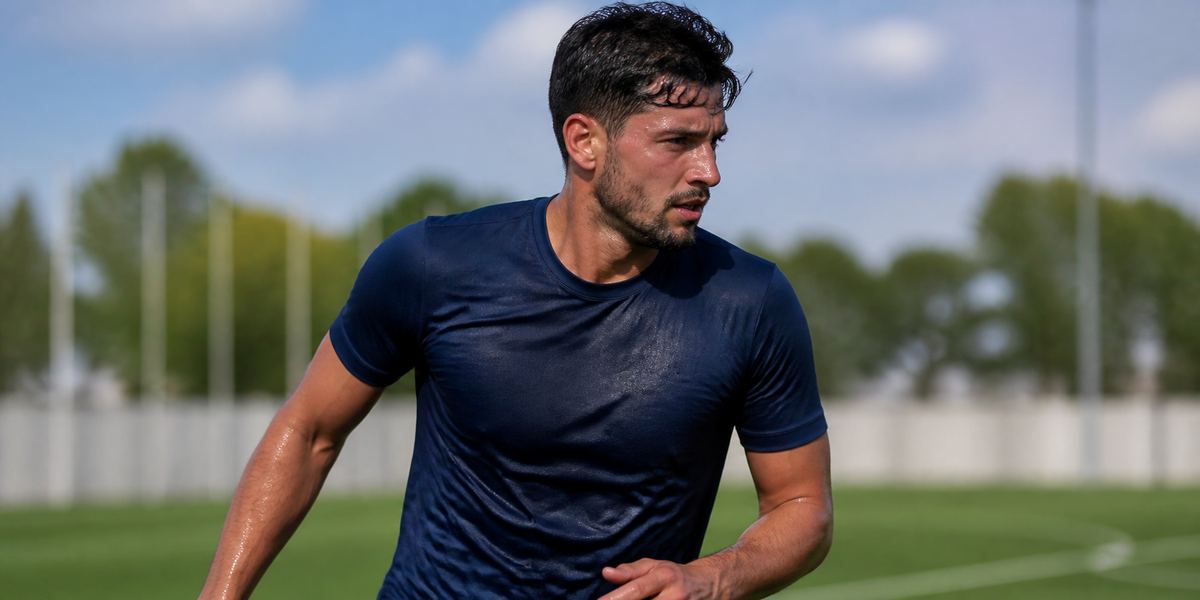
The challenge: sweat transport without a heavy wet cling
Soccer combines repeated sprints, lower-intensity movement and limited recovery time. A jersey can feel uncomfortable when sweat remains on the skin-facing surface, the knit saturates locally or the wet fabric clings to the torso. The sourcing brief therefore needs to separate four questions: initial wetting, transport from the inner face to the outer face, spreading area, and drying under the intended climate.
Fiber chemistry alone cannot answer all four. Yarn cross-section, filament count, knit geometry, surface density, hydrophilic treatment, dyeing and garment ventilation work as a system. The development goal is not “maximum wicking” in isolation; it is a balanced jersey that can be knitted, dyed, worn and washed reliably.
How does moisture-wicking soccer jersey technology work?
Capillary channels within and between filaments can pull liquid through the textile structure. A one-way construction is designed to add direction: the skin-facing and outer sides use different wetting or capillary behavior to encourage outward transport and limit return wetting; the effect must be verified on the finished fabric. Once the liquid spreads over a larger exterior area, evaporation can occur more efficiently when temperature, humidity and airflow allow it.
This is moisture management, not active refrigeration. It does not guarantee a lower body temperature in every environment. Buyers comparing technologies should read the SiPHONiX® one-way moisture technology overview and validate their own construction.
Development path for a one-way moisture-transfer jersey
Translate wear conditions into a textile brief
Define climate, match duration, player level, garment fit, target weight, stretch direction, opacity, hand feel, colors, care label and printing or heat-transfer requirements.
Select the yarn route
Screen a SiPHONiX® cool-dry polyester filament yarn against a control yarn. Confirm available denier, filament configuration, luster and dyeing compatibility rather than assuming a catalogue option fits every machine.
Build two or three knit constructions
Vary knit structure, layer orientation and surface density while keeping unnecessary variables stable. Mark the skin-facing side throughout sampling; reversing a directional fabric can change the intended transport behavior.
Dye and finish representative samples
Test the actual dark and light color routes, heat setting and finishing recipe. A lab result from an unfinished swatch should not be treated as the final jersey result.
Validate fabric, print and garment
Measure moisture-management behavior, drying, air permeability, stretch and recovery, dimensional stability, colorfastness and print compatibility using methods agreed with the buyer and laboratory.
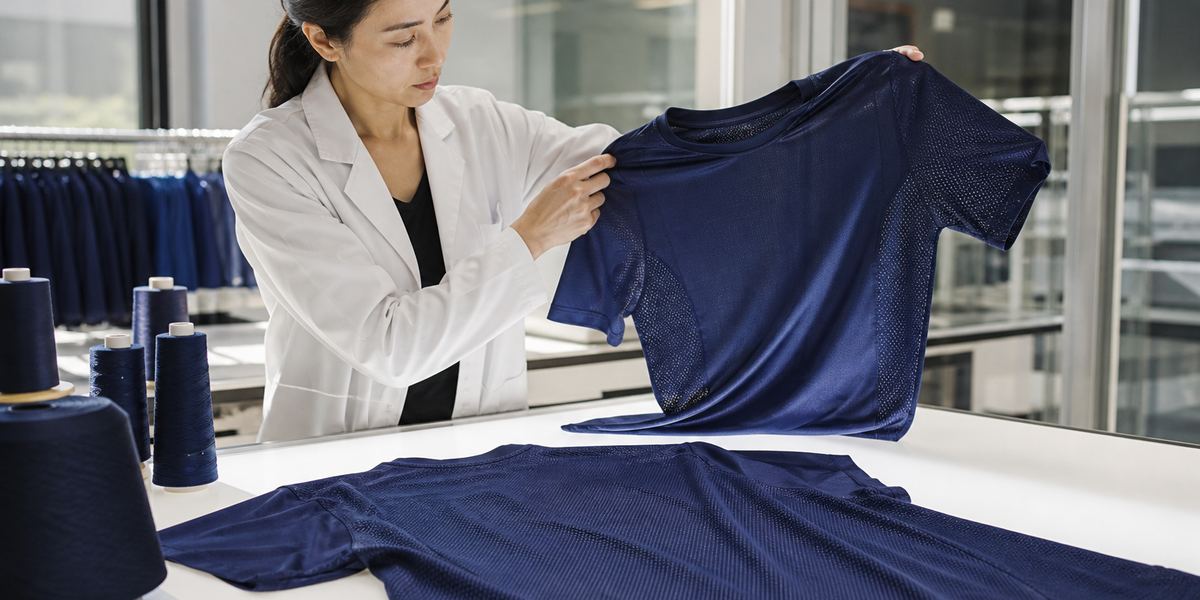
Proposed outcome: a decision-ready sample matrix
The proposed sample set includes one control fabric and two directional-moisture candidates. Each candidate should have a construction sheet, clearly marked face/back orientation, processing history and test plan. The sourcing team can then compare moisture-management indicators alongside knitting stability, color, cost and lead time.
Yarn selection alone cannot guarantee a finished-fabric result. The same yarn can perform differently across knit structures and finishing systems, so bulk approval should be based on test data from the exact dyed construction intended for production.
Soccer jersey fabric specification and RFQ table
| Parameter | Options to define | Validation | Risk if omitted |
|---|---|---|---|
| End use | Match jersey, training top or fanwear; climate and fit | Wear brief and prototype review | Wrong balance of weight, coverage and ventilation |
| Yarn | Polymer, denier/filaments, luster, color route, and SiPHONiX® placement by face, layer or zone | Yarn data and trial knitting | Machine, construction or dyeing incompatibility |
| Construction | Single jersey, mesh, plated or engineered zones; face/back direction | Construction sheet and physical marking | Directional behavior reversed or inconsistent |
| Fabric targets | GSM, width, stretch, recovery, opacity and hand feel | Conditioned fabric testing | Comfort or sewing problems |
| Moisture management | Wetting, absorption, directional transport, spreading and drying | Buyer/lab-agreed methods on finished fabric | “Quick-dry” claim without comparable evidence |
| Garment processing | Sublimation, screen print, heat transfer, seams and ventilation zones | Printed and sewn prototype | Blocked pores, shade change or reduced stretch |
| Care and durability | Wash program, drying, cycle milestones | Post-wash repeat testing | Launch performance not retained in use |
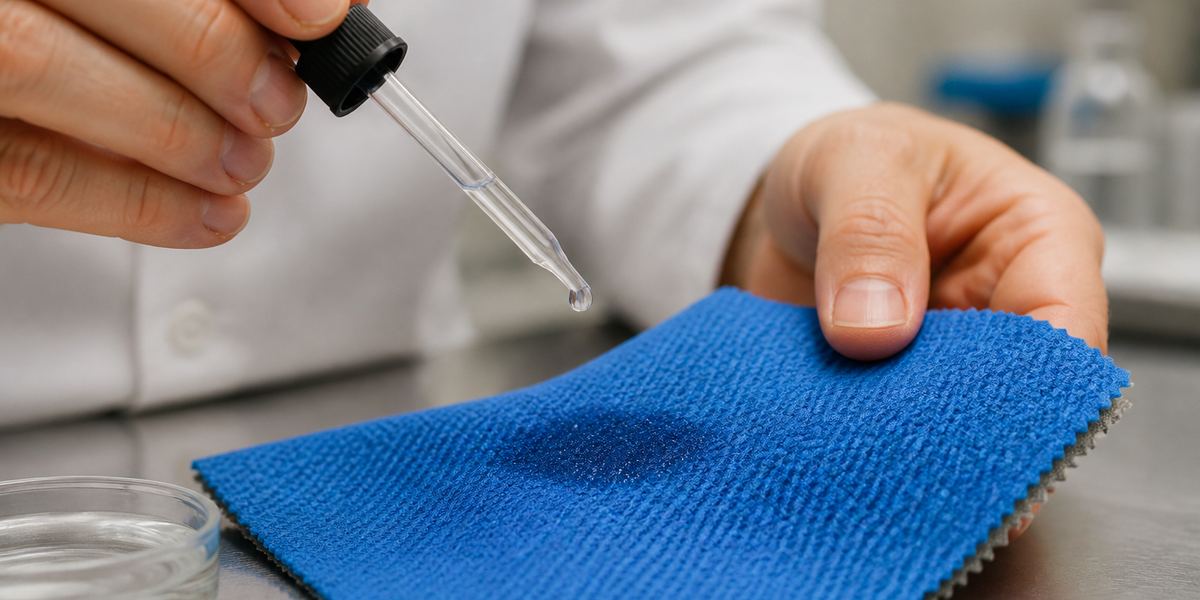
What can affect moisture-wicking jersey performance?
- A yarn feature is not a finished-garment certification.
- Moisture transport and drying are related but different; test both if both are claimed.
- Laboratory drying behavior may not reproduce high-humidity, low-airflow match conditions.
- Air permeability, opacity and snag resistance can change as the knit becomes more open.
- Sublimation, coatings and softeners can alter wetting and transport.
- Any antibacterial, UV-protection or cooling function must be specified and verified separately; it is not automatically included.
For a broader comparison of yarn variables, use the existing moisture-wicking yarn selection guide. This case remains focused on a soccer-jersey development workflow.
MOQ, sample plan and supplier questions
MOQ and lead time depend on the chosen yarn specification, color, fabric construction, knitting and finishing route, test program and whether stock material exists. Start with an available-yarn knitting trial and, where color development is required, a separate lab dip. Before bulk approval, ask:
- Which SiPHONiX® specifications are available for the target gauge and machine?
- How must the skin-facing and outer sides be marked during knitting and cutting?
- Which finishing chemicals could change moisture behavior?
- Can control and candidate fabrics be processed in the same trial?
- Which test methods, conditions and wash milestones will appear in the report?
- Which variables determine sample quantity, MOQ and production timing?
FAQ about moisture-wicking soccer jersey fabric
What are the benefits of sweat-wicking soccer jersey fabric?
It depends. It may improve moisture distribution and reduce localized wetness when the yarn, knit and finish work together, but the effect should be demonstrated on the finished fabric. Comfort still depends on fit, airflow, humidity and garment design.
Is polyester automatically moisture-wicking?
No. Polymer choice alone does not guarantee effective wetting, capillary transport, spreading or drying in the finished knit.
Does one-way moisture transfer work after washing?
It depends. The construction and finishing route must be tested after the care protocol and cycle milestones stated in the brief.
Can the fabric also be cooling or antibacterial?
It depends. Additional functions may be available as a custom development. Additional functions should be selected deliberately and tested separately; they are not assumed features of every SiPHONiX® specification.
Can a yarn supplier guarantee the finished jersey result?
No. The buyer, knitter, finisher and laboratory must validate the final construction and garment process.
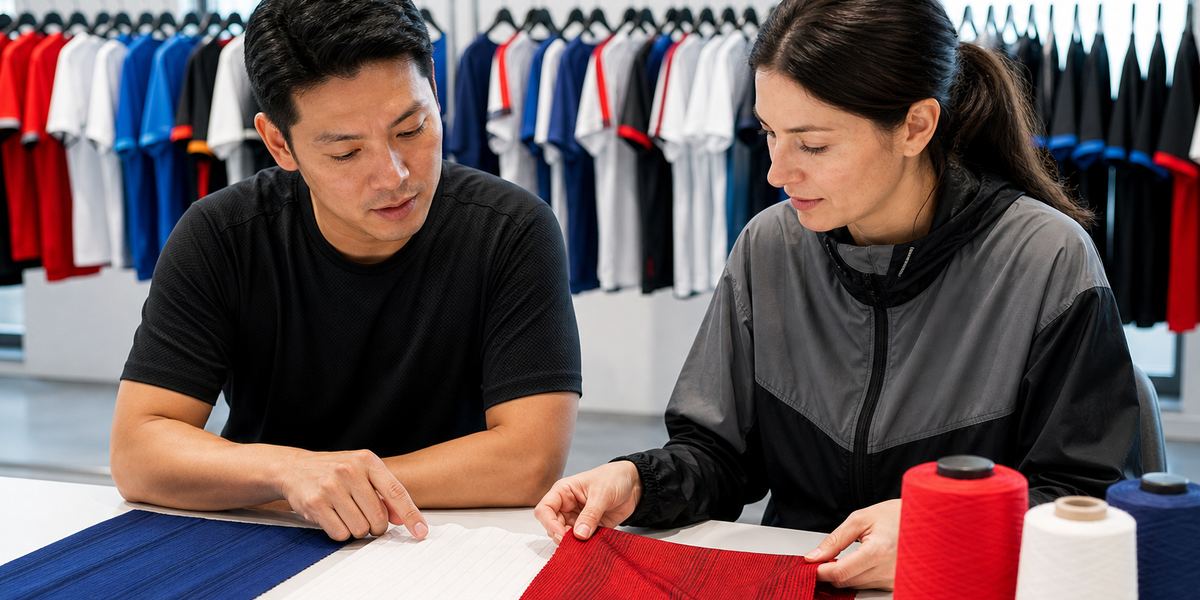
Request a soccer jersey moisture-management sample plan
Send the climate and use case, garment fit, target GSM and width, stretch and opacity needs, knitting machine details, color and print process, care label, required test methods, annual volume and timeline. Annie’s Smartex can use those inputs to propose a yarn and construction sample matrix.

Related Posts

Anti-Static Yarn for Cleanroom Garments: An ESD Workwear Development Case
See how carbon-fiber anti-static yarn is specified for cleanroom and ESD workwear, from five listed yarn sizes to fabric, garment...

What Is One-Way Moisture Transfer Fabric and How Does It Work?
Learn how one-way moisture transfer fabric moves sweat from the skin-facing side to the garment exterior, how it differs from...
Desert Trail Running Footwear – PCM Cooling Case Study
When “Cooling” Fabric Meets 60°C Sand: Why Passive Isn’t Always Enough The Challenge “We assumed a lightweight HDPE cooling fabric...
PECooX® HDPE Mattress Case Study
The Challenge “We’ve upgraded our foam layers, added ventilation channels, and improved our spring system — but customers still complain...