 English
 Español
 Português
 Deutsch
 한국어
 日本語
 Italiano
 Français
 العربية
 Türkçe

On a cold ride, the back of your hand meets the wind while your palm holds the bar and your fingers reach for the brake. A bulky glove may feel warm off the bike yet make that movement awkward. This winter cycling glove concept explores a different allocation: examine an aerogel textile on the hand’s exposed side, keep the grip side comparatively lean, and compare both with a familiar insulated control. The aim is a glove construction worth sampling, not a claim that a finished ShowarmX cycling glove already exists.
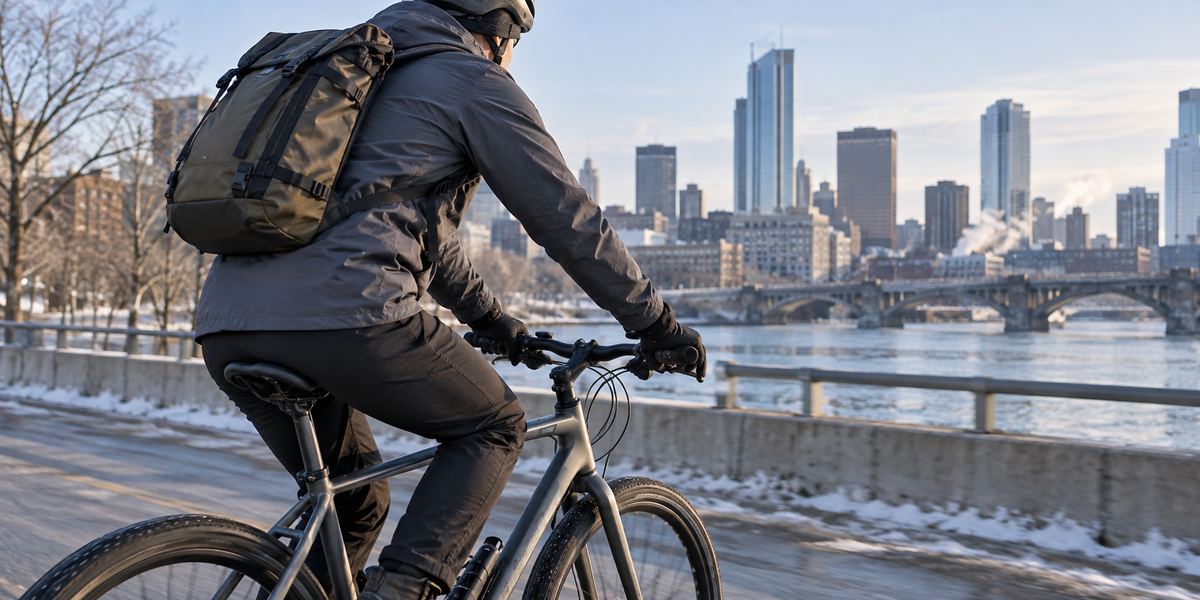
The challenge: warmth where wind hits, control where hands grip
A commuter may hold the handlebar for long stretches, brake repeatedly and open a bag or phone at a stop. Add insulation everywhere and the palm grows thicker around the grip; reduce it everywhere and the back of the hand may feel exposed. This case follows that single conflict. Industrial protective gloves have different hazards and standards, so the existing aerogel industrial-glove concept is a related material example, not a cycling specification.
Three construction decisions shape the first sample
01 / Start at the back of the hand
Das ShowarmX aerogel thermal fabric is listed for warm-glove applications. A proposed dorsal panel can investigate its use without assuming that the listed fabric has been validated in this glove. Put the candidate textile beneath a suitable outer shell, then check whether added layers make the knuckles stiff. A full-hand aerogel layer is an alternative, but it would make the grip question harder to answer in the first round.
02 / Keep the palm readable
Use the same palm fabric and grip finish in the control and experimental glove. Keep insulation out of the primary contact patch at first so the cyclist can still feel the bar. This is a construction choice, not a rule that the palm never needs warmth. If the grip side becomes the cold spot during evaluation, add a separate palm variant rather than changing both sides at once.
03 / Resolve the finger and cuff junctions
A warm back panel means little if finger seams leak wind or the cuff leaves a gap at the jacket sleeve. Let the first prototype compare a modest finger-back extension with a simpler hand-only panel. Check seam bulk during a brake-lever reach and confirm the cuff can sit under or over the intended sleeve. Those decisions affect comfort as much as the textile choice.
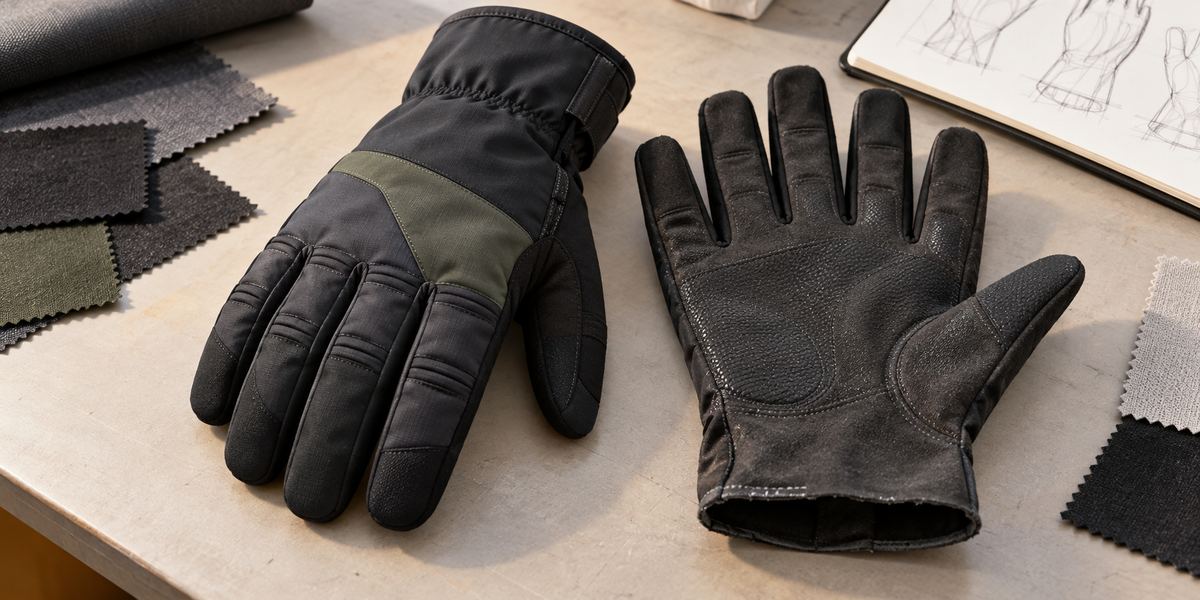
The material trade-off behind that layout
ShowarmX also has a listed thermal padding route. Fabric and padding are different starting points: a fabric panel might simplify cutting and seam placement, while padding would need an enclosing construction and careful control of bulk. Ask for the actual hand, thickness and assembly options before choosing either. The useful comparison is the glove you can sew and operate, not an isolated conductivity claim from a material page.
Wind-facing coverage and water management belong in the same brief. A breathable shell may admit air at seams; a tighter shell may change moisture build-up. The aerogel component should be evaluated inside the selected shell and lining system, with a conventional glove made to the same pattern as the control.
Proposed outcome: two gloves that answer one question
Make Control A with the chosen shell, palm, lining, pattern and conventional insulation. Make Sample B with the same pattern and palm, replacing only the dorsal insulation zone with the proposed ShowarmX construction. Record panel area, layer order, seam allowances, total glove mass and thickness at the grip. If B restricts finger movement, try a smaller back panel before increasing material complexity. If A and B feel similarly warm but B improves bar feel, that is useful design feedback; it is not a proven performance result here.
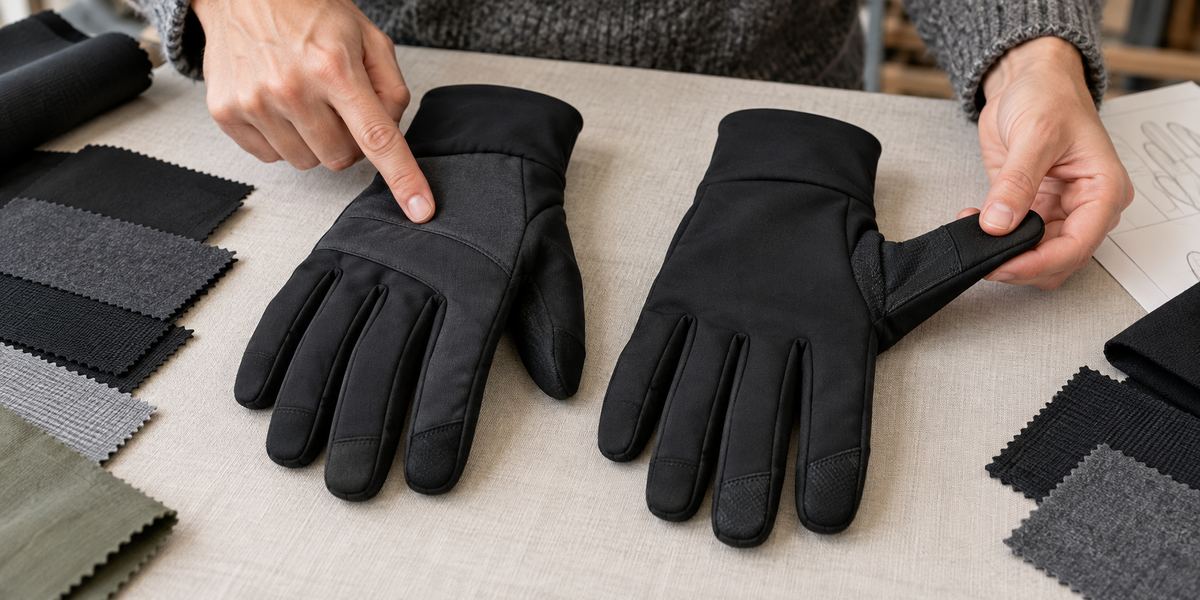
What would make the concept ready for a product decision?
Evaluate the assembled gloves on the intended handlebar and brake setup, not just on a flat swatch. Compare grip security, finger reach, seam pressure, fit after repeated flexing, and warmth under stated wind and temperature conditions. Check the planned care route and wet-use conditions separately. Material-level thermal data can guide selection, but finished-glove comfort, durability and any protective claim require tests on the relevant construction.
Konzeptvorschlag zur Material- und Anwendungsentwicklung. Dieser Fall präsentiert ein Konzept, das auf anonymisierten Markterhebungen und technischen Recherchen von Annie's Smartex basiert. Es handelt sich nicht um ein Angebot für ein Standardprodukt und es wird nicht behauptet, dass ein bestimmtes Endprodukt kommerziell erhältlich oder für diese Anwendung validiert ist. Verfügbarkeit von Mustern, Spezifikationen, Leistung, Konformität, Herstellbarkeit und Pflegebeständigkeit müssen durch projektspezifische Entwicklung und Tests bestätigt werden. Es werden keine vertraulichen Kunden- oder Projektdetails offengelegt.
Bring the glove brief to a material discussion
Share the riding temperature and wind range, handlebar and brake type, target fit, shell and palm materials, cuff design, care method and the grip movement you cannot sacrifice. Review the ShowarmX thermal fabric und dann contact Annie’s Smartex to discuss whether a dorsal-panel sample is feasible.

Verwandte Artikel

ShowarmX® Aerogel-Thermogewebe: Das leichteste Isolationsgewebe, das sowohl im Sommer als auch im Winter funktioniert
Wichtigste Erkenntnisse Hier ist eine Frage, die sich die meisten Stoffkäufer nie stellen: Was wäre, wenn derselbe Stoff, der Sie warm hält...
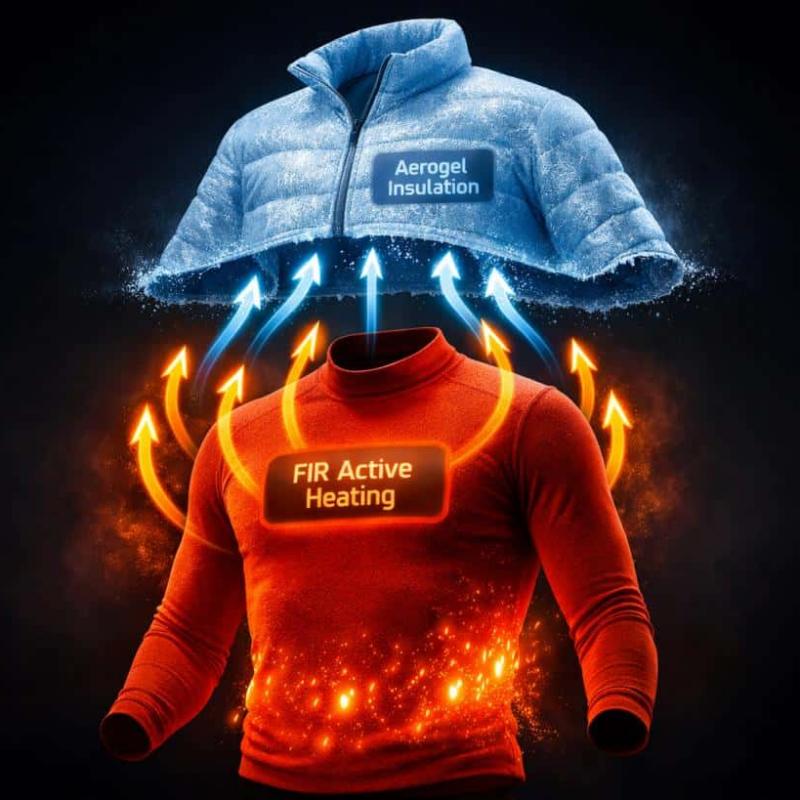
Die wärmsten Leichtbau-Wintertechnologien 2026: Aerogel-Isolierung vs. Ferninfrarotgarn (und warum Sie beides brauchen)
Stell dir vor: Am Ausgangspunkt der Wanderung herrschen -15 °C. Du trägst eine Jacke für extreme Kälte, die du über einem Thermounterhemd trägst…
Aerogelfaser vs. Daunenisolierung: Was ist besser für Winterkleidung?
Sie standen wahrscheinlich schon einmal in einem Outdoor-Ausrüstungsgeschäft, hielten zwei fast identisch aussehende Jacken in den Händen und versuchten herauszufinden, welche...
Wattierung aus Aerogelfasern niedriger Dichte: Eine ultraleichte Alternative zu Daunenisolierung
Innovation bei Isoliergarnen in Luft- und Raumfahrtqualität · ShowarmX® Ultraleichte Aerogel-Wärmepolsterungstechnologie Die Herausforderung „Unsere Daunenjacken halten Bergsteiger warm, bis…“