 English
 Español
 Português
 Deutsch
 한국어
 日本語
 Italiano
 Français
 العربية
 Türkçe

A dog can walk comfortably in a shirt and still dislike sleeping in it. The fabric bunches beneath the chest, a seam presses against a cushion, or the neckline moves when the dog curls up. If you are developing indoor dog wear, those small moments matter more than a long list of textile functions. Far-infrared fabric such as XOY Alpha is an interesting starting point for a soft rest shirt, but the finished garment has to earn its place in the dog’s routine.
Here is a practical way to explore that idea: choose the dogs and rooms you are designing for, cut one uncomplicated shirt, and compare it with a familiar soft jersey. The aim is a garment a dog can move and settle in, with a material story your brand can explain honestly.

Where does an indoor dog shirt make sense?
Start with the dog’s ordinary surroundings. A short-coated dog resting in a cool room may welcome a light layer; a thick-coated dog in a warm room may have no use for one. That difference gives your design team a clearer brief than “year-round comfort.” Choose the coat type, size range, room conditions and likely wearing time before you choose fabric or write a product claim.
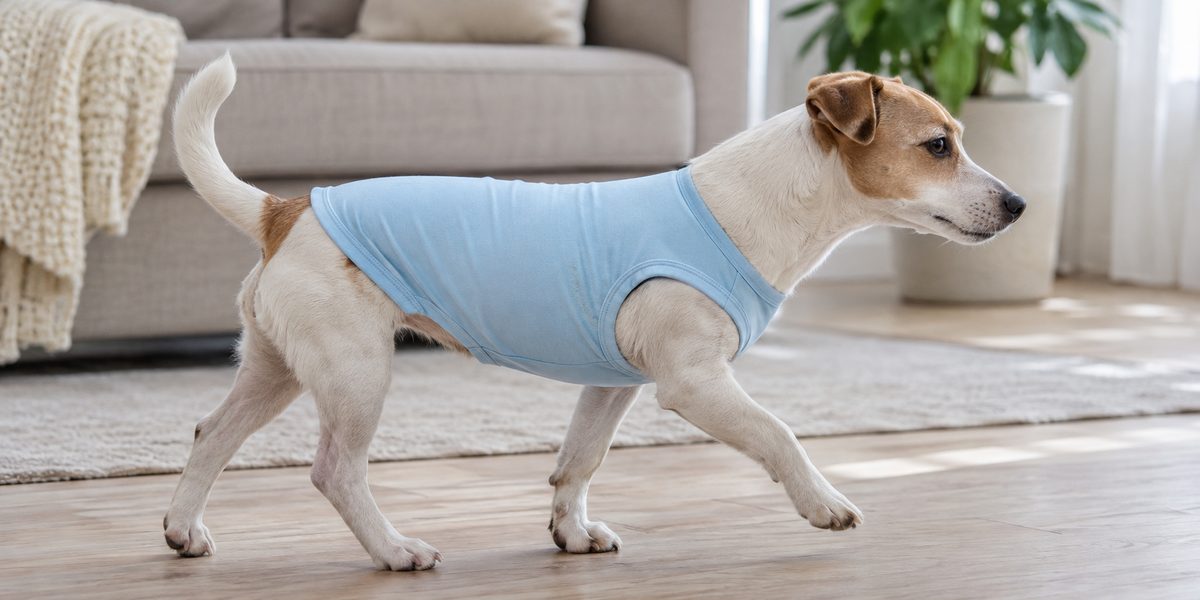
Watch what the dog does between naps. The shirt should stay put when it gets up, allow a natural stride and remain comfortable when it lies on either side. A beautiful fabric cannot rescue a neckline that rubs or a closure that ends up under the dog’s body. For general clothing fit and signs that a dog is too warm, VCA’s dog-jacket guidance is a useful companion to the pattern brief.
What could XOY Alpha bring to indoor dog wear?
XOY Alpha is a 150 gsm fabric made from 92% polyester and 8% elastane. That gives you a light, stretchy candidate for a close but easy-moving shirt. Its far-infrared (FIR), quick-dry and antibacterial features may also interest a pet-apparel brand. For this indoor brief, though, you will probably notice the fabric’s hand, stretch and behavior after washing before you notice any technical feature on a label.
FIR describes a property measured on fabric. It does not tell you whether a particular dog will feel warmer, sleep longer or relax. You can still explore XOY Alpha as a comfort-oriented material; just let the garment trial answer the garment question. If your team plans a specific FIR claim, the FIR report guide can help you match the report to the exact fabric you intend to use.
Cut the shirt for resting, not just standing
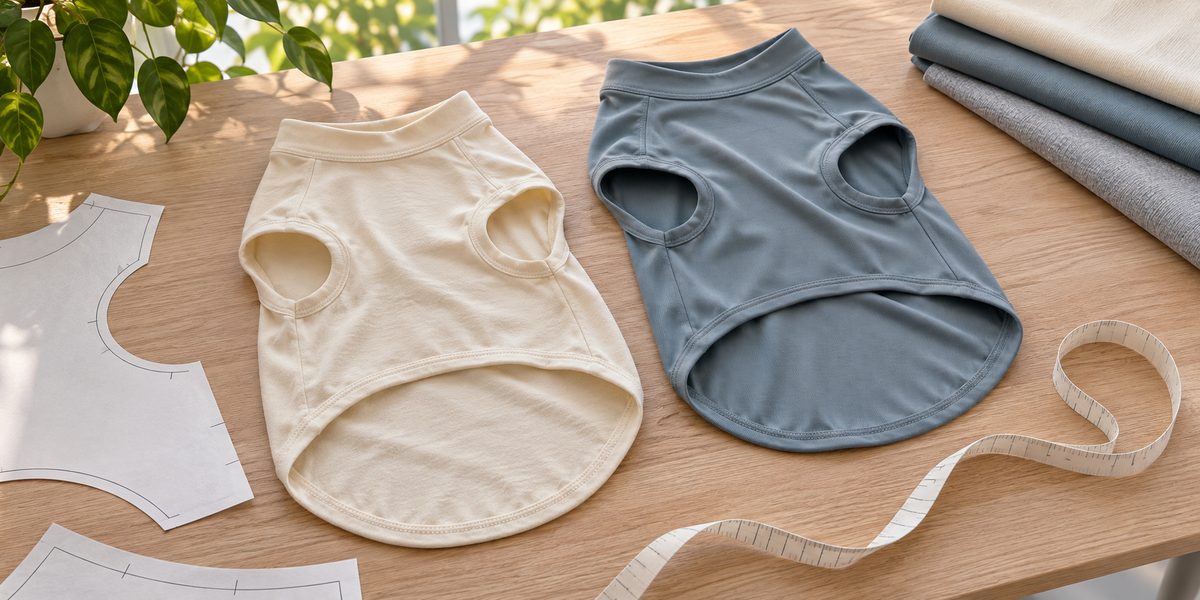
A simple back-and-chest top is enough for a first sample. Give the forelegs room to move, keep the belly opening practical and place seams where they will not press into the floor or bed. Measure chest girth, back length and neck opening on the target dog sizes. A small human T-shirt pattern will not solve the difference in shoulder movement or body shape.
There is a trade-off you can feel without a laboratory: a snug shirt is less likely to twist, but can pull at the forelegs or feel too warm under a dense coat. A loose shirt moves more freely, but may roll as the dog sleeps. Check the same sample while the dog walks, turns and curls up. Leave full-body pajamas for a later round if the basic top already works.
Which shirt should you sample beside XOY Alpha?
Use an ordinary soft jersey as your reference. Cut it and the XOY Alpha sample to the same pattern, size and closure arrangement. You will learn far more from two comparable shirts than from comparing different fabrics in completely different styles. If XOY Alpha feels promising but the fit is wrong, make a third version that changes only the pattern.
| Sample | What stays the same | What you learn |
|---|---|---|
| Soft jersey reference | Size, cut and closures | How the dog handles a familiar, simple indoor layer |
| XOY Alpha shirt | The same base pattern | Whether the fabric changes touch, movement, warmth or care behavior |
| Adjusted XOY Alpha shirt | The XOY Alpha fabric | Whether a seam or opening change solves a specific fit issue |
Keep a few notes with each fitting: dog size and coat, room conditions, time worn, movement and what happens when the dog rests. The point is not to turn a household moment into a laboratory result. It is to see which part of the shirt you would change before you make a size run.
Can a comfortable shirt help a dog settle?
Comfort is a sensible design goal. Some dogs may settle more readily in a garment that does not pull, rub or overheat them; others prefer no shirt at all. During short, supervised fittings, notice whether the dog moves normally, tries to remove the top, pants more than usual or chooses its regular resting spot. Compare those moments with the same dog’s behavior without a shirt.
That observation can guide the next design change. It does not show that FIR relieves anxiety or improves sleep, and a light shirt is different from a pressure wrap. If your brand wants an emotional-wellness claim, it needs evidence on the finished garment and its intended dogs. Until then, talk about the shirt’s softness, fit and intended use.
Will it still feel good after washing?
Pet clothing collects fur, skin oils and everyday dirt. Wash a sample using the care instructions you expect to give owners, then check whether the neckline holds its shape, the seams stay smooth and the hand still feels pleasant. If you want to make an antibacterial or quick-dry claim, look at the matching fabric report as well as the finished shirt. The first question for your range is simpler: would you be happy to put this shirt back on the dog after repeated care?
The same fabric can inspire an outdoor garment, but the brief changes once the dog is walking in direct sun. The XOY Alpha dog-vest concept explores that direction. Keep this indoor shirt light, comfortable and easy to live with; develop outdoor coverage and sunlight claims as their own project.
Start an XOY Alpha indoor dog-wear sample
Tell us the dog sizes and coat types you want to serve, the room conditions, shirt shape and care expectations. We can discuss an XOY Alpha fabric sample and the information you need for a first garment comparison.

Related Posts

Far-Infrared Recovery Yarn with Dynamic Moisture Management: How XOY Alpha Redefines Recovery Wear Performance
Recovery wear has evolved far beyond compression tights and cooling sleeves. Today, the most advanced athletic garments are engineered at...
Lightweight Warmth Without Bulk: The Aerogel + Far Infrared Yarn System Built for Base Layers, Knitwear and Everyday Apparel
There is a quiet shift happening in performance apparel development. Brands are no longer asking “how warm is it?” —...

XOY Alpha Loungewear Fabric: Designing a Top for Humid Evenings
Creative Textile Lab · Summer homewear A summer lounge top should feel easy enough to forget about. On a humid...

The Underwear Revolution: How Volcanic Mud is Changing Intimate Apparel
The Daily Struggles with Traditional Underwear Have you ever experienced that uncomfortable dampness that lingers in your underwear throughout a...