 English
 Español
 Português
 Deutsch
 한국어
한국어 日本語
日本語 Italiano
 Français
 العربية
 Türkçe
One-way moisture transfer fabric is designed to move liquid sweat preferentially from the skin-facing side to the garment exterior, where it can spread and evaporate. It is different from a fabric that simply absorbs water or wicks equally in every direction. The result is created by a complete system—fiber and yarn selection, asymmetric fabric construction, surface wetting behavior, dyeing and finishing—not by a marketing name alone. This guide explains the mechanism, the difference from conventional moisture wicking, the tests buyers should request, and the information a mill needs before developing a sample.

What is one-way moisture transfer fabric?
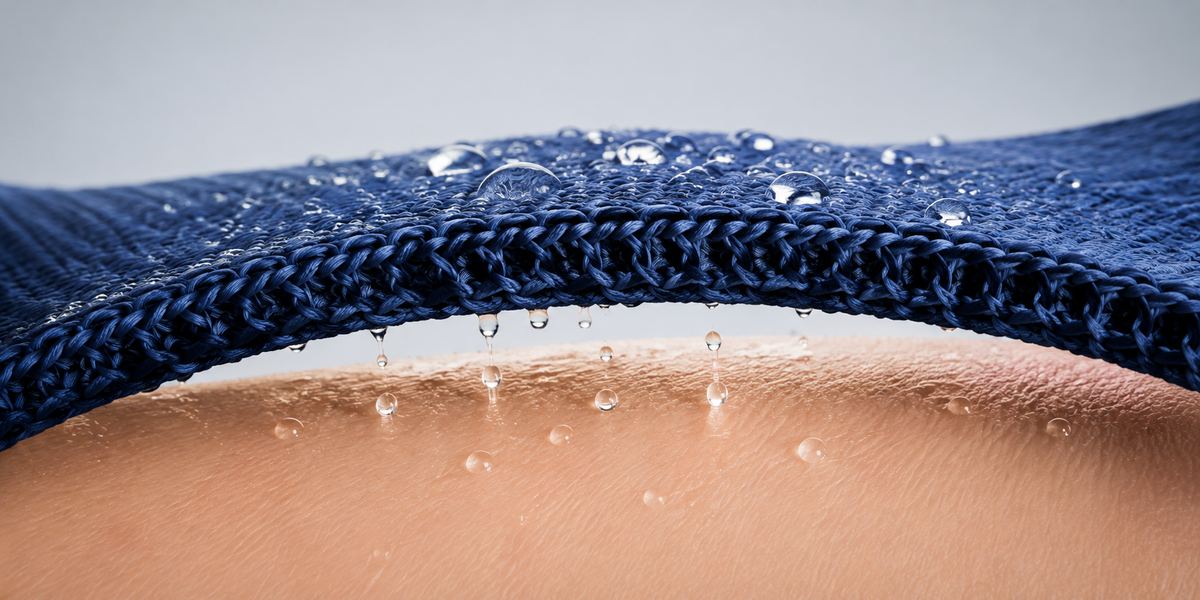
A one-way moisture transfer fabric has two faces that behave differently when they meet liquid perspiration. The side next to the skin is designed to take up as little liquid as practical while allowing sweat to pass into the fabric. The outer side accepts and spreads that liquid over a wider area. This difference creates preferential movement through the fabric thickness—from inside to outside.
The textile is not a sealed one-way valve. Water can still interact with both faces, and performance changes with sweat volume, pressure, temperature and fabric saturation. “One-way” therefore describes a measurable preference under stated conditions, not an absolute promise that moisture can never move in the reverse direction.
In technical literature, buyers may also encounter unidirectional moisture transfer, directional liquid transport or one-way moisture transport. In commercial sourcing, one-way moisture transfer fabric and one-way wicking fabric are more common descriptions.
How does one-way moisture transfer work?
Liquid movement is driven by differences in wettability, capillary pathways and pore structure. A skin-facing surface with lower affinity for liquid discourages sweat from remaining at the body interface. A more wettable outer surface pulls and spreads the liquid. Yarn fineness, filament geometry, loop construction, density and the contact between layers all influence whether a continuous transport path is formed.
Some fabrics create this asymmetry with different yarns on the two faces. Others use plated or double-face knitting, different filament sizes, controlled finishing, or a combination of these routes. The commercially useful question is not only “Which yarn wicks?” but “How will the entire construction move liquid from the intended skin side to the intended outer side after dyeing, finishing and washing?”
Moisture wicking vs one-way moisture transfer: what is the difference?
| Property | What it describes | What it does not prove | Buyer question |
|---|---|---|---|
| Absorption | How readily a textile takes up liquid. | That liquid leaves the skin-facing side. | Which face absorbs, and how much moisture is retained? |
| Moisture wicking | Capillary movement along fibers, yarns or a fabric surface. | That transport is directional through the fabric thickness. | Is wicking measured vertically, horizontally or between faces? |
| One-way moisture transfer | Preferential liquid movement from the inner face to the outer face. | Fast evaporation or comfort under every wear condition. | Which side was mounted as the skin side, and what is the one-way result? |
| Quick drying | How quickly retained liquid leaves the textile under a defined method. | That the inner face stayed drier during transport. | Which drying method, temperature and initial liquid load were used? |
| Water-vapor transmission | Movement of moisture in vapor form. | Liquid sweat transport. | Is the claim about vapor, liquid or both? |
A fabric can wick quickly across both surfaces yet still feel clammy because the skin-facing side remains wet. Conversely, a fabric may show directional transfer but dry slowly if the outer face does not spread moisture effectively. Buyers therefore need a performance package rather than one generic “moisture-wicking” claim.
Which yarn and fabric variables affect directional transfer?
Yarn system
Polymer, filament count, denier, yarn texture, surface behavior and the difference between inner- and outer-face yarns can change the capillary pathway.
Fabric architecture
Single jersey, plated constructions, interlock and double-face knits do not transport liquid identically. Loop placement and connection between faces are critical.
Wet processing
Scouring, dyeing, heat setting, softeners and moisture-management finishes can strengthen, weaken or reverse the intended face difference.
For polyester developments, SiPHONiX® one-way moisture-transfer polyester filament yarn is one possible starting material. Available specifications shown on the product page include DTY 75D/72F and 150D/144F. The appropriate denier, face placement and companion yarn should be selected against the required hand feel, GSM, opacity, stretch and end use.
Buyers who need a fabric rather than yarn can review the current SiPHONiX® one-way moisture-transfer fabric route. For the underlying material concept, see the SiPHONiX® technology page.
How should one-way moisture transfer fabric be tested?
AATCC TM195-2011e2(2017)e5, Liquid Moisture Management Properties of Textile Fabrics, is commonly used to evaluate and classify dynamic liquid-moisture behavior in knitted, woven and nonwoven fabrics. Its results consider how the fabric wets, absorbs, spreads and transfers liquid between its two surfaces. When reviewing a report, identify the designated top and bottom faces and confirm which represents the skin side.
Do not use one result as a substitute for every moisture claim. Vertical or horizontal wicking, drying time, drying rate, water-vapor transmission and air permeability are separate measurements. The buyer and laboratory should select methods that match the final product claim and intended use.
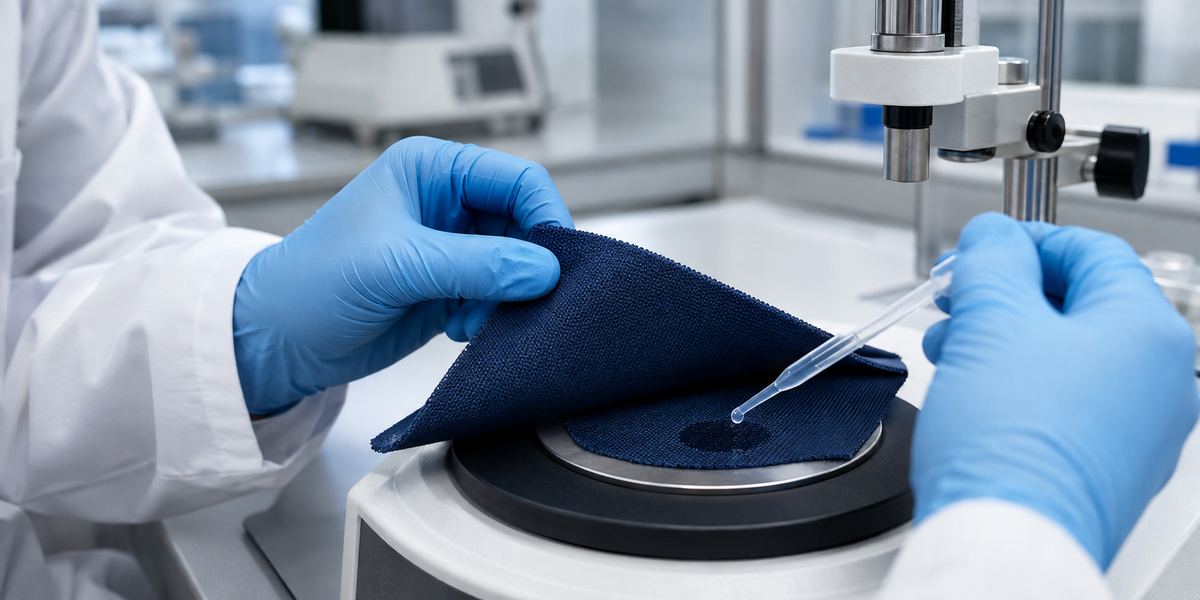
A practical verification plan compares both fabric orientations and records composition, construction, GSM, finishing route and conditioning. If durability matters, test the unwashed fabric and agreed laundering milestones using the same orientation and method. Bulk approval should also include face identification and construction tolerances so the approved mechanism is not lost during production.
How should sportswear manufacturers specify the fabric?
- Define the wearing problem. State whether the priority is reduced wet cling, a drier skin-facing surface, fast spreading, quick drying or a combination.
- Describe the final article. Include soccer jersey, running top, base layer, workwear lining or another application, plus expected sweat level and climate.
- Set the construction envelope. Provide composition, knit type, target GSM, width, stretch, hand feel, opacity and the required skin-facing side.
- Agree the evidence. Identify the fabric-stage tests, washing protocol, test orientation and acceptance criteria with the laboratory and supplier.
- Approve a sample matrix. Compare controlled variations in face yarn, companion yarn, density and finishing rather than changing several variables without traceability.
If the project is still at yarn-selection stage, the broader moisture-wicking yarn selection guide explains conventional capillary-wicking options. Use it to screen material families, then evaluate the directional construction separately.
MOQ, samples and supplier questions
MOQ, sample availability and lead time depend on whether the project uses an existing yarn and fabric construction or requires a new denier, color, face combination or finishing route. Until the exact specification is confirmed, a responsible supplier should not quote one universal MOQ.
- Which yarn is used on the skin-facing side and which on the outer face?
- How are the two faces identified after dyeing and finishing?
- Does the performance come from yarn selection, fabric construction, finishing or a combination?
- Which fabric construction and test report does the claim cover?
- Were both fabric orientations evaluated?
- What changes after laundering, heat setting or the use of softeners?
- Can the supplier provide yarn and fabric samples for the same development?
FAQ about one-way moisture transfer fabric
Is one-way moisture transfer the same as moisture wicking?
No. Wicking describes capillary liquid movement. One-way transfer requires a directional difference between the skin-facing and outer surfaces. Wicking can contribute to the mechanism, but it does not prove directionality by itself.
Can one functional yarn guarantee one-way moisture transfer?
No. The yarn may enable the desired pathway, but finished-fabric construction, face placement, dyeing and finishing determine the final result.
Does a positive droplet demonstration prove performance?
No. It is useful for screening and showing face behavior, but it does not replace a controlled fabric test, orientation record and wash-durability evaluation.
Does one-way transfer automatically mean quick drying?
No. Moving moisture to the outer face can support evaporation, but drying rate also depends on spreading area, retained liquid, fabric mass and environmental conditions.
Which side should face the skin?
It depends on the approved construction. The supplier must mark and document the intended skin-facing side; reversing it during cutting or sewing can change the moisture behavior.
Build a testable one-way moisture-transfer fabric brief
Before requesting a sample, prepare the end use, composition, yarn denier, knit or weave, target GSM and width, stretch, skin-facing side, dyeing and finishing route, target test methods, wash protocol, color, quantity and timeline. Annie’s Smartex can then recommend a SiPHONiX® yarn starting point and a fabric sample matrix for validation.

Related Posts
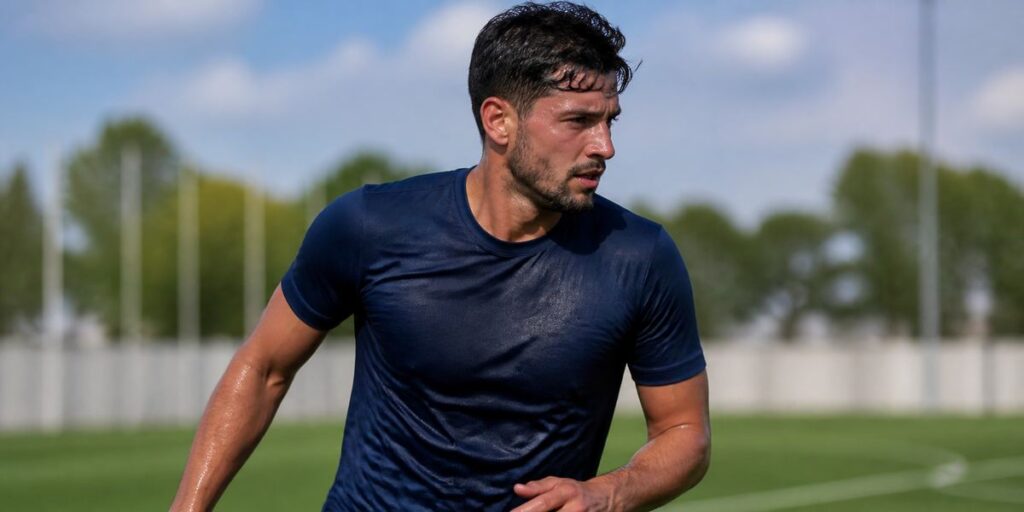
One-Way Moisture-Transfer Soccer Jersey Fabric: A SiPHONiX® Development Case
A practical development case for specifying SiPHONiX® one-way moisture-transfer soccer jersey fabric, from yarn placement and knit construction to testing...
How Does Hollow Polyester Yarn Keep Fabrics Warm Without Bulk?
When can hollow polyester yarn make a winter fabric lighter? Compare knit construction, solid polyester alternatives and finished-fabric warmth before...
Why Does “Cooling Fabric” Feel Cold in Three Completely Different Ways?
Two people are wearing something labeled “cooling fabric.” One feels nothing until fifteen minutes into a workout, when sweat finally...

Far-Infrared Recovery Yarn with Dynamic Moisture Management: How XOY Alpha Redefines Recovery Wear Performance
Recovery wear has evolved far beyond compression tights and cooling sleeves. Today, the most advanced athletic garments are engineered at...